


Efrain Ortega’s wife was four days from giving birth to their fourth child when he received an email from his immigration lawyer. The program that would finally put him on a path to citizenship was on pause until at least mid-November.
“I’m married. I’ve got my kids. I feel like I’m in a good spot in my life,” said Ortega, who has been married for eight years to his wife Kristin. “But it could all go away.”
Ortega, 35, is among an estimated 500,000 people married to a U.S. citizen who face a major obstacle to legalizing their immigration status. Because he entered the country illegally at age 9, Ortega would need to leave the country to become a lawful permanent resident. He would need a waiver to leave without triggering a 10-year ban, a process that can take years because of backlogs.
The Biden administration announced a program in June called “parole in place” that would eliminate this barrier. But Texas and other states immediately sued to challenge the program, blocking application approvals and throwing the Ortegas back into limbo. Thousands of Houstonians could benefit from the program, known as Keeping Families Together, if a court allows it to move forward.
“You’re always scared that immigration could detain you and deport you,” said Adriana, a 62-year-old Mexican immigrant who has lived in Houston for more than 30 years who is also applying to the program. “I hope they resolve this soon.”
With the program still paused just days before the election, the frustration from affected families highlights the challenges that the Joe Biden administration faced with its immigration policy. Biden promised during his campaign to undo Trump’s restrictionist immigration agenda – and he did. He also increased pathways to legal migration through the refugee program and parole.
But record global migration kept the focus on the border throughout his presidency, explained Muzaffar Chishti, a senior fellow at the Migration Policy Institute.
“All his accomplishments are unknown because all the oxygen in the room has been taken by the border,” Chishti said.
Biden responded by restricting asylum, sparking criticism from immigrant advocates who in turn sought the promised relief for long-time residents. The interruption of the program fed perceptions that many immigrants were left behind by Biden’s policies.
“It is another disappointment for this group of people,” Chishti said. “You have a built up expectation that if it’s dashed, it creates its own grievance.”
Now, impacted families and immigration advocates have filed a petition requesting that the Supreme Court vacate a stay that has put the applications on pause. They argue that district courts cannot block federal programs for more than 28 days without providing the sufficient legal analysis.
Meanwhile, families like the Ortegas and Gavidias are among the thousands of Houston families in the middle of this political chess game.
Years together, but no citizenship path
It was soccer that brought Efrain and Kristin together, the first time and the second. The pair met in high school, where they both played for the soccer team. They were young when they had their first son Jayce – less than two years out of high school. The couple broke up and then Kristin moved with her family to Oklahoma. When she returned, the pair reconnected at their son’s soccer games. They’ve now been married for eight years and together for nine.
Now, the couple spends their days shuttling the kids to football games, dance practice, or trombone lessons. Like many parents, Ortega complains about the hundreds of dollars in fees for all his kids’ activities. But he wants them to have all the opportunities his family couldn’t afford. So every hour spent at the barbershop where he cuts hair and serves as the general manager is worth it.


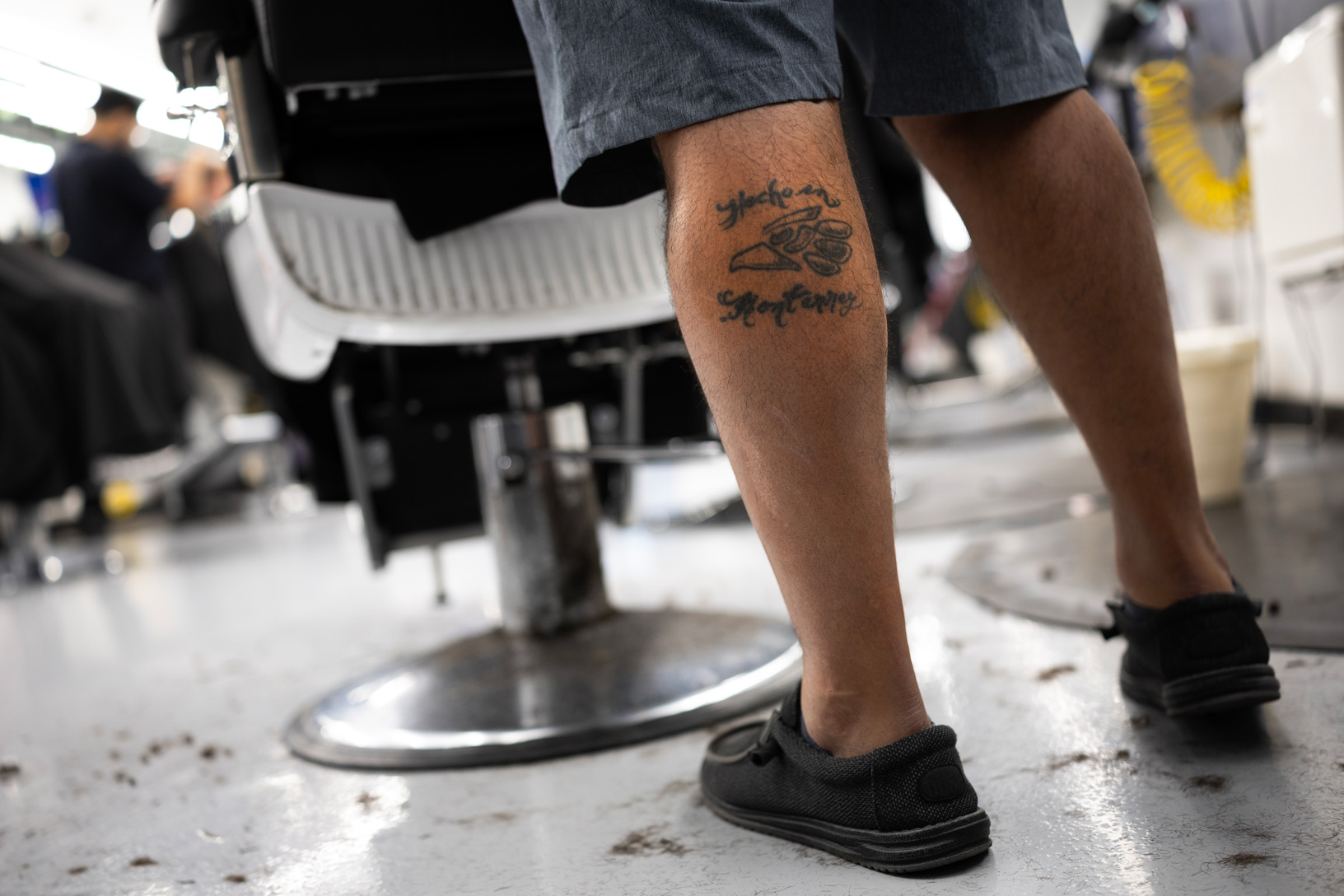
“I can’t tell my kids no,” he said. “Because I know what it’s like.”
Ortega has a work permit through Deferred Action for Childhood Arrivals (DACA), which has helped him get a better-paying job. But he can’t become a legal permanent resident or citizen through that program.
Kristin works remotely in accounting, but Ortega is the breadwinner. The thought of him getting stuck outside the country has made Kristin freak out about getting his residency with a waiver. Any snag in the immigration bureaucracy could mean Efrain could get stuck in Mexico for months, or even years. In the meantime, Kristin would be on her own with the kids – eight in total including four together and four from their previous relationships.
“That’s why we put it off for so long,” Kristin said. “It’s scary not knowing if he’s gonna come back.”
The cost has also been a deterrent. Efrain estimates he has spent between $15,000 and $20,000 on immigration fees over the years.
“Everyone thinks as soon as you’re married, three months later, you have your papers,” Ortega said. “But they make it impossible to get everything done.”
As a U.S.-born citizen, Kristin didn’t have much experience with the immigration system. She has learned through her husband’s experience, watching him gather all his documents, take his biometrics, and file his paperwork every two years to renew DACA.
“It’s frustrating on my end as his wife because it’s not fair,” Kristin said. “He plays the role of a citizen. But he’s not.”

The frustration with the immigration system has made her apathetic to both political parties.
“Neither one of them has made me feel secure that something positive will happen for my husband,” Kristin said.
Voting for his family
Victor Gavidia, originally from El Salvador, was working as a waiter at an Italian restaurant when the new girl on the kitchen staff caught his eye. He invited her to the beach for his birthday. Adriana was skeptical, but her sister convinced her to go. Victor asked her to be his girlfriend days later. That was 27 years ago.
They’ve stuck by each other since then — through Adriana’s cancer treatment, Victor’s path to sobriety and then his rheumatoid arthritis diagnosis. Victor has since left the service industry for an administrative office job because of his health. Adriana sticks with her restaurant job because she has fewer options without a work permit. They’ve spent countless days going to the movies with Adriana’s nieces and nephews, a tradition they’ve continued with the next generation.
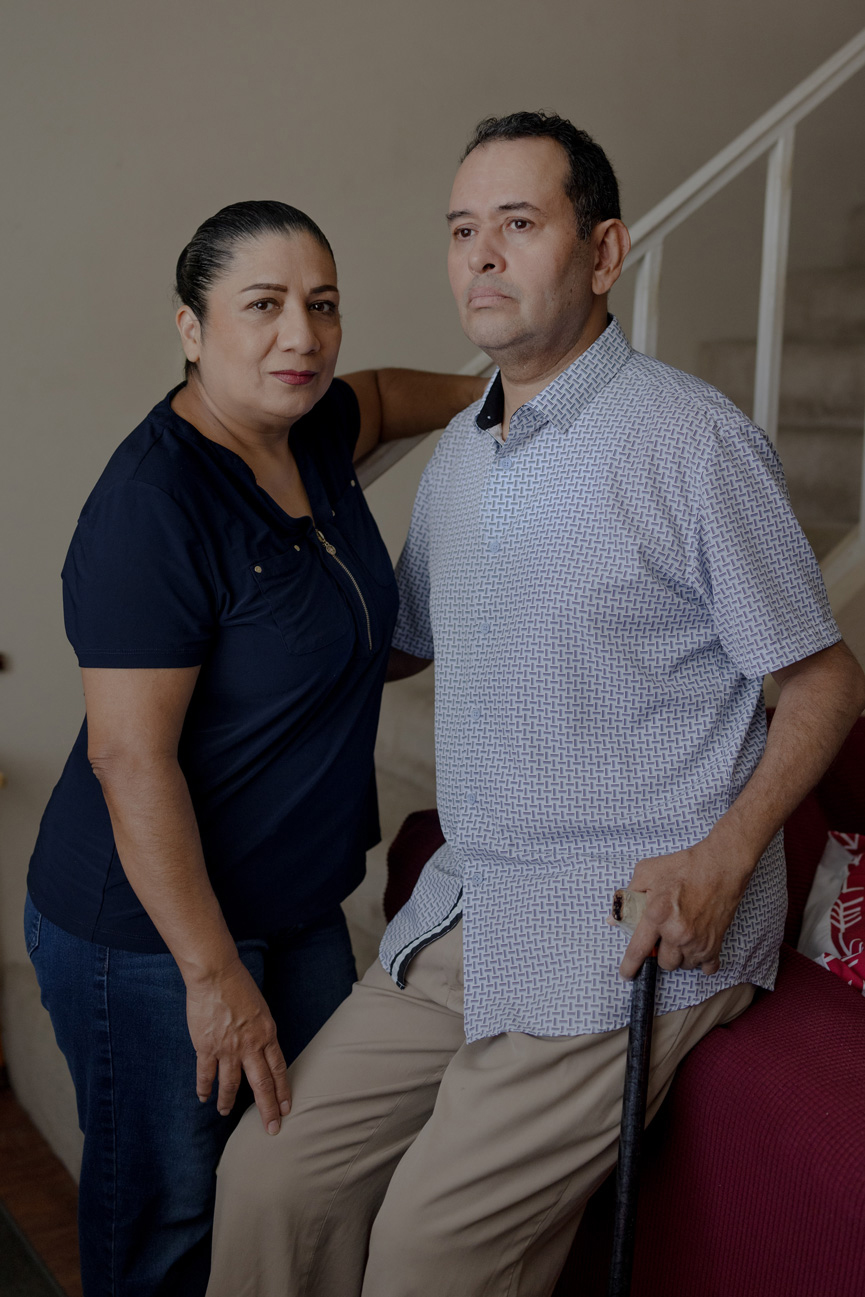

“Adriana has been a pillar for me. She’s always been there in the good times and the bad,” Victor said. “She is my partner for life.”
After nearly two decades together, Victor and Adriana got married in 2014. When Victor became a citizen a year later, it opened up a pathway for Adriana to legalize her status. They applied for a waiver so Adriana could go to Mexico to get her residency, which still hasn’t been approved after four years. But Adriana worries about going to Mexico for the first time in three decades and leaving her husband.
“What if I’m missing something or something doesn’t seem right to them, and they detain me and don’t let me return? Then, what am I going to do?” Adriana asked. “I can’t stay in Mexico. I don’t want to leave him alone.”
When the Keeping Families Together program opened up, the couple was quick to apply. As elections approach, Victor feels he’s voting for both of them. While he agrees with Republicans on some issues, immigration policy has convinced him Democratic nominee Vice President Kamala Harris is his best option.

“Always having so much fear is complicated,” Adriana said. “If it’s already difficult, with Trump it would be worse.”
Impact diluted
Despite decades as Texas residents, the Ortegas and Gavidias’ home state is at the forefront of challenging their pathway to legalization.
The program’s halt underscores how hard it is to make progress on immigration policy when Congress has failed to pass immigration reform in decades. Presidents have taken executive action to circumvent Congress, but this often faces court challenges. Texas has often led the charge to strike down programs for legal migration, including DACA and Deferred Action for Parents of Americans and Lawful Permanent Residents (DAPA), and now Keeping Families Together.
Juan Carlos Cerda, Texas State Director for the American Business Immigration Coalition, said opening a pathway to legalization for Texas residents like Efrain and Adriana would benefit Texas economically and is popular among voters. The state is “wasting the potential economic benefits of allowing people to access work permits, green cards and contribute more fully to the American and Texas economy,” Cerda said.
Immigration advocates and lawyers say they believe the parole in place program is on firm legal footing. Congress has already determined that people like Efrain and Adriana are eligible for a green card. The program simply facilitates the process.
But a win in court is not always the goal.
“They might lose at the end of the game, but they’ve stretched it out so much that the actual impact and the benefit that I could bring to the immigrants has been diluted,” said Joaquin Quero, a lawyer for the Houston-based Gonzalez-Olivieri Immigration Law Firm.
Ultimately, it’s families like the Ortegas and Gavidias who suffer, advocates say.
“It’s frustrating. It leaves these families and these individuals in limbo,” said Elizabeth “Chiqui” Sanchez Kennedy, Executive Director of Galveston-Houston Immigrant Representation Project. “When there’s a new level of uncertainty, it takes an emotional toll on both the individual and the entire family.”
Just a week before the presidential election, the Ortegas welcomed baby Luca, the newest member of their clan. It only further reminded Efrain of the life he has built. He hopes for a Harris administration that will provide a pathway for him and his family, rather than a Trump presidency that threatens to strip it away.
“This is my country. I would never go back. My family’s here,” Efrain said. “I just want this resolved and we’re able to be free.”

