
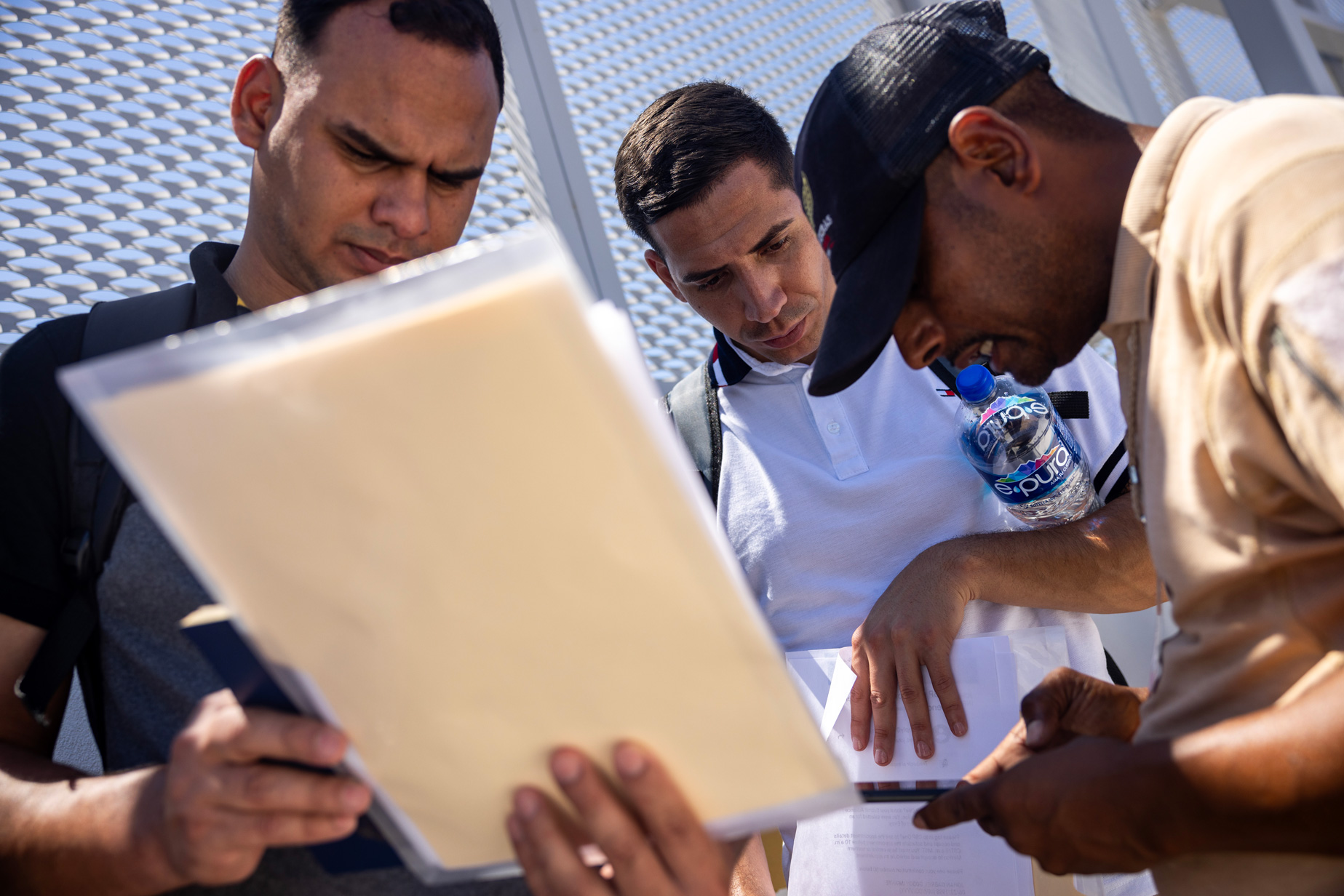

PIEDRAS NEGRAS, Mexico – Antonio and his cousin had traveled 1,600 miles from Honduras, dodging Mexican enforcement and criminal groups, when they faced their biggest obstacle. It was time to mount the train known as “La Bestia” or “The Beast.”
“The train was going fast and it nearly dragged me, and my sneakers broke. But, I held on and I got on,” Antonio said, who asked to be identified by first name for fear of being harmed if he is deported. “But then I turned around.”
His cousin had fallen and was crushed by the train. Antonio is still scarred by the image, but he had to forge on. He’s still figuring out how to break the news to his aunt.
Now he waits at a shelter in Mexican border city Piedras Negras. As he weighs his options to get to Houston, presidential candidates debate the future of border policy that will determine the fate of Antonio and so many others. Republicans say the border is open. Antonio’s experience shows this is not the case.
Monthly border encounters, which is defined as the number of migrants caught by Border Patrol or who have turned themselves in, have dipped to a four-year low, partly due to a policy announced in June to deport most people crossing between ports of entry, according to the most recent Customs and Border Protection data. Since then, encounters have decreased by 55 percent.

This reality contradicts Republican criticism of the Biden-Harris administration’s border policy. Former President Donald Trump has attacked Vice President Kamala Harris for overseeing a “border bloodbath.” Gov. Greg Abbott criticized her as a failed “border czar.” Yet lawyers and immigration advocates say that the Biden administration has restricted the right to asylum to an unprecedented level during a Democratic administration.
“We’re down to the lowest numbers of Border Patrol apprehensions since Trump was president during the pandemic,” said Adam Isacson, the director of defense oversight for the research and advocacy organization Washington Office on Latin America.
“They have done it at the cost of human suffering and human rights abuse, but they have taken this issue away substantially from the Trump campaign.”
Antonio’s options are slim. He could wait for months for an appointment through CBP One, a government smartphone app to seek asylum. But he would risk kidnapping or extortion while waiting in Mexico. He could cross the border and turn himself into Border Patrol. But they would probably deport him, even if he told them he was in danger for participating in a protest movement in Honduras. He could try to evade Border Patrol and sneak into the U.S. undetected. But he would have to fork over thousands to a smuggler, and he could still die in the desert.
This is the reality of seeking asylum under the Biden administration.
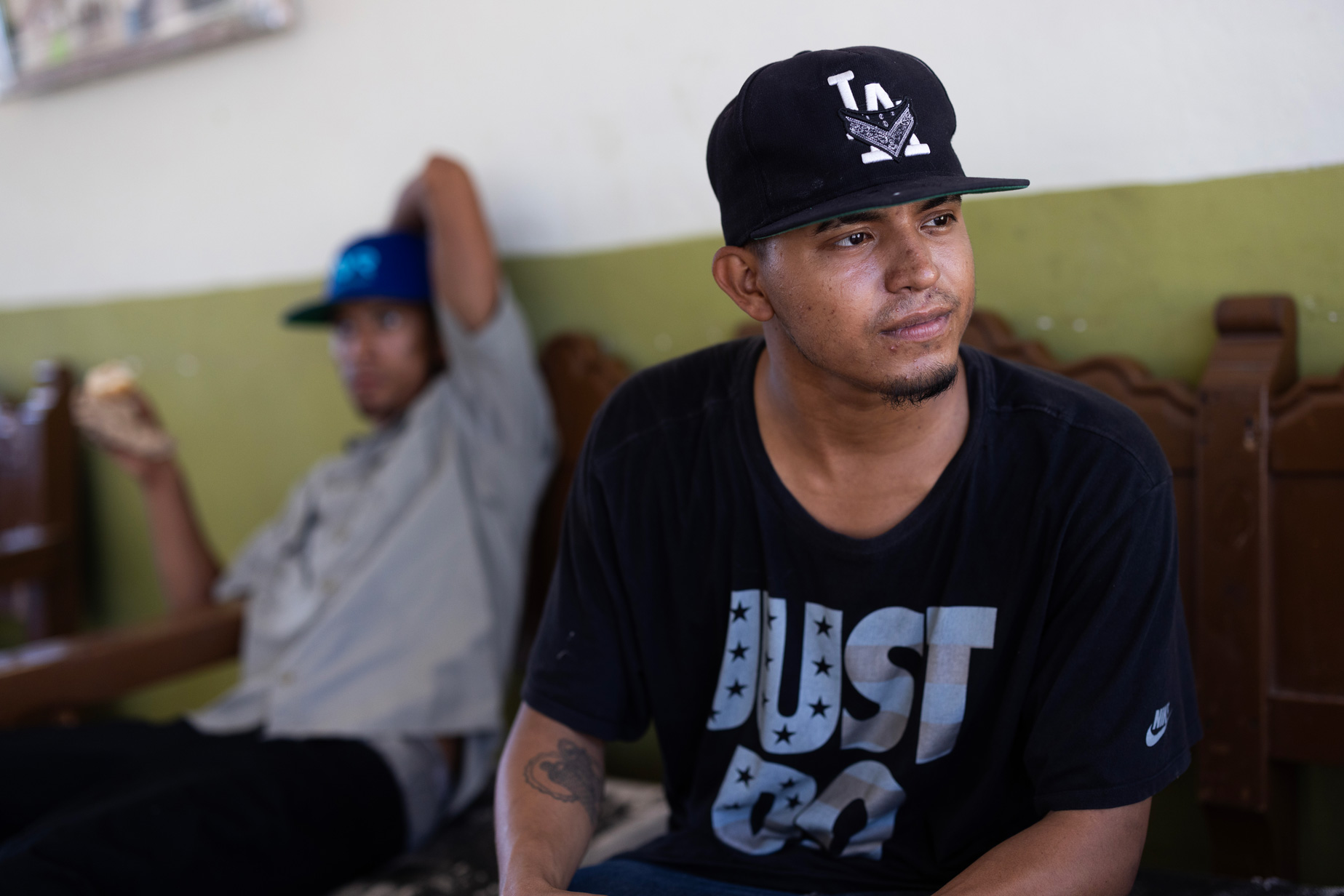
“I’m from Honduras,” said Antonio. “They don’t give us asylum.”
Stuck in Mexico
Immigration enforcement starts thousands of miles south of the U.S.-Mexico border. Deportation flights funded by the U.S. government have started from Panama. Since January, Mexico has increased arrests of migrants traveling on buses and trains.
Even for migrants like Antonio who manage the dangerous mount onto a train, organized crime awaits on board to extort and beat them, said Isacson.
“The train remains the route for the poorest of the poor – the people who can’t scrape together a few thousands dollars to pay a smuggler to get them across Mexico in vehicles,” Isacson said.
Because of these dangers, many migrants wait in Mexico for a CBP One appointment. Since May 2023, migrants requesting an asylum screening at the U.S. border must use the app, with few exceptions. Once approved, they are eligible for a work permit within weeks of arrival in the U.S.
Human rights organizations say the app violates the right to asylum because of long wait times and technical glitches. It also makes migrants into “sitting ducks” for cartels, according to Krystle Cartagena, managing attorney for RAICES Texas, a migrant rights nonprofit. Most of her clients are kidnapped, extorted or abused in Mexico while waiting.

“The CBP One solution is no solution at all,” said Cartagena.
Antonio was skeptical of the CBP One app. He heard that Central Americans rarely scored an appointment.
“It’s God’s decision or luck,” he said.
Asylum access
Those who pass Mexican immigration enforcement and make it to the border are met with another harsh reality. In June, the Biden administration announced that it would turn back most asylum seekers if daily crossings reached 2,500. The policy immediately went into effect, causing chaos and confusion among migrants.
Under the policy, Mexico accepts some returned migrants from countries where deportations are difficult, such as Venezuela, Cuba, Nicaragua and Haiti. Other nationalities are returned to their home countries.
At the shelter in Piedras Negras, most of the 160 migrants there were from Honduras and Venezuela. Some had recently tried to cross the border and seek asylum.
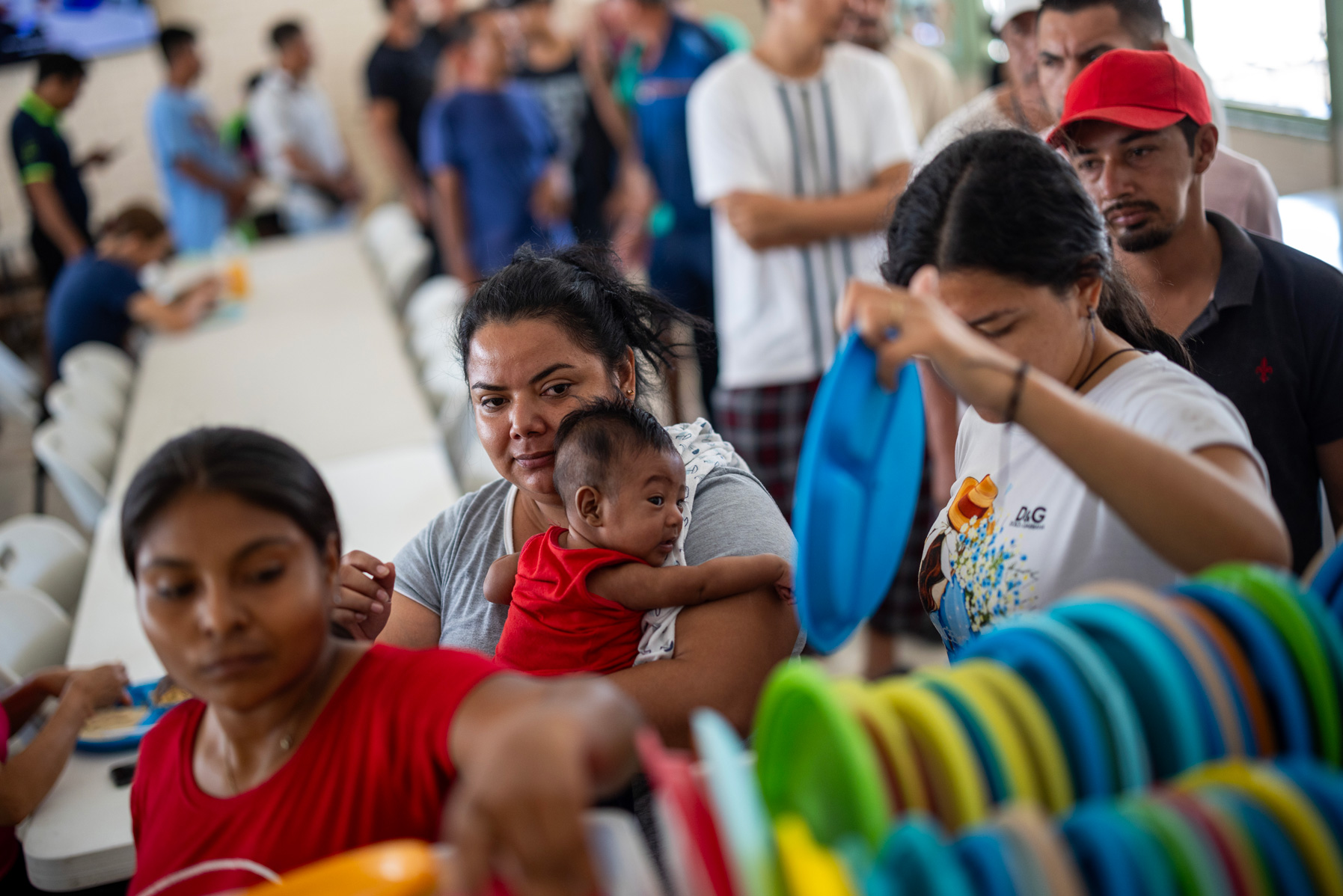
Gabriela Soto holds a baby while in line for breakfast at Casa Del Migrante Frontera Digna, Tuesday, Aug. 20, 2024, in Piedras Negras, Coahuila, Mexico. (Antranik Tavitian / Houston Landing) 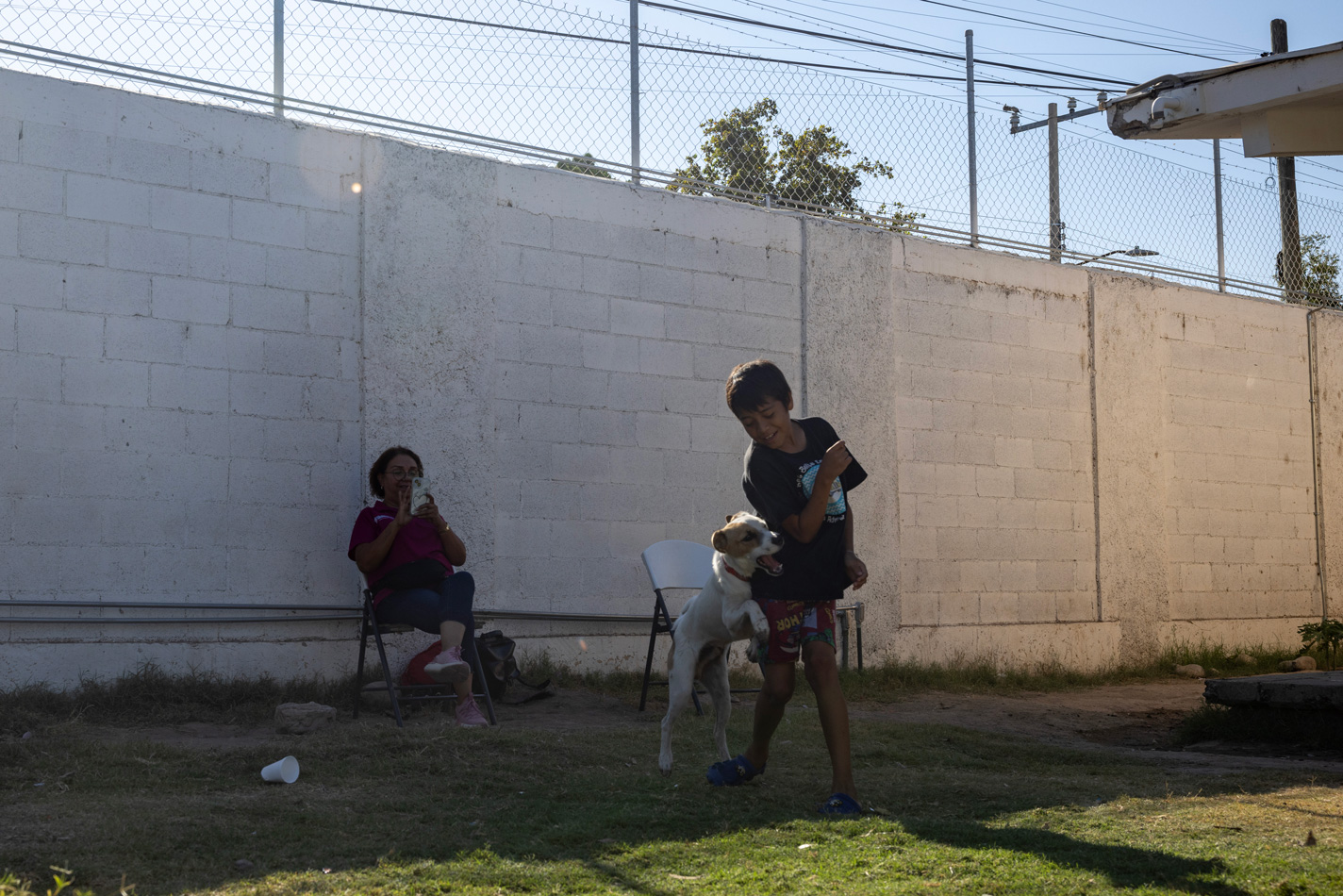
A child plays with a dog at the Casa Del Migrante Frontera Digna, Tuesday, Aug. 20, 2024, in Piedras Negras, Coahuila, Mexico. (Antranik Tavitian / Houston Landing) 
A child’s shoe along the water front of the Rio Grande, Tuesday, Aug. 20, 2024, in Piedras Negras, Coahuila, Mexico. (Antranik Tavitian / Houston Landing) 
A child fishes along the Rio Grande with other morning fisherman, Tuesday, Aug. 20, 2024, in Piedras Negras, Coahuila, Mexico. (Antranik Tavitian / Houston Landing)
Gabriela Soto, 33, left Honduras with her 7-year-old son in March. She worked for a loan shark in Honduras. When her boss had money troubles, a group of men showed up at her house threatening to kill her. They beat her and fired shots outside.
Soto crossed the border in mid-June. She tried to tell the border agents that she was scared to go back to Honduras.
“They didn’t give me a chance to say anything,” Soto said.
María Franco, 23, fled Venezuela in November with her husband and their 2-year-old daughter. Her husband worked in law enforcement, but started being harassed and threatened at work because his parents were involved in organizing against the government of Nicolás Maduro. When he quit, armed government supporters came to the house and beat Franco, demanding information about her husband’s whereabouts.
Once in Mexico, the family spent five months requesting a CBP One appointment. They decided to cross the border and turn themselves in to seek asylum in August. They told officials they were scared, but they were sent back to Mexico.
“They didn’t let anyone enter, not pregnant women, not newborn babies, no one,” Franco said.
This is the norm for asylum seekers who turn themselves over to Border Patrol, according to Cartagena.
“These people are very much afraid of being returned to their home countries,” she said. “They just are being ignored when they say it.”
These policies violate due process and the right to asylum under U.S. and international law, said Crystal Sandoval, director of cross border strategies for El Paso-based nonprofit Las Americas.
“Access to counsel is probably extinct now, especially when we’re seeing the border being pushed to the south of Mexico,” she said.


