

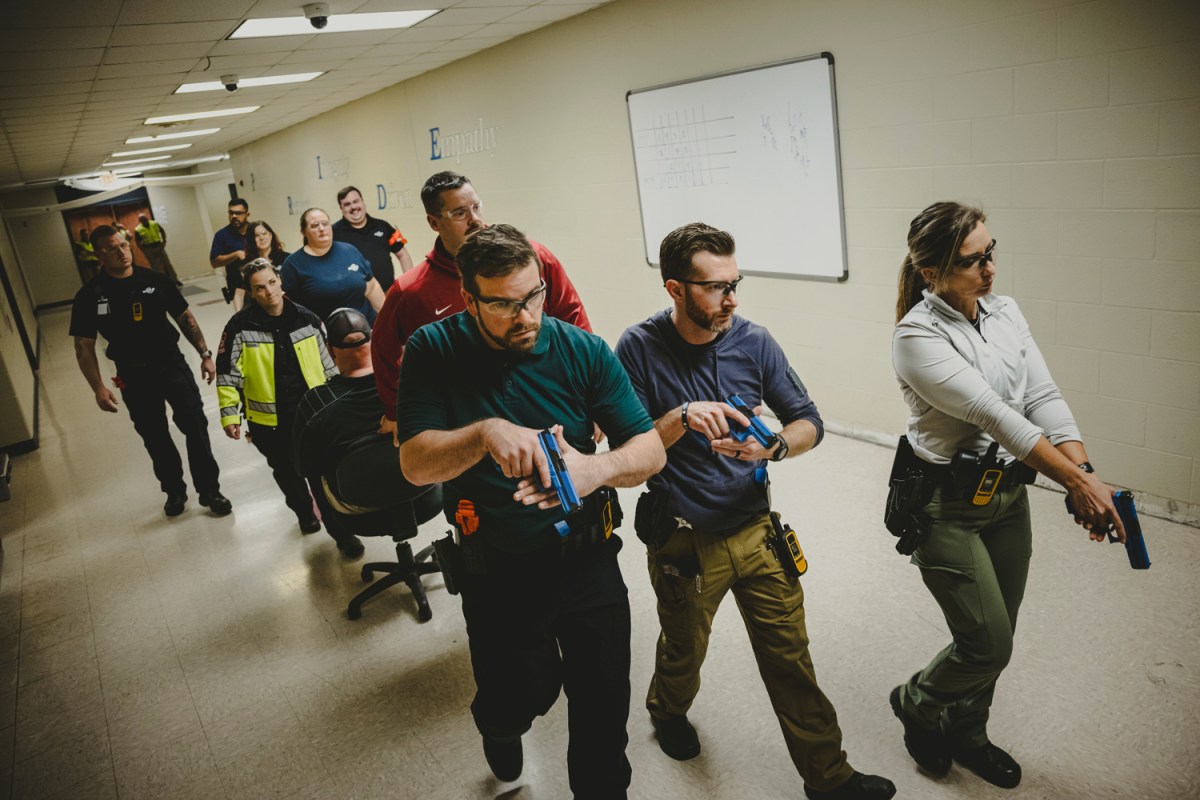
NEW CANEY – Most of the blue stains on the walls of the former Keefer Crossing Middle School are from Blu Tack used to hold up posters. Others are from Simunition, a non-lethal ammunition used by law enforcement for training.
For more than a year, the vacant school building on FM 1485 has been a training ground for law enforcement, emergency services and school district police agencies.
Bureau of Alcohol, Tobacco, Firearms and Explosives agents have used the space to train with Montgomery County bomb squads. Local firefighters have practiced search and rescue missions there. And police officers from as far away as Minnesota have traveled to the facility to learn how to respond to active-shooter situations.
“Things they can’t do somewhere else because they’re afraid to break something, it doesn’t break here. And if it does, it’s easy to fix,” said Jason Millsaps, executive director of Montgomery County’s Office of Homeland Security and Emergency Management.
The building’s use is only set to expand. Come next year, the 200,000-square-foot campus, which New Caney district officials vacated after the 2020-2021 school year, will become a state training facility dedicated specifically to active-shooter preparedness.
Officials say the center is aimed at preventing another Uvalde, where law enforcement officers waited more than an hour to confront and kill the gunman. State Rep. Steve Toth, R-The Woodlands, said it will improve coordination among law enforcement agencies during active-shooter situations.
“In a lot of counties, you’ve got constables, the county sheriff, local city police and ISD police. It’s like, ‘Who’s in charge?’” Toth said.

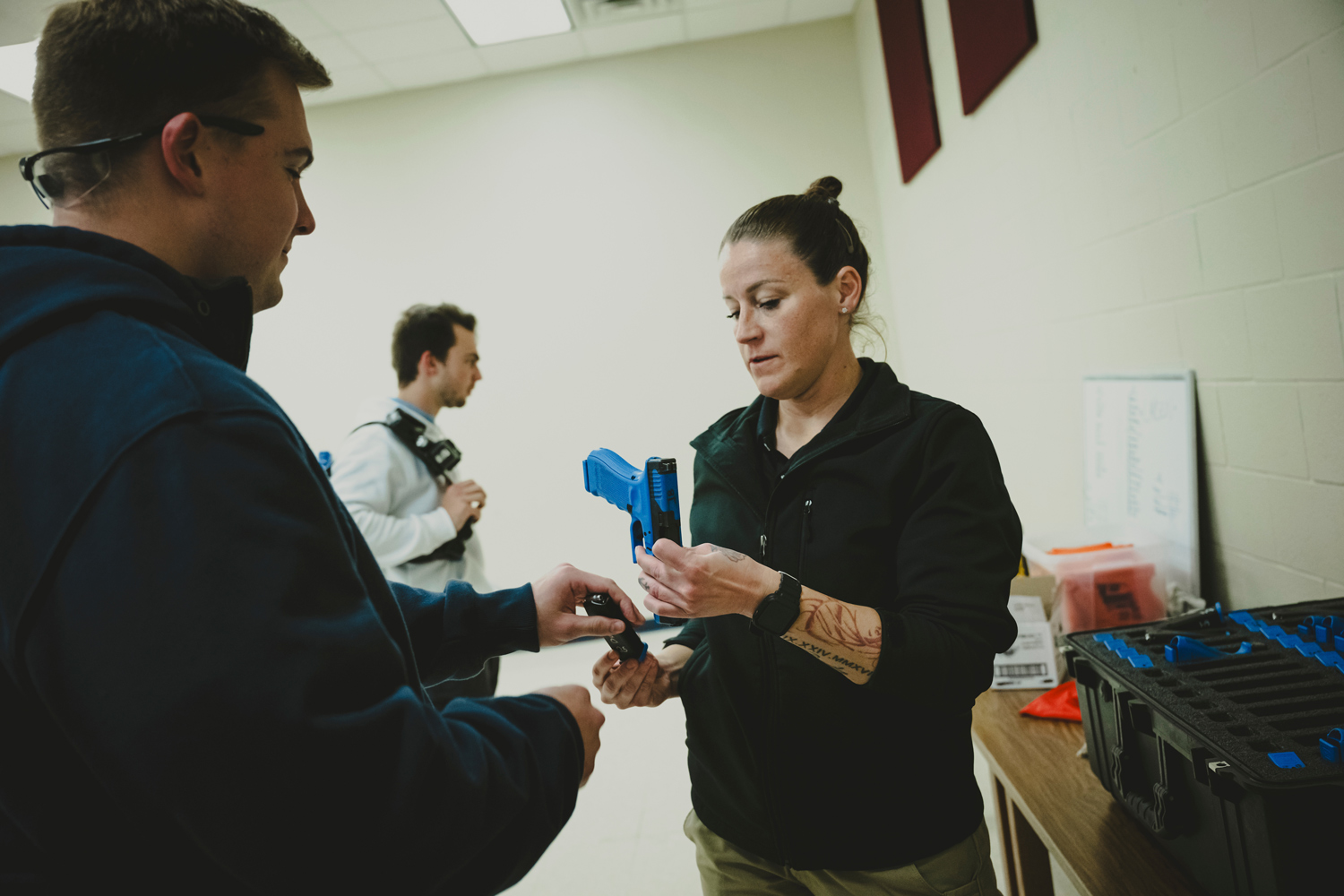
The Special Threat Joint Tactical Training Facility, as it’s being called by the Texas Department of Public Safety and Montgomery County, is scheduled to open sometime next year once construction is complete.
The facility will be used by municipal, county and federal law enforcement agencies, as well as state and federal military forces, according to a contract Montgomery County commissioners approved with DPS in September.
Montgomery County Sheriff’s Office Lt. Keith Funderburk, who oversees training at the facility, said DPS officials are considering putting similar facilities elsewhere in the state. But it depends on the success of Montgomery County’s project.
“We’re under the microscope statewide,” Funderburk said.
“We’re the guinea pigs,” added Millsaps.
Similar to the Tilman Fertitta Family Tactical Training Center used by Houston police, the training center will have mock environments like an outlet mall or motor hotel. The building’s classrooms, many of which are still filled with desks, chairs and shelves, will for the most part go untouched. The same goes for the artwork and murals adorning the walls.
The nearly $24 million project comes after DPS earlier this year scrapped a $1.2 billion proposal to turn its training center north of Austin into an active-shooter training facility. The Williamson County Training Academy is slated to receive a $381.5 million renovation instead.
“As with all projects when training is involved, the goal is to provide the best, most advanced training for our recruits and personnel,” a spokesperson for DPS said in a statement. “A better-trained officer or trooper is always better able to respond to the wide array of situations they are called into, and that means better public safety for the people of Texas. In particular, the new Special Threat Joint Tactical Training Facility will help provide better training in response to active-shooter situations.”


Learning from past mistakes
In the weeks after a gunman in 2018 opened fire at Sante Fe High School about 45 minutes southeast of Houston, killing 10 people, Montgomery County officials began discussing how to bolster their active-shooter preparedness.
What came out of those discussions is what county officials call their “Special Threat Response Plan,” which outlines how first responders should organize themselves in an active-shooter situation, said Millsaps, the county’s emergency management director.
The plan also details how police should respond to an active-shooter situation. One of the failures of Uvalde is that none of the 376 officers who responded to Robb Elementary School on May 24, 2022, took command of the scene, Millsaps said.
“The first guy there, it doesn’t matter if they’re the newest cadet, newest deputy, the first guy there takes command of that scene and starts asking for additional resources and starts looking for the bad guy,” Millsaps said.

Taking command of a scene and immediately searching for the shooter in small teams is one of the tenets of Advanced Law Enforcement Rapid Response Training (ALERRT), created by Texas State University two decades ago.
“It’s flooding the target location as quickly as possible with as many teams as you can to go after the shooter immediately,” said Brian Higgins, a retired Bergen County, New Jersey, police chief and adjunct faculty member at John Jay College of Criminal Justice. “Remember, an active shooter is a person who is actively pulling the trigger to kill somebody. Their mindset is the body count.”
Considered to be the national standard in active-shooter training by the FBI, ALERRT courses will continue to be offered at the Montgomery County facility, which the county sheriff’s office began using in September 2022 after securing a lease.
After Uvalde, Gov. Greg Abbott directed Texas State University to provide ALERRT training to all school districts, and peace officers in Texas are now required to complete 16 hours of ALERRT training every two years.
About 72 percent of the at least 116 law enforcement officers who arrived at Robb Elementary before the gunman was killed had received some form of active shooter training during their careers, including ALERRT, according to an analysis of records obtained by ProPublica, Texas Tribune and FRONTLINE. Officers who received training before the Uvalde shooting had most commonly taken it only once. Only three officers would have met Texas’ new standard for training.
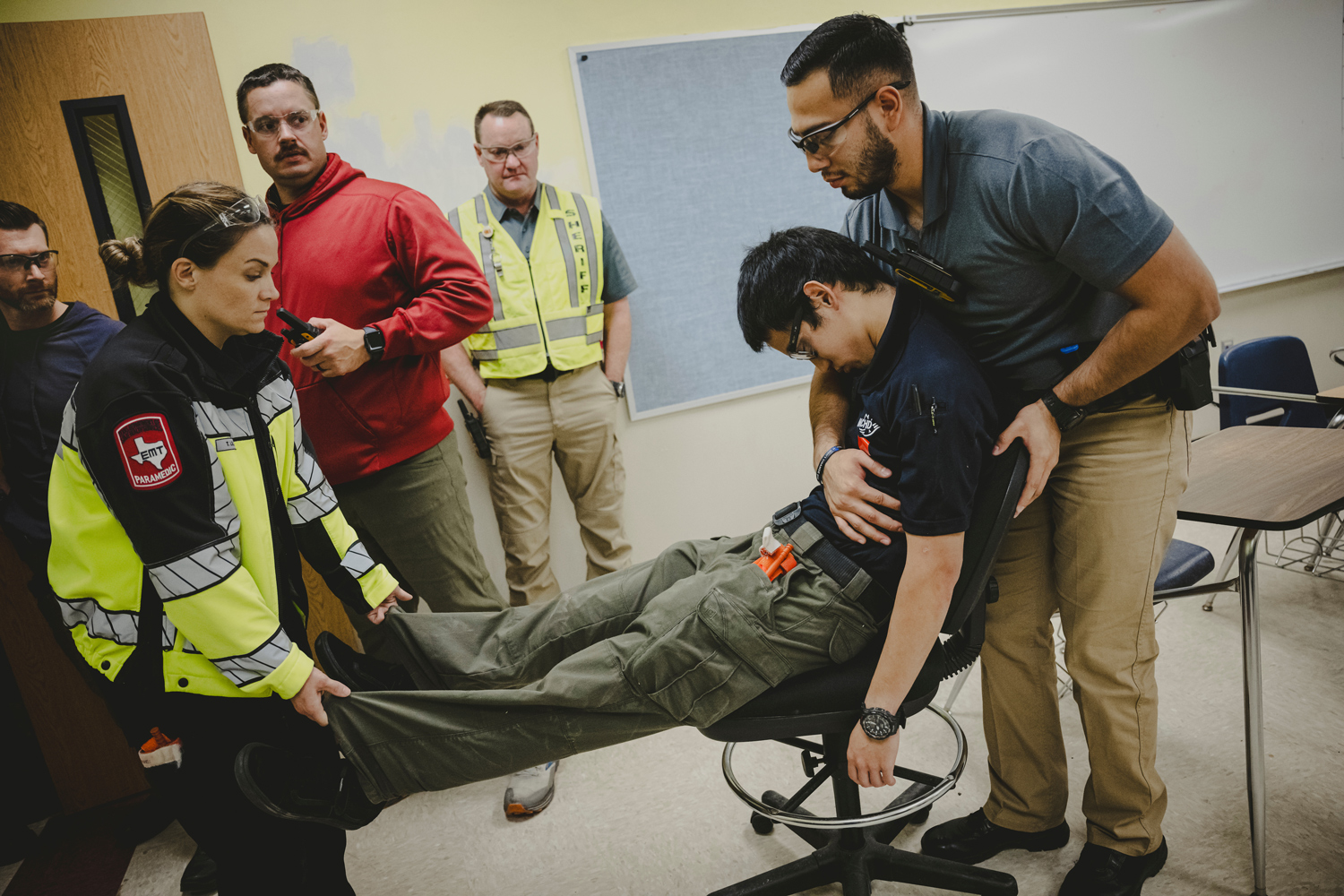
Montgomery County sheriff’s deputies and Montgomery County hospital district EMS personnel practice evacuating victims with gunshot wounds while training together for how to respond to a mass shooting, on November 28, 2023 in New Caney, Texas. (Meridith Kohut for Houston Landing) 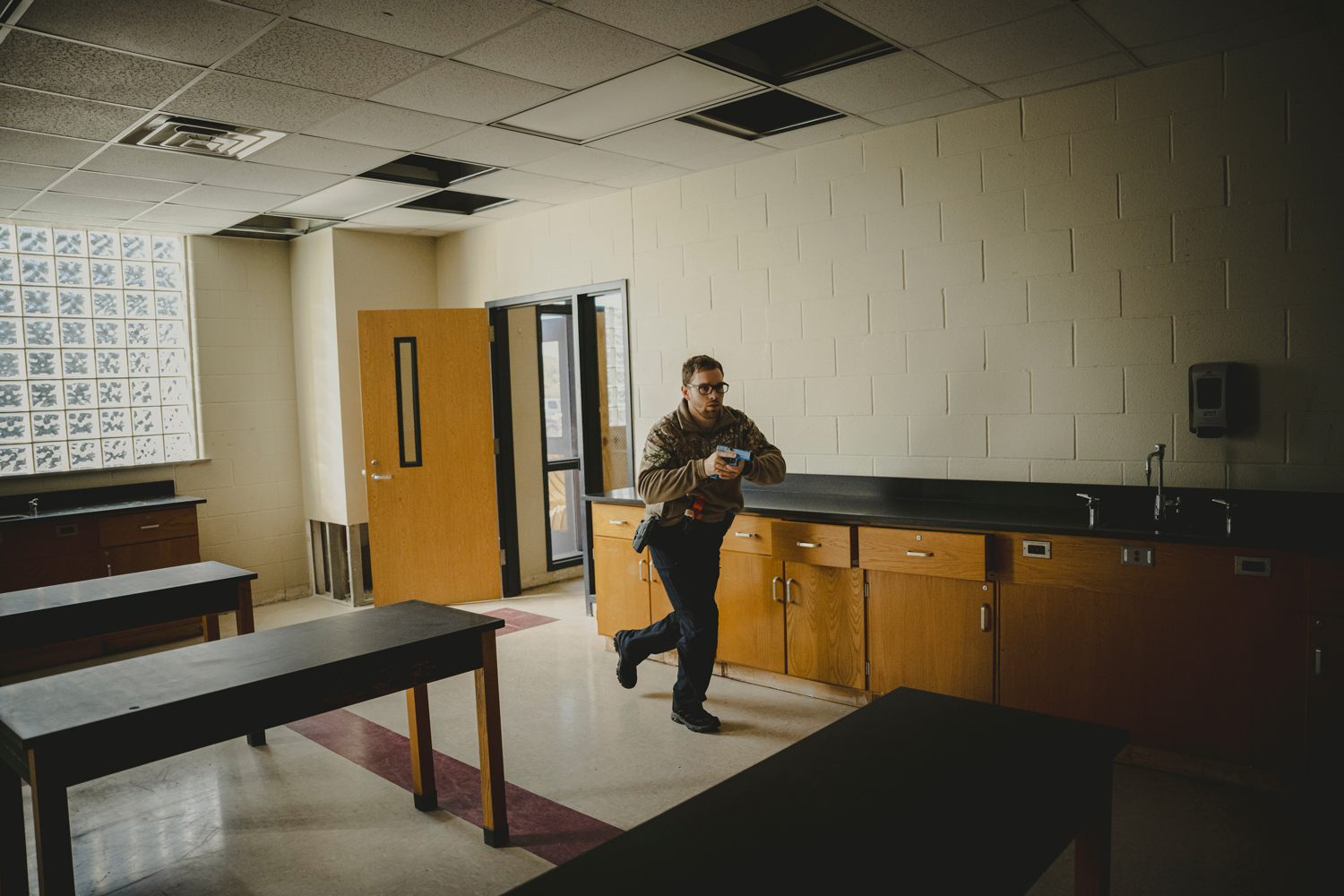
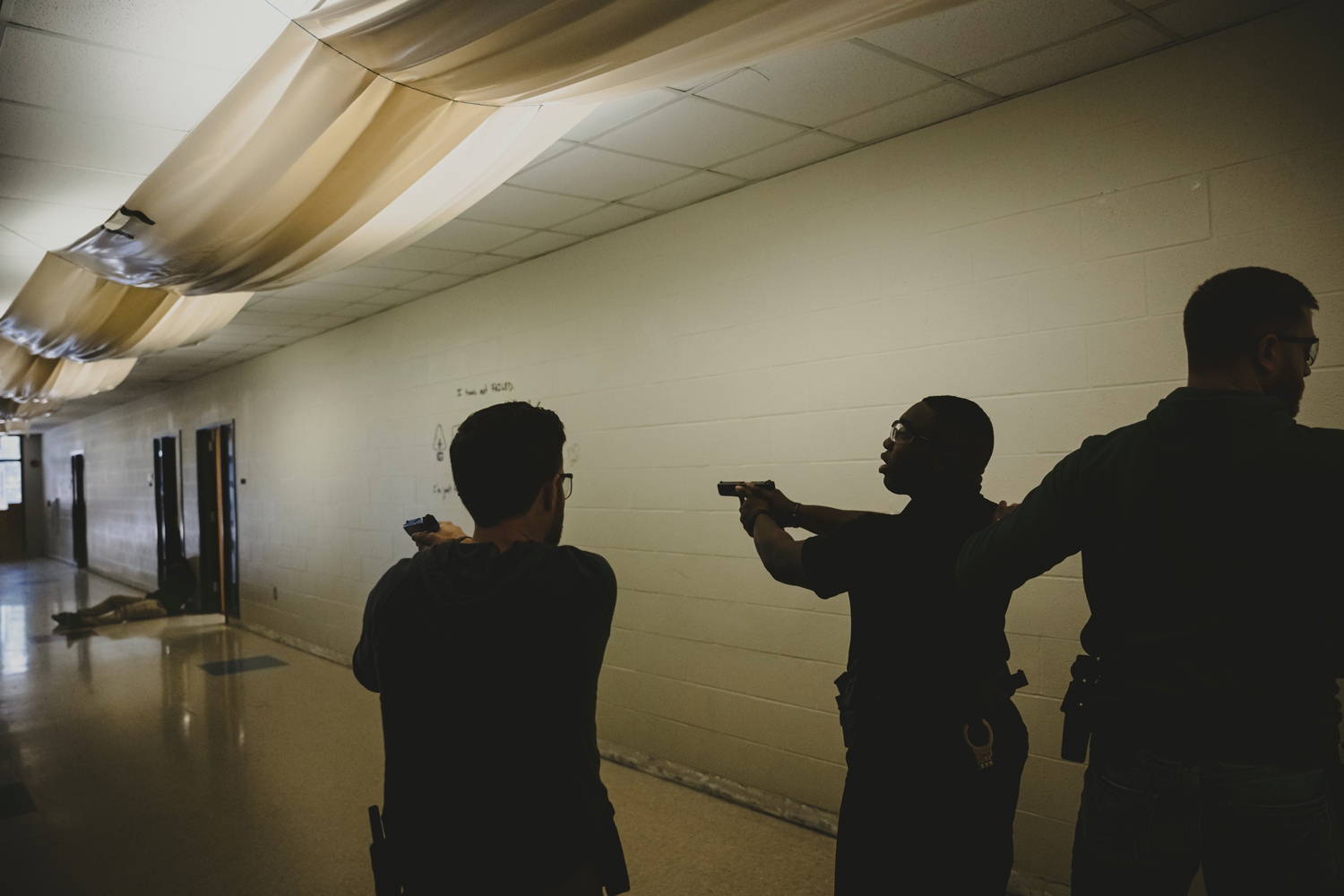
Montgomery County Sheriff’s deputies enter a classroom while training to respond to an active shooter, on Nov. 28 in New Caney. (Meridith Kohut for Houston Landing) 
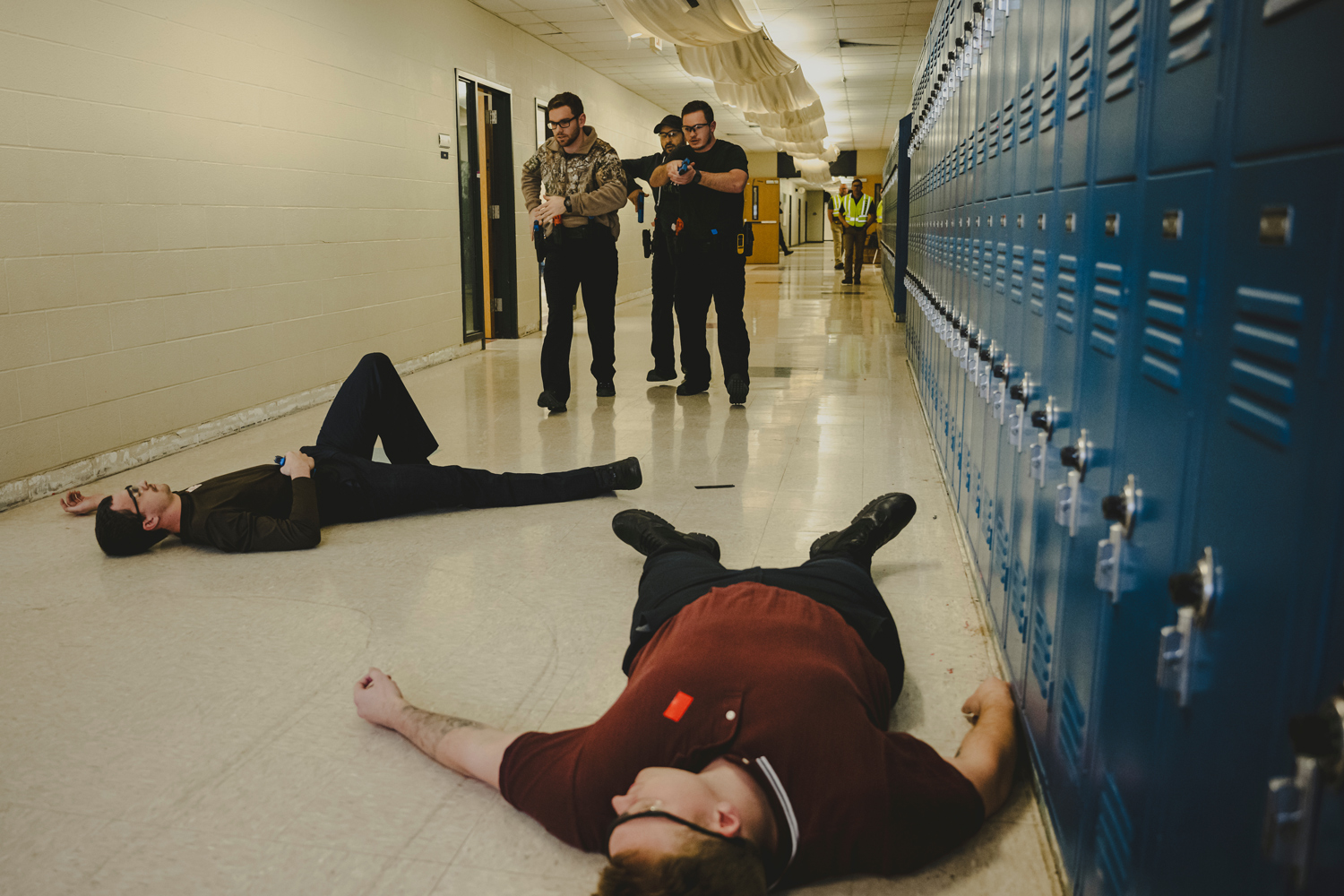
A recently graduated Montgomery County sheriff’s deputy enters a school hallway while training to respond to an active shooter. (Meridith Kohut for Houston Landing) 
Colored marks from Simunition gun projectiles stain a wall in the former New Caney high school building that the Montgomery County Sheriff’s Office is repurposing as a training facility. (Meridith Kohut for Houston Landing) 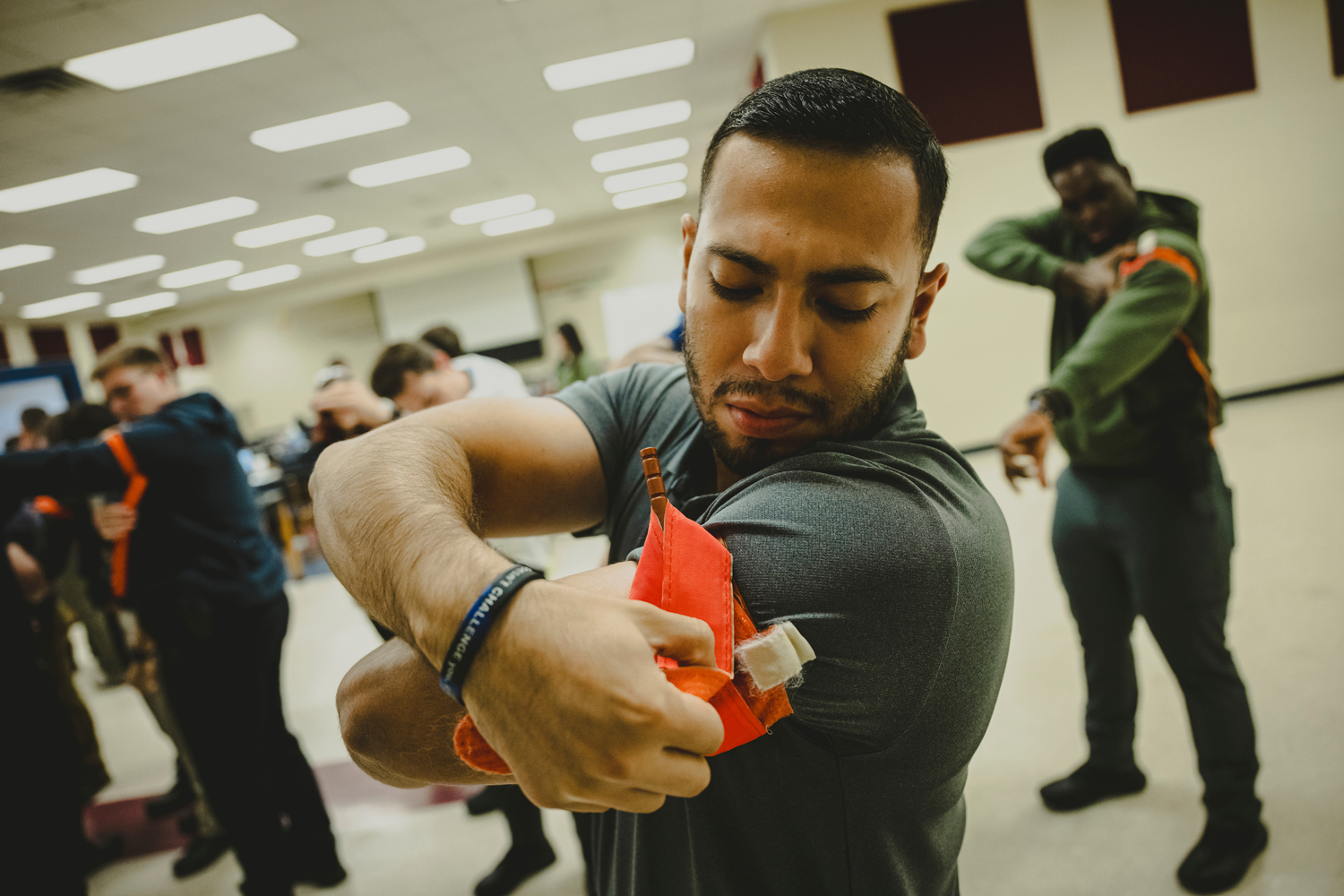
Montgomery County sheriff’s deputies practice applying a tourniquet, during training in New Caney. (Meridith Kohut for Houston Landing) 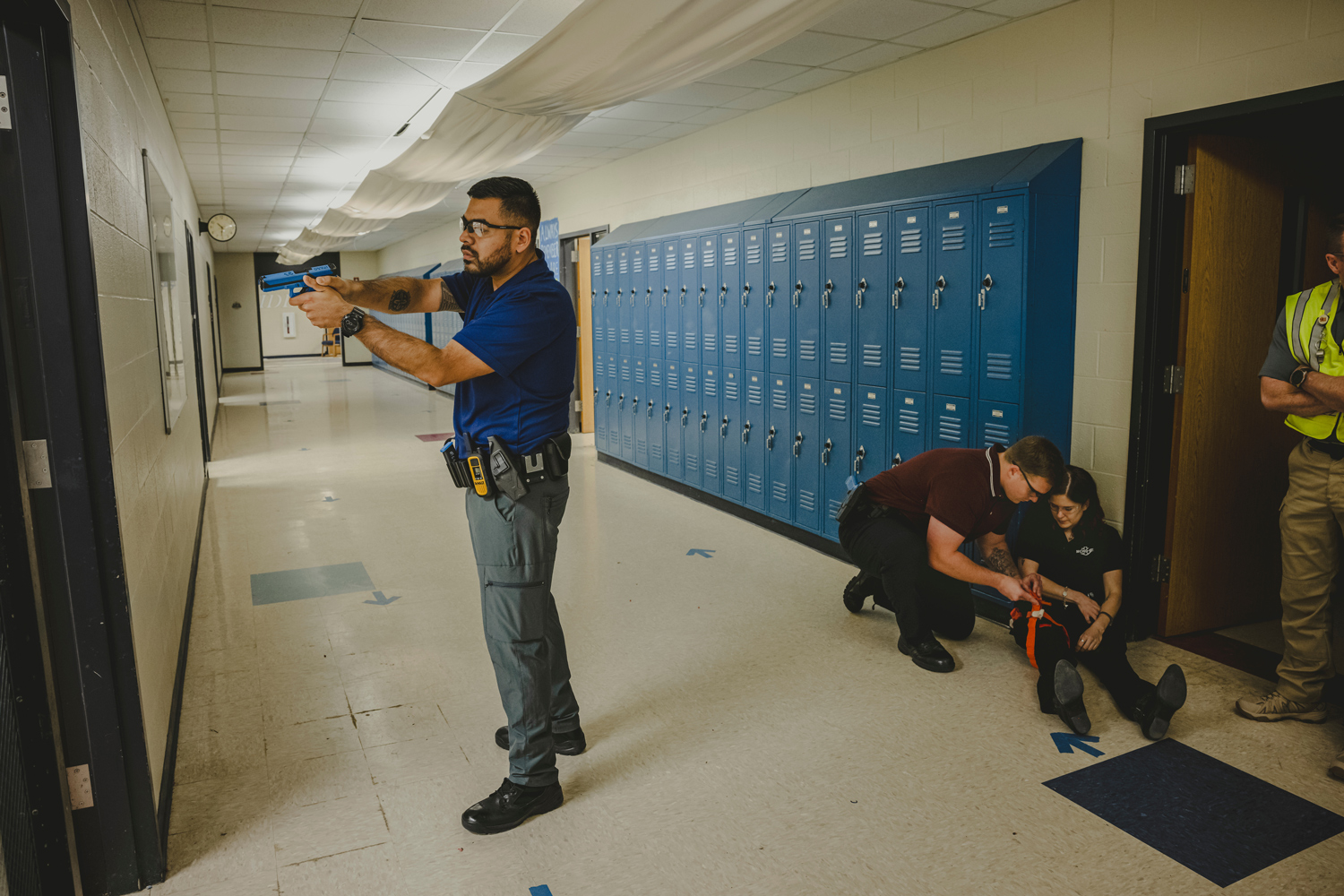
Montgomery County sheriff’s deputies and Montgomery County hospital district EMS personnel practice evacuating victims with gunshot wounds, while training together on how to respond to a mass shooting. (Meridith Kohut for Houston Landing) 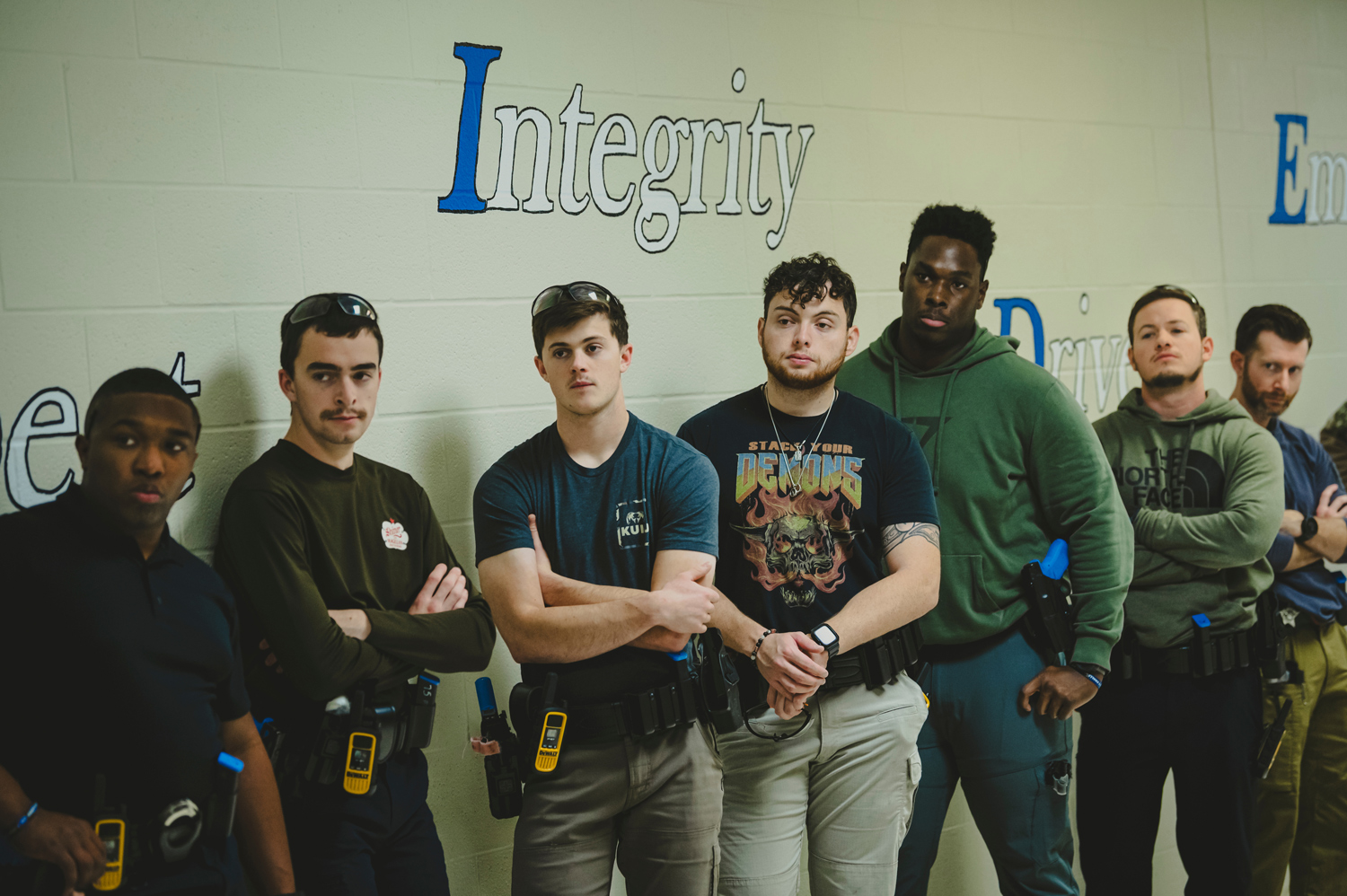
Recently graduated Montgomery County sheriff’s deputies listen as Specialist Landon Slatter debriefs them after a joint training exercise on how police and EMS should work together when responding to a mass shooting in New Caney. He emphasized the need to communicate better, and to prioritize victims with the most severe wounds for evacuation. (Meridith Kohut for Houston Landing)
Higgins said “continuing down this road of identifying a (training) standard for the state of Texas is a great idea.”
“Most of Texas is what we saw in Uvalde,” Higgins said. “A big part of Texas is not the Dallas or the Houstons. It’s the small police departments, sheriff’s departments combined with local municipal jurisdictions that respond.”
On a recent Tuesday, small teams of recently graduated Montgomery County Sheriff’s Office cadets navigated the hallways of the former Keefer Crossing Middle School, moving toward the sound of simulated gunfire.
Along the way, they found mock gunshot victims with injuries of varying severity. Using their radios, the cadets told paramedics waiting outside whom the most injured were and who needed to be evacuated first. They didn’t always get it right.
Not correctly identifying the most injured victims was among the mistakes the cadets made. Instructors also faulted cadets who took charge of scenes but did not maintain consistent communication with the paramedics.
Funderburk said the course being taught that day, Active Attack Integrated Response (AAIR), is designed to improve coordination between law enforcement, fire and emergency medical services during active shooter situations.
Instructors drill students to take charge of a scene and coordinate effectively with paramedics to increase the chances of someone surviving a gunshot wound.
Facility will be open year-round
Police agencies regularly use school buildings on weekends to train for active-shooter situations. But having a dedicated facility, no less a former school building, open year-round will be a game changer, said Toth.
“Cops have families, they want to go on vacation during the summer,” Toth said. “You’ve got to have these training centers that are available seven days a week, morning ‘til evening.”
The training center is currently free to use for agencies, and will remain that way. Officials also plan to construct a 40-bed dormitory for those traveling from outside the county and state.
Millsaps said the biggest obstacles to first responder training are time, money and space. “We’ve eliminated the space and the money for training. Now, it’s just giving up the time to get over here,” he said.
Conroe ISD police Chief Matthew Blakelock said the district provides its own active-shooter training and has its own ALERRT instructors. But he looks forward to utilizing the New Caney facility to train with other agencies.
“We do plan to take advantage of that when there is a multi-jurisdictional training or we’re not able to get a campus facility of our own,” Blakelock said.
The facility’s master plan, which among other things will detail how much repairs and renovation will likely cost, is scheduled to be completed sometime this month. Only then will Millsaps have a better idea of how much money he and other county officials want to spend on buying the building outright.
The building was burglarized before Montgomery County started using it for training, resulting in lasting, permanent damage to its air-conditioning system and electricity. Copper pipes were cut out without water being shut off, flooding areas of the building. The county spent $100,000 on new wiring for electricity and currently spends $23,000 a month on rent.
Millsaps estimates the training facility will need $5.5 million from state lawmakers every two years to keep it open.
Freelance photographer Meridith Kohut contributed to this report.


