

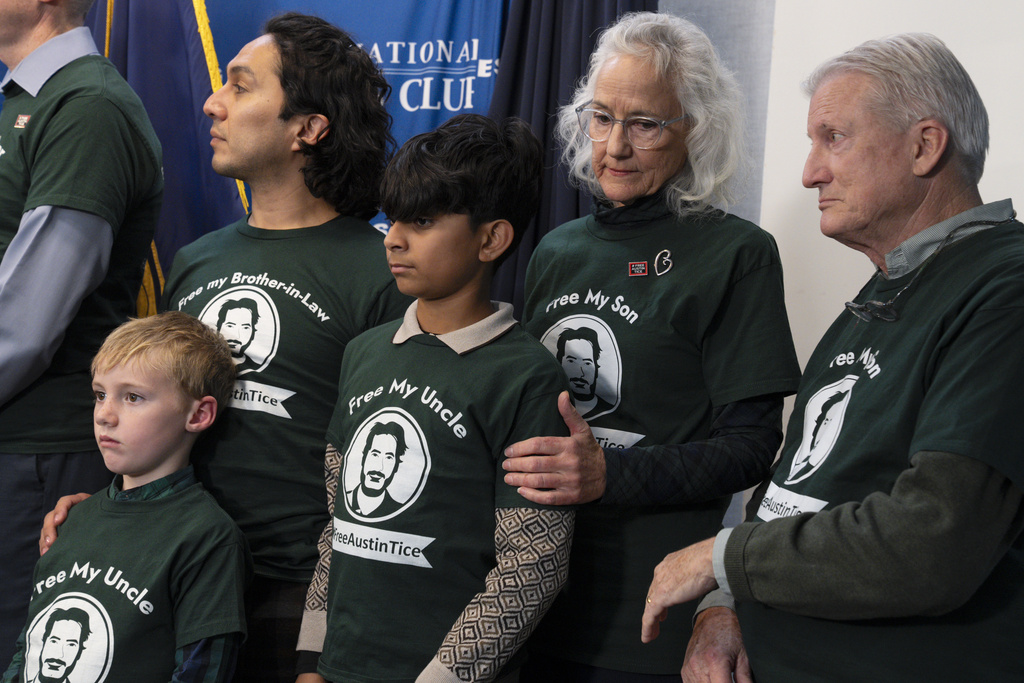
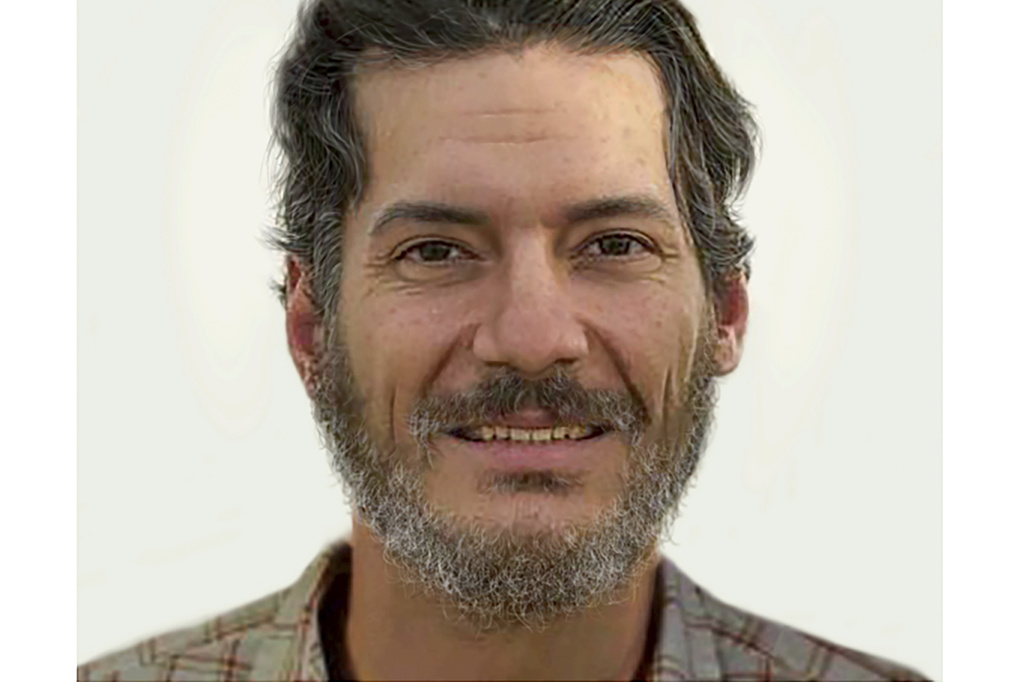
American activists, Western journalists and Syria’s new militant leaders are scouring the nation’s abandoned prisons, poring through abandoned government files and trying to track down former regime leaders in a coordinated hunt to find Austin Tice, a Houston native and American journalist who was abducted in Damascus in 2012 while reporting on the country’s civil war.
Activists trying to find Tice are calling on the United State to send in American forces to help with the complicated search, which so far has yielded no clear signs that he is alive or dead.
“They needed to be here from Day One,” said Nizar Zakka, president of Hostage Aid Worldwide, the Washington-based nonprofit leading search efforts in Syria on behalf of Tice’s family. “All the evidence is being destroyed and scattered.”
While the United States has several hundred soldiers in Syria focused on a limited mission to contain any resurgence of Islamic State violence, the Biden administration has been reluctant to send in specialized teams to help search for Tice and a handful of other Americans who disappeared in the country over the last two decades.
Tice, a Marine Corps veteran, was working in Syria as a freelance journalist for McClatchy Newspapers and The Washington Post when he was abducted on Aug. 13, 2012, two days after his 31st birthday. A few weeks later, a video appeared showing an anguished Tice, bound and blindfolded, being led through some mountains by armed captors. After that, signs of Tice all-but evaporated.
American officials believe Tice was held by the Assad regime, but they long have been frustrated in their efforts to even get the now-deposed Syrian government to admit that they held the American. President Joe Biden said earlier this month that the U.S. is acting on the assumption that Tice is alive, though other U.S. government officials have said they have no firm evidence that is true.
Matthew Miller, the State Department spokesman earlier this week said the White House is considering sending Americans into Damascus, but has yet to do so.
Tice’s mother, Debra, told MSNBC on Tuesday that her efforts to get the United States to do more to find her son consistently have hit brick walls.
“If you are pushing someone to do something they really don’t want to do, you’re not going to get a good job anyway,” she said. “For the people that dove right in and got right in there, those are the people we want to have working for us.”
The search instead has been led by a hodge-podge of activists and journalists who have been looking for any traces of Tice in the Syrian regime’s byzantine network of detention centers.
Hopeful family
The Tice family’s hopes of finding the journalist were buoyed last week when rebel fighters seized control of Damascus and forced President Bashar al-Assad to flee the country, ending more than 50 years of Assad family rule.
Activists and Western journalists – armed with tips about where Tice might have been held – have been searching the once-feared prisons that have been freed of all detainees. Tice was not among those freed in the early days.
False reports circulated late last week on social media that Tice had been found alive turned out to be a case of mistaken identity. Instead, people searching for Tice found a Missouri man, Travis Timmerman, who had been reported missing in June in Hungary.
Mouaz Moustafa, executive director of the Syrian Emergency Task Force, a Washington-based nonprofit that long has opposed the Assad regime, was among the first Westerners to meet Timmerman and see that it wasn’t Tice.
Moustafa, whose uncle is among the estimated 150,000 missing Syrians, has been searching for Tice, his uncle and a handful of other Americans believed held by Assad, including Majd Kamalmaz, a Syrian-American psychotherapist who was taken in 2017 at a Damascus government checkpoint. Earlier this year, U.S. officials told the Kamalmaz family they had solid information the therapist was dead.
In one former military center, Moustafa said he found cramped cells, pools of acid filled with human bones, and shredded government documents.
“The U.S. government should send a team and put these papers together,” he said.
Moustafa and Zakka both said they have found nothing to lead them to Tice.
“We have no signs of Austin in any place so far,” Zakka said.
Zakka expressed some concerns that Israeli airstrikes targeting Syrian military buildings could have hit prisons where Tice was held. Debra Tice wrote a personal appeal to Israel Prime Minister Benjamin Netanyahu, asking him not to target sites where her son might be held.
On Tuesday, Netanyahu responded with a letter assuring her Israel was coordinating with the United States on its targeting.
“The (Israeli military) is not active in the area where Austin may be located,” Netanyahu wrote.
Shifting search
Much of the search has turned to poring over millions of pages of abandoned government files and trying to track down Assad regime officials who know what happened to Tice.
In 2020, then-President Donald Trump sent two top aides to Damascus on a secret mission to try to free Tice. At the time, Roger Carstens, the State Department’s top hostage negotiator, and Kash Patel, who is now President-elect Trump’s choice to head the Federal Bureau of Investigation, met with Ali Mamlouk, Assad’s longtime intelligence chief.
Mamlouk was unwilling to provide the American officials with proof Tice was still alive without major U.S. concessions and discussions ended without any progress, according to people briefed on the secret talks.

The FBI is offering a $1 million reward for information leading to Tice’s safe return, an offer that has generated a variety of false and misleading tips.
In 2023, while working for the Wall Street Journal, this reporter was provided a photograph by an American source purporting to show Tice alive and well in Syria.
The photograph showed a young, smiling, bearded man sitting on a couch sporting tattoos similar to the tribal band and barbed wire band on Tice’s arms. U.S. officials reviewed the photograph and quickly determined that it was not Tice. It appeared that someone had gone to great lengths in an effort to dupe U.S. officials and get some of the reward money.
Last week, a Syrian journalist detained by the Assad regime told Western reporters that he had been in a cell across from Tice as recently as 2022. Some investigators working to find Tice are wary of the former detainee’s story, however, worried he may have mistaken someone else for Tice.
Debra Tice told MSNBC on Tuesday that she and her family saw something in a television report on the prison that made her think that her son had been held there.
“We do think that Austin may have been in that specific cell,” she said. “There was something there that really seemed to us like Austin.”


