Each week, “Pop Quiz” features an interview with a member of Greater Houston’s education community. To suggest someone we should interview with an interesting story to tell, email us at education@houstonlanding.org.
Meet the interviewees
Nearly one-in-five Harris County adults lack a high school diploma, a rate higher than in surrounding regions. But two San Jacinto College administrators are launching a program designed to change that.
In 2023, Texas lawmakers laid the legal framework for community colleges to begin offering a high school diploma to students. Dubbed the “Texas Opportunity High School,” the program allows students to complete a diploma while also studying in a career or technical education program, such as welding or phlebotomy.
Now, San Jacinto College is one of five colleges across the state — and the only in the Houston region — building a version of the program, with plans to roll it out this fall. If it’s successful, community college leaders across the state could replicate it.
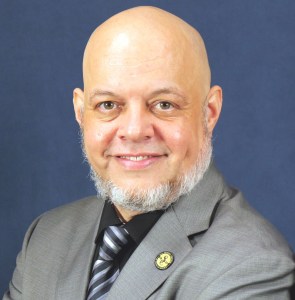
San Jacinto College Vice Chancellor of Strategic Initiatives Allatia Harris (Photo courtesy of San Jacinto College)
San Jacinto leaders hope the program attracts people who have completed some high school and are looking to advance in their careers by finishing a career certification. For the foreseeable future, as the program launches, classes toward the diploma will be free for students.
“It’s designed to help them demonstrate (their skills), acquire the pieces they need and be able to do more,” said San Jacinto Vice Chancellor of Strategic Initiatives Allatia Harris.
“There are a lot of people like that out there, where you don’t know they don’t have a diploma because that usually is a personal embarrassment. So you’re not going to know. And they’re very competent, hardworking people. But different life situations caused them to leave high school before they finished.”
To understand what students can expect and what the impact of the program could be, the Landing spoke with Harris and Dean of Strategic Initiatives Lamar McWaine, who are getting it off the ground.
The following interview has been lightly edited for clarity and length.
Tell me a little bit about adult diplomas and, historically, what level of involvement community colleges have had in getting adults high school diplomas. How new is this?
Harris: When community colleges were formed … one of the missions was adult compensatory education, which is developmental education. But in our adult classes we offer the GED, the “general education development.”
So generally speaking, in terms of the diploma world, the GED has been a way that most community colleges participate. But a diploma actually being conferred by a college is new to Texas. I believe they do it in Kentucky. There are some models out there currently. It’s really sort of a developing concept.
(A GED is a national set of tests that an individual takes to prove they have knowledge equivalent to a high school graduate. A GED has no required coursework and solely requires the student to pass the exams. An adult diploma is awarded to students who complete the classes they did not complete while they were in high school, which typically takes longer than a GED and may include coursework on top of exams.)
How are you appealing the adult diploma to potential students? What is the benefit of coming to San Jac and doing this?
San Jacinto College Dean of Strategic Initiatives Lamar McWaine (Photo courtesy of San Jacinto College)
McWaine: The Opportunity High School Diploma is competency-based, and there’s five “competencies” that individuals will need to pass an assessment for. And they can test out of all of them possibly and earn their high school diploma that way, by having prior things they’ve done in high school. Also, military service will be considered, workplace skills will be considered, so they can get credit for prior learning. There might only be a couple of pieces — or maybe one piece — that they need to take in order to get their high school diploma as well.
So, it’s going to be something that will benefit them at work, if they get to the point where they can’t get a promotion because of a high school diploma, this will help that way.
We also envision that there will be some industry partners that will want to partner with us to have their workers come and do that. They want them to do some specific training for their industry. But this will also be an opportunity where they can earn their high school diploma with us in a short amount of time.
When you say “a short amount of time,” how long is it typically expected that people take to complete their diploma?
McWaine: All five colleges might be doing it differently, but what we are envisioning is about four to six weeks for each module and there’ll be five modules for those competencies. So it depends. A student can do it in four weeks, it might be one, it might be a couple of months. But that’s one of the benefits of this program.
Harris: And some of what we’ve talked about is, someone who may have dropped out of school really, really, really early, who has not gone to high school at all — this may not be the best program for them. They may not have enough, but we’ll test them and look at what credentials they might have that they’re coming with, and see what they might be able to get credit for and how much instruction they might need in order to be successful. It’s possible they’re better in a traditional GED program. … But they may also come in and simply not have graduated for a host of reasons, but they have pieces of the curriculum that they’ve completed already.
For some context, what do you envision the impact of expanding access to the high school diploma college could be?
Harris: Citywide or regionally, I’ve heard the numbers of people who don’t have a high school diploma and it’s really pretty staggering. Just this week, and we’ve barely put things on the website, we’ve had two people call already wanting to know more information — how can they get into this?
There’s more of a demand than we had anticipated. … I’ve talked with some of the employers, and again a couple … were really excited because they do have employees that are good employees. They want to advance and they’re upskilling them, a high school diploma will make a big difference.
Why might someone pursue this diploma instead of a GED?
Harris: The GED is a great way for someone to complete high school, but I think there are people out there who really want a diploma. And people who are already in the workforce that their real goal is to advance their careers in the workforce and continue doing the kinds of things they’re doing, but advance into leadership roles. And this is a great way to achieve that, to complete something that they left — for a myriad of personal reasons, among different people.
So it’s an opportunity to complete something that is really important to most people and at the same time enroll in a program that will advance their skill sets and help them earn family-sustaining wages and then advance in their careers. And it values what they know. Because some of these folks have been out in the job market, in the work world for five years, 10 years or more. They’ve learned a lot. And this diploma values what they’ve learned.
Miranda Dunlap covers Houston’s community colleges in partnership with Open Campus. Despite roughly half of Houston’s higher-education students attending community colleges, there hasn’t been much news covering these systems or students — until now. Her reporting holds institutions accountable, highlights barriers faced by students and helps them navigate their opportunities. Reach Miranda at miranda@houstonlanding.org or on Twitter and Instagram.
Related
Republish our articles for free, online or in print.
Houston Landing's published content is free. Please review our republication guidelines, and give us attribution when you republish our content. Houston Landing photos and graphics are able to be republished within the context of the stories in which they originally appeared.
For photo licensing and republication questions, email photo@houstonlanding.org. Note that individual Houston Landing photographs and graphic illustrations are subject to copyright and cannot be republished without specific written approval from the Houston Landing.
Q&A: Why one Houston-area community college will soon help adults get a high school degree
Miranda Dunlap is a reporter covering Houston Community College, Lone Star College and San Jacinto College. She reports in partnership with Open Campus. Her work focuses on highlighting opportunities available...
More by Miranda Dunlap