

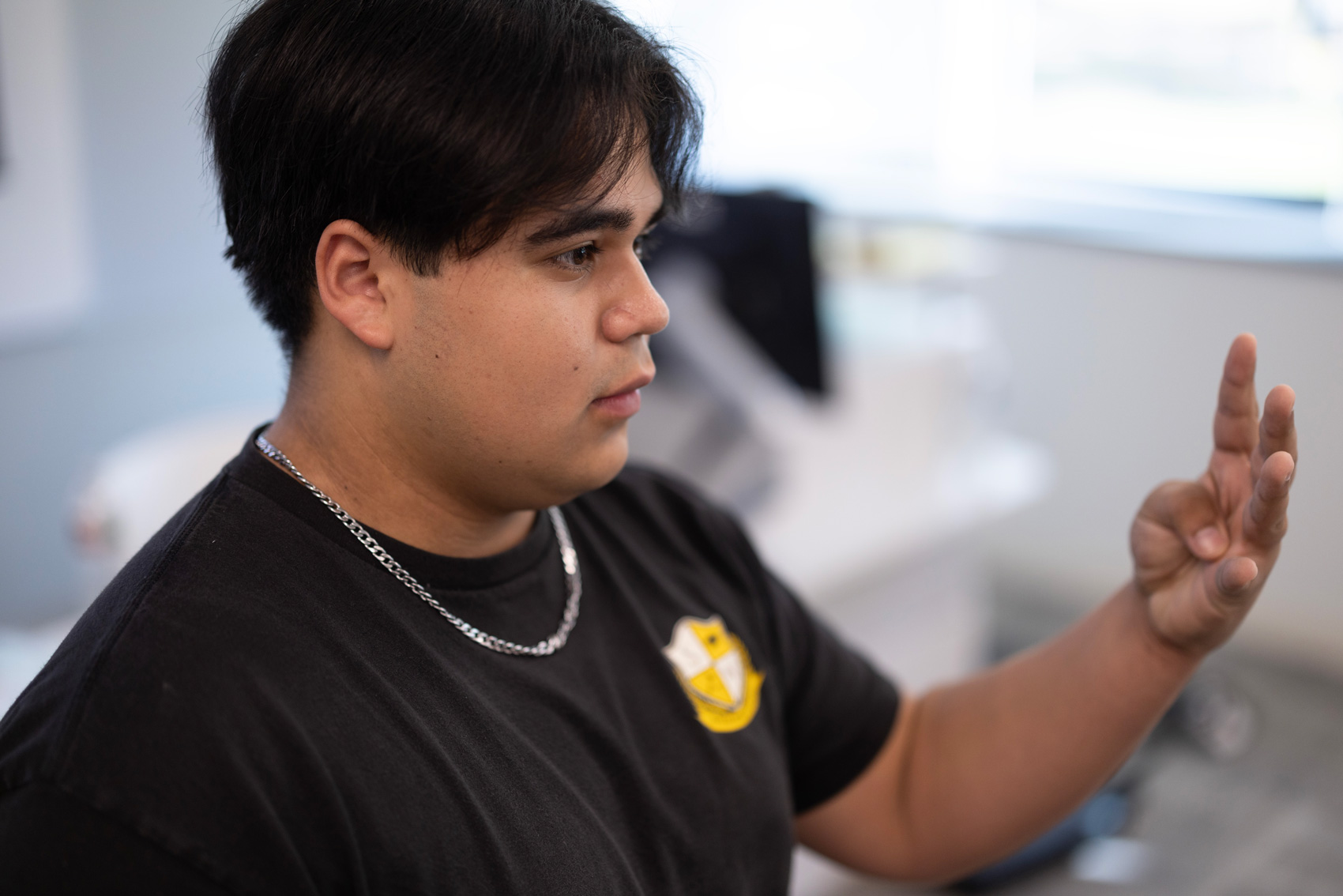
Rather than giving in to the common case of “senioritis,” recent Spring Woods High School graduate Cristopher Melendez spent his senior year determined to make his fellow classmates’ voices heard by Spring Branch ISD leaders.
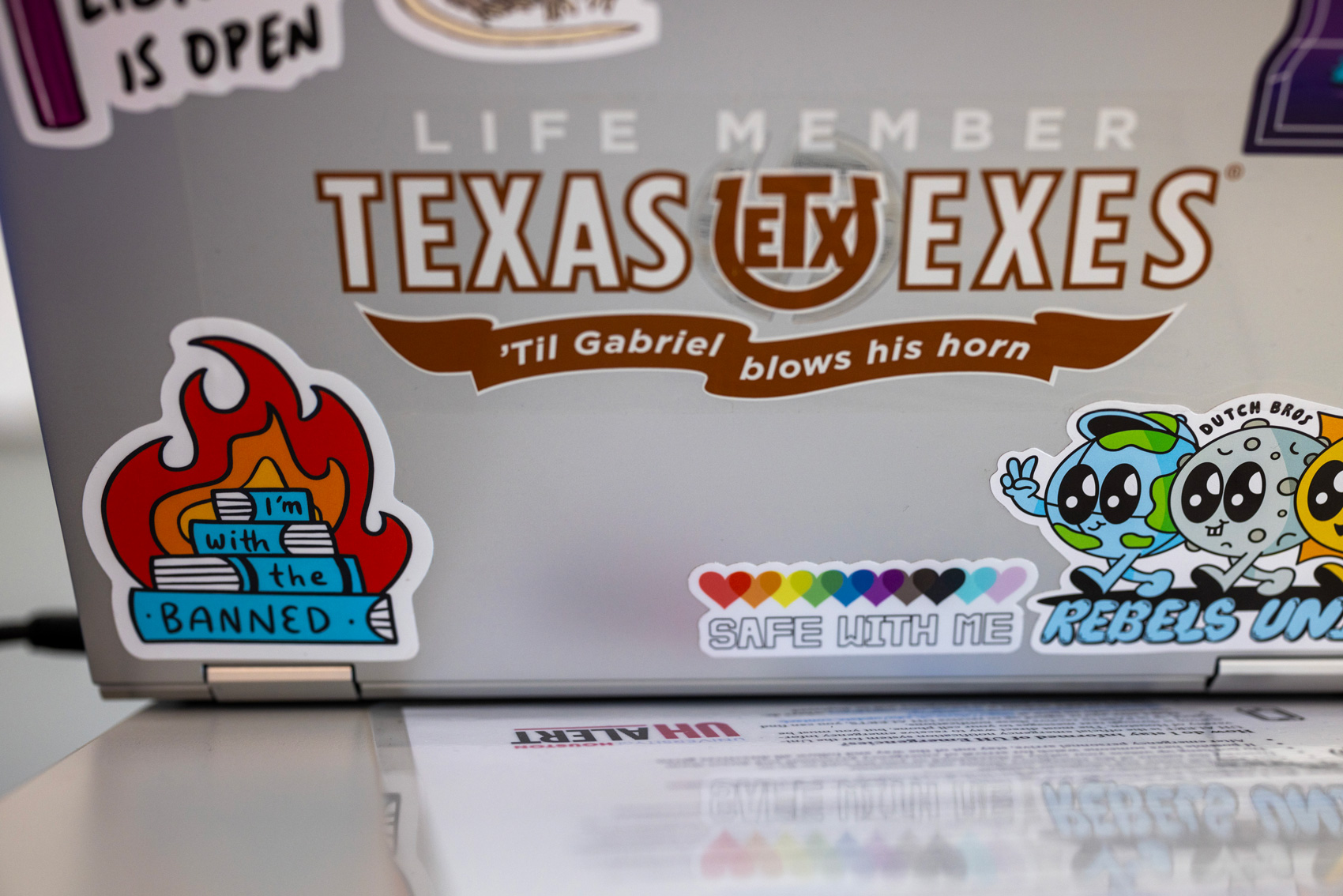
Melendez created a student organization called the American Latino Advocacy Society — abbreviated to ALAS, or “wings” in Spanish — where students worked together to resist controversial changes in the district, often by contacting trustees and attending board meetings. The club soared to roughly 60 members when district leaders eliminated all librarians and unveiled budget cuts that closed programs and schools on the district’s majority-Latino northside.
“I think it was at the perfect time because of everything that was happening just this past year,” Melendez said. “As news came out about the (budget) deficit, it kind of fueled the fire and motivated people to join. … It was crazy motivation.”

Many teenagers probably couldn’t fathom willingly spending an evening at a school board meeting. But for Melendez and an increasing number of students across the Greater Houston area, it’s becoming a routine — and a guaranteed way to make their voices heard.
As conservative school board trustees in several districts — including Conroe, Cy-Fair and Katy ISDs — have introduced policies that rankle the region’s more liberal youth, it has sparked a growing movement of students finding their voice by organizing to push back against their district’s leadership.
Generally, student opposition hasn’t done much to influence trustees’ decision-making. But students take pride in other wins, such as getting more young people involved in local governance and encouraging broader scrutiny of their districts.
Here’s what students across the Houston region told us about finding their voices this year, in their own words. Their responses were lightly edited for clarity and brevity.
‘I had to do something’
Most students were inspired to speak in front of their school board or join an advocacy organization when a particular policy or issue hit close to home.
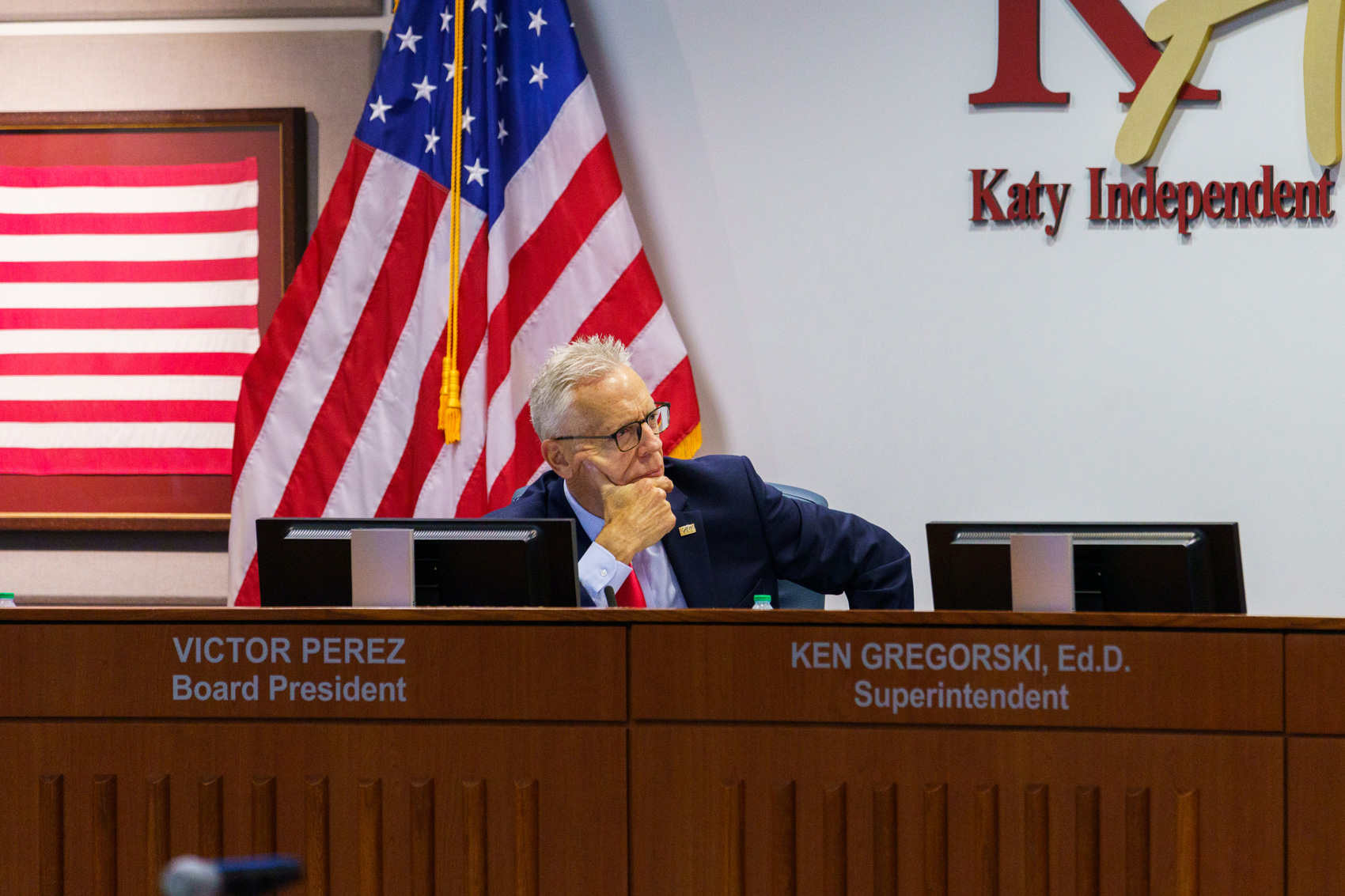
In Katy ISD, students came out in force against the approval of a “gender policy” which requires staff to disclose students’ gender identity to parents, among other protocols.
Heated debates over instituting the same gender identity policy, along with controversial book bans, mobilized students in Conroe ISD.
Students are increasingly speaking out after a Cy-Fair ISD election that flipped the board to a conservative supermajority was followed by librarian cuts and lengthy discussion of whether to allow religious chaplains as counselors in schools.
And in Spring Branch ISD, students pushed back against budget cuts that closed schools in lower-income parts of the district and eliminated all librarians.
Sumya Paruchuri, Conroe ISD’s The Woodlands High School: I just felt like I had to do something.
I’ve seen and heard a lot more students speaking out and advocating for what they want in their schools. … The policies or the things that (school boards) are doing now are just more extreme compared to what they were doing before.
Trey Knight, Cy-Fair ISD’s Hamilton Middle School: I got involved in school board issues after they let go of most of our librarians. My teacher encouraged us to do something about it, and that’s when I came up with the idea to start an Instagram account to speak out about it. It was a way for me to make my voice heard and get others to join me in advocating for change in our district.
Cristopher Melendez, Spring Branch ISD’s Spring Woods High School: The board has just become so politically-driven and with so little representation on our side. … The board does not represent any of my political views whatsoever.
Megan Raz, Katy ISD’s Jordan High School: People that propose stuff like (Katy’s gender policy) do not at all represent the student body. The vast majority of people are very nice and welcoming and accepting, and they want everybody to feel comfortable. So having a school board propose this and be like, “This is what Katy ISD wants, this is what the students want,” is so just not accurate in the slightest.


Fueling the fire
After seven hours of classes, mountains of homework and the general limitations of being a teenager, advocacy looks a little different for students.
Student advocates turn to social media to rally more of their peers behind their causes and encourage their friends to attend school board meetings with them.
Basil Chen, Katy ISD’s Jordan High School: I was pushing a lot of people to go (to meetings). I helped to revise people’s speeches. I was doing literally anything behind the scenes I could. On my Instagram, I make informational posters to post on there.
Trey Knight, Cy-Fair ISD’s Hamilton Middle School: Being involved looks to me like posting information so people can know what is happening. I did a series of (social media) posts where students could speak up about what was happening in the district.
Jarred Burton, Katy ISD’s Tompkins High School: We made a post to our (Sexuality and Gender Alliance club) account that gives a tutorial on how to sign up to speak for a board meeting. It was just too confusing for a lot of people, and it is probably intentionally that way, but it’s just difficult to figure out the basics.
Once the SB 763 with the chaplains came around, we also put out some infographics to get people updated, which led to a handful of people from our GSA that spoke out at the board meeting against chaplains on the day that they were going to talk about whether or not to pass it.

related to education
‘This school district has failed him’: Trans Katy teen drops out after gender policy passes
by Miranda Dunlap / Staff Writer
Senate Bill 763 gave schools the ability to hire religious chaplains as school counselors, and required school boards to vote on whether they’d allow this in their schools.
This controversial issue drew Langham Creek High School freshman Olivia Penrod to attend a board meeting for the first time — in Cy-Fair ISD, trustees had lengthy discussions about the issue over multiple meetings, with some trustees more eager to approve the measure.
Olivia Penrod, Cy-Fair ISD’s Langham Creek High School: When they were talking about (hiring chaplains), that was the first time I actually spoke, because my counselor has done a lot for me recently. And I feel like if she weren’t in that position, I don’t know where I would have been.
When I told my friend about it, she was like, “Where can I sign up to speak? I want to speak about this. I hate this.” … They were excited to talk about it, but they didn’t know where to go. That’s the main issue with most students in high school … None of them even knew that there was a school board or school board meetings.
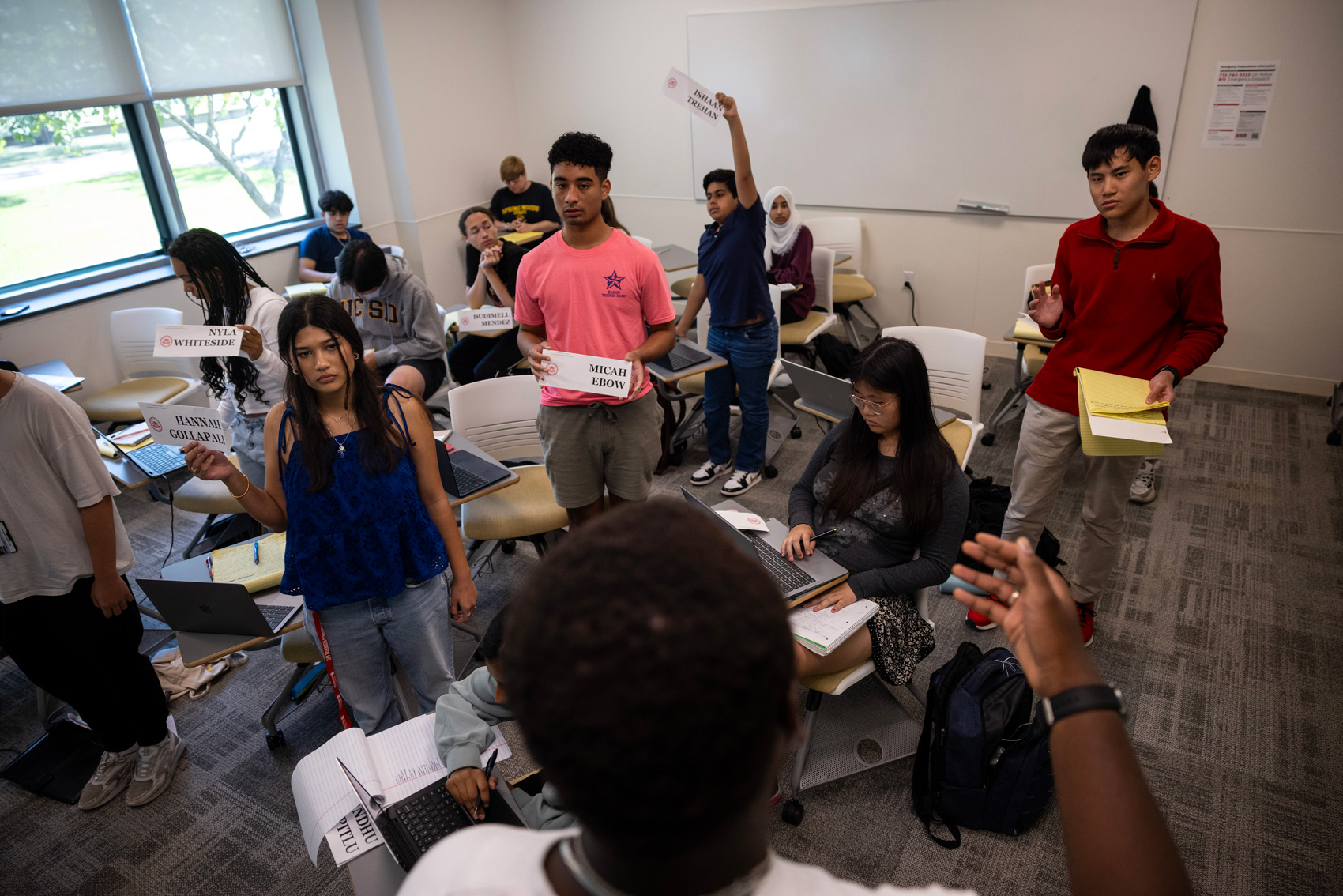
This year, over 80 students across the region took part in the student advocacy organization Students Engaged in Advancing Texas, which aims to get more students involved in policymaking. Members often coordinate to push back against school board policies they oppose — with students sometimes traveling to other districts to speak out about issues.
The Woodlands High School senior Sumya Paruchuri joined SEAT when Conroe trustees began discussing enacting a gender policy just like Katy’s. They spoke against the proposal during public comment at the next board meeting.
related to education
Katy ISD board, undeterred by backlash, passes gender identity, student bathroom policy
by Miranda Dunlap / Staff Writer
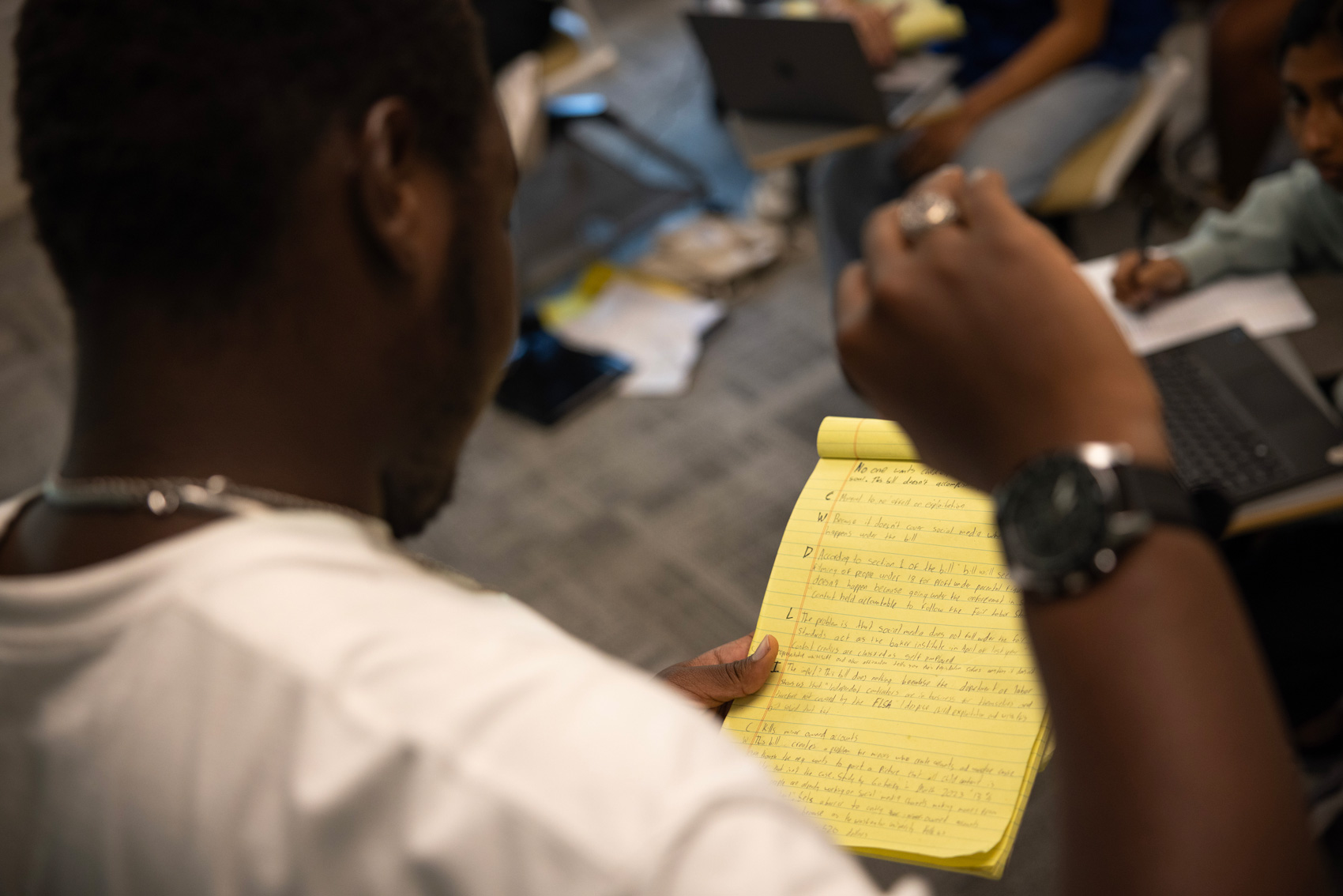
Sumya Paruchuri, Conroe ISD’s The Woodlands High School: I was terrified. I was so incredibly nervous, but … I was like, “There’s no way I’m not going to do this,” because it’s an issue that is personal to me.
I did quite a bit of research, and then I wrote a speech. And then I sent it to a few of my friends to proofread it, so I didn’t sound like an idiot.
Cristopher Melendez, Spring Branch ISD’s Spring Woods High School: We would contact board members personally within our (ALAS club) meetings, and try to get them involved. Try and make sure that it’s not as if it’s just, “Oh, we’re out here protesting and hating on you,” but we’re trying to get you involved in the solution, not trying to isolate you from it.
I tried to emphasize keeping us informed and not letting board members try to deflect and talk down on us, because that’s what a lot of people like to do whenever you’re in politics. Like, “Oh, you’re the voter. You don’t know how hard it is.” … I would always inform our students on what’s going on, so they could snap and be like, “Yes, I do.”

‘Doesn’t really change too much’
Despite their efforts, students generally have not had much success in swaying their school board members.
Sumya Paruchuri, Conroe ISD’s The Woodlands High School: Most of the time, they go in knowing what they want to do and speaking doesn’t really change too much.
Basil Chen, Katy ISD’s Jordan High School: Policymakers who want to make these decisions, they’re going to make it regardless of what kids think or not, because they already assume that they know what’s best for us.
They already assume that we’re just kids, we don’t know what we’re talking about.
Cristopher Melendez, Spring Branch ISD’s Spring Woods High School: No matter how much outcry, no matter how many people said something, (their decisions) became final. … I think they sympathize with us. So it’s like, sure, they heard us. Sort of. They tried to understand our feelings, but that didn’t change the way that they went about their policymaking.
Though they often expect their words to fall on deaf ears, students believe it’s still important to keep speaking up.
Jarred Burton, Katy ISD’s Tompkins High School: When you speak at a board meeting, you’re not just speaking to board members. You’re speaking to the community. … You’re not just speaking to the people in power, because they don’t get there by coincidence. There’s people that vote to put them there.
Some students have seen larger successes by persisting even after school boards make choices that they worked to oppose.
Student advocates’ biggest success this past school year likely came from SEAT members filing a federal complaint to the Office of Civil Rights, arguing Katy’s hotly debated gender policy discriminated against students on the basis of sex.
Jarred Burton, Katy ISD’s Tompkins High School: Back in May, we got the news that the Department of Education was officially opening a federal investigation into the district for Title IX violations. So that does not mean that we’re going to get the gender policy repealed guaranteed, but hopefully there’s at least something that will happen that will lessen the blow of the policy or do something to prevent the district from further discriminating against queer people.
Their advocacy has had impacts beyond the boardroom. For some, it’s finding community in like-minded peers. For others, it’s discovering their path forward after high school.
Trey Knight, Cy-Fair ISD’s Hamilton Middle School: I feel like I’ve reached so many students who don’t know what is happening next year and in the future.
Megan Raz, Katy ISD’s Jordan High School: I never thought I was going to stay in-state (for college). But I’m excited to stay in Texas because I get to continue with this advocacy and work on making Texas a more inclusive and safe place.
More kids are finding ways to get involved … This network has been built of wanting to fight back and make our voices heard and make school just a more inclusive and safe, accepting place for everybody.
Correction, July 30: An earlier version of this story contained an incorrect spelling of Cristopher Melendez’s name.


