


On May 16, Elmer Capriel noticed a tree in his yard swaying more than usual when the derecho, or windstorm, surprised the Houston area with winds up to 100 mph. He thought nothing of it at the time.
Less than two months later, that same tree toppled over and landed on his house when Hurricane Beryl hit on July 8.
“I never imagined it would fall,” Capriel said in Spanish.
Capriel is one of millions of Houstonians who were impacted by Hurricane Beryl in one form or another. Hurricane Beryl left nearly 2 million without power and at least 13 dead after making landfall in Matagorda Bay. In certain areas, wind gusts were as high as 107 mph, resulting in fallen trees and powerlines across the region.
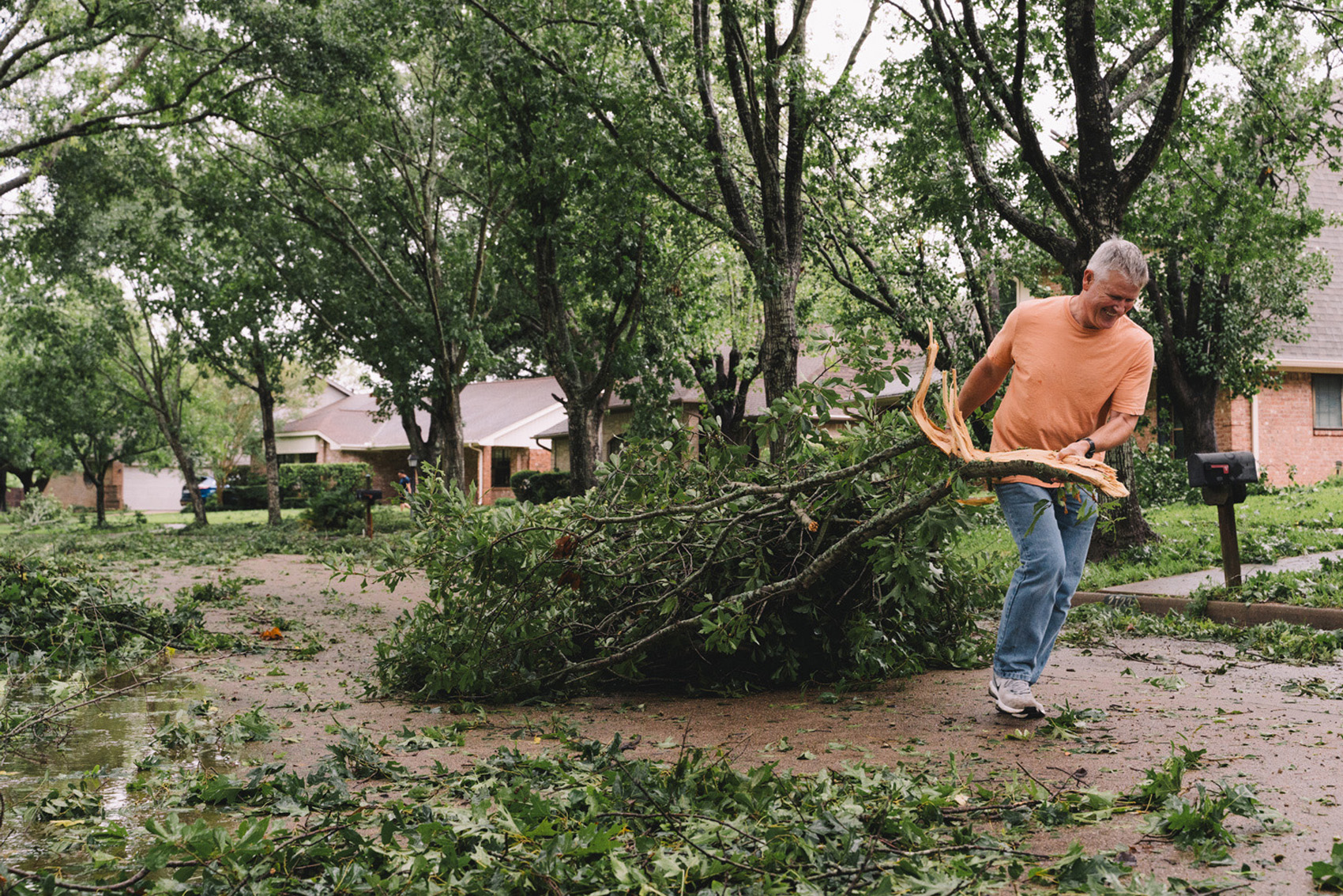
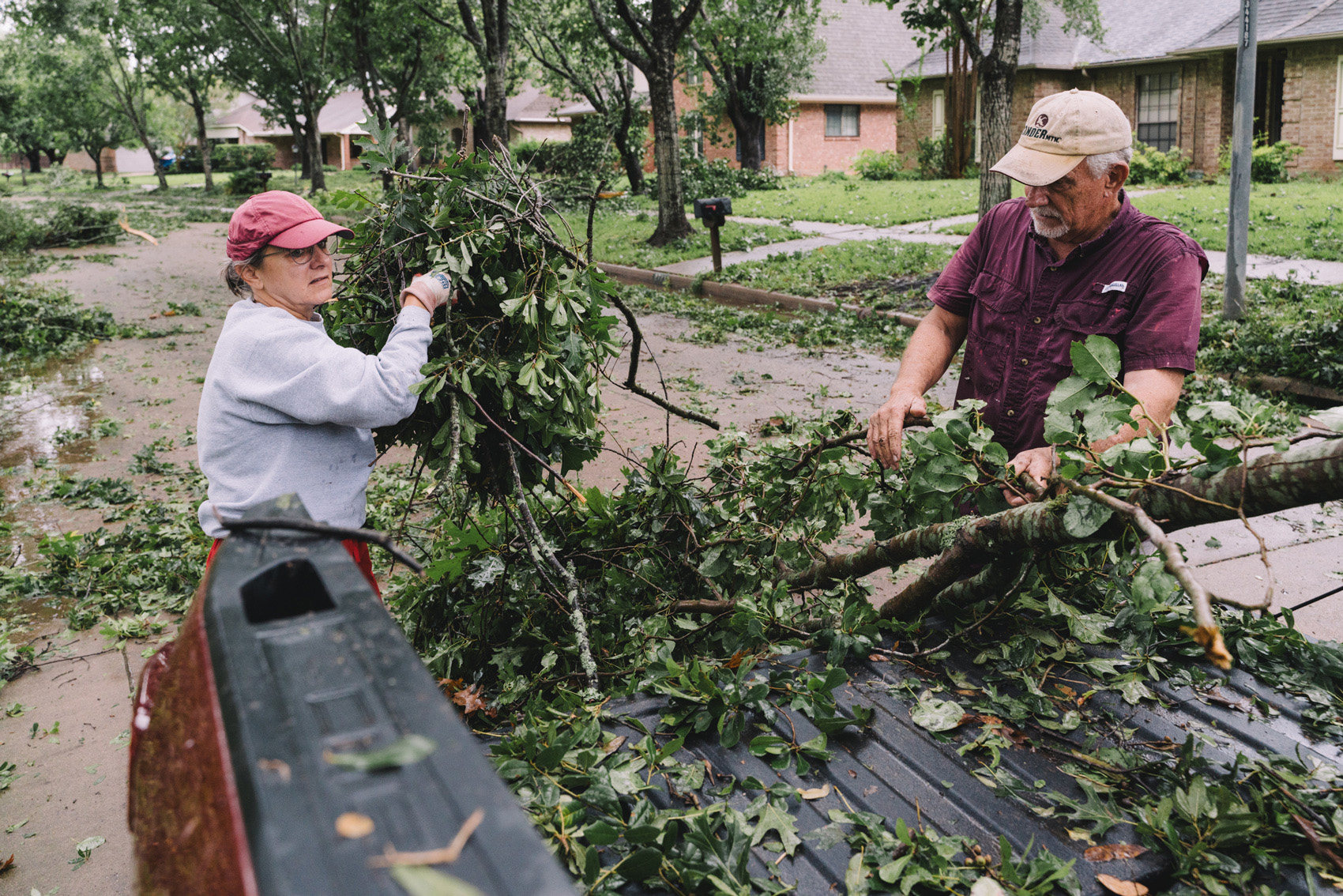
In the weeks following the storm, Houstonians had to dodge fallen trees, branches, debris and more across the region. In fact, Hurricane Beryl potentially impacted about 50 percent of urbanized-area trees, according to the Texas A&M Forest Service.
“Hurricanes don’t discriminate,” said Aaron Stottlemyer, head of the forest analytics department at Texas A&M Forest Service.
Despite what many think, strong winds aren’t the sole reason many of Houston’s trees were damaged. Lack of maintenance, wind levels, and the biology of trees all have an impact on the strength and health of Houston’s trees.
Here’s what we know about what causes damage to trees and how public entities provide maintenance:
How weather patterns cause stressed trees
Last year, Texas experienced an excessive drought with parts of the Houston region being abnormally dry. A year later, conditions have improved as the greater Houston region is no longer under any drought conditions, according to the U.S. Drought Monitor.
Although weather patterns like El Niño and La Niña contribute to hurricane seasons, researchers remain unclear on how the changes from one dry season to a rather rainy season impact stressed trees.
During a drought, a few branches will die to try and save the life of the whole tree, said Georgianne Moore, professor of biology at Georgia Southern University. Those trees would eventually become dry and brittle and could break during a storm.
“And maybe that’s what happened in Houston during this storm – branches that had already been dying from the previous drought were all falling out of the trees. I know that definitely could have been a possibility,” Moore said.
Moore said when a tree is in a drought, its growth slows. The trees will take preventative steps so it doesn’t dry out by shedding leaves and slowing down water consumption.
Trees are adapted to not let their wood dry out, she says. If a tree is stressed and looking for water, it can put in more roots which could lead to a better anchor for the future.
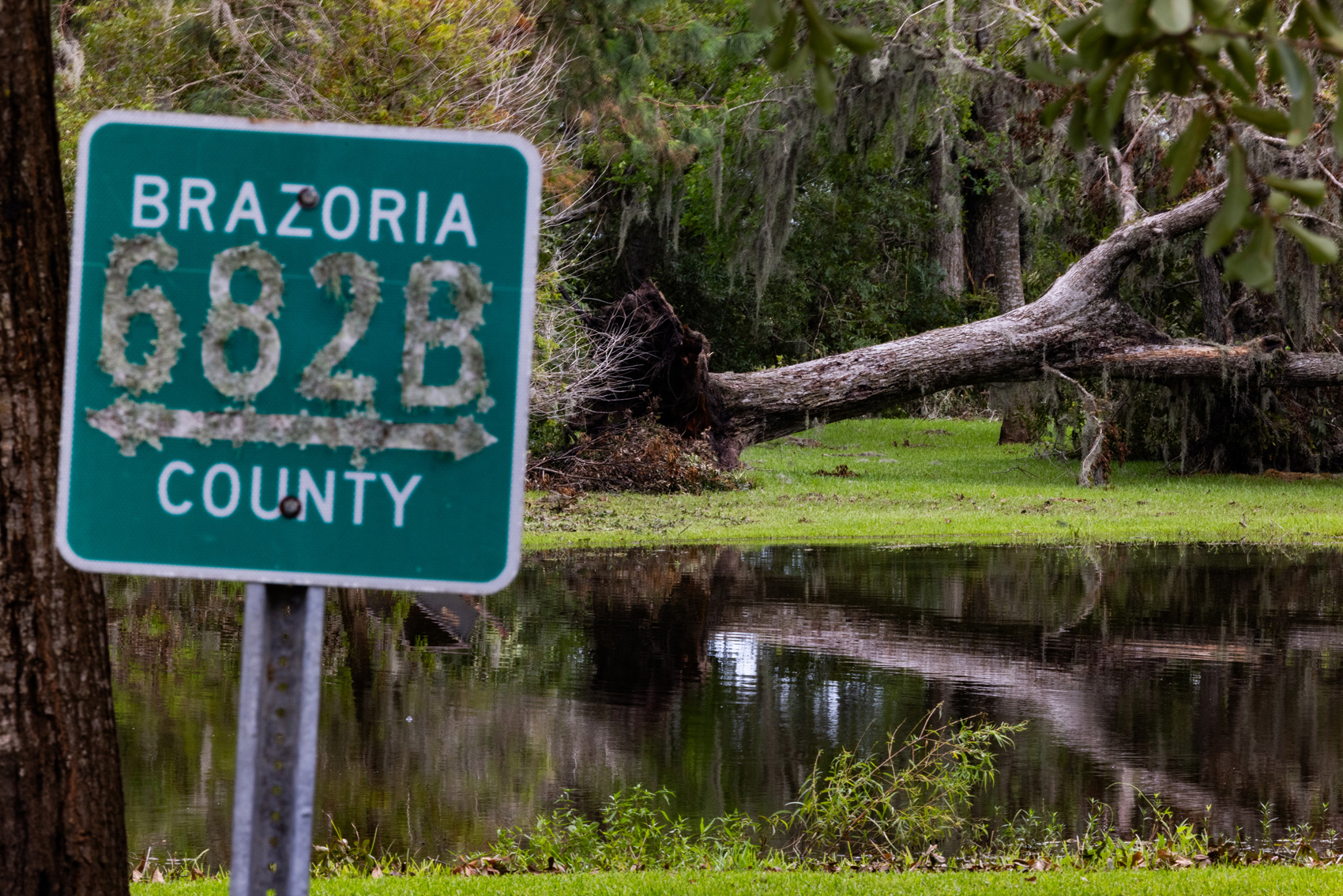
During a hurricane, a combination of factors can cause trees to be uprooted, such as saturated soil caused by extreme flooding, soil that cannot absorb any more liquid, and extreme winds.
“One of the number one risks during extreme events is toppling over roots and all because the ground gets so wet,” Moore said. “Trees aren’t that deeply rooted and they don’t anchor into the ground very well. When we’re dealing with a lot of flooding and wind, the whole tree falls over. It doesn’t break in half.”
A weather event can lead to a stressed tree but may not kill it, Stottlemyer said. Instead, the stressed tree will be vulnerable to damage by another event.
May’s derecho storm could have led to trees falling during Hurricane Beryl since they were already stressed after that first storm, Stottlemyer said.

How the city conducts vegetation maintenance
In Houston, tree regulations are laid out in the Tree and Shrub Ordinance, which provides standards for planting trees and shrubs on streets and parking lots, according to the Planning and Development’s website. The city regulates how protected trees are maintained, and provides incentives to property owners who preserve and care for existing trees on private property.
The requirements apply to new commercial and multifamily residential developments, property expansions exceeding 1,000 square feet, and new single-family construction.
“These minimum requirements ensure that Houston will have aesthetically pleasing developments and enhanced greenspace, making it a better place to live,” according to the Landscape Regulations for Development.
Houston’s Park and Recreation department is responsible for trimming, pruning, and planting trees. During a storm, things operate differently.
During emergency events, Houston Public Works will handle tree and debris removal for any trees or limbs that fall into the “right of way,” said Erin Jones, Houston Public Works spokesperson. Right of way depends on where private property lines are drawn as well.
On residential streets, the right of way is about 16 feet from someone’s yard from the back of the curb, which the city and contractors can access for projects, Jones said. Any project would have to be restored to city standards.
If a tree is near a powerline that is on a right-of-way street, CenterPoint would be responsible for the tree in that case, she said.
After a storm, the solid waste department handles debris removal from private properties. The Houston Parks and Recreation are also responsible for handling tree installation and removal.
In Houston, residents can submit a 311 request for tree-related issues, including tree removal, clearing tree debris and waste, and more. The request will be routed to the appropriate department or company.
Since the derecho in May, there have been 10,066 complaints made to 311 regarding trees in the Houston region.
How utility providers coexist with trees
In Texas, utility providers are responsible for trees near or on powerlines, according to Texas law. Trees cause about 20 percent of unplanned power outages, according to CenterPoint Energy.
“Every year in Texas, people are injured or even killed when they climb or prune trees near power lines,” according to state law. “High-voltage lines are not insulated, and direct contact usually results in death by electrocution.”
The Arbor Day Foundation, a nonprofit organization aiming to plant trees across the nation, and the National Association of State Foresters have a Tree Line USA program aimed to help utility providers understand the coexistence between electricity and trees.
Tree Line USA program sets standards for utility providers, said Logan Donahoo, senior manager for programs.
When utility providers apply for this program, they have met requirements set by the Arbor Day Foundation including:
- Quality tree care – Pruning
- Annual training for employees
- Tree planning and public community
- Tree-based Energy Conservation Program
- Arbor Day celebration
Six utility providers in Texas are part of the program and commit to these standards.
Utilities such as CenterPoint have set standards for how they trim trees. Firstly, a licensed contractor will place a brochure on an owner's door about tree trimming in the days before a tree is trimmed.
According to CenterPoint website, the licensed contractors follow these standards when trimming:
- Promote continued tree growth (away from the lines)
- Minimize the need for future trimming
- Cause the least stress to the tree
- Reduce the likelihood of disease, decay and excessive re-sprouting
How to prepare for the next storm
City departments cannot enter private properties for trimming, pruning or removing trees. Property owners are responsible for the maintenance of their trees.
“Regarding how trees could be impacted by the next event, it really depends on a lot of factors including wind speed and duration, amount of rain, soil conditions at that time, and how well trees were maintained leading up to the event,” Stottlemyer said.
Eric North, a certified urban forester with Arbor Day Foundation, said owners need to remember trees are a long-term investment and are living organisms – they must be planted, pruned, maintained and inspected.
Healthy trees can better withstand storms and recover from damage.
He recommends residents hire certified arborists to inspect a tree before and after a storm.
Trees at risk of causing dangerous situations include those that might have been standing straight one day and then leaning over the next day, those whose soil seems to be off, or those with large branches hanging off.
If a property owner plants a new tree, they need to consider its position in 10-20 years, North said.
Most trees can’t handle floods for a long time and can go into drought-like situations. To help the trees, owners can manage water resources beforehand by not overwatering or underwatering a tree, he said.
If a tree is flooded, there isn’t much an owner can do but watch the tree over time and then have a professional make an assessment.
“We don’t want to save trees that can be dangerous,” he said.
Trees for Houston, a nonprofit committed to planting, protecting and promoting trees, provides a list of resources for tree maintenance before and after storms. Click here to check them out.
Trees in the greater Houston region
As of 2021, Houston had 33.3 million trees with a tree canopy that covers 18.4 percent of the city, according to the U.S. Forest Service Southern Research Station. Most trees are on private properties.
Released in 2020, the Climate Action Plan outlined the city’s commitment to planting 4.6 million native trees by 2030. As of 2022, the city has planted 1.4 million trees.
Multiple organizations and public entities focus on planting, pruning, and maintaining trees in the area.
Organizations like Trees for Houston distribute trees to neighborhoods and organizations around the city. Between 2021 and 2022, the organization planted and distributed 60,035 trees, including native trees such as the American Sycamore, Live Oak, Red Maple and more.
In Harris County, specifically, data shows that it lost more tree canopy than trees planted between 2011 to 2021. During this timeframe, about 10 percent less land is covered by trees, and can be seen in almost every neighborhood, according to the Kinder Institute for Urban Research.
“There are numerous reasons for tree canopy loss: extreme weather events, insects, diseases, incorrect planting practices, removal for construction, etc.,” according to the report. “Not enough trees are being planted in urban areas to counter this loss, particularly in socioeconomically disadvantaged neighborhoods.”
Correction: Georgianne Moore's title was incorrect in a previous version of this article.

