

More than 2,000 miles away from her home country, Yetseidy Mireles joined thousands of Venezuelans in Houston who optimistically watched their country’s presidential elections on Sunday. Many thought this would be the day voters would bring down the government of Nicolás Maduro, who has presided over an unprecedented economic collapse since 2013.
But their hopes for a peaceful transition through the ballot box were shattered in the early hours Monday morning. The country’s electoral authorities declared Maduro won a third term, extending his 11 years in office by another six years.
Key Facts about Nicolás Maduro:
- Maduro took office in 2013 after the death of political strongman Hugo Chávez.
- A former bus driver, Maduro has promised to continue the “Bolivarian Revolution” started by Chávez to nationalize the economy and invest in social programs.
- An estimated 7.7 million Venezuelans have fled under Maduro’s leadership as the oil-rich country fell into economic collapse.
- Maduro was declared winner of elections in 2013 and 2018. Both the opposition and international community questioned the veracity of results.
- Maduro faces charges in the U.S. for running a “narco-terrorism partnership” with Colombian guerilla group FARC.
- The International Criminal Court is investigating the Maduro government for crimes against humanity related to a deadly crackdown on 2017 protests.
The opposition questioned the vote count. International observers called for transparency in a voting process mired with irregularities.
“These results leave us with deception, sadness and desperation,” said Mireles, a 33-year-old Houston resident and native of San Carlos in the Venezuelan state of Cojedes. “Once again it’s palpable the corruption and fraud that our country lives in.”
Mireles was among the many Venezuelans who placed their hope in Edmundo González, a former diplomat and opposition candidate who was leading polls prior to Sunday’s vote. But the real driving force behind their optimism was María Corina Machado, an industrial engineer who was barred from running for alleged corruption charges. Venezuelans looked to the opposition party to help solve the economic and humanitarian crisis that has caused food and medicine shortages and the collapse of the health care and education system.
For Houston’s growing Venezuelan population, a win by González – and by extension Machado – would have meant a possible return to Venezuela.
“I long to return to my country and be with my parents and see my children grow up in my country,” said Mireles, who has been in Houston for a year with her husband, 9-year-old son and 2-year-old daughter. “What pains me the most is that my parents are missing their grandchildren growing up.”
Hopes dashed
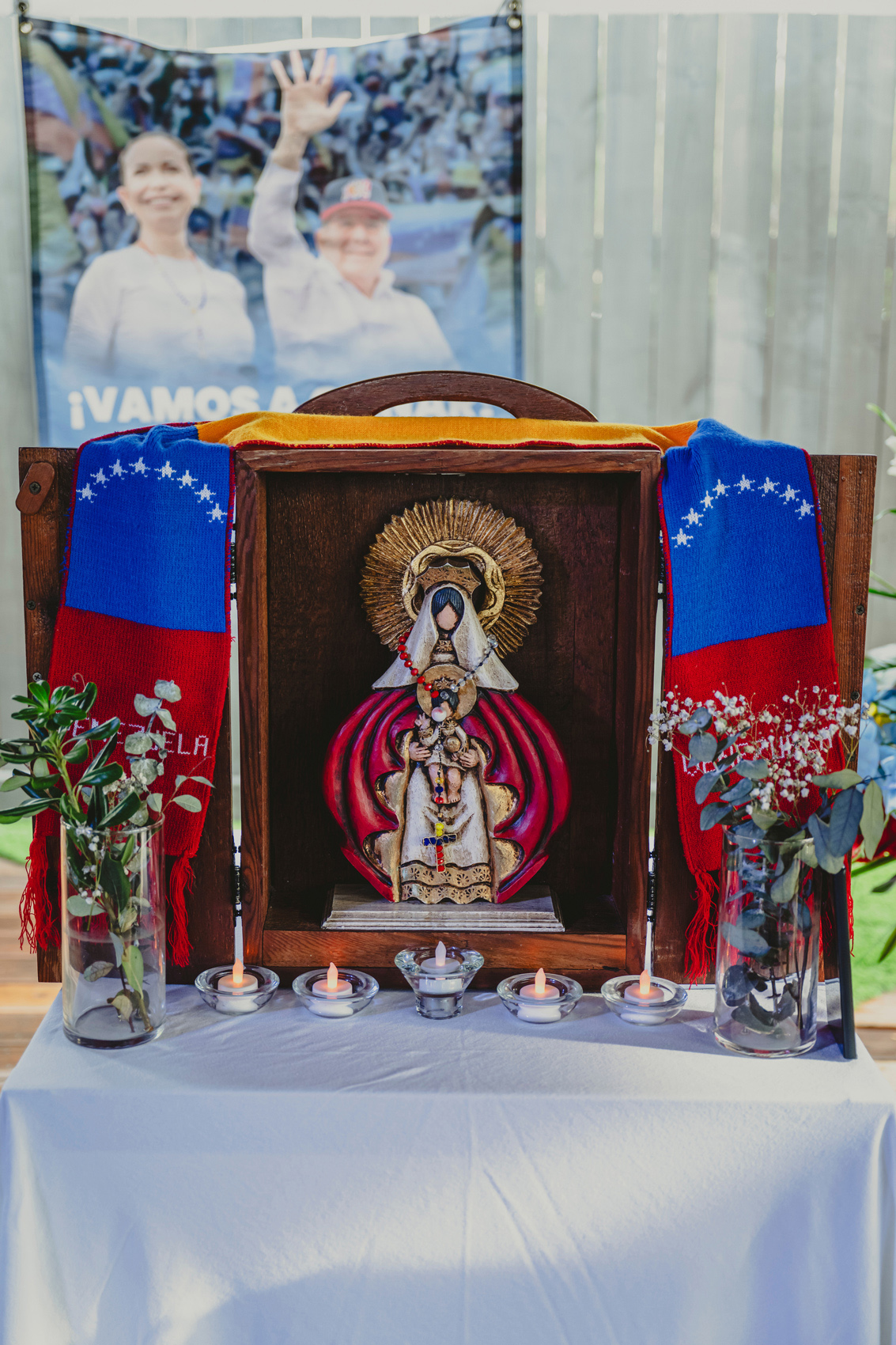
Donning hats with the red, blue and yellow of the Venezuelan flag and signs calling for a free Venezuela, many yearned for a future in the country they left behind – and finally felt it within reach.
“It’s difficult, but not impossible,” said 22-year-old Paola Hernández, who has lived in Houston for two years, before the results were announced. “We have faith that he’ll leave.”
But elections were tense in Venezuela. Hernández’s mother signed up to work as a voting observer in their lakeside city Cabimas as part of a mass mobilization of opposition supporters. But she was barred from entering the voting station.
Voters waited for hours in line across the country. Many were turned away. Those who complained were beaten by hooded government supporters, international media reported. The Center for Justice and Peace (Cepaz), a nonprofit promoting democracy and human rights in Venezuela, documented more than 140 cases of human rights abuses during the voting process.
Still, two major exit polls predicted González won more than 60 percent of the vote.
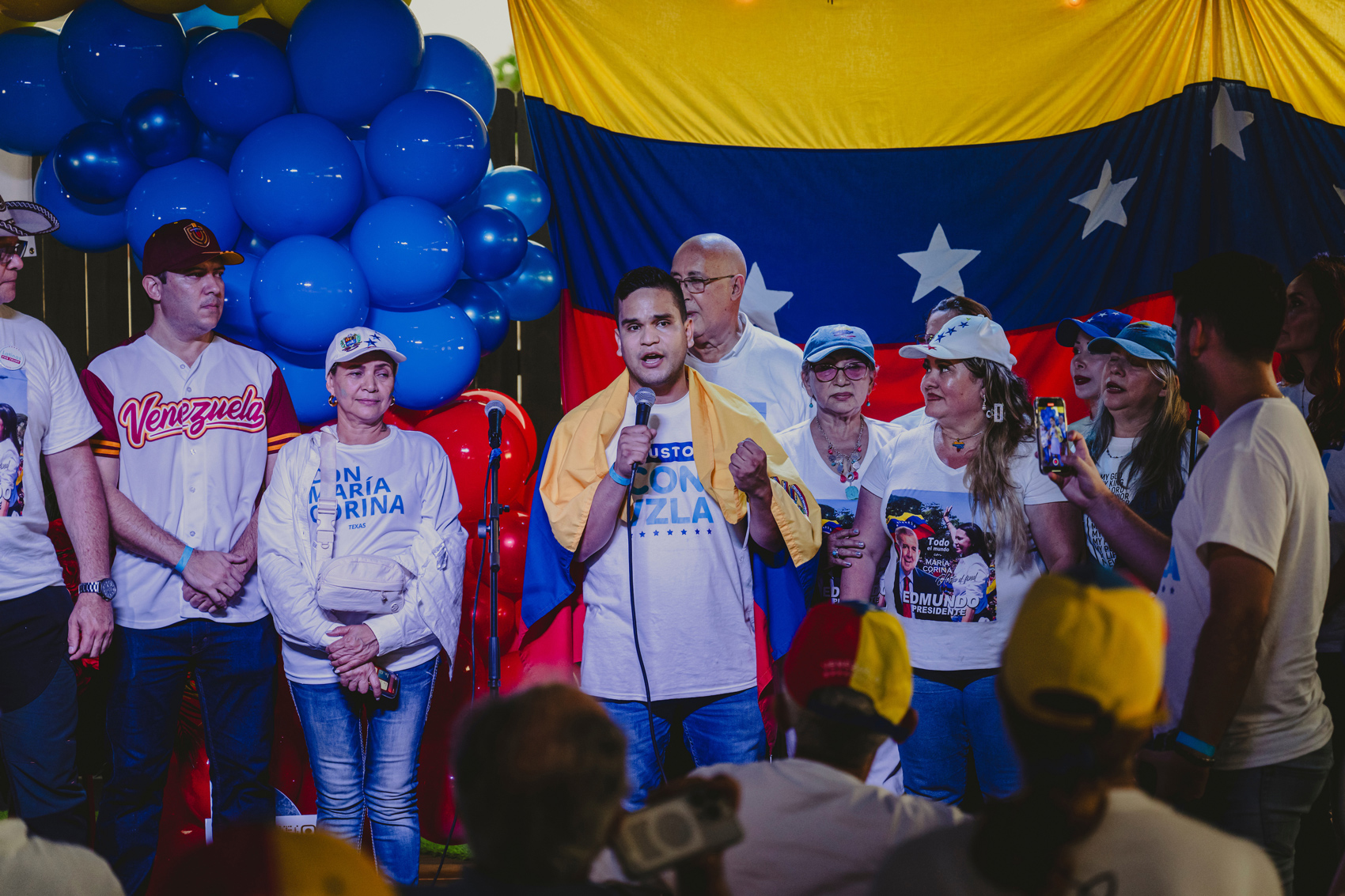
“We have seen how the Maduro regime has sought the way to remain in power, even violating democratic institutions,” said Jorge Vergara, director of the Houston chapter of Machado’s opposition group Comando Con Venezuela, before results were announced. “The whole country waits in uncertainty now.”
Just hours later, the country’s electoral authorities declared Maduro won more than 51 percent of the vote, compared to González’s 44 percent. Other opposition candidates won the remaining votes.
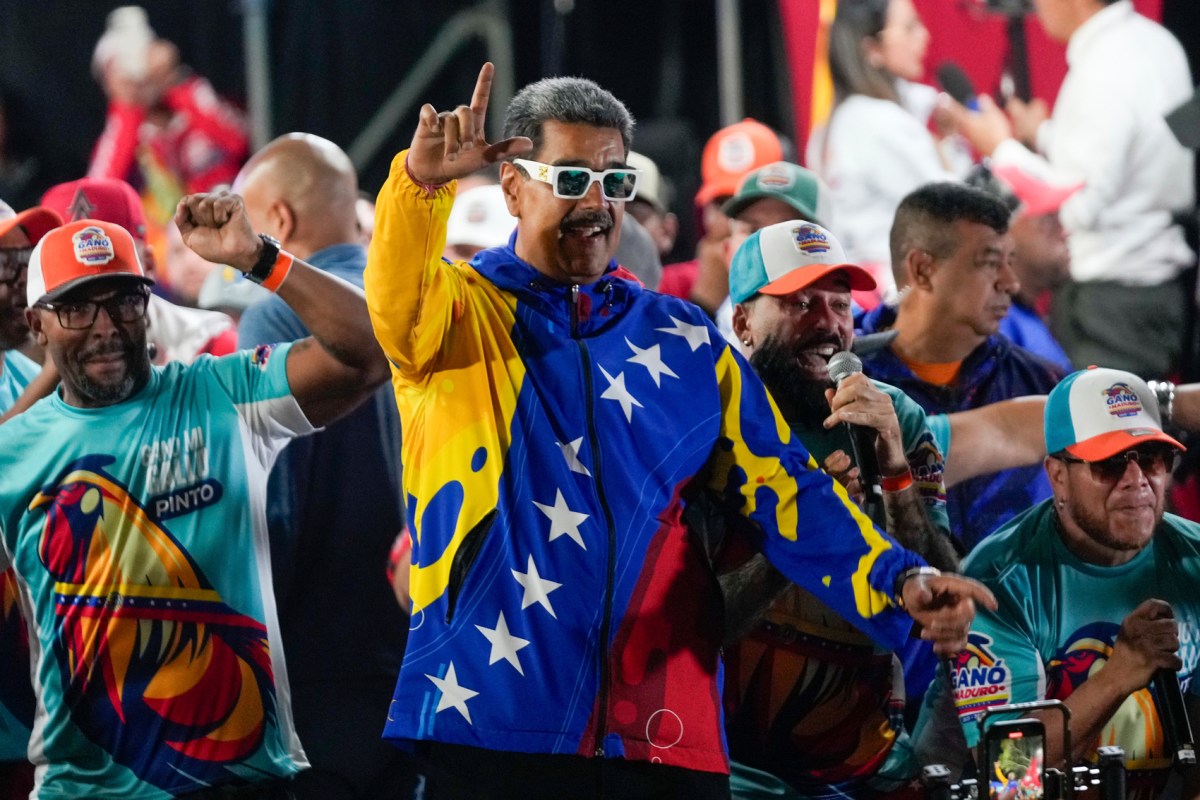
Maduro celebrated his victory early Monday amongst his supporters chanting “Vamos Nico!”
“They couldn’t do it with sanctions. They couldn’t do it with aggression. They couldn’t do it with threats,” Maduro said. “They couldn’t do it now and they will never overcome the dignity of the Venezuelan people.”
The announcement threw the future of Venezuela into limbo as the opposition disputes the results. Mass protests could follow, likely to be met by violent government repression as has been the case in the past.
“It’s not going to be easy. The government has not accepted defeat for many years,” said 32-year-old Gazigy Naim from Mérida, who has stayed in touch with her family there throughout the day.
“Now, the situation is going to be very intense. We’re seeing videos that the situation is already tense, there are shots being fired.”

‘Our heart is in Venezuela’
For Venezuela’s growing diaspora, many pinned their hopes of a better future for Venezuela on the election results.
An estimated 7.7 million Venezuelans have left the country in recent years, and more are making Houston their home. Venezuelans are the fastest growing immigrant population in Houston. Now more than 50,000 Venezuelans call Houston home, a fivefold increase since 2010, according to Migration Policy Institute.
An opposition win would have meant that some Venezuelans could return home – even just temporarily for a hug from mom. Another six years of Maduro will likely mean a bigger exodus.
“The desperation of the results from many who voted enthusiastically may produce another wave,” said Diego Chaves-González, senior manager for Migration Policy Institute’s Latin America and Caribbean Initiative.
Jesus Salcedo, 24, left Venezuela at 18 because he saw no future there. But he hoped for a change that would pave the way for him to return to his city San Felipe.
“It’s not easy being far from home,” said Salcedo, who arrived in Houston a year ago after living in Peru. His parents, siblings, and extended family all remain in Venezuela. “You can be in another country, but there’s nothing like the feeling of knowing you have a home you can return to.”
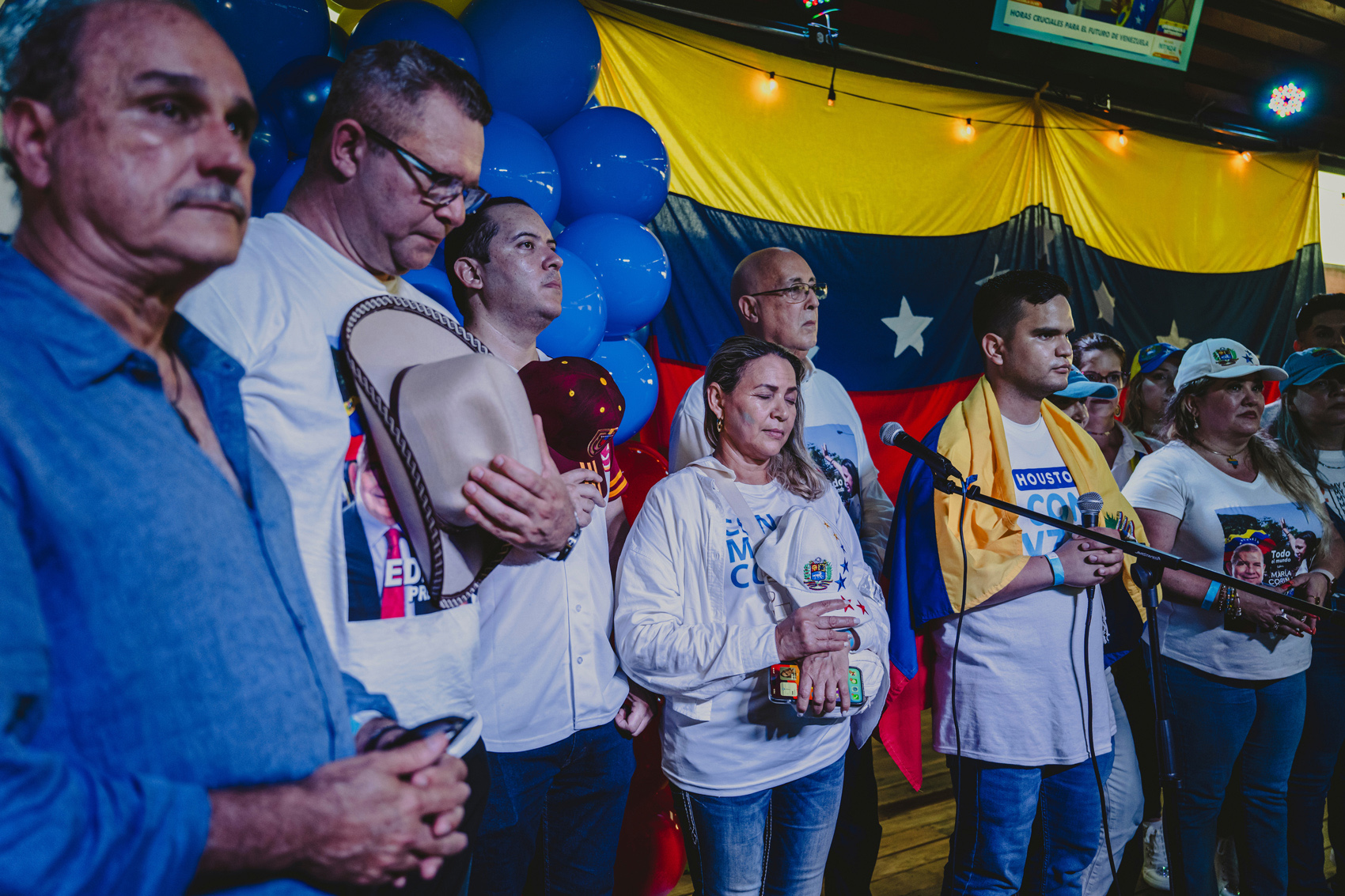
Political activists and organizers of the Venezuelan diaspora in the Houston area hold a minute of silence in honor of the people who have lost their lives to political violence and the humanitarian crisis in Venezuela, during an election results watch party in Katy, Texas on July 28, 2024. Thousands of Venezuelans who have sought refuge in the Houston area in recent years were hopeful that this election might be the end of the Maduro regime in their home country. (Meridith Kohut for Houston Landing) 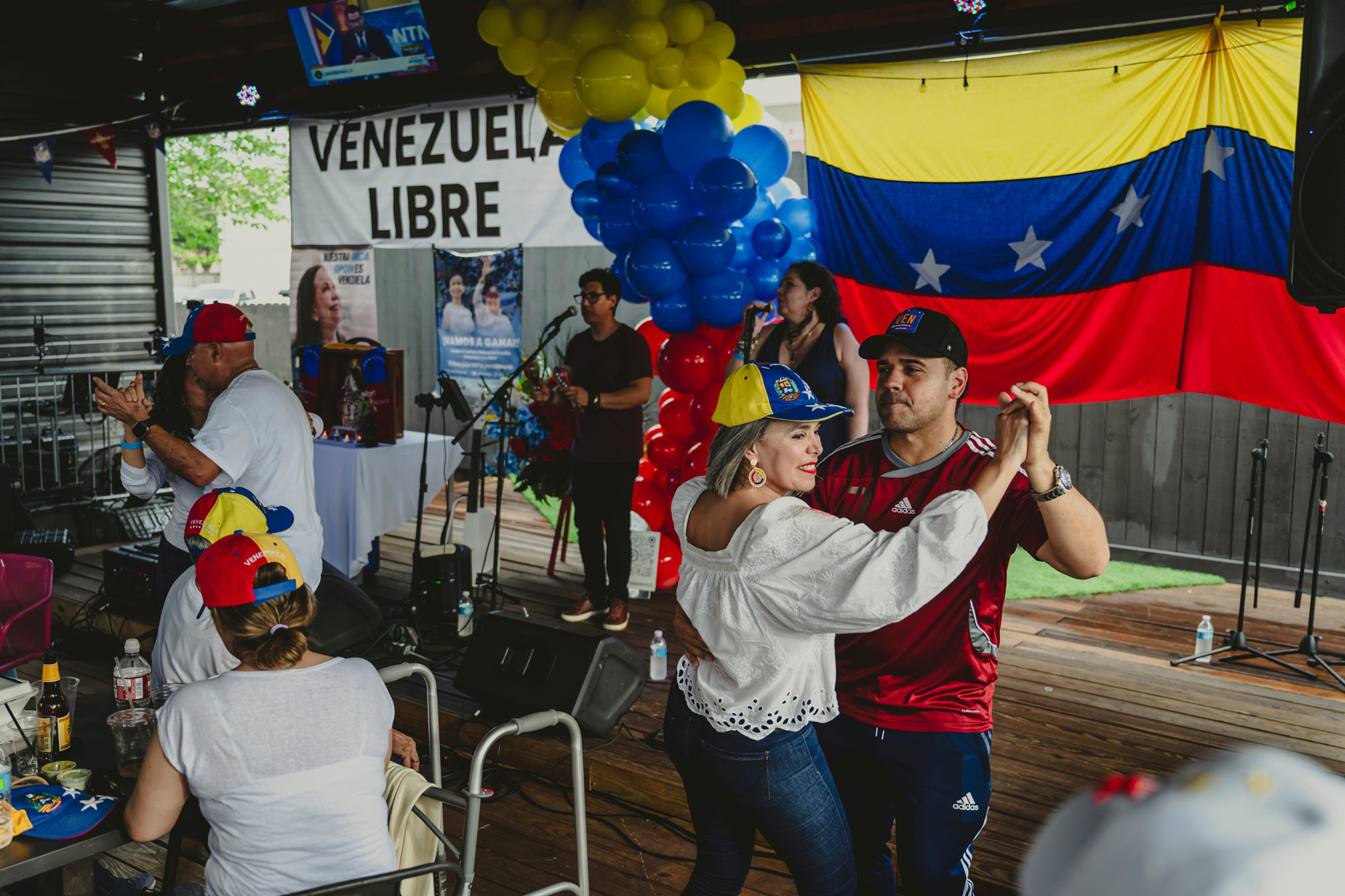
Venezuelans dance next to a “Free Venezuela” sign and large Venezuelan flag at an election results watch party in Katy, Texas on July 28, 2024. Thousands of Venezuelans who have sought refuge in the Houston area in recent years were hopeful that this election might be the end of the Maduro regime in their home country. (Meridith Kohut for Houston Landing) 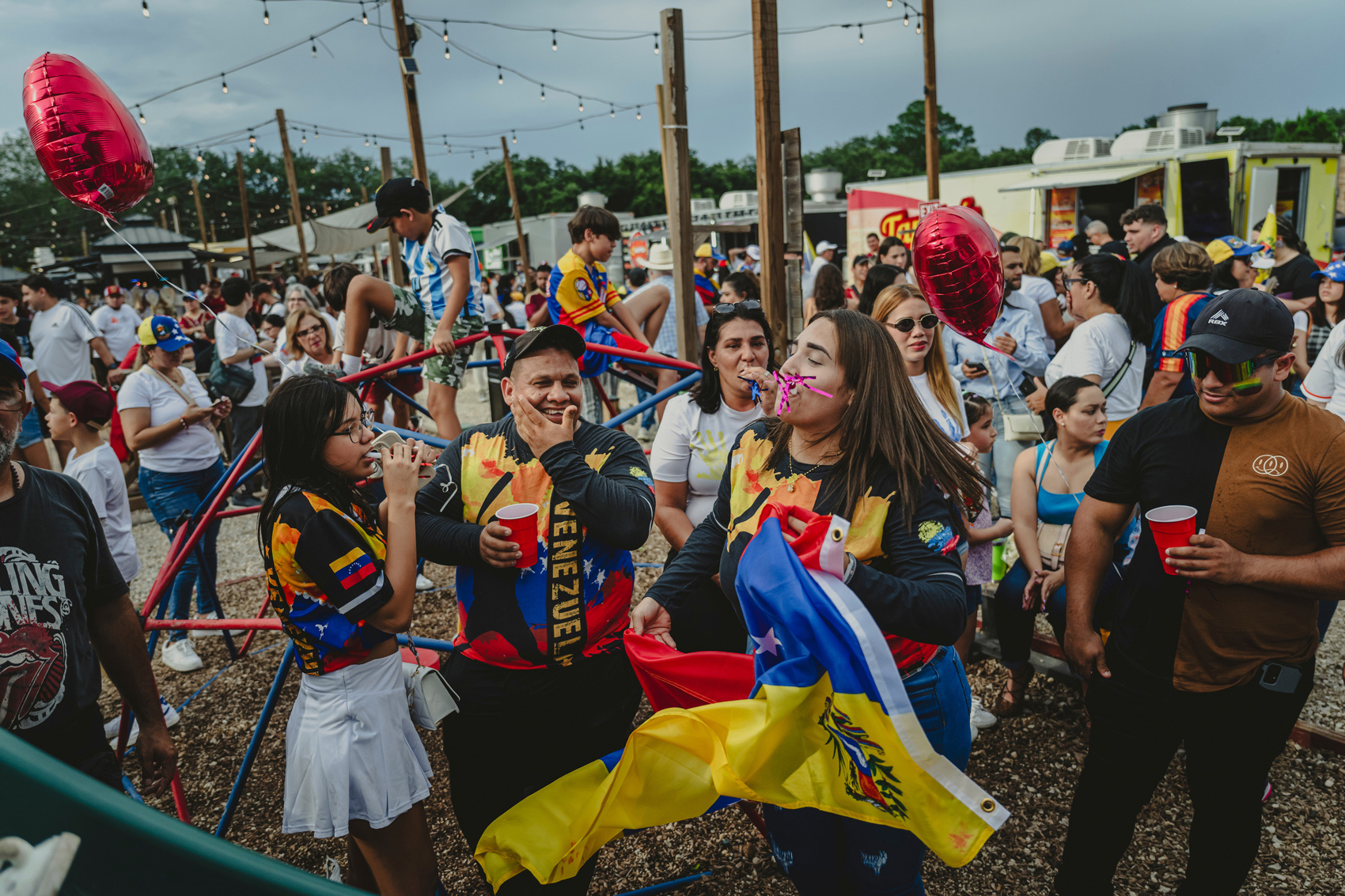
Rosleidy González toots a noise maker and dances with a Venezuelan flag, on July 28, 2024 in Katy, Texas while waiting for results from the Presidential election in Venezuela. Ms. González is a migrant from Maracaibo, Venezuela who fled the economic and humanitarian crisis in her country and arrived in Houston two years ago. Her parents and grandparents are still in Venezuela, surviving on money that she sends home each month. (Meridith Kohut for Houston Landing) 
Venezuelan migrants wave a Venezuelan flag and express their anger toward President Nicolás Maduro in the streets of Katy, Texas on July 28, 2024 as they waited for election results to see if he would be voted out of office. (Meridith Kohut for Houston Landing) 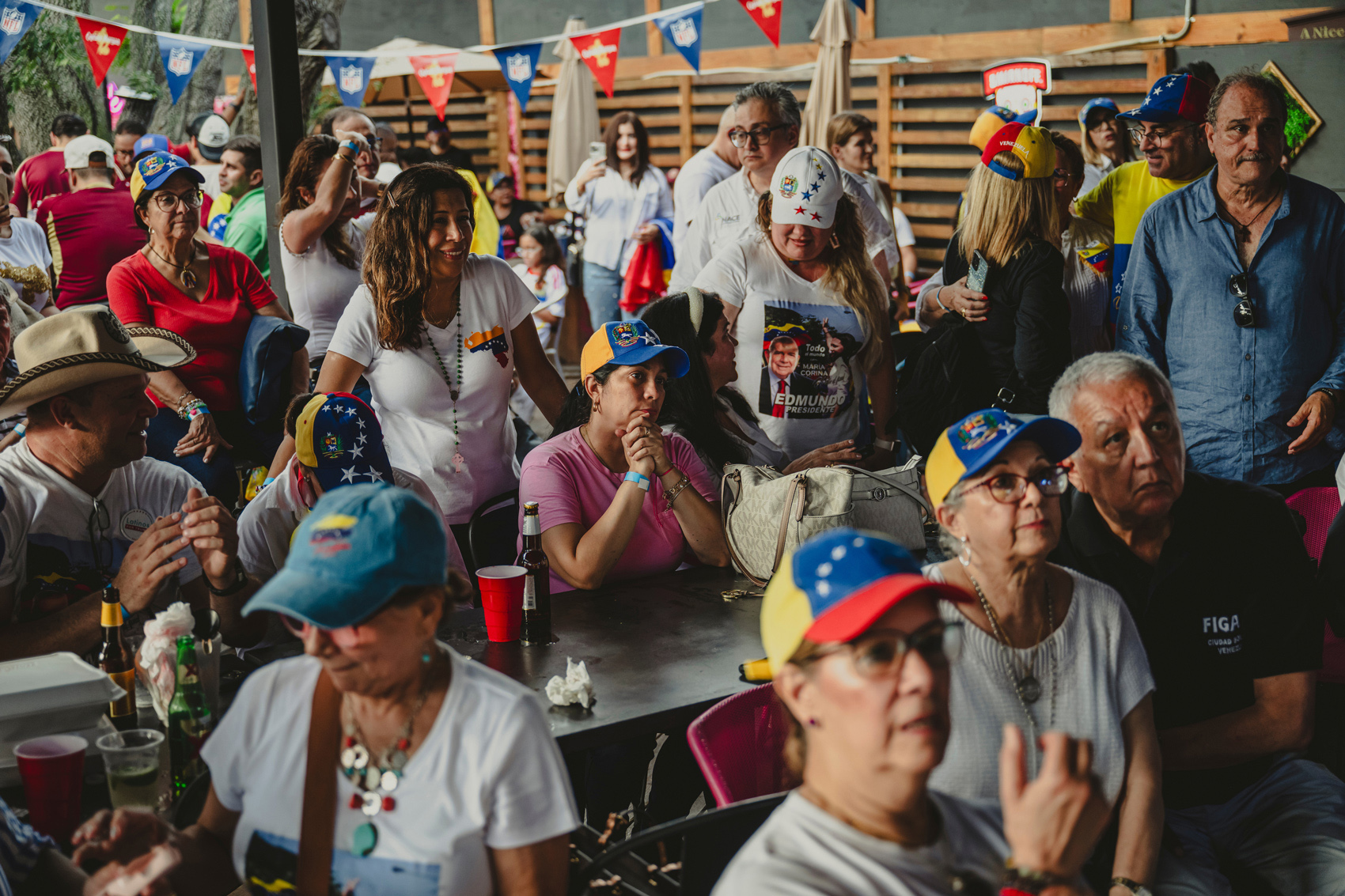
Venezuelans gathered together to watch news coverage of the Presidential election on tv during an election results watch party in Katy, Texas on July 28, 2024. Thousands of Venezuelans who have sought refuge in the Houston area in recent years were hopeful that this election might be the end of the Maduro regime in their home country. (Meridith Kohut for Houston Landing) 
Jorge Vergara, director of the Houston chapter of the “With Venezuela” organization, gives a speech, surrounded by political activists and organizers of the Venezuelan diaspora in the Houston area, during an election results watch party in Katy, Texas on July 28, 2024. Thousands of Venezuelans who have sought refuge in the Houston area in recent years were hopeful that this election might be the end of the Maduro regime in their home country. (Meridith Kohut for Houston Landing)
Ricardo, a 29-year-old from Caracas who has lived in Houston for a year, also felt the pull back to Venezuela.
“We’re here in a country where we’re better off, but our heart is there in Venezuela,” said Ricardo, who is being identified by first name only because he fears retaliation against his family in Venezuela. Yet as long as Maduro remains in power, he’ll keep saving up money for his parents and siblings to join him, he said.
José Suárez has been in Houston for six months, and his wife and kids, 4 and 6, are traveling through Latin America on the way to join him now. But if he saw that Venezuela was improving, he would take the whole family back.
“We want this change,” Suárez, a 42-year-old from Barquisimeto, said before the results. “Then in a short time, we could return to Venezuela.”
After the results were announced, Venezuela felt farther away for Suarez and so many other hopeful Venezuelans. “All the hopes and dreams of returning home fade away for another six years,” Suárez.

