

Bonnie Blumberg has always known her mother was creative and kind. When Blumberg was growing up in the ‘60s and ‘70s, her mom — Janice Goldstein — always volunteered to sew costumes for the class plays. And not just Blumberg’s costume: Goldstein would make them for the entire class, sewing and knitting into the wee hours, long after Blumberg and her sister’s tuck-in time.
Goldstein’s dedication to her craft was something Blumberg took as a given.
Then came the 40 ministrokes.
And the three massive strokes.
In 2017, Goldstein, now in her early 90s, lost the use of the right side of her body. She began using a wheelchair, and Blumberg — a math professor at University of Houston Downtown with no prior knowledge of the medical field — got a crash course in the nitty-gritty details of stroke recovery and all its brutal effects, like aphasia, which made it difficult for her mother to speak. Last year, Blumberg sold her mother’s place in favor of something smaller and easier to maintain. And in that haunting, daunting moving process, she felt like she saw parts of her mother that had been tucked away in knitting project bags and socked into craft corners and late-night creative sessions for most of her life.
“I didn’t even know how creative my mother was until I sold her place,” says Blumberg.
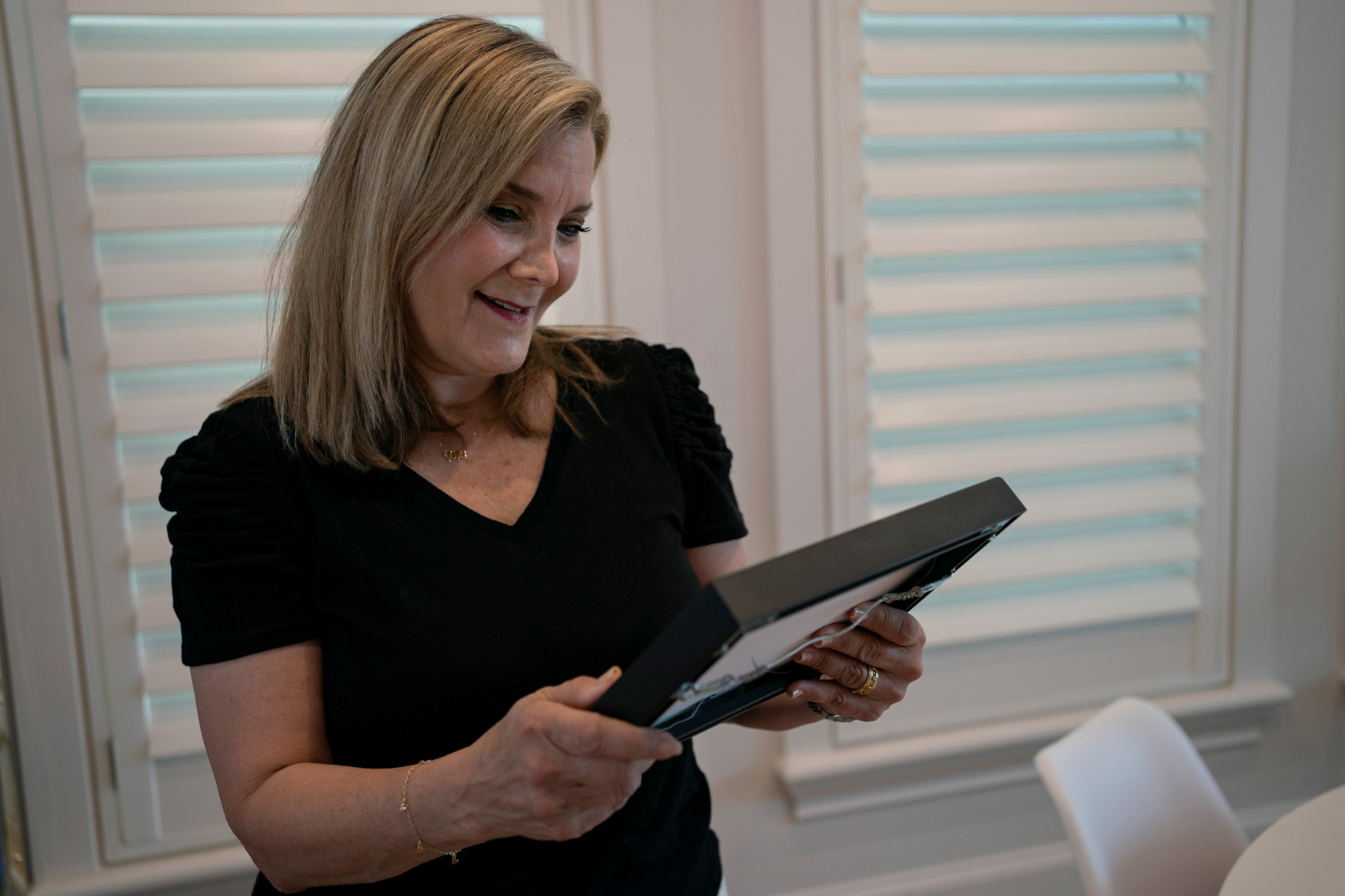

Then, in the cleanout, she spotted a stash of nearly-finished needlework projects. Blumberg knew immediately that they were meant for her: The cosmetic and jewelry cases, all embroidered and just in need of zippers and lining, were decorated in hearts, in the same vein as Blumberg’s home is decorated.
Blumberg brought them to a craft store in Montrose, where she “spent a fortune” having them finished.
“I’d spend a fortune again,” she says.
But soon she learned, she didn’t have to.
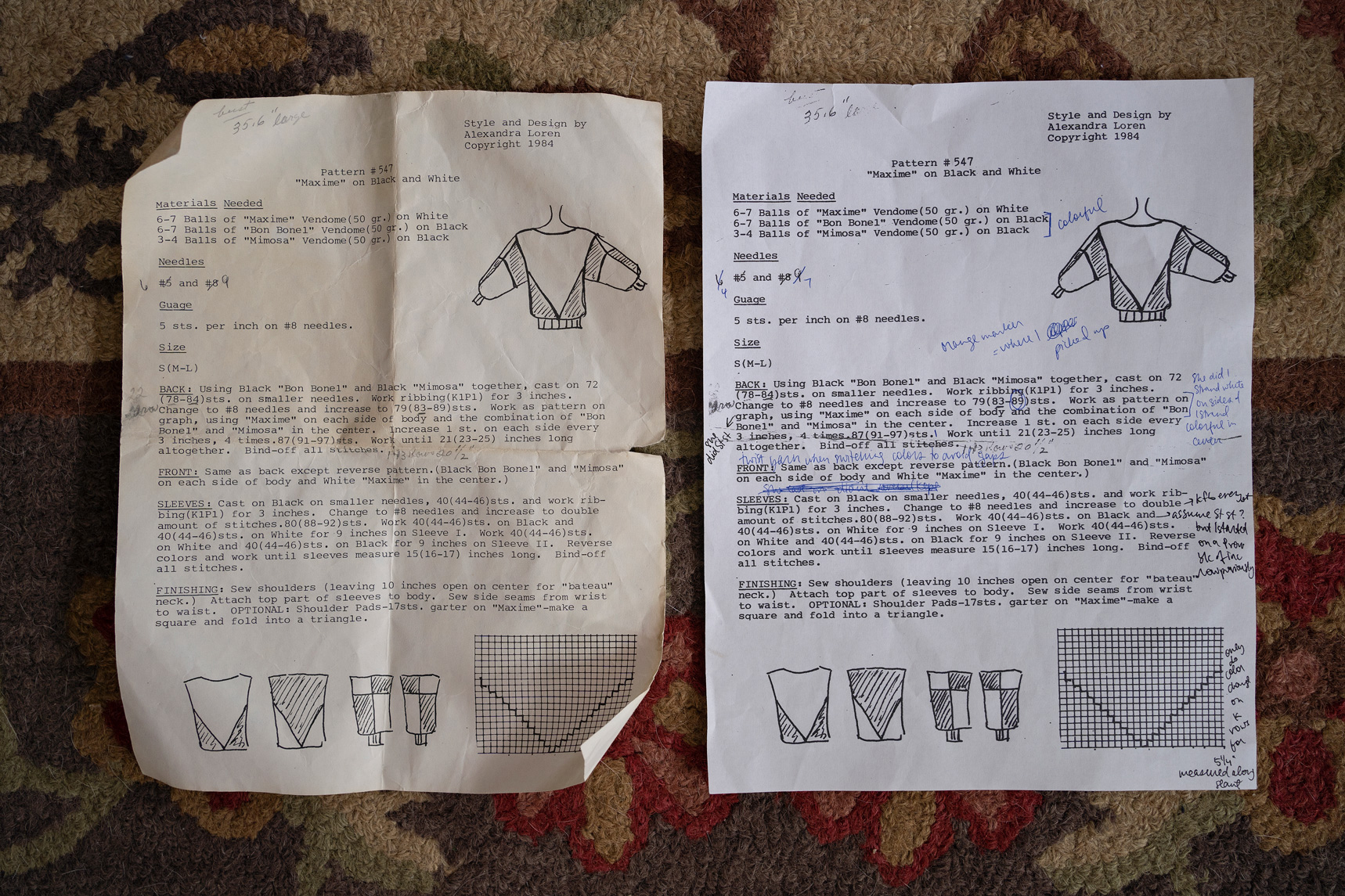
Digging further into her mother’s possessions, Blumberg found three knit sweaters in various stages of construction. Again, she knew exactly who they were intended for: The first, a blue and white garment, was for her mother; the second, all purple, was for Blumberg; and the third, a cardigan coming to life from a hand-written, homespun pattern, was for Blumberg’s daughter. She brought them to a local knitting store, who put her in contact with a shop in San Francisco, which then asked her a fateful question: “Have you ever heard of Loose Ends?”

Blumberg never dipped into crafting like her mother did. In her words: “It stopped with me.” So Loose Ends — a nonprofit organization that matches people like Blumberg who have unfinished work from loved ones that have either passed or become incapacitated with crafters in their area who can finish quilting, knitting and other projects — was a foreign concept to her. (At only about two years old, the nonprofit is likely a foreign concept to many, though it boasts more than 25,000 volunteer “finishers” who have taken over about 2,500 projects since the organization’s launch.)
Blumberg got to Googling. Soon thereafter, Loose Ends linked her up with Anna Minmier, a finisher in Montrose about half Blumberg’s age, who volunteered to take over Goldstein’s work.
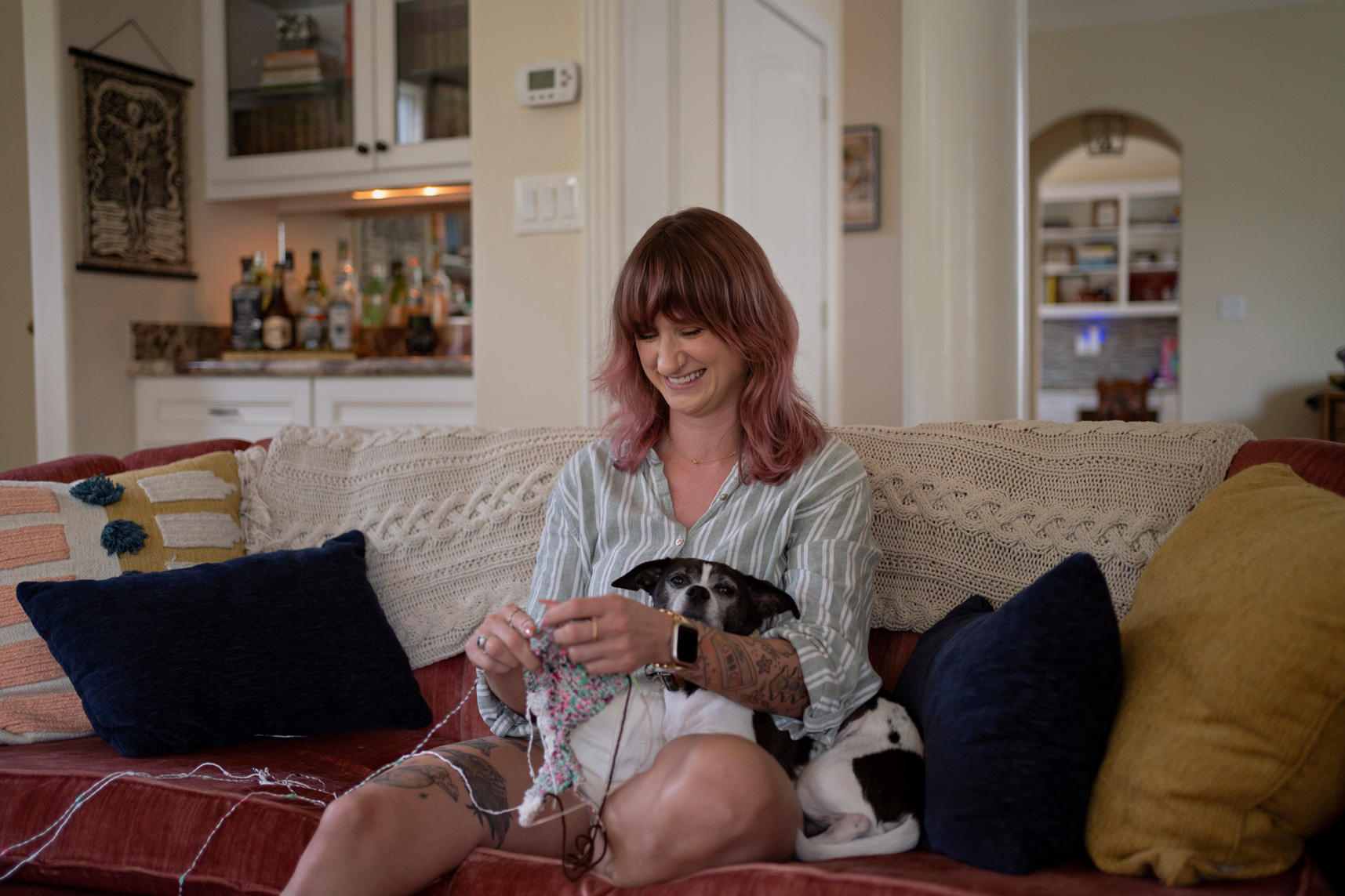
Now in her evenings — and below the frame of her camera during work teleconferences — Minmier’s fingers dance a waltz she has memorized so perfectly in the 20 years since she took up knitting as a precocious 9-year-old that she rarely needs to cast her gaze toward the heirloom that blooms between her knitting needles.
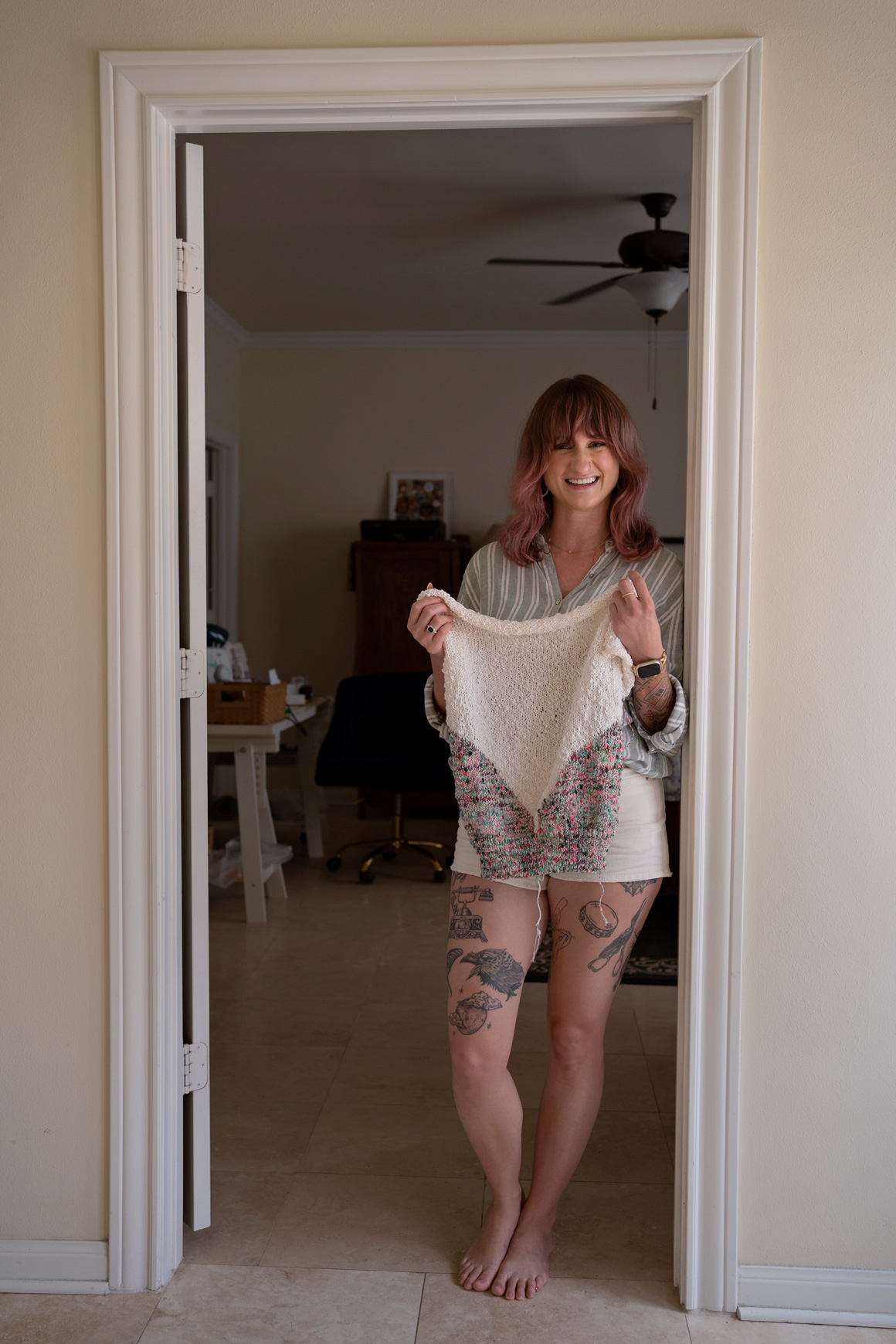
Her efforts, Blumberg says, are an act of altruism that Blumberg can never repay. She tears up, just talking about it.
“All I could do when I met Anna was give her a big hug, because these things are so special,” Blumberg says between sniffles. “It’s unbelievable how special this project is. I would have spent another fortune to get this done.”
But one of the core tenants of Loose Ends is that the work is always completed for free. And while Minmier’s efforts have spanned months, and could easily have made her money on Etsy or at a pop-up market, she’s happy to have a part in what she sees as a beautiful story that binds generations.
The project reminds her a bit of her own family: Her grandmother, who is about Goldstein’s age, was a knitter as well. Until her arthritis made it hard to complete those delicate waltz-like movements. Like with Blumberg’s family, the crafting skipped a generation; now, Minmier is her family’s designated knitter. But her grandmother is always with her when she knits, in ways large and small. Minmier now keeps a stock of stitch markers — little hooks that help her keep track of important points in a project — inside a decades-old prescription pill bottle her “midwestern frugal” grandmother kept her supplies in.
She stumbled upon the Loose Ends project back in February when a cool knitter she follows on Instagram mentioned she had signed up to be a finisher.
“What is this?” Minmier asked out loud, while staring at her Instagram screen. “I must read more about this.”
So she fell down a rabbit hole, and came out in March with two bags of knitting supplies from Blumberg, who lives only a few miles away, in Rice Military. Every evening, she clicks and clacks away at them.
“Honestly, it feels a little selfish,” Minmier says laughing. “Like, I get to do my hobby, and I didn’t have to pay for any of the supplies.”
It’s also an opportunity for her to work with patterns she never would have picked for herself, stretching her skillset and keeping her mind as sharp as her needles.
Then, there’s the connection she’s formed with Blumberg.
“We’re in touch every week. I send her little updates. She’s not a stranger, you know? I don’t feel like I don’t know her. She has a daughter my age, and her mom is my grandmother’s age, and it just feels like that’s not somebody I would have met out in the world, but for some reason I was able to make this little connection that feels really meaningful and fulfilling to me,” she says.

(Danielle Villasana for Houston Landing)
With every flick of her needles, the project pushes closer to completion. Minmier will miss it, though she’s looking forward to that moment when Blumberg can hold and hug the memories her mom started to knit into existence before she lost her own.
That, says Loose Ends co-founder Jennifer Simonic, is the beauty and the value in the organization.
“It’s not just being nice,” Simonic says. “It’s making sure people have these tangible objects that you can hug when you’re missing a person. That’s a big deal.”
Blumberg isn’t certain that her mother will recognize the completed sweaters. Will she remember the materials she bought for the blue-and-white one that Blumberg hopes will soon keep Goldstein warm in her wheelchair? Will she remember the meticulous pattern-making she underwent for her granddaughter’s cardigan? It’s a bit of a longshot, Blumberg confesses, with a heavy sigh.
But Blumberg will always have them. And she will always know how creative her mother is. And how her kindness came back to their family through strangers.
“This is something I will never forget,” she says through tears. “And something that just can’t be repaid. It’s the most special thing, because this is coming from someone with the same talent that my mother has, and it’s just the most special thing. The most special thing.”

