

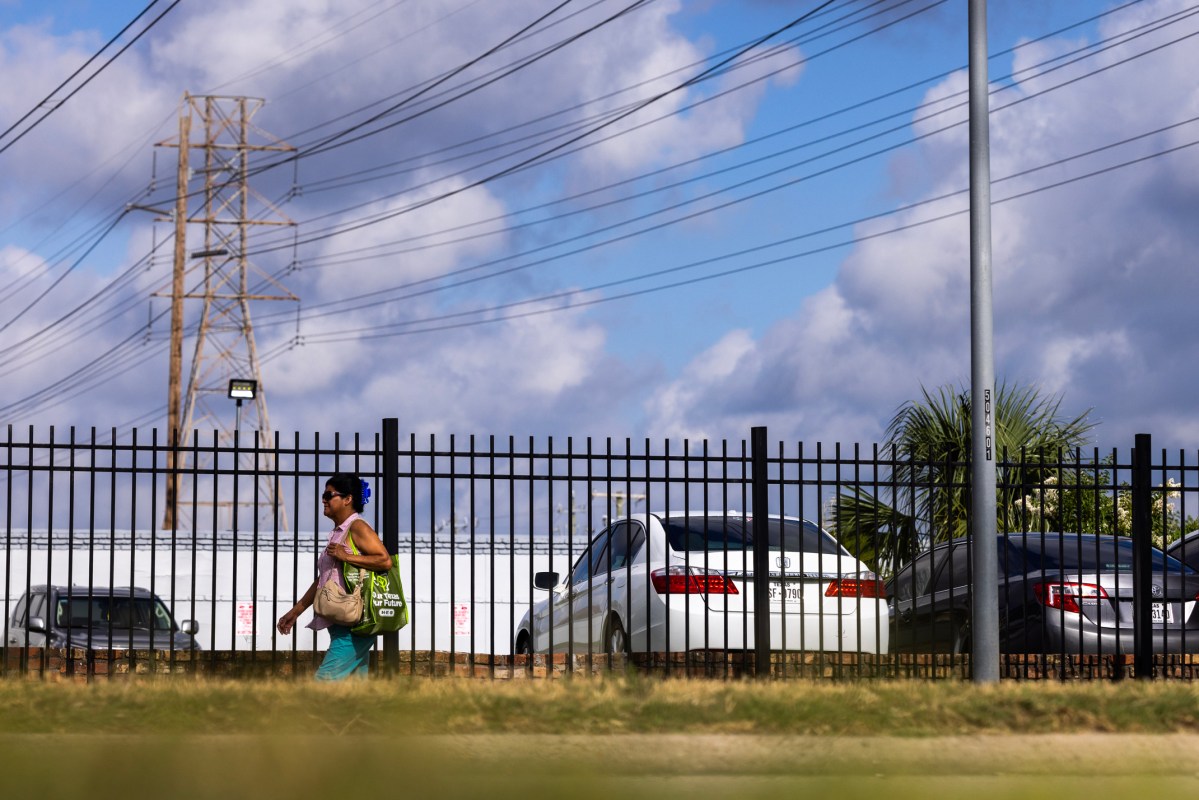
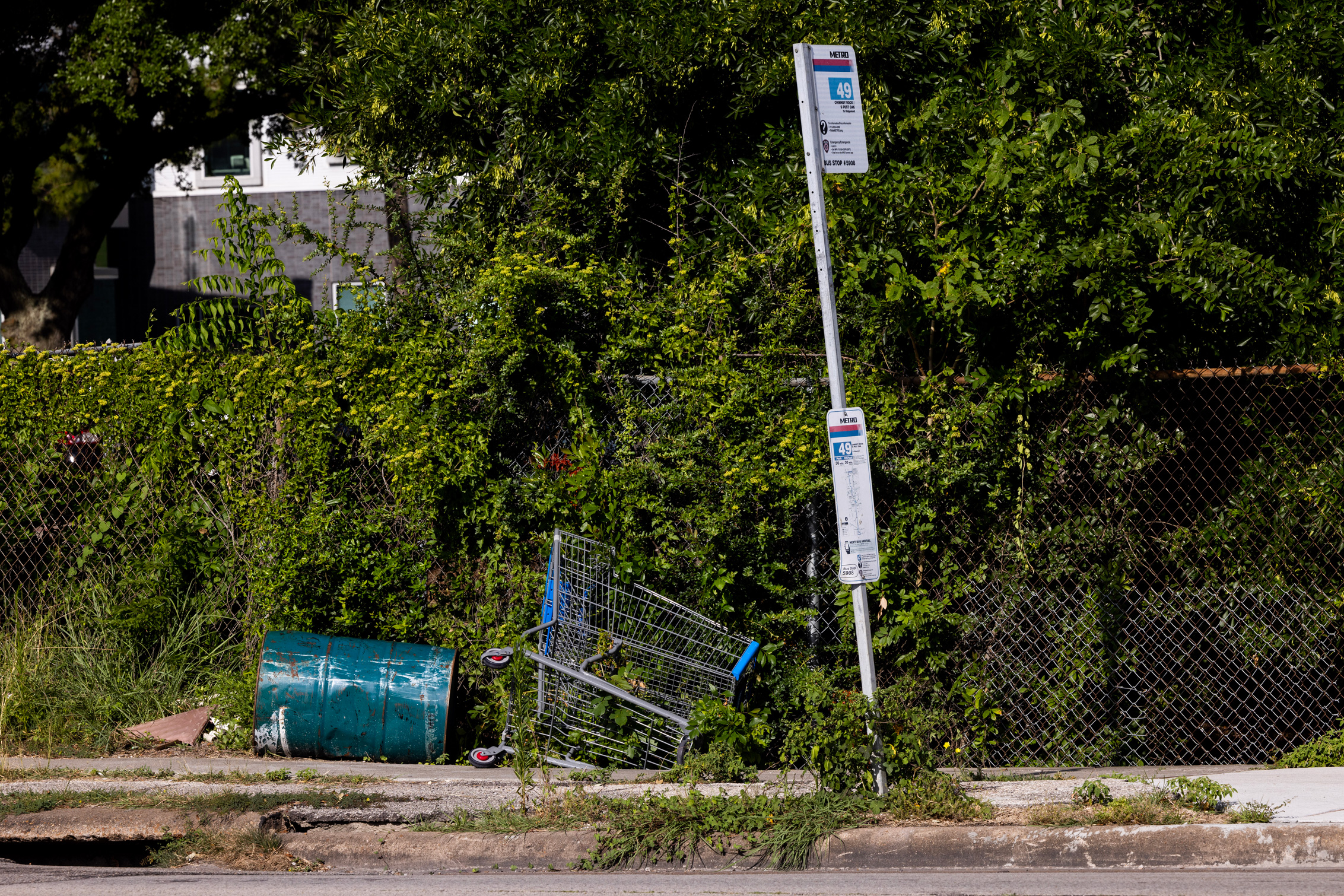
In the summer, when temperatures reach well over 90 degrees, Gulfton residents waiting for the bus might stand behind the slim shadow of a pole just for a bit of reprieve. The neighborhood, just southwest of downtown Houston, is not known for its shade. Instead, residents have lived in the neighborhood’s sweltering heat for years – often unable to find a cool spot out of the sun.
This meant that Sandra Rodriguez was hardly surprised to learn that Gulfton was one of the hottest neighborhoods in Houston, according to 2024 heat mapping data published Tuesday. As the super neighborhood president for Gulfton, Rodriguez knows the heat.
“It’s not surprising when you walk down the sidewalk to catch a bus, or when you’re walking to the store, you feel the heat because there’s no trees or shade that can cover you,” Rodriguez said. “If you look at an aerial view of Houston, you’ll see the surrounding neighborhoods have green, but you really can’t see much here in Gulfton.”
The data – collected by Houston Harris Heat Action Team’s H3AT Mapping Campaign project during a single day last August – showed that areas like Gulfton, Alief and Sharpstown are as much as 14 degrees hotter than the cooler neighborhoods in Houston, such as Tomball, Northside and Baytown, during the same time. Residents in hotter neighborhoods are more vulnerable to heat-related health issues, such as dehydration, heat exhaustion or heat stroke because they can find little relief from the heat.
These results are meant to identify where Houston residents face a greater heat risk to mitigate the impact, such as cooling interventions like revitalizing parks, building more green spaces and planting more trees. Already, efforts have been made by public agencies and nonprofit organizations to combat the heat, though the initiatives will take some time.
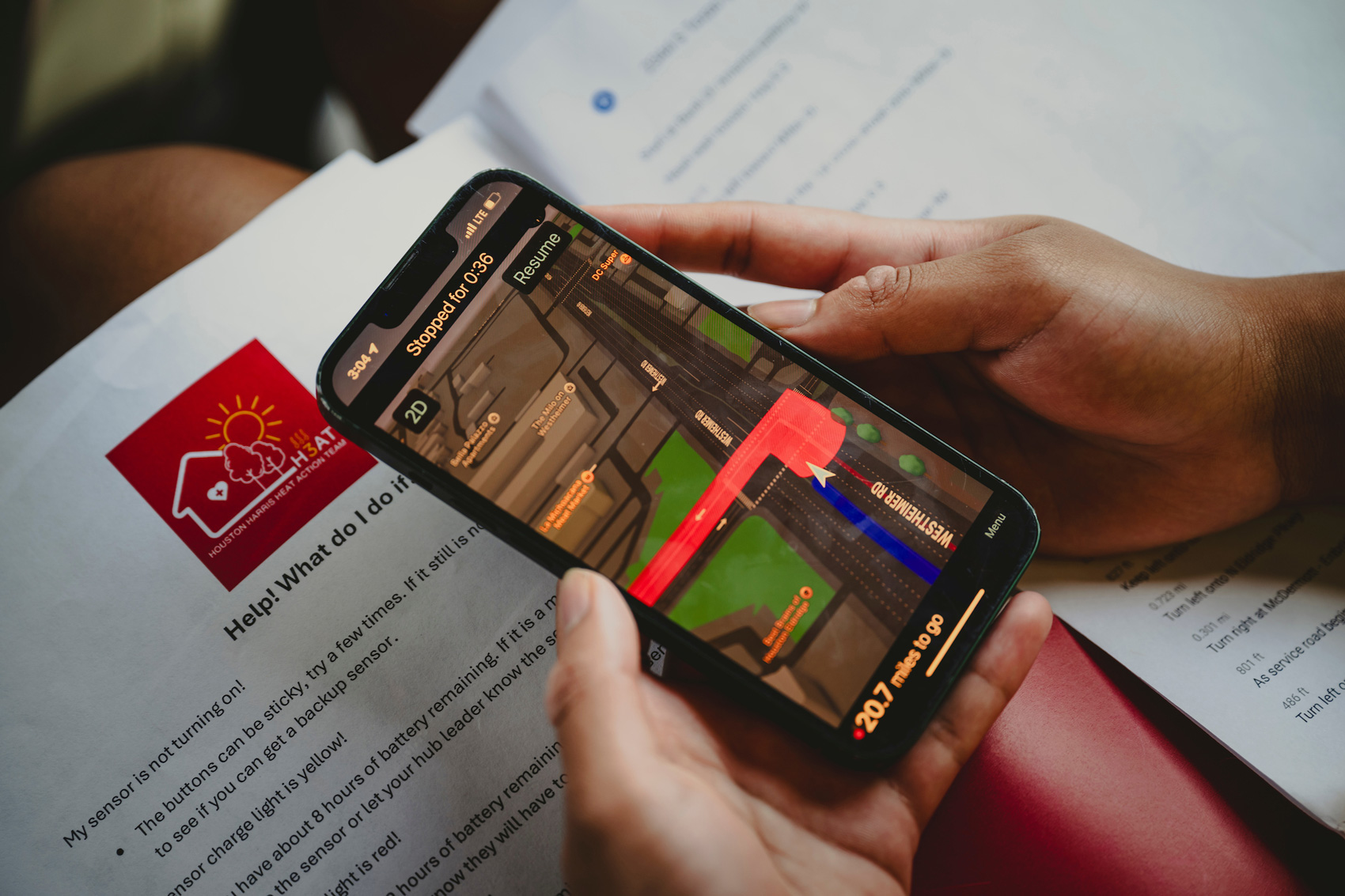
To understand this effect further, organizations and agencies like Harris County Public Health, HARC, the City of Houston and the USDA Forest Service, created a campaign to collect heat data in Houston first in 2020 and then again in 2024. In a single day – August 10th, 2024 – 152 volunteers traversed 700 square miles of Houston collecting temperatures in the morning, afternoon and the nighttime.
The Heat Action Team had also analyzed a smaller mileage of Houston in 2020 and found similar results. Spots like Gulfton, Alief, Sharpstown and Sunnyside are very hot, but Stephanie Piper, a research associate at the Houston Advanced Research Center – a partner in the Heat Act Team, is also not surprised. The point is awareness and action.
“A lot of these neighborhoods are where we’re seeing community members actively working on cooling interventions,” said Piper. “But the goal of this data is to prove again that this is an issue and these communities can get attention and funding to continue combating it.”
The heat campaign
The difference in heat between neighborhoods is due to the urban heat island effect, according to the heat data analysis. Buildings, roads and other forms of impervious cover absorb heat and release it slowly over time. Green spaces absorb far less heat. This creates an island of heat within an urban area.
In the case of the Gulfton, the neighborhood does not have many trees and parks to naturally cool the air and release moisture, and its asphalt streets and concrete structures, like apartment complexes and parking garages, absorb the heat and keep neighborhoods hot well into the nighttime.
What researchers found in the heat data was neighborhoods experiencing the worst of the heat were dealing with three components, or what they called a triple threat: morning temperatures over 80 degrees, limited nighttime cooling and high afternoon temperatures. In one case, an area of Alief without tree canopy had a surface temperature of 116 to 134 degrees in August while the average air temperature was 102 degrees.


On the other end, an area like Tomball can cool off more rapidly. On the evening of August 10th, the coolest part of Tomball was 86.4 degrees, while Gulfton reached just over 94 degrees.
“If it’s hotter than 80 degrees in the morning, that means that it didn’t cool down overnight,” Piper said. “That usually means the impervious surfaces are holding on to the heat and making it so that there’s no cooling relief. You don’t get that same release you get from plants or trees.”
Gulfton expanded in a time of high population growth and traffic during the oil boom of the 1960s, when using cement infrastructure was the norm to quickly accommodate people moving in. But after the boom collapsed in the 1980s, the area became an enclave for recent arrivals, particularly from El Salvador, Mexico and Vietnam.
The neighborhood is now one of the most densely populated areas in Houston, with about 90 apartment complexes and 15,000 units. Over 50 languages are spoken in Gulfton, according to the Houston Complete Communities initiative.
Rodriguez, who grew up in Gulfton, said the community has found its voice and has been advocating for decades for a safe and healthy environment, including dealing with the heat.
“This neighborhood is beautiful,” Rodriguez said. “We have a lot of potential and when we see organizations and resources coming here and planting those seeds for longer impacts, we start believing in change.”
Addressing the heat
In 2021, Harris County’s Precinct 4 secured $6 million from the federal government’s American Rescue Plan for Crime Prevention through Environmental Design. The funding was split evenly between Gulfton, Sharpstown and Alief. A large part of the initiative is planting trees and shade structures to reduce temperatures in the afternoon.
“We are very cognizant and aware that it’s an issue that geographically represents itself in some neighborhoods more than others, especially in Gulfton, Sharpstown and Alief,” said Luis Guajardo, director of planning and community development for Precinct 4. “When we look at the disparities that have already existed, there’s a lot of work for us to do in the area. The best time to plant a tree was 20 years ago, or now. So we’re doing it now.”
Over 1200 trees have already been planted in 2024 in Alief, with another 800 trees on the way in 2025, according to Guajardo.
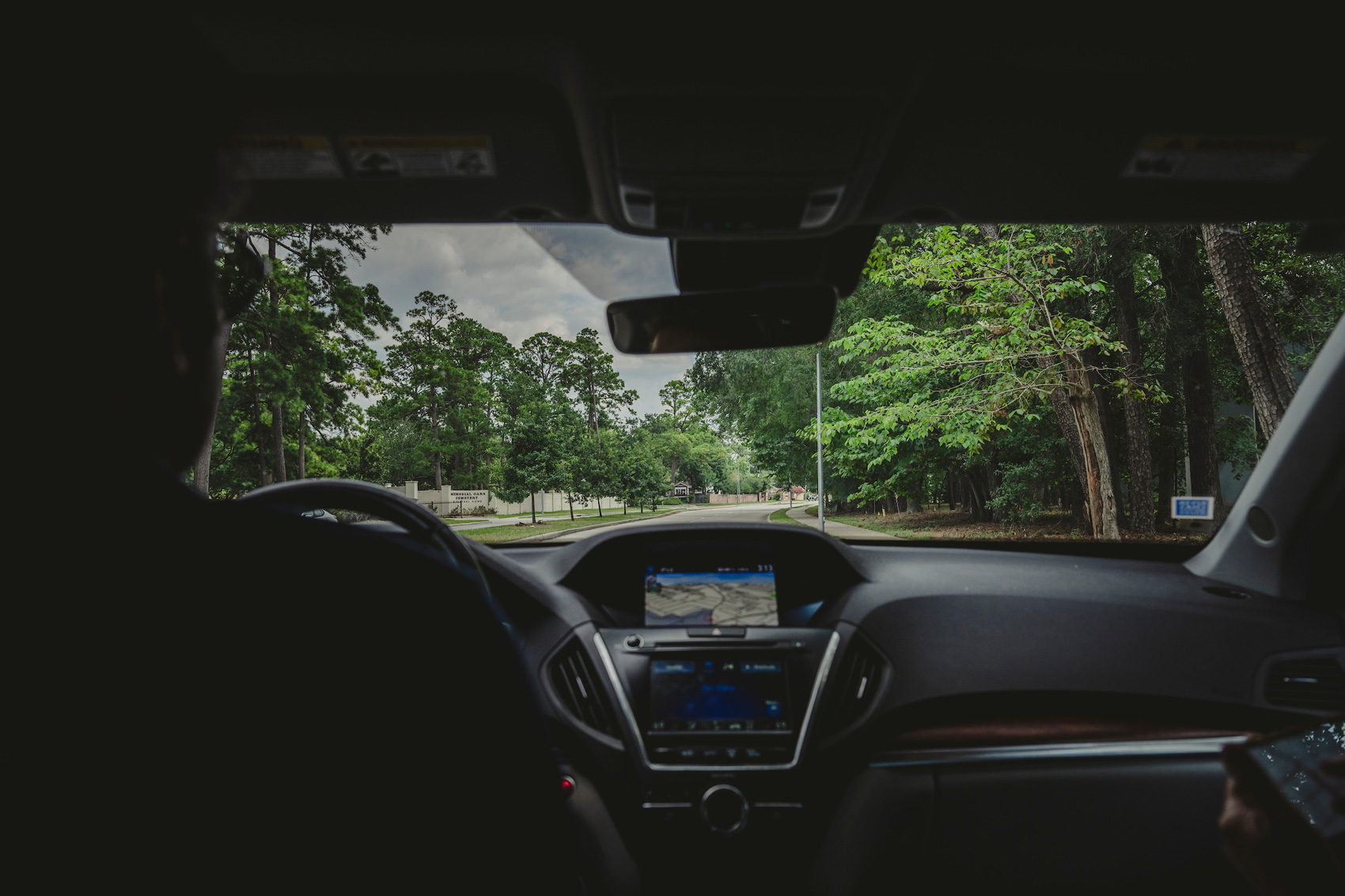
The funding is being used to grow and develop the Barbara Quattro Alief Forest. The plan calls for trees planted along nearly 8 miles of roadway in the community as a green, leafy path for medians and sidewalks.
In Gulfton and Sharpstown, however, there is less space behind the curb or in the median to plant trees, so Guajardo said it’s been a lot of problem-solving and work-arounds in the area, such as extending the curb to create more vegetative space. The precinct is planting more than 250 trees, numerous shade structures to complement the trees and a series of bus shelters with Metro that have a more cooling effect.
Gulfton’s city greenspace – Burnett Bayland Park – is also under a new redesign, with the goal of expanding the original 32 acres to 75 acres.
“Our team here approaches each infrastructure project in a way that thinks through sustainability and resiliency in a much more holistic way,” said Lesley Briones, commissioner for Harris County Precinct 4. “When we put down sidewalks, we don’t just put concrete down, we’re thinking how we can build things that address equity.”

Still, changes like this take time. The plan is to have many of these projects completed or in the works by mid to late 2026. In the meantime, Briones said the Precinct has 10 community centers to get out of the heat this summer, as well as cooling centers that pop up during extreme heat events.
The hottest neighborhoods in 2020 were the same in 2024. Piper from HARC plans to analyze the data further to better understand how tree planting has helped, but it takes years for trees to reach their full service and shade potential.
“This is one of those kinds of details in the data that we want to tie into tree canopy more explicitly in the future,” Piper said. “That’s definitely something we’re looking to understand on a more detailed level.”

