

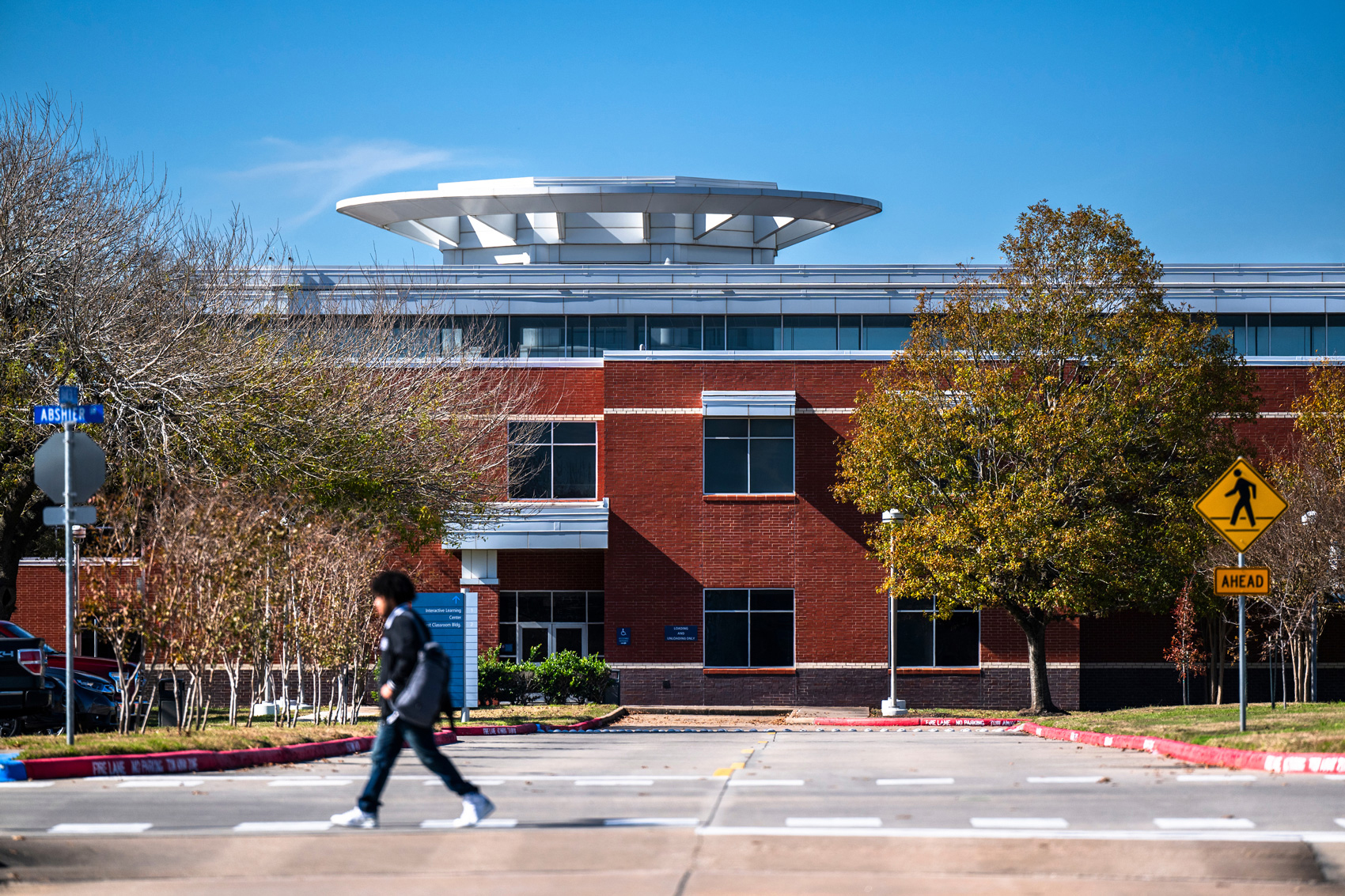
San Jacinto College will offer a new bachelor’s degree in logistics and supply chain management in the spring 2026 semester, a sign of the school’s growing focus on educating future and current employees in an industry that helps drive Houston’s economy.
Trustees unanimously approved the new program Monday, marking the college’s fourth bachelor’s degree and the second program introduced by the college in the past year aligned to the logistics and distribution fields.
“We’re listening to our industry partners, and they’re telling us what we need to focus on, which seems to work best,” SJC Board Chair Dan Mims said. “This is an example where the demand is there, supply is not where it needs to be, and we’re able to fill in the gaps.”
With the new bachelor’s degree, college officials will focus on grooming the next generation of employees in the industry, which oversees the management and movement of goods from producers to consumers. In Pasadena, just over 70,000 employees work in the logistics, material and supply chain industry, with many serving the area’s prominent petrochemical companies, according to the Pasadena Economic Development Council.
“We’ve been educating a lot of dual credit students, high school students, about careers in this industry, because they don’t really know — they think the Amazon package just magically shows up on their doorstep,” said Alexander Okwonna, provost of SJC’s North Campus, where the program will be housed.
The industry’s importance to southeast Houston is evidenced by the warehouses that dominate its landscape and the nearby Port of Houston, a shipping hub that moves the most cargo in the U.S. Major logistics and supply chain employers in the southeast Houston area include AXion, Kaneka North America, Wilhelmsen Port Services and CBSL Transportation Services, according to the Pasadena Economic Development Council.
The new program was born from a partnership with companies in the area. All of SJC’s technical programs have an advisory committee of industry leaders that provide input about topics like curriculum and share information about industry needs.
In this case, representatives from employers such as Lyondell-Basell, TransUnion, DHL, FedEx and Amazon told SJC leaders a higher-level degree is needed.
“They gave us that input around that really big need to have a bachelor’s degree, because of managing all of the complex data that surrounds the movement of materials — really, those higher level skills,” Okwonna said. “ They really said, ‘Hey, this is the direction you really need to go.’”
related to education
Hundreds of Pasadena ISD students graduate high school with a college degree. Here’s how.
by Miranda Dunlap / Staff Writer
The college’s existing two-year logistics and supply chain program has attracted more students in recent years, though it remains much smaller than most of its programs. In the fall 2024 semester, 63 students enrolled in the program, up from 32 in the fall 2019 semester. Houston Community College also introduced a new supply chain and logistics associate degree program in 2023, citing growing demand in the field.
In March, SJC also plans to debut a competency-based education program in the same subject, which allows students to move through instruction online at their own pace and ultimately graduate with a degree or technical certification. College leaders plan to target current local logistics and distribution employees who want to “upskill,” or gain more skills to advance their career.
Julianne Echavarria, marketing manager for the Pasadena Economic Development Council, said in a statement the added programs at the college are “a significant value add to the Pasadena labor market” that will “help the community unlock new potential in the labor force, add jobs and enrich the already existing and thriving group of industry professionals.”
College officials will soon begin looking for a director for the new program and plan to hire additional faculty, Okwonna said.
The college can add just one more bachelor’s degree program once the new program launches, as state law allows community colleges to offer up to five bachelor’s programs. Other large colleges have expanded their four-year program choices, with Houston Community College offering two and Lone Star College offering four.
SJC officials said any additional programs would be decided by what their industry partners say is needed.
“It all starts with listening,” Mims said.

