

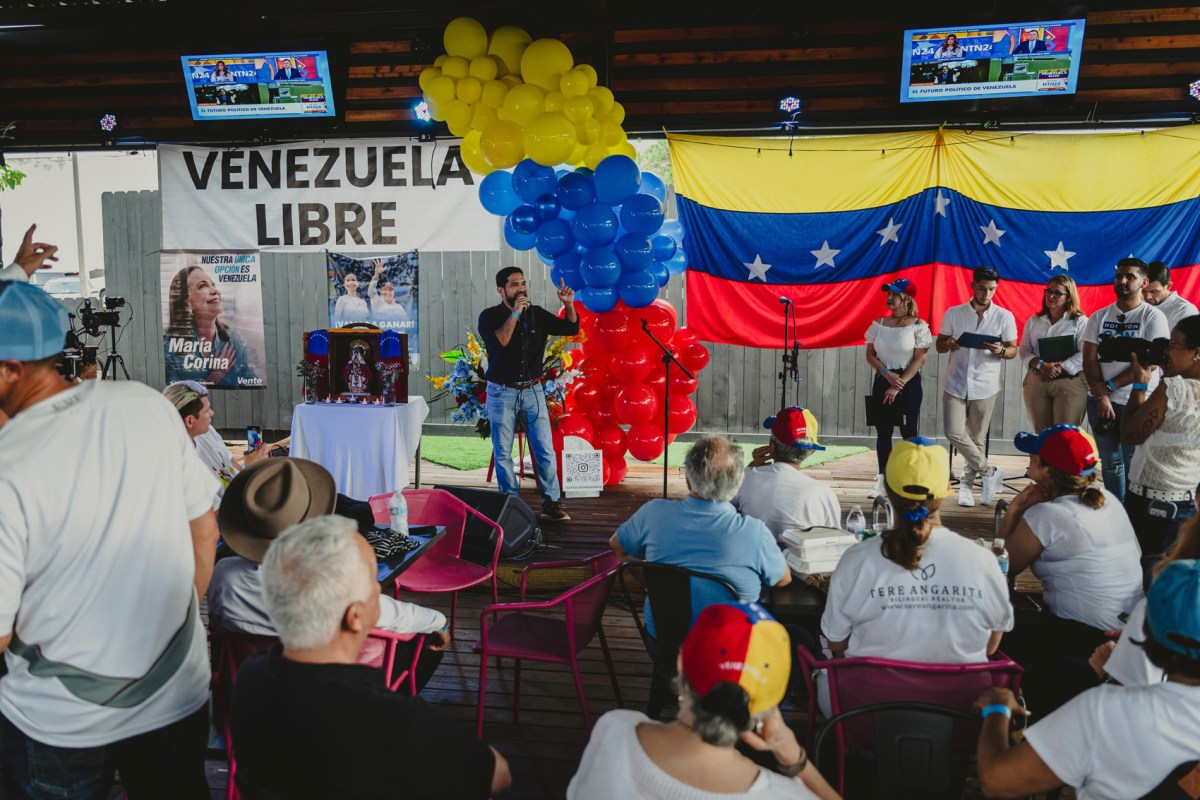
Department of Homeland Security Secretary Kristi L. Noem revoked on Tuesday the extension of Temporary Protected Status for Venezuelans granted by the Joe Biden administration in its last days in office. The extension would have granted 18 months of additional protections for Venezuelans with TPS status expiring in April and September of this year.
The decision could potentially strip 600,000 Venezuelans in the U.S. of deportation protections as the Donald Trump administration focuses on immigration enforcement, leaving many Venezuelans in Houston vulnerable to detention and deportation.
The exact number of Venezuelans with TPS in Houston is unknown, but Venezuelans are one of the fastest growing immigrant populations in the area. The population has grown more than five-fold from 2010 to 2021, and there are at least 54,000 Venezuelan residents in Houston as of 2021, according to non-partisan think tank Migration Policy Institute.
Noem is now reviewing the decision and could issue new guidelines for an extension of TPS by Feb. 1. If she does not issue a new decision by then, the status will renew automatically for six months. Still, hundreds of thousands of Venezuelans risk losing their TPS status this year.
Trump’s attacks on TPS
Noem claimed in an interview with Fox News that people with TPS are “violating our laws,” but TPS is a legal status established by Congress since 1990 for people from countries facing a war, natural disaster or humanitarian crisis.
TPS grants protections from deportation and provides a work permit. However, it does not provide a pathway to citizenship, leaving most recipients to rely on DHS to continue renewing the designation to maintain legal status in the U.S.
As of 2019, there were an estimated 27,000 TPS recipients in the Houston area, mainly from Honduras and El Salvador, which were granted TPS in 1999 and 2001 respectively. The number has likely grown since Venezuelans were first granted the status in 2021.
To qualify for TPS, a person must be in the U.S. when the designation is issued, and TPS is not extended to immigrants who arrive in the country after the designation date.
During his first presidency, Trump tried to end TPS protections for six nationalities, including Salvadorans, Hondurans and Haitians, claiming that past administrations had abused the status through repeated extensions. He was blocked by the courts.
The National TPS Alliance, an advocacy organization led by TPS recipients, said that it would continue to unite against any attack on TPS.
“An attack on one is an attack on all,” the National TPS Alliance said in a statement. “While there has been talk of division among immigrants based on national origin—whether from Venezuela, Mexico, El Salvador, Haiti, or elsewhere—the simple truth is that the Trump administration seeks to remove all of us, along with our children and future generations.”
Venezuela’s TPS designation
The Biden administration granted Venezuelans TPS in 2021 because of the humanitarian and political crisis there that has led nearly 8 million Venezuelans to flee. Food shortages and electricity outages have become common in the South American country. Imprisonment, torture and forced disappearances of political dissidents have increased as president Nicolás Maduro has clung to power.
Former DHS Secretary Alejandro Mayorkas then issued a second TPS designation for Venezuelans in 2023.
Laura Becerra, a Venezuelan immigrant and movement politics director at Texas immigrant and workers rights organization Workers Defense, called the decision to revoke the TPS extension a “cruel and heartless act that will shatter the lives of hundreds of thousands of families.”
“I know firsthand the devastating reality that Venezuelans face. No one chooses to abandon their home, their culture, and their loved ones unless staying is no longer an option,” Becerra said in a statement.
Trump previously granted removal protections to Venezuelans in one of his last acts in office, citing “the deteriorative condition within Venezuela, which presents an ongoing national security threat to the safety and well-being of the American people.”
Noem’s decision and her comments claiming Venezuelans are fueling crime in the U.S. is a departure from Trump’s first-term approach to Venezuelan migrants.
Becerra challenged Noem’s justification for terminating the extension based on supposed criminals and gang members with the status. Cases of known Venezuelan gang members in Houston are low, and anyone who applies for the status undergoes a background check and a criminal record disqualifies them from the status.
“The people who sought refuge in the U.S. under TPS are not ‘dirtbags,’ as Secretary Noem disgracefully stated,” Becerra said. “They are hardworking individuals seeking safety and stability for their families.”
What should Venezuelans with TPS do?
Venezuelans with TPS will continue to have their status, including their deportation protections and work permits, until their expiration in April or September.
New applications will not be accepted and pending applications will not be processed, the DHS memo states. All fees paid to renew TPS under the Mayorkas designation will be refunded.
Jorge Márquez, director of the non-government Houston-based organization the Venezuelan American Center, said that TPS recipients should wait until Feb. 1 to see the new guidelines issued by DHS.
“Whoever has TPS approved until April or September continues enjoying those same benefits. Their work permits remain valid until that date,” Márquez said. “We hope that in the next few days the new conditions for extension are published.”
If and when new guidelines are issued, anyone who applied under the previous extension should reapply, Márquez said.
He urged people not to panic despite the flurry of changes in immigration policy since Trump took office.
“We want to send a message of calm,” Márquez said. “Those Venezuelans who find themselves in the U.S. and that enjoy this protection, the majority are good Venezuelans, Venezuelans who have come to contribute to this country.”

