

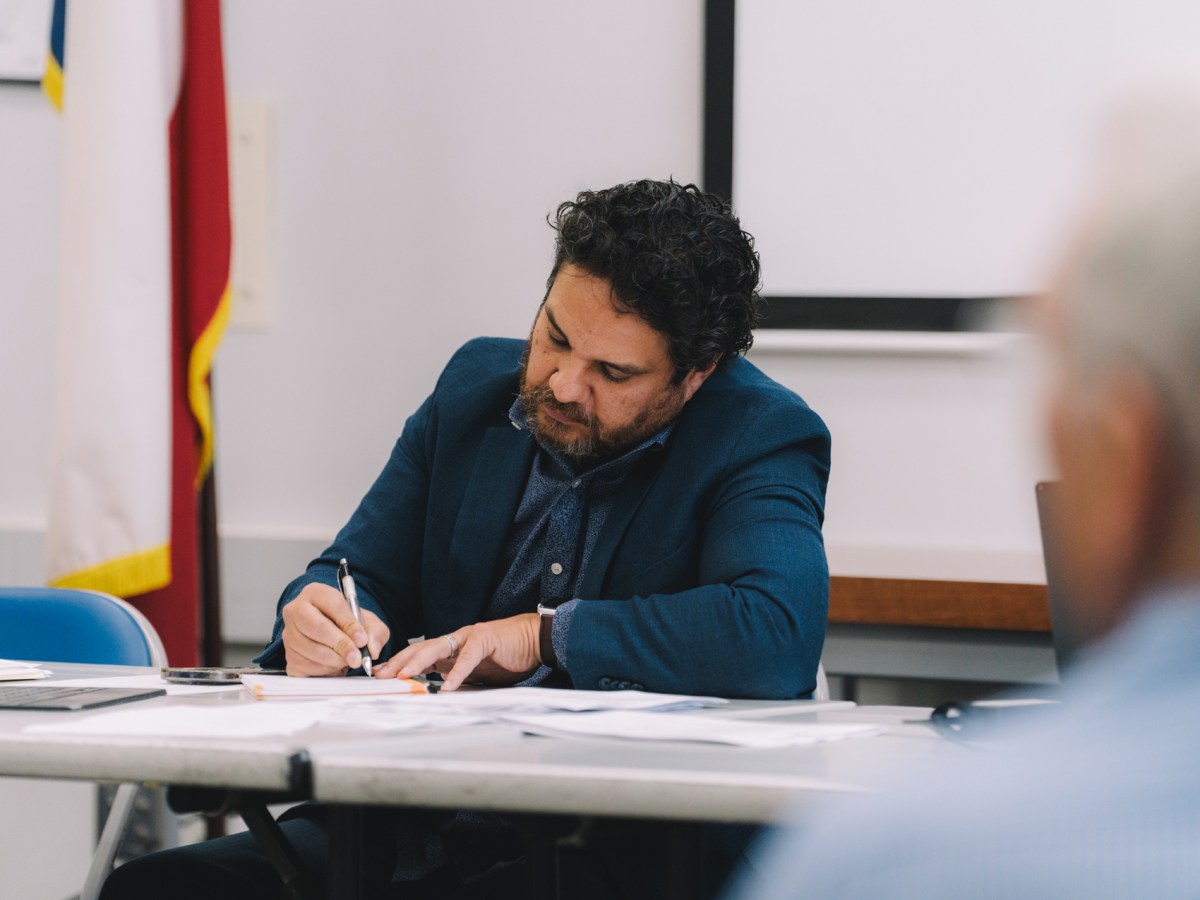
If you ask Bert Ruiz, making a developer reverse course on plans to build a new apartment complex in his community is one of the Braeburn Super Neighborhood Council’s greatest successes.
Residents were concerned about the impact the proposed complex would have on flooding and drainage in their southwest Houston neighborhood.
Ruiz, president of the Braeburn Super Neighborhood Council, recalled his predecessor using relationships the council had built with elected leaders to relay the community’s concerns. After hearing the discontent from residents at a super neighborhood council meeting, the developer withdrew the project.
“So, that’s an example where, if you have the numbers … you’re prepared with some questions to ask the individual or the presenter, and then you’re able to articulate your reasons for pushing back on something, that it can come through,” Ruiz said.
RELATED: Newcomer and lifelong resident team up to launch Fourth Ward super neighborhood
Super neighborhood councils like Braeburn’s help residents organize around infrastructure and quality of life issues and offer community members a more potent and unified voice at City Hall.
Currently, however, nearly half of Houston’s 88 designated super neighborhoods are inactive.
History and function
Spearheaded by former Mayor Lee Brown in 1999, Houston’s super neighborhood system was intended to create a framework for community action that allows the city to work with neighborhood residents more efficiently, according to the city’s super neighborhood handbook.
As the name implies, super neighborhoods typically bring together adjacent communities bound by physical or geographic features that share similar cultural identities and infrastructure.
Each super neighborhood has a designated community liaison within the Mayor’s Assistance Office. The liaisons work with super neighborhoods to facilitate direct communication and act as a primary point of contact at City Hall.
Currently, 42 of Houston’s 88 super neighborhoods are inactive, meaning they do not have a leadership council or meet regularly. Some never activated after their creation in 1999, and others have become inactive over time, said Sandra Cortez, the city’s super neighborhood coordinator.
The pandemic was a catalyst for many super neighborhoods falling inactive, Cortez said, with some leaders dying from COVID-19 and others unable to make the transition from in-person to virtual meetings.
Braeburn’s super neighborhood had been active until about 2011, Ruiz said. He helped reactivate Braeburn’s super neighborhood in 2019, and has served in various leadership roles since then. The experience, Ruiz said, has been a net positive for his community.
“It’s put us a little bit back on the radar,” he said. “And you know, when you’ve got city officials or representatives that are responding to you, that’s a good sign.”
Activating your Super Neighborhood
For residents looking to get involved with their super neighborhood, the first step is to check the city’s directory to see if it is active.
If you live in an area with an inactive super neighborhood, the city has outlined a process for activation.
The process begins by submitting an application. Once that is done, a community liaison will be assigned to your super neighborhood and will work with you throughout the activation process.
The second step is to find community stakeholders and hold an initial meeting to gauge interest in organizing a super neighborhood council. Stakeholders should include residents, but also representatives from civic clubs, homeowners’ associations, local nonprofits and businesses operating within the super neighborhood boundaries.
Documentation is important during this stage of the process because the city requires prospective super neighborhood councils to ensure all stakeholders are given an equal opportunity to participate.
Next, the bylaws drafting process begins. The bylaws serve as the governing documents for the leadership council, and provide a framework for holding meetings, electing leaders and making decisions.
The proposed bylaws must be read aloud and voted on at a community meeting, after which super neighborhood organizers must hold elections to determine the inaugural council leadership team.
When all those steps are completed, the super neighborhood council go before the mayor and city council to receive formal recognition as “active.”
The timeline for activation can vary, Cortez said. Community liaisons work at the pace set by community members and do not put pressure on completing activation within a specified time.
Reflecting on his own super neighborhood reactivation process, Ruiz stressed the importance of grass-roots organizing. It is important, he said, to find common issues that will galvanize community members.
“I would just start with what are the areas of concerns, trends, priorities,” he said. “Start focusing on those. … And then, once you’ve got a little bit more engagement, then you can kind of establish the rest of the group.”

