

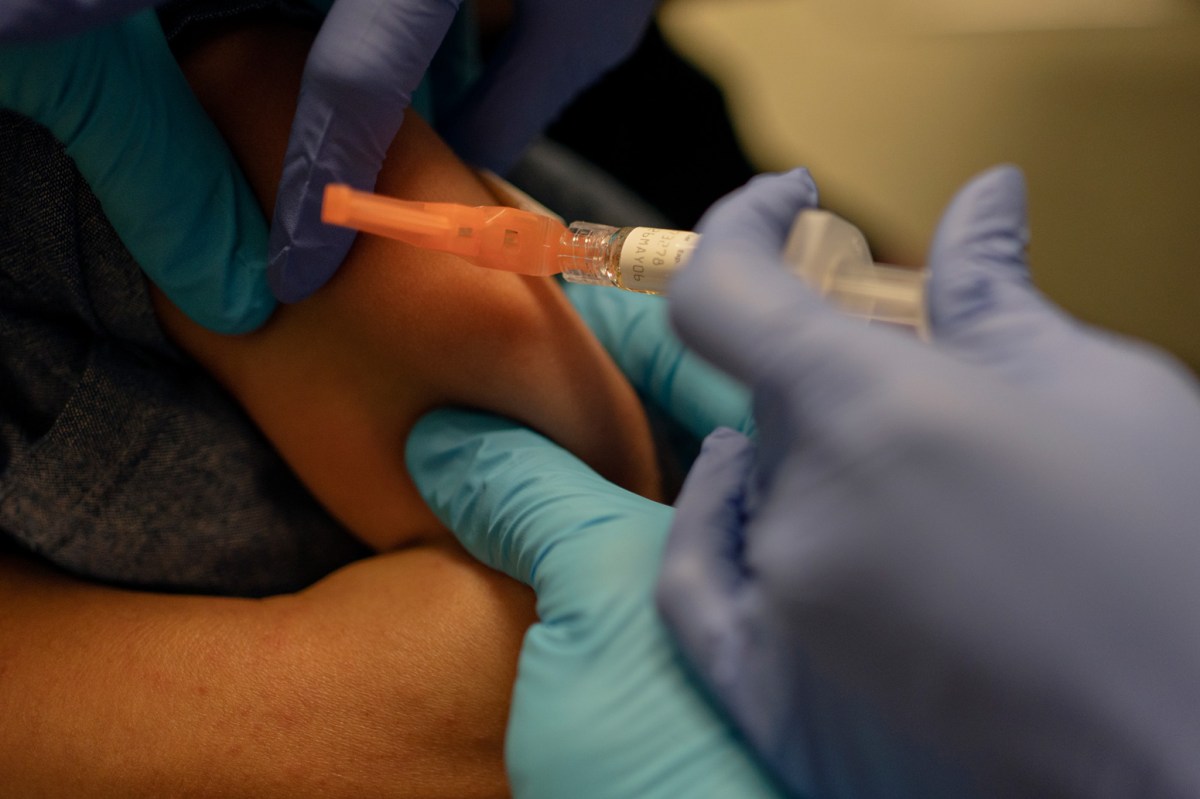
When Joanna Nathan brought her 6-month-old daughter to her pediatrician check-up this month, she came armed with a burning question: How worried should she be about the measles, given that her daughter is too young to be vaccinated?
“I’m nervous,” she told the doctor. “Can we accelerate the shot?”
It’s a question being posed to doctors across the area as the once-erradicated disease flourishes in other parts of the state, and three cases have now been reported in Harris County.
“We’ve definitely been getting an increased number of parents who have concerns about protecting their babies,” said Sapna Singh, chief medical officer at Texas Children’s Pediatrics.
“According to the (Centers for Disease Control and Prevention) vaccination schedule, we don’t routinely recommend a dose under 12 months,” Singh continued. “And that group of parents has been asking, ‘What would allow for that to happen?’”
Count Nathan in that group, along with tens of thousands of other local families; an average of 64,000 babies are born to Harris County residents in each of the past five years, according to state health data.
Nathan’s inquiry was met with clear guidance from her daughter’s doctor: At the baby’s next checkup, when she turns 9 months old in late May, they will assess the situation and determine if a very specific set of parameters has triggered the CDC’s recommendation to issue Nathan’s daughter an early dose. Until then? Wait it out.
“I trust my pediatrician. You know, he’s the expert, so I went with his advice. But at the same time, I’m still a little bit wary and nervous,” Nathan said.
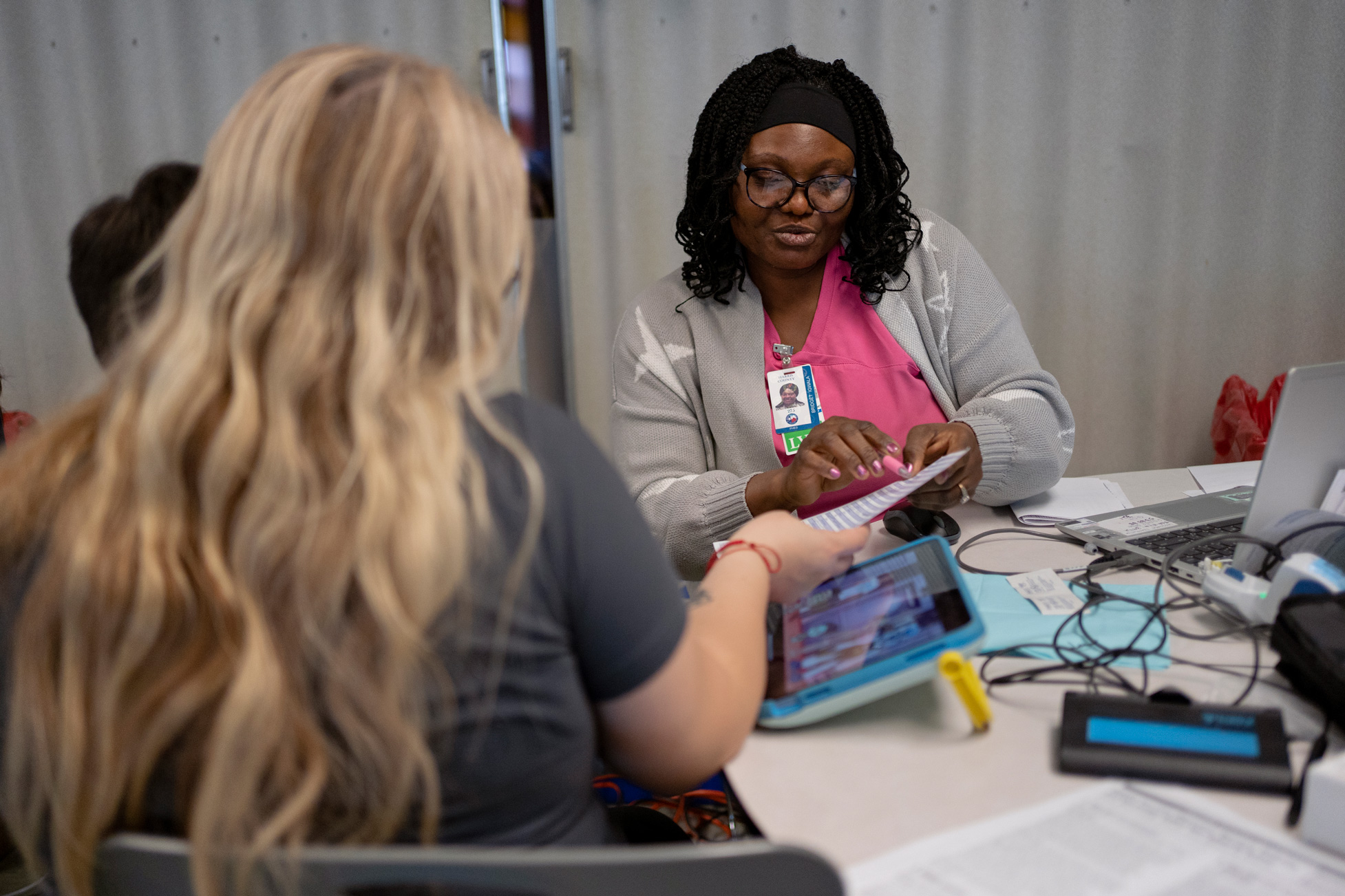
She’s avoiding the rodeo. Rethinking errands, and skipped over indoor attractions at a recent visit to the zoo.
She’s frustrated. Anxious.
“I don’t want to live in fear of a low-probability risk,” said Nathan, whose eldest child died a few years ago when he was only 4 years old. “But that being said, measles shouldn’t even be a low-probability risk.”
A vulnerable polpulation
It’s not that babies are fully unprotected from measles outbreaks. David Persse, chief medical officer for the city of Houston, notes that “between birth and 6 months, the child is probably protected if mom is vaccinated, because mom’s antibodies will carry over to the baby.” At 6 months, Persse says kids enter a “gray area” as passed-down immunity wanes ahead of the 1-year mark when children become eligible for the first of two measles shots. (The second is typically issued at 4 years, and increases a child’s immunity from 93 percent after one dose to 97 percent after two.)
But Persse and Singh both point to certain exceptions that would allow parents to request their child receive a first dose early. The first exception is if a child is travelling either internationally or domestically to an area where an outbreak has been declared. At this point, that would include travel to 12 Texas counties, concentrated in the state’s South Plains and Panhandle regions, where the majority of Texas’ 259 cases since January have been reported.
The second exception is if Harris County is deemed an “outbreak” area itself – a designation that would require three cases of measles and proved local spread.
“You can get the vaccine as early as 9 months” for babies exposed to a community experiencing an outbreak, said Roselynn Ruth, director of nursing for Harris County Public Health. “But of course, Houston is not in outbreak status.”
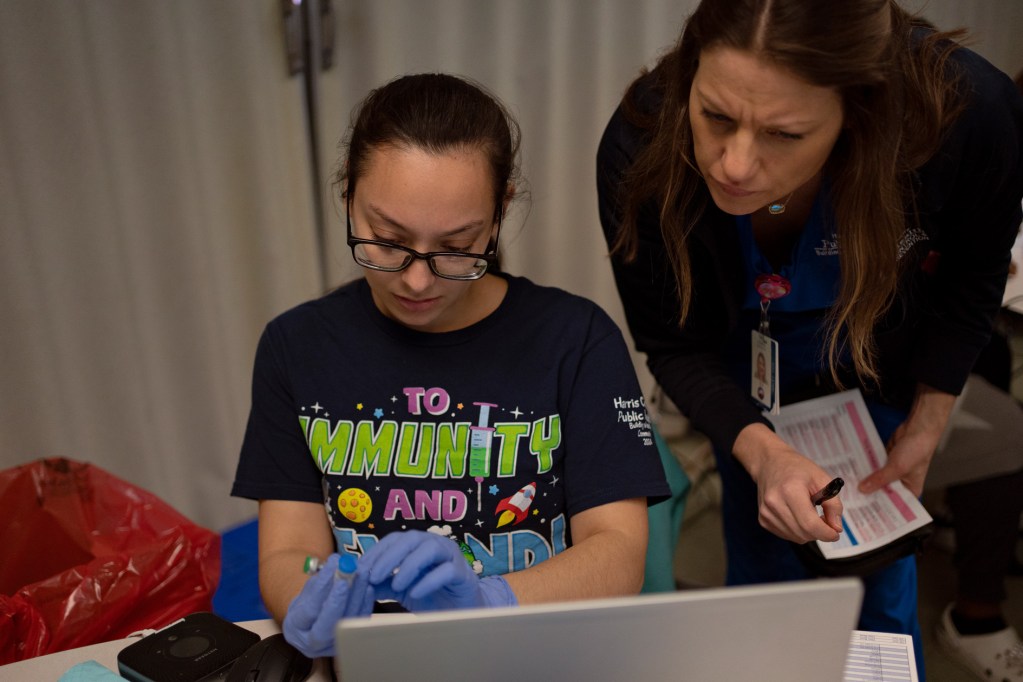
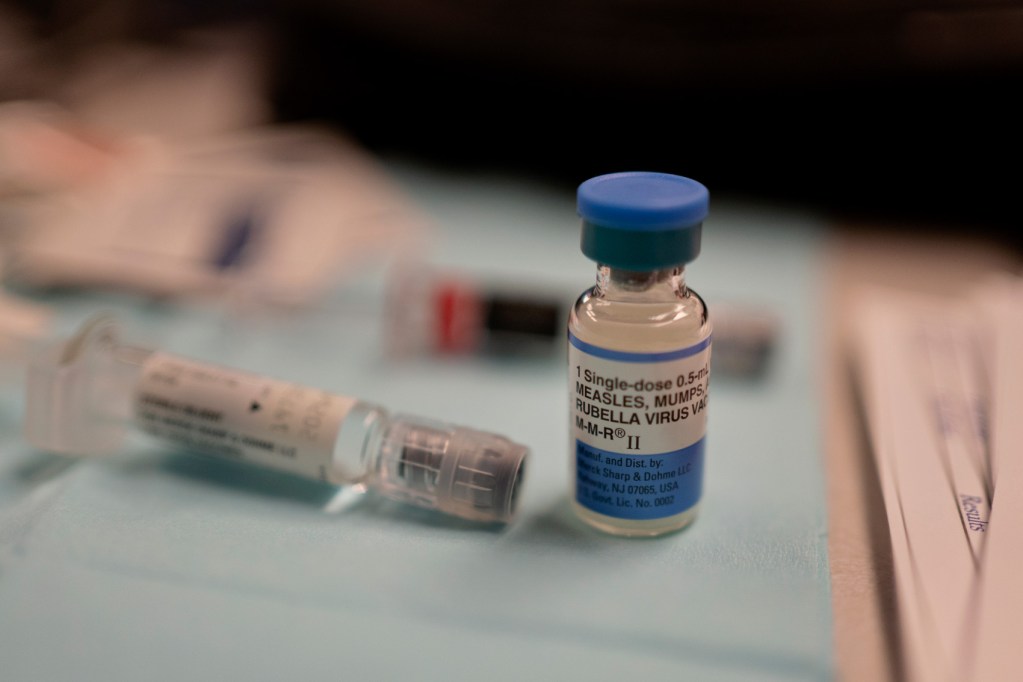
While Houston logged its third case earlier this week when an unvaccinated infant – too young for the shot, just like Nathan’s daughter – was diagnosed with the virus, the child’s case was a result of international travel, and not related to the two positive local cases confirmed in January.
Babies who receive a dose at 9 months still need another dose when they turn 12 months old, and another at 4 years. Think of it as an extra dose, rather than an early one, said Persse.
Extra shots aren’t a perfect solution, given that they would still leave thousands of kids between 6 and 9 months old unprotected. As such, local health officials stress the need for parents – and other members of a child’s community – to protect children who cannot yet receive a shot.
“Everybody should be concerned from a preventive stance, to make sure your kids are vaccinated and up to date,” said Ruth. And it goes beyond children’s vaccines. In the years since the COVID-19 pandemic, vaccination rates among all Texans – for a wide range of diseases – has consistently decreased. Ruth and Persse recommend parents, grandparents and other adults who might be in contact with small children check their vaccination status as well.
“For a child, your best protection is if everyone that is around them, which is your family members, is vaccinated. We call it cocooning,” Persse said. “You cocoon the one who can’t be vaccinated with those who can be, and that should protect us.”
A ‘cocoon’ of safety
The idea of a safe cocoon was particularly attractive to Kat Nakhleh, a mother with 6-month-old twins.
“My husband and I, we got measles boosters,” said Nakhleh. “We’re nervous enough to read up on it, and you can check up at CVS or an urgent care, to see if you have antibodies still. And I looked at my husband and said, ‘Why don’t we get the shot anyway? There’s no downside.’”
At 34 years old, Nakhleh and her husband do not fall in the donut hole of older adults who need a second shot due to a less effective shot administered between 1963 and 1967. But as she looks for ways to protect her kids, receiving another shot felt like an opportunity to grab some control in a situation where her lack of control can feel overwhelming at times.
“I would never be getting boosters unless I felt like I had to. I don’t want to be a vector,” she said. And one thing that health experts like Persse, Singh and Ruth stress is that being vaccinated is a powerful stonewall against spreading measles. While measles is explosively contagious – Persse points out that “it is at least 10 times more easily spread than the flu or COVID” – immunized people do not shed or carry the virus.
That little bit of control is reassuring to Nakhleh. But her worries persist.
“All this anti-vax stuff is so much more infuriating now that I have a child than they were before. This isn’t a theoretical risk. It’s real, and people are making a decision that is so antithetical to any decision I would ever make with my child and my life,” she said. “Measles kills, but it’s not just death. It’s deafness, it’s cognitive issues. It’s crazy what people are willing to put at risk.”
Like Nathan, Nakhleh has skipped the rodeo. But the twins are in day care. She and her husband are back at work. This isn’t the pandemic, she reminds herself.
Still, she keeps an eye on the news. She and her husband have identified a threshold at which they will change their everyday habits.
“If it gets closer to Houston, like if there’s an outbreak in San Antonio, that’s the scenario where we would really change what we’re doing,” she said. “But we’re just hoping we can get to the 1-year mark – or at least the 9-month mark, if that happens – and get the shot.”

