

Waiting for Harris County to finish its vote count after the polls close on Election Day can feel like watching paint dry.
Political junkies and news media often spend hours Election Night repeatedly refreshing the results pages at harrisvotes.com, waiting and pleading for new numbers.
Harris County historically has been one of the last — if not the last — counties to turn its final vote tally into the state on Election Night. And in the last several years, it has seemed to have gotten worse.
In 2021, the county did not finish counting Election Day votes until 8:30 the next morning. Voter turnout for that Nov. 2 election was 9.2 percent, and a majority of ballots were cast during early voting.
Election administration experts blame the lengthy wait times on Texas’ Election Code, county officials following vote-counting best practices, and Harris County’s sheer size.
The combination creates a lengthy tallying process that can take county employees well into the morning after Election Day to complete.
“It’s just a different ball game when you’re dealing with these large counties and large metro areas,” said Jennifer Morrell, chief executive officer of The Elections Group, a national organization that partners with state and local voting jurisdictions to help improve election processes and procedures.
Harris County elections are run through County Clerk Teneshia Hudspeth’s office, but election policies — governing everything from the types of IDs voters must bring to the polls; the type of machines voters use to cast their ballots; and how and when vote counting is conducted — are set at the state level.
Hector de Leon, senior advisor for government affairs and public engagement at the Harris County Clerk’s office, said following state policies surrounding how votes are counted is time consuming, especially when performed in a county the size of Harris, contributing to what the public may perceive as delays.
“The perception from the standpoint of an elections official and the standpoint from the outside — the public or media standpoint — when you don’t have the base guidelines that are provided by the law, it seems to be portrayed always in a negative way,” de Leon said.
The process
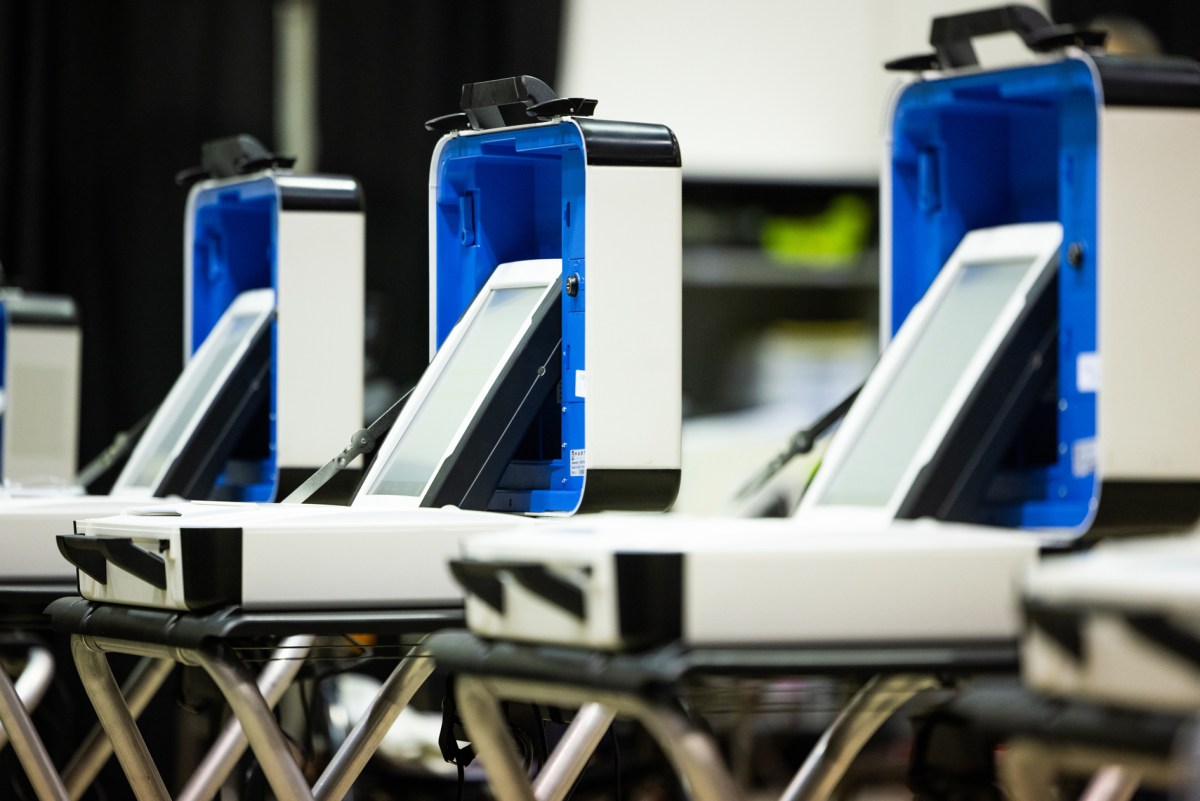
Once polls close on Election Day, each of the county’s 700 voting centers must be properly closed down, with necessary scanners and ballot boxes loaded up to be transported to Harris County’s vote counting headquarters.
Election judges also must fill out paperwork that includes such information as the number of voters who checked into the polling location and how many ballots were scanned throughout the day.
This process, which former Harris County Elections Administrator Clifford Tatum said can take about an hour, can be further slowed if voters still are waiting in line to vote at 7 p.m., the time when polls officially close.
This year, de Leon said, Harris County will employ six “rally stations” across the county. Once election judges finish closing down their voting centers, they will transport voting equipment to an assigned relay station where a first count will take place.
Rally stations are more common in larger voting jurisdictions like Harris County, said Tammy Patrick, chief executive officer for programs at the Election Center, a national nonprofit providing training, certification and support to election administrators and voter registration officials.
At these stations, de Leon said, one of the two identical memory cards inside each ballot scanning machine will be used to count votes and transmit those tabulations back to the county’s vote counting headquarters.
The stations are subject to the same guidelines as the county’s vote-counting headquarters, according to Texas’ central counting station handbook. That means before any actual counting can take place, a laundry list of verifications and equipment certifications must take place.
According to a video produced in 2022 by the former Harris County Election Administrator’s office, that process includes checking the paperwork filled out by each election judge, matching up serial numbers on different pieces of equipment submitted from each polling location, and securing paper ballots to be stored in case a hand count or election audit is required.
Each of the machines used to scan the paper ballots undergoes these counting verification steps.
New counting headquarters
After the rally station, voting equipment is taken to Harris County’s vote- counting headquarters. This year, Harris County’s counting center will move from NRG Stadium to a location on Morales Road, near George Bush Intercontinental Airport. There, a second vote count is conducted.
The secondary count, de Leon said, is required to verify the results of the first, and help election workers determine whether there are any discrepancies.
It is unclear, he said, if this new double counting process necessitated by the use of the stations will impact the time it takes to fully release unofficial results.
After the votes from each machine are counted, they are reviewed and verified by representatives from both major political parties before they can be uploaded to the county’s unofficial vote count website.
Along with counting in-person ballots, election workers also must process and count the mail ballots received on Election Day, which generally involves multiple steps and verification procedures, Morrell said.
From sorting out envelopes, to matching received ballots to the voters who submitted them, to simply opening and placing ballots inside counting machines, Morrell said, it is easy for time to quickly add up throughout this process.
Taking into account the requirements election workers must follow combined with the fact that Election Day involves thousands of machines from 700 polling locations across more than 1700 square miles, Director of the Bipartisan Policy Center Elections Project Rachel Orey said Harris County is actually doing pretty well.
“I don’t want to characterize them as if they’re behind the curve because I think in many ways their policies are actually pretty good,” Orey said. “Some of the barriers with regard to just being a very large county with more than 2.5 million voters, these are some challenges that are just insurmountable.”

