


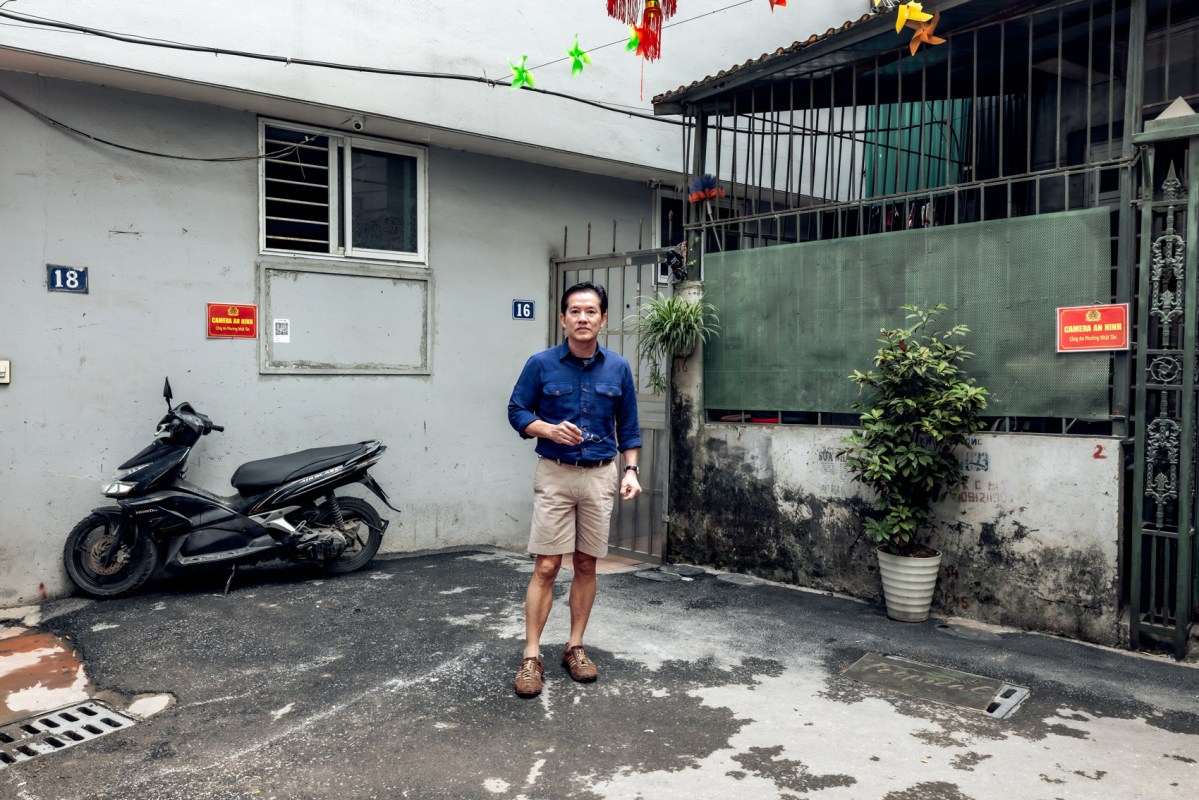
Like many a legendary Texas tale, Tu Nguyen’s is one of murder, justice and revenge.
It’s a story of one man’s quest to avenge the 1982 killing of his father, a pioneering investigative Vietnamese journalist gunned down in the driveway of his Houston home. The murder has never been solved. No one has ever been arrested.
Nguyen has spent more than a decade trying to track down the people who killed his father. He’s gone undercover in Thailand and Vietnam to expose corruption by anti-Communist groups, much like his dad. Nguyen received anonymous threats to stop searching for the truth, just like his father.
The hunt has led to many frustrating dead-ends. It has polarized the Vietnamese community in ways that still resonate 50 years after the end of the 20-year war in Vietnam. It has created fissures among Nguyen’s own Houston family members, some of whom wish he’d give up on his quest. It has brought Nguyen small – if fleeting – moments of peace. But a sense of resolution has been eternally elusive.
“I’m still seeking justice,” Nguyen said recently. “Not just for my family, but for other journalists, as well.”
Nguyen’s lifelong search began on the morning of Aug. 24, 1982, when his father, still wearing his pajamas, was shot dead outside his southeast Houston home. The killing of Nguyễn Đạm Phong was a shock, but not a surprise.
Phong had been a respected investigative journalist in Saigon during the war who was forced to flee the country when the Republic of Vietnam fell in 1975. Phong put his wife and 10 kids on an overcrowded fishing boat bound for the Philippines in 1975, and told them he would join them once he helped other journalists escape.
Nguyen, then 9, had little understanding of what was happening around him. He watched in awe as people shot at the helicopters flying over Saigon – until he realized people were dying. He clambered onto the boat with his family and nearly 100 other people as they set off for safety. It would take weeks for the boat to travel across the South China Sea. They had to crudely filter ocean water to drink as they ran out of fresh water on the boat. Nguyen saw several people, including children, die on the journey.
The refugees were saved by a U.S. warship that plucked them out of the water. When an American sailor asked Nguyen what he wanted to drink, he replied with the only word of English he could think of: Coca-Cola.
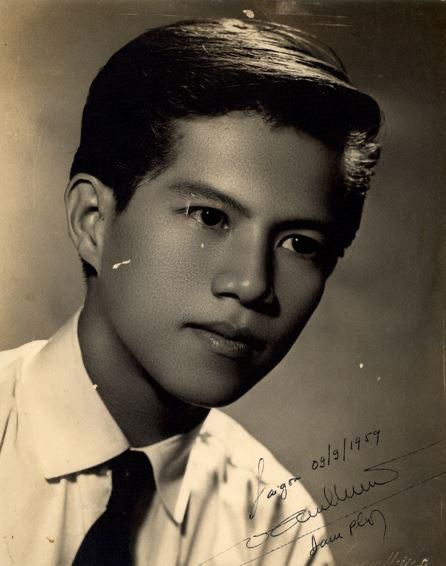
Nguyen waited in the Philippines with his family for word from his dad. Every day, his mom cried and checked the United Nations lists for Phong’s name. It took six months for Phong to make it out of Vietnam. Once reunited, the family traveled to Guam, then Arkansas, and, finally, to Houston, where they were among the first Vietnamese war refugees to find sanctuary in southeast Texas.
RELATED: 50 years later, the fall of Saigon still resonates throughout Houston’s Vietnamese diaspora
Phong took whatever jobs he could find. He worked in landscaping. He made dental crowns. But he longed to return to journalism.
In 1981, Phong launched a new Vietnamese-language newspaper in Houston –Tự Do , which means “freedom.” Phong quickly alienated his fellow Vietnamese refugees by writing stories critical of the influential anti-Communist groups in the United States that were working covertly to train a new militia to try to topple the Vietnamese government.
Phong’s scathing stories drew repeated threats that rattled the family. Nguyen repeatedly urged his father to stop making people angry with his newspaper. Night after night, the family phone rang with threats from anonymous callers.
“I told him from day one I didn’t like it,” Nguyen said of his father’s crusading journalism. “My family put the words ‘freedom of the press’ on a pedestal. But I didn’t want anything happening to my dad.”
Nguyen was at the University of Houston on Aug. 24, 1982, when gunmen turned up at the family home and shot his father dead in their driveway. Preoccupied with worry about his father, Nguyen found it hard to concentrate on the test he was taking. Then he called home and got the life-changing news.
“His pen was his rifle,” Phong’s wife, Hoa Troung, told The Washington Post after her husband was killed.
A Houston police investigation went nowhere. Detectives had few connections in the small-but-growing Vietnamese refugee community. And language and cultural barriers made it difficult for investigators to make any inroads.
Tony Nguyen, a California-based documentary filmmaker who produced a film about the unsolved 1981 killing of another Vietnamese journalist in San Francisco, said the attacks sent a distinct chill through the community across America.
“Even if they weren’t political hits, they had a profoundly political effect in silencing the voices in the community,” he said. “Especially if they differed from the strong anti-Commuist rhetoric at the time in the 1980s.”
Tu Nguyen’s own search for answers took a decisive turn in 2015, when an investigative reporter with ProPublica reached out to the family with questions.
A.C. Thompson was working on a documentary film for Frontline about the unsolved killings of several Vietnamese journalists who had sought refuge in America.
EARLIER: Despite size, Houston’s Vietnamese population lags when it comes to political engagement
Thompson spent a year traveling the country trying to find Phong’s killer, along with those responsible for the death of four other Vietnamese journalists between 1981 and 1990. When it came out, the documentary sent shockwaves through the Vietnamese community by laying blame for the attacks at the doorstep of a group run by former South Vietnamese military officers known as The Front, or the National United Front for the Liberation of Vietnam.
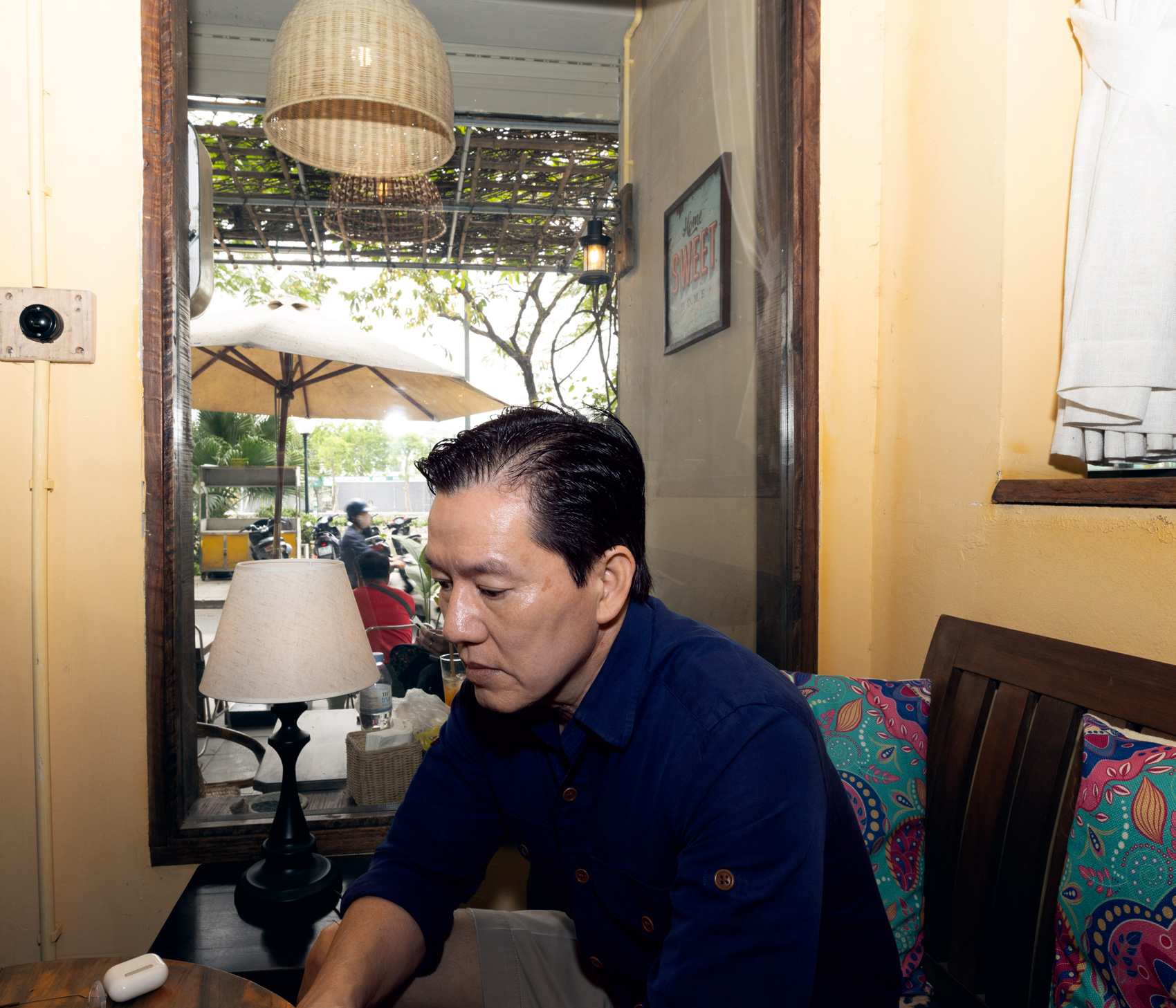
Thompson couldn’t pinpoint Phong’s killer, a regret he carries to this day.
“For Tu, the pain is very present with him every day,” Thompson said. “It has shaped and damaged Tu so profoundly that it hurts talking to him about it.”
Thompson and Nguyen took some solace in putting a spotlight on The Front. But the accusation stirred up old divisions.
“Tu’s pain is his pain, and it’s awful,” Thompson said. “But it’s also this broader phenomenon where the whole community doesn’t have closure. It remains an open wound for this community that has a lot of open wounds.”
Release of the 2015 Frontline documentary became a catalyst for Nguyen. Thompson and journalist advocates tried unsuccessfully to get the FBI to reopen its investigations into the unsolved killings of the Vietnamese journalists across America. So, Nguyen decided to pick up the baton and continue his pursuit for answers.
“I turned to A.C. Thompson and said: ‘You did the best you could. It’s time for you to step aside. This is my duty. It’s my job to take over from here.’”
Nguyen, who runs his own cybersecurity business, developed what he called the “Octopus strategy” to pursue his quest for justice.
“They have tentacles right? You do not want to chop those up,” he said. “You chop them up, they grow out. So you want to pin them down, isolate the head of the octopus and then this is when you move in.”
Armed with declassified FBI files and a series of cold leads, Nguyen set out to identify the people who killed his father. He spoke to former police detectives and Vietnamese refugees that had gone off to Southeast Asia with a quixotic drive to topple the government in Hanoi. He focused his attention on former members of the Front that founded Viet Tan, or the Vietnam Reform Party, which operated underground for two decades before emerging as an American political group pressing for democracy in Vietnam.
Nguyen decided the best way to take on Viet Tan was in the courts. He asked the Federal Election Commission to investigate the group. He sought to challenge the group’s tax exempt status across the United States.
Duy Hoang, Viet Tan’s executive director, said the organization had nothing to do with the killing of Nguyen Dam Phong.
“I hope he finds justice for his father, but we are not in any way related to that,” he said. “It’s a tragedy what happened to his father.”
It wasn’t long before Nguyen received his first chilling threat. In August, 2017, Nguyen said he came out of his house to head to work one morning and found a note on the windshield of his truck.
“Cha nào con nấy cùng một kết thúc,” it read. “Like father, like son – with the same ending.”
Nguyen was rattled, but unbowed. His father had always taken him under his wing and told him about the risks and rewards of being an investigative journalist. Nguyen began to understand his father’s fearless crusade and why his dad had chosen him among all his kids as the one he thought might carry on his mission.
“You learn to love America,” he said. “You learn the true meaning of the word freedom that’s not in the dictionary.”
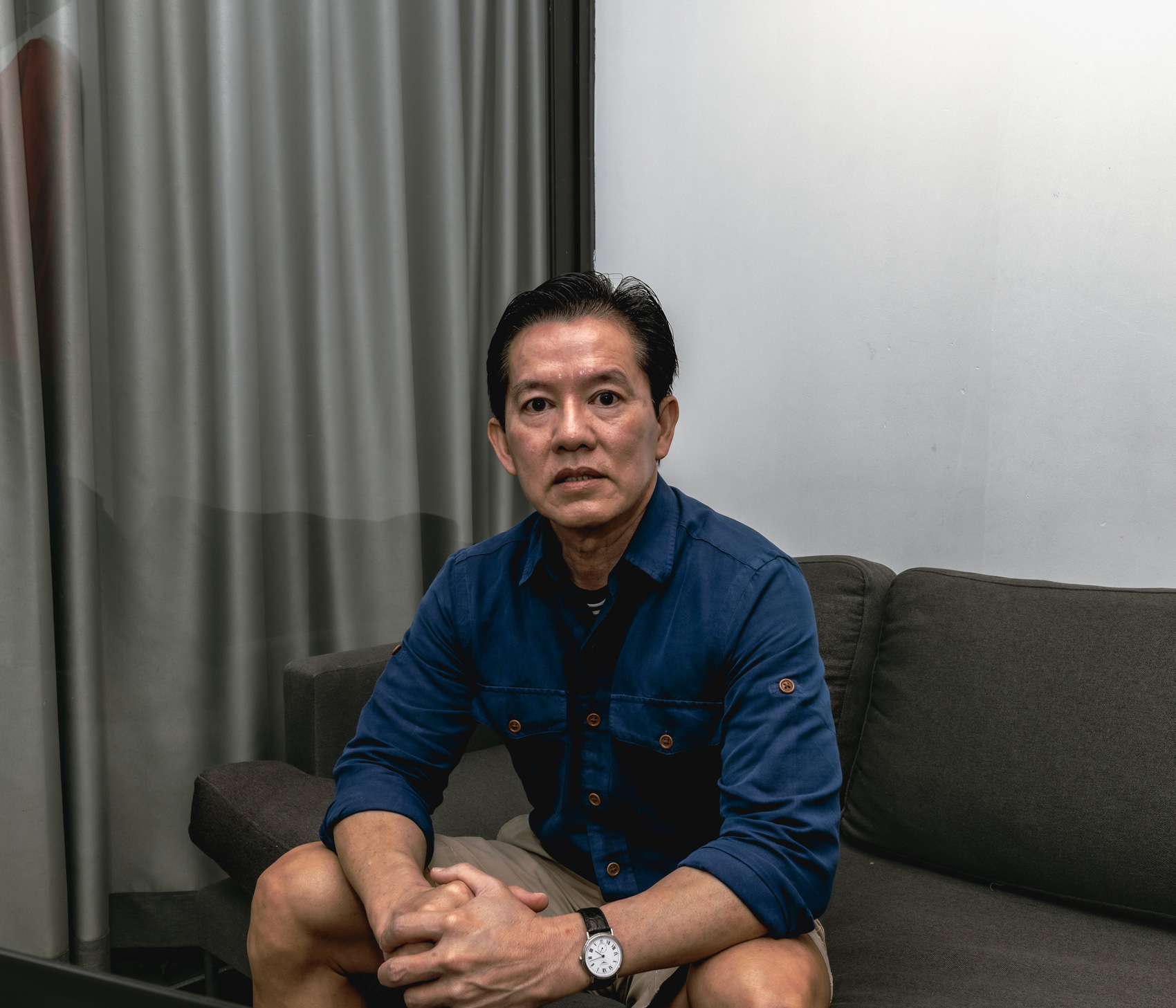
Nguyen’s family grew increasingly concerned about his safety. As Nguyen devoted more and more time to his quest, his wife and kids repeatedly urged him to let the matter lie.
“Time lost to revenge is not time used well,” said Thanh-Thi Nguyen, Nguyen’s 19-year-old son. “I just want him to move on for his own health.”
Thanh-Thi Nguyen said he understands why his father continues to pursue his quest, but wishes he would focus more on the present, not the past.
“I see a lot of my grandfather in my dad,” he said. “My dad doing what he is doing for his father is a form of what my grandfather did for Vietnam in terms of journalism.”
Undeterred, Tu Nguyen set off for Southeast Asia, where he videotaped interviews with former South Vietnamese soldiers who said they had been deceived by the anti-Communist groups purporting to raise money to fund efforts to bring down the government in Vietnam. He posted them on a YouTube channel as part of his efforts to challenge the anti-Communist forces he believed were responsible for his father’s murder.
Nguyen then went undercover to try to expose shady groups promising to help needy people get out of Vietnam that were instead helping well-off people leave the country. Nguyen brought his findings to the Canadian Broadcast Corporation, which used his research as a cornerstone for an investigative 2023 report on the dodgy resettlement programs.
“He’s very persistent,” said Eric Szeto, a CBC journalist who worked with Nguyen on the story. “He’s definitely determined.”
Nguyen found some comfort in exposing the corrupt groups and pursuing the kind of investigative crusade his father had died for.
“In a way, what I did was called revenge,” he said. “I was able to find peace by finishing what my dad was not able to finish.”
But his efforts to find the people who killed his dad repeatedly hit dead-ends. The people Nguyen had identified as the possible triggerman and his accomplices were either dead or suffering from dementia, making it impossible to extract any meaningful information about a decades-old killing.
Nguyen wavers between feelings of satisfaction and regret. Sometimes, he sees the people who killed his dad as pawns in a bigger game, foot soldiers just following orders. Other times, he wishes he could find that elusive piece of evidence to put someone behind bars.
“There’s an emptiness in me,” Nguyen said. “I always wanted the people who killed my dad and the other journalists to pay for what they did.”