


Following the presidential election, the threat of mass deportations has fueled fears among members of the immigrant community about local police officers’ role in immigration enforcement, whether officers will share members of the immigrant community’s legal status with ICE, and even how to tell the difference between police officers and ICE in the first place.
Meanwhile, some major law enforcement agencies in Harris County have expressed concern about how that same uncertainty impacts their ability to fight crime and support victims in a city like Houston, where nearly one-third of the population was born abroad.
“The most important thing for people to know is that not all law enforcement is ICE,” Cesar Espinosa, founder of immigrant rights organization FIEL, told the Houston Landing at a recent presentation to community members. “In the greater Houston area, there’s about 80 agencies that can detain you at any time: constables, sheriffs, [school police]… and not all of them are interested in your immigration status.”
Here’s what immigrant Houstonians should consider to assert their rights when interacting with police and if they’d like to report a crime safely, according to experts:
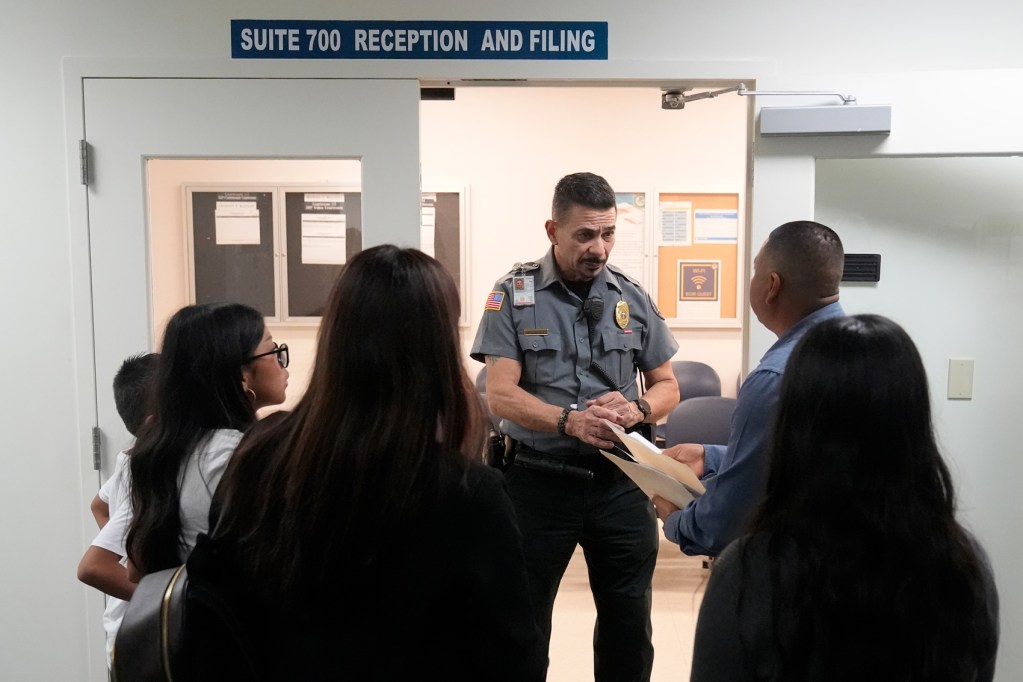
What is the difference between police officers and ICE and how can I tell who I’m dealing with in Harris County?
ICE and local policing agencies serve different core purposes. ICE is a federal agency charged with enforcing federal immigration and customs laws, including deporting foreign nationals.
Local police departments —the county’s largest being the Houston Police Department— can only arrest and detain you for state and local criminal laws unless they have an explicit agreement with federal authorities.
And while police officers can share information and coordinate with ICE, most commonly after an arrest, HPD currently stresses they are limiting proactive coordination with immigration enforcement and there are protections for those who want to report a crime.
“So number one, it’s important for them (the public) to identify who’s who,” Espinosa told the Landing.


At the HPD, the most common uniform worn by officers is black with a yellow-bordered patch on the shoulder. At the Harris County Sheriff’s Office —the second largest department in the county— the most common uniform is dark blue with a gold and brown patch on the shoulder.
But there are over 60 law enforcement agencies operating in Harris County. And Immigration and Customs Enforcement agents have been known to wear uniforms which say “police,” and are allowed to impersonate law enforcement.
Experts say:
- Ask for the officer to show you their badge and identification. They are required by law to show it to you, and the badge will identify the police department or agency they work for.
- If the officer is from ICE, these are your rights

What are my basic rights to remember when interacting with the police?
“The most basic right that anyone has in the United States, when you come across a law enforcement agency or police officer, is you have the right to remain silent,” presented Roberto Quijano, a local immigration lawyer at the Quijano Law Firm, during a know your rights presentation last Wednesday.
Experts say:
- Unlike with ICE, you must identify yourself to the police. But, you only have to share your name, date of birth, and address verbally.
- You have the right to remain silent.
- You have the right to record interactions with the police without interfering with their duties.
- You have the right to ask if you’re free to go, or if you are being arrested or detained.
You are most likely to encounter police during a traffic stop. If you are, here are your rights:
Related

“Most police officers, Harris County Sheriff, constables, HPD will not call ICE if they suspect that the person that they encounter has no status,” said Quijano. “That doesn’t necessarily mean that that person has to give them their [passport].”
Do I have to let an officer search me, or search my home?
Every person, regardless of immigration status, has certain protections under the Fourth Amendment of the U.S. Constitution against illegal search and seizure.
“You don’t need to … consent to a search of yourself or your belongings without the officer presenting a warrant,” said Dustin Rynders.
Experts Say:
- In order to search you, your car, or your home, police must present a warrant signed by a judge with the proper name, address, and permission to search.
- If you’re at home, you can ask them to pass the warrant under the door or through a window.
- There are some exceptions, including threats to public safety, if you are arrested, if illegal items are visible to an officer, or if you consent to the search.
Is it safe to report crimes to the police if I’m not a citizen?
Currently, members of the immigrant community can and should report crimes to the police, say local leaders, immigration advocates and police.
“Officers cannot inquire about immigration status of people who are victims and witnesses,” said Harris County Sheriff’s Office deputy Rafael Pantoja, citing current Texas state law. “So if you’re a witness and you observe … a crime, you can report the crime.“
Experts say:
- Texas state law currently prohibits local police officers from asking your immigration status if you are reporting a crime as a victim or a witness.
- Crimes can be reported anonymously by calling your local police department, or texting or calling 911. On the call, assert that you would like to remain anonymous and ask the dispatcher that answers not to give any of your information to officers, said Pantoja.
- Immigrant witnesses and victims may be entitled to special visas or protections, such as U-Visas, if they share their immigration status with police. However, those protections are not guaranteed. You should discuss your situation with an immigration lawyer.
- No matter what, if an officer asks you questions about your immigration status, you don’t have to answer the question.
However, Dustin Rynders, Legal Director at the Texas Civil Rights Project, cautions those who come forward to remember there are limitations on the protections police can provide to undocumented Houstonians who enter the legal system.
“There’s no actual … ‘safe harbor status,’” he said.
Will the police share my immigration status with ICE?
Harris County policing agencies do not have any direct additional agreements with ICE at the moment and cannot arrest you for your immigration status alone. That does not keep officers from asking about your status and sharing that information with immigration authorities.
Experts say:
- Police are allowed to ask about your status, but you are not required to answer even if you are arrested.
- If you are booked into jail, your fingerprints will automatically be checked against federal immigration databases and ICE may request to detain you if they find any immigration violations.
If you do go to court: “Before accepting any plea bargain, be sure to have a candid conversation with your attorney, including any immigration attorney you have, about the impact of accepting that plea deal with your immigration status,” said Rynders.
Related
What other important things should I know?
Espinosa explained that it’s important to use your best judgment when escalating an interaction with police: “If it’s just a ticket, or if you ran a light, or you were speeding, then by all means, cooperate with that officer,” he said. “But if they start asking questions, that’s when people’s mentalities change and they should remain silent.”
Experts Say:
- Don’t lie and don’t flee — that can lead to deeper legal issues.
- Stay calm and be respectful, and teach your children to do the same.
- Even if officers seem friendly, be aware that anything you say can be used against you or others — and officers are legally allowed to lie.
What if I feel my rights have been violated?
If you feel as if you were the victim of police misconduct or that you were racially profiled, you can report your experience to the police department you dealt with. Here is an explainer on how to complain to the police about misconduct. Complaints against HPD can be done anonymously.
If you are not comfortable calling the police, there is at least one nonprofit in Harris County that helps locals navigate pursuing a complaint or legal action.

