

When Alexandra Luttrell-Freeman lost power at her home in Spring during Hurricane Beryl, her mind instantly went to her two freezers. Stashed inside was 1,600 ounces of breastmilk, which she has been dutifully pumping since the birth of her daughter, eight months ago.
She began counting down: In 48 hours, the freezer would hit its limit and the milk would spoil. That meant a loss of nearly two months’ worth of food her body had made for her daughter. She couldn’t let that happen.
As one of more than 2 million people who lost power when Beryl slammed the Houston area with Category-1 level winds last Monday, Luttrell-Freeman followed restoration updates from CenterPoint Energy.
“Because CenterPoint wasn’t communicating, and they were like, “We’ll have a million people’s power restored by tomorrow,’ I thought, statistically speaking, we should be OK,” she says. “But we got close to that 48-hour mark and I started freaking out about it.”
When her house was still dark and sweaty last Tuesday evening, she drove out of her neighborhood in search of cell service and solutions. By 9 p.m., she’d found a post in the neighborhood mom chat, in which another local mom offered freezer space to anyone in need of storing milk. Below that comment, she found an echoing chorus.
It’s not the kind of thing Luttrell-Freeman would usually respond to. But she felt desperate. So she put her thumbs to work, messaging strangers.
“And these wonderful women, I showed up at their doors to drop off milk at like 10:30 at night on a Tuesday, and they were like, ‘Come on over. Come give it to us. We know how hard this is.’”
‘A stressful time’
Breast milk, like anything in a freezer, can typically keep for about 48 hours in a power outage before it begins to thaw. That time window can vary, depending on the freezer’s temperature at the time the power shut off, and how cramped it is. A crowded freezer stays cool for longer. Somewhere around day two, once-solid bricks of breast milk will become squishy. That’s still OK, actually, as long as there are still a couple ice crystals within the liquid.
related
“Our turn to get hit:” After Beryl, Houston immigrant rights group is in need of help
by Anna-Catherine Brigida/ Staff Writer
“Once the milk has thawed completely, it needs to be fed to your baby or discarded within 24 hours,” says Kristina Tucker, the assistant clinical director overseeing lactation and the milk bank at Texas Children’s Hospital. “If there are any ice crystals in the milk, you can refreeze it.”
But according to the Centers for Disease Control and Prevention, once the final ice crystal has disappeared, the milk is no longer safe to refreeze.
It’s important, even in an emergency, to adhere to that guidance, says Tucker.
“It’s such a stressful time,” she says. “Mothers work so hard to express the milk they have stored. To lose it …”
Tucker trails off at that thought. And she’s not alone in lacking the words to frame just how crushing it would be for a mom to lose her stash of milk when they have a baby to feed at home. Across Houston, as the power outage extended from days to a week or more for some, moms entered scarcity mode.
“I felt paralyzed,” says Luttrell-Freeman. Until that swarm of strangers swooped in to help her.
Losing a supply
Moms throughout the Houston region have shared their highs and lows with the Houston Landing. Some were able to link up with neighbors to store their stashes, like Luttrell-Freeman did. Others, like Emily Lasiter Lewis, borrowed generators to keep their freezers up and running. Juvie Cruz Cardenas plugged a generator in over the fence, and even across the street, thanks to kind neighbors, to keep her milk cold and safe.
The American Academy of Pediatrics recommends exclusive breastfeeding – or pumping – for the first six months of an infant’s life. In the city of Houston alone, the U.S. Census Bureau reports that about 34,000 women give birth per year – plus all the additional moms in the area’s outlying suburbs, which were also hit by Beryl. That means that tens of thousands of women were sent scrambling last week, in search of angels with freezer space to spare.
Some lost parts of their stash while being able to save smaller quantities. When Jennifer Warman’s power went out, she lost not only the ability to store her milk, but also the use of her electric-powered pumps. She pivoted to using a manual pump. And with her refrigerator down, she still had to pour out most of the milk she expressed through that laborious, hand-driven process.
“I have dumped probably about 60 ounces, just because we didn’t have anywhere to store it,” she says. That’s in addition to the 150 ounces she’d pre-pumped, which she was unable to save. “Thankfully I had another 200 ounces that were able to be saved at my mom’s, that made it into their freezer. But I lost more than a week’s worth of milk.”
Her son is 10 months old, which means he is able to eat some solid food. But as is recommended by the AAP, her baby still drinks a healthy amount of breast milk – about 25 to 30 ounces a day.
Losing that food for her child hurt.
The ‘Mom village’
That pain feels universal for moms who’ve been through the gauntlet of breastfeeding and pumping. And that’s exactly why moms were quick to come to the rescue, says Kim Updegrove, executive director of Mothers’ Milk Bank at Austin, a Texas-based milk bank that serves the Houston area.
“It’s heartbreaking to work that hard and develop a stash for a rainy day, and then to see it disappear,” she says. “And I think moms understand that. Moms understand the concept of ‘village.’ We’re sort of forced into it.”
Mothers of newborns feed their children between eight and 12 times a day, for about 20 minutes or so per feeding. Over the course of a year, that adds up to thousands of hours, in addition to all the other work that comes with raising a newborn, and – for many moms – whatever work they may have to complete outside of the home.
“We have these complex roles between work and home management and child rearing, and all of that forces us to acknowledge that it really does take a village to get it all done. And we’re much more likely to reach out and say, ‘OK., who’s got what resources?” says Updegrove. “I love that about women – and moms specifically. No one is shy when it comes to the needs of an infant. We reach out and ask for things we wouldn’t ask for ourselves. We’re asking for our infants.”
That also works in reverse: The countless moms throughout Houston who offered freezer space, generators or a place to stay made offers in the name of infants they didn’t know, because they understand the stakes.
As Updegrove put it: “Women just do things for each other and for their children.”
Now that the vast majority of Houstonians have had their power turned on, and the milk that has spilt as collateral damage is long-since spoiled, mothers can catch their breaths – and even celebrate the ways they have carried each other through.
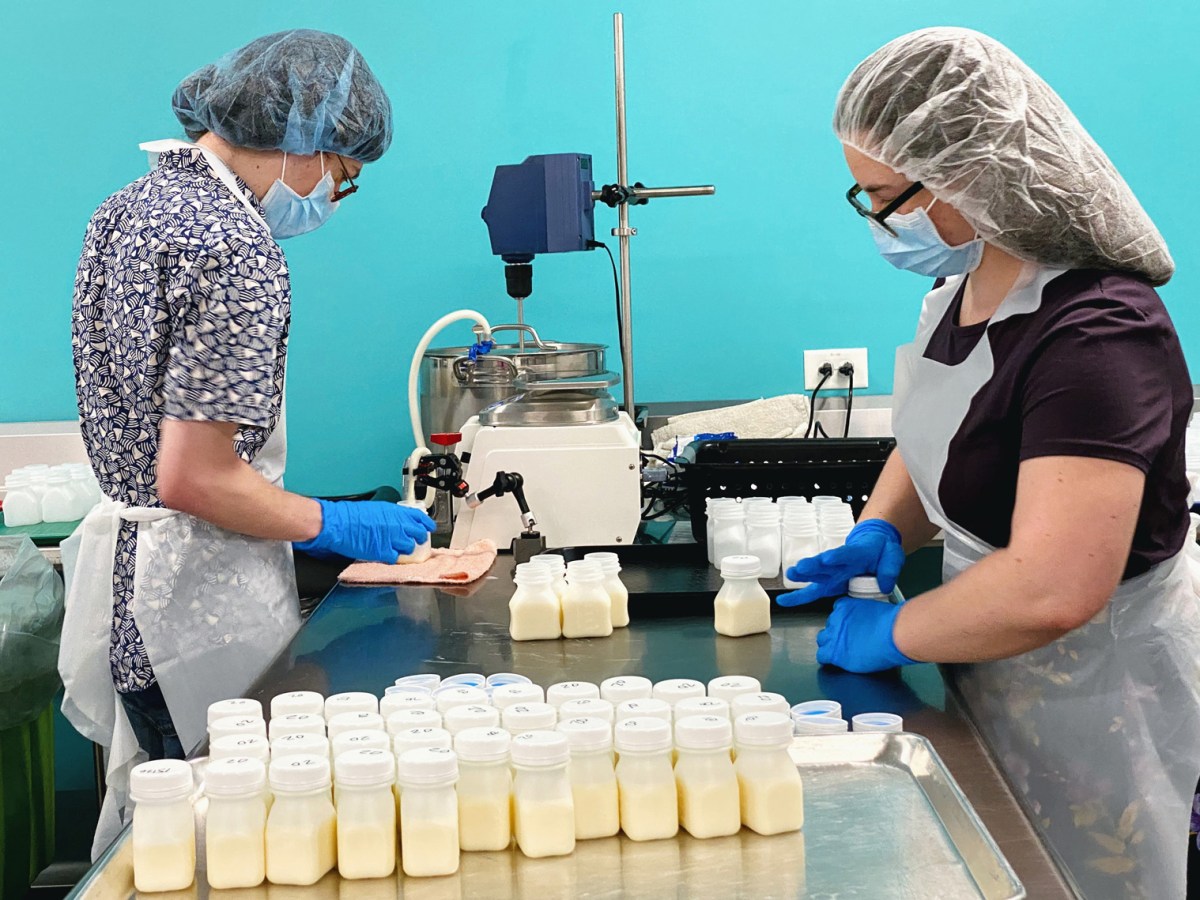
But there are other ways breastfeeding mothers can help prepare for future emergencies. Updegrove’s milk bank, MMBA, sends about 35 percent of its stores to the city of Houston, where it is funneled into neonatal units to feed vulnerable babies born prematurely. Yet only 23 percent of the milk her bank receives comes from moms in Houston.
“I know in the middle of a crisis is not the time to really pound people with a call to action, but there are plenty of people who are out there, lactating, and who want to find a way to help: They can donate their milk,” she says.
Warman, who lost a week’s worth of milk, says she was thankful she had recently made a donation to the MMBA, which meant she didn’t lose as much as she could have.
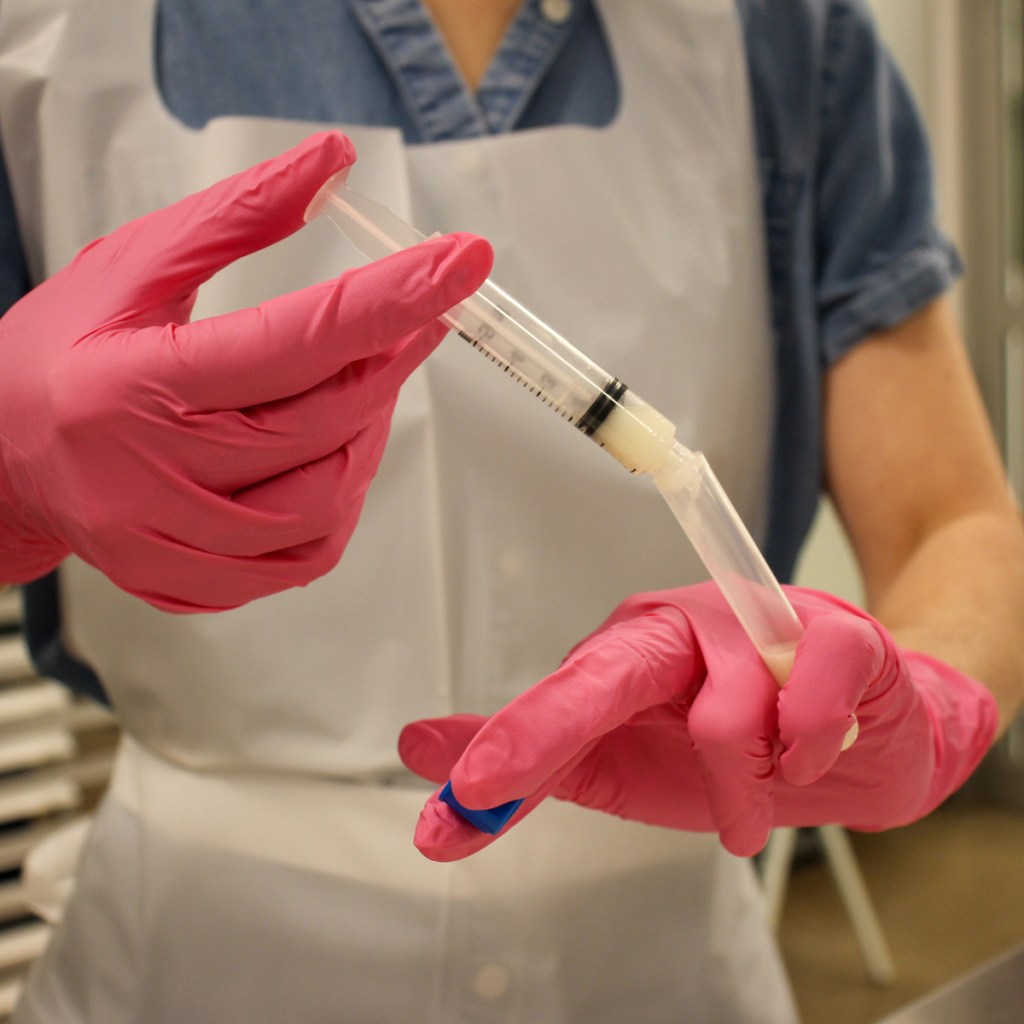
“It takes just ounces a day to feed a premature baby,” says Tucker at the Texas Children’s milk bank. “Four to 8 ounces a day might feed a premature baby. And many mothers have an extra 100 or 200 ounces in their store, which may not seem like a lot to them, but that can impact several premature infants with a need. And it can be truly life saving.”
To learn more about donating to the Mother’s Milk Bank of Austin, click here.
To learn more about donating to the Texas Children’s milk bank, click here.

