
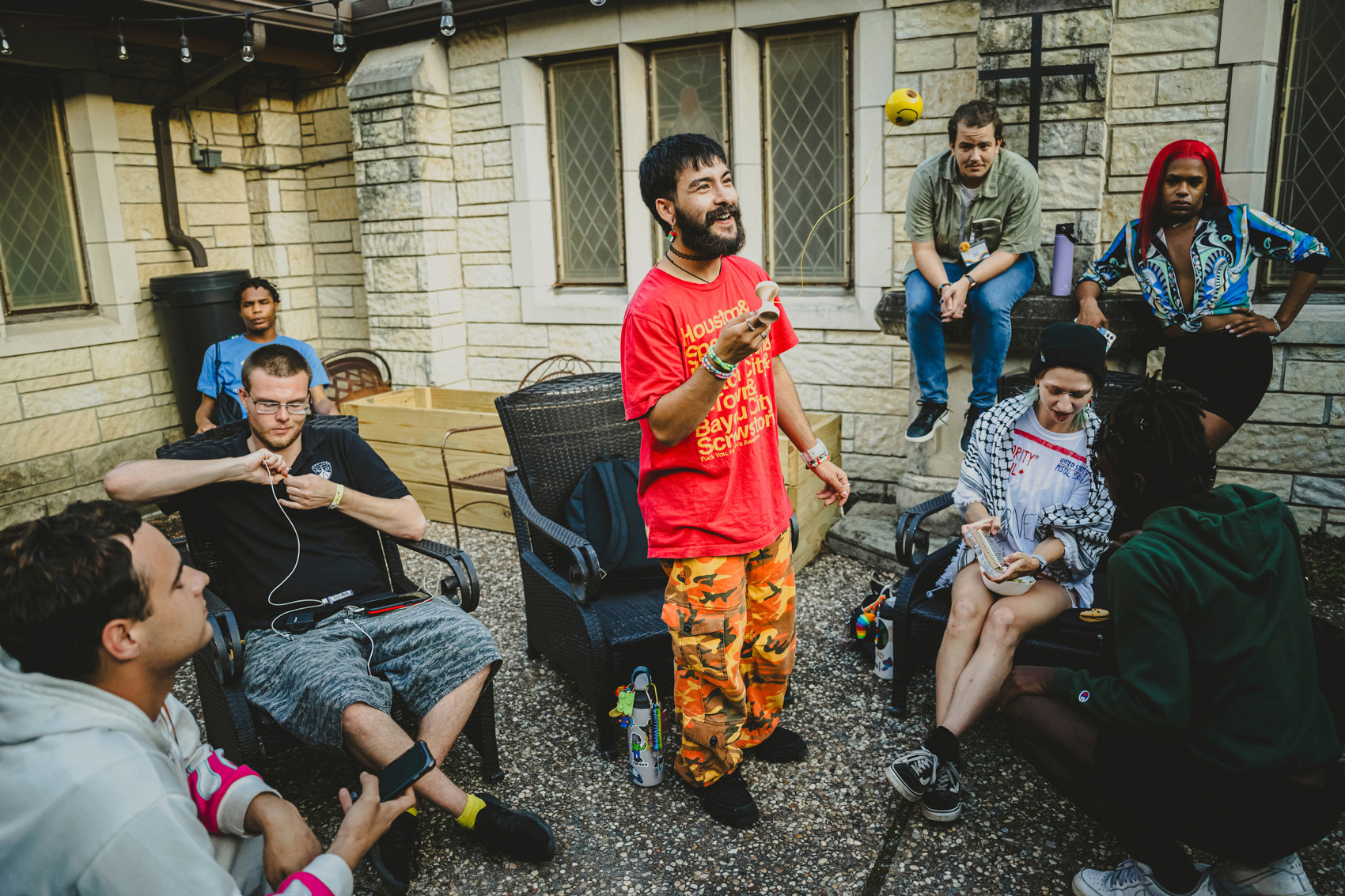

Axel Henry has been trying to get back to Michigan, a state he fell in love with for the last two years. However, he had fallen on hard times and had to move back to his hometown of Houston.
From car troubles to struggling to pay his rent, he bounced from friends to neighbors’ houses. He never felt like he had a home — a safe place where he was accepted as a trans man.
“My home should be somewhere that I am comfortable,” Henry said.
He ended up at his parents’, whom he describes as Christian and anti-queer, and left when his dad insisted on keeping Henry’s previous name, or deadname, saved in his phone, which led to an argument.
“It was the cherry on top for me,” Henry said. “It was not so much an issue for them, which bothered me even more. They didn’t see it as an issue.”
He finally found his safe place at Montrose Grace Place, a nonprofit that provides food, clothing, resources and fellowship for LGBTQ+ youth and youth of intersecting identities.
Montrose Grace Place has served thousands of homeless youth in the LGBTQ+ community since 2010. Its drop-in program, every Monday and Thursday at 6 p.m., provides hot meals, clothing donated by Francesca’s and resources, such as $5 bus passes, computer access and Wi-Fi. It also has volunteers on hand to help with other life needs, such as obtaining identification, housing assistance and legal aid.
By attending Grace Place’s youth nights within the last year, Henry found community. And by participating in the organization’s new diversion program, which is a targeted case management program to end youth homelessness, he would eventually rent an apartment in Grand Rapids, Michigan, where he and his partner Onyx Kloth could live authentically.
Grace Place has served roughly 250 youth on a consistent basis in the past year, according to its executive director, Courtney Sellers. Many of the youth arrive after work or school and line up nearly an hour early to secure a spot in line.
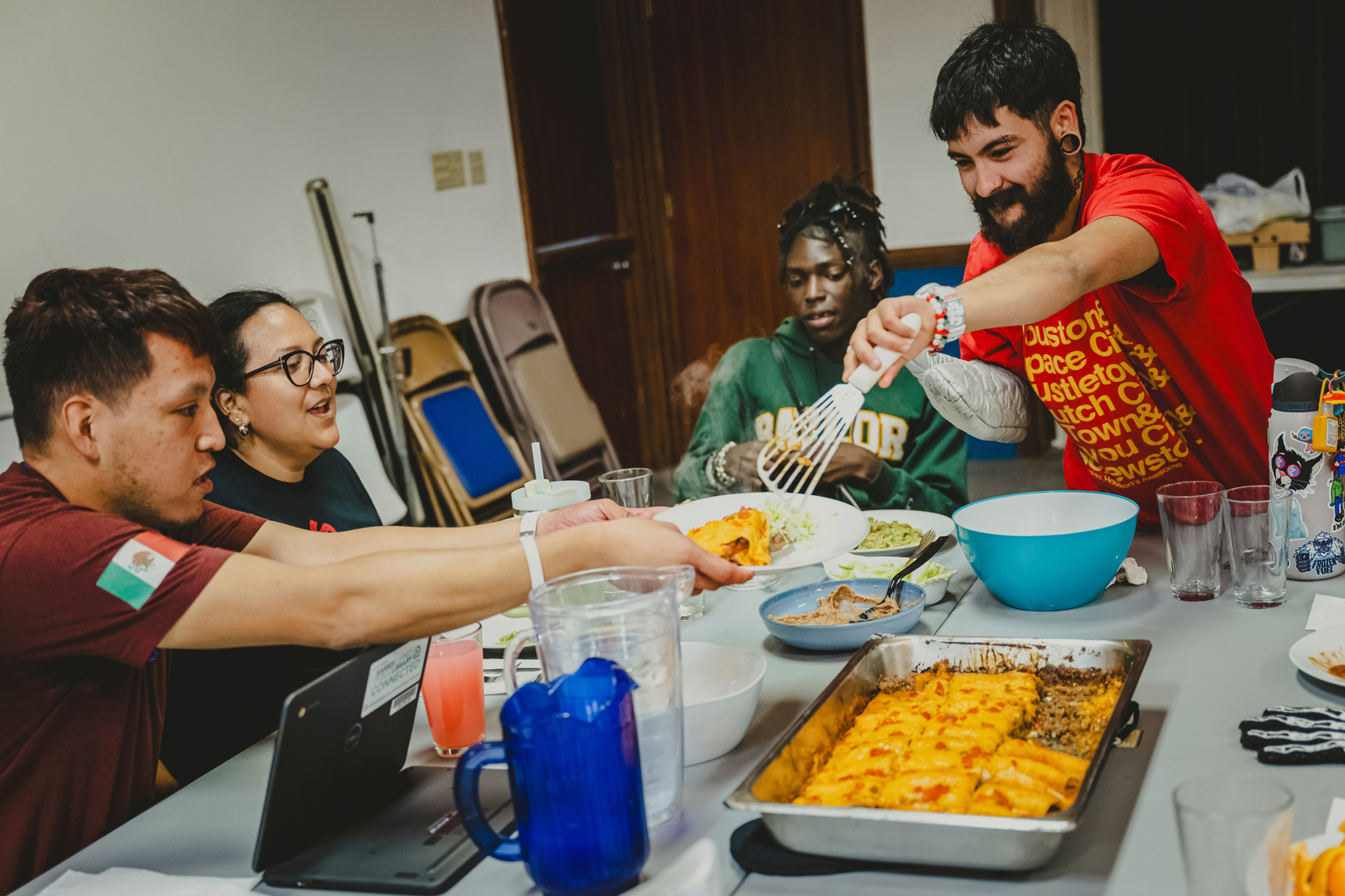
“We have a max of 30 a night and we almost always meet that cap,” Sellers said. “Anybody that comes after that, if we’re full, then we give them a bus pass, a to-go plate of food, and then we’ll chat with them. We don’t want to just turn them away.”
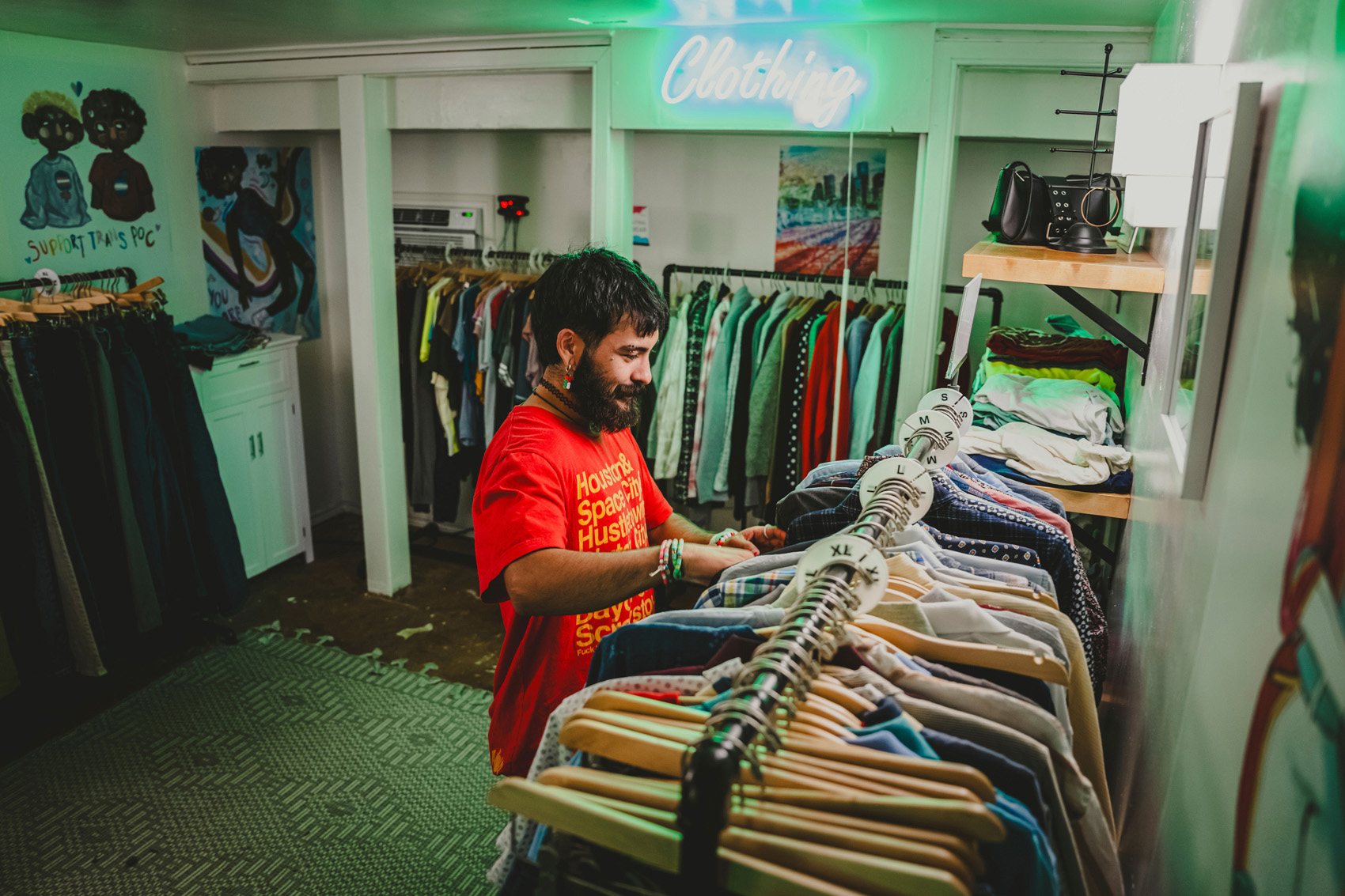
For those that make the cut, they begin the evening with a family-style dinner cooked and served by volunteers, followed by an open recreational time where people can engage in arts and crafts and select clothes from Tracy’s Closet, the center’s clothing donation “store” named after a Black trans woman named Tracy who loved to shop. She would frequent Grace Place before she was murdered by her boyfriend in 2019.
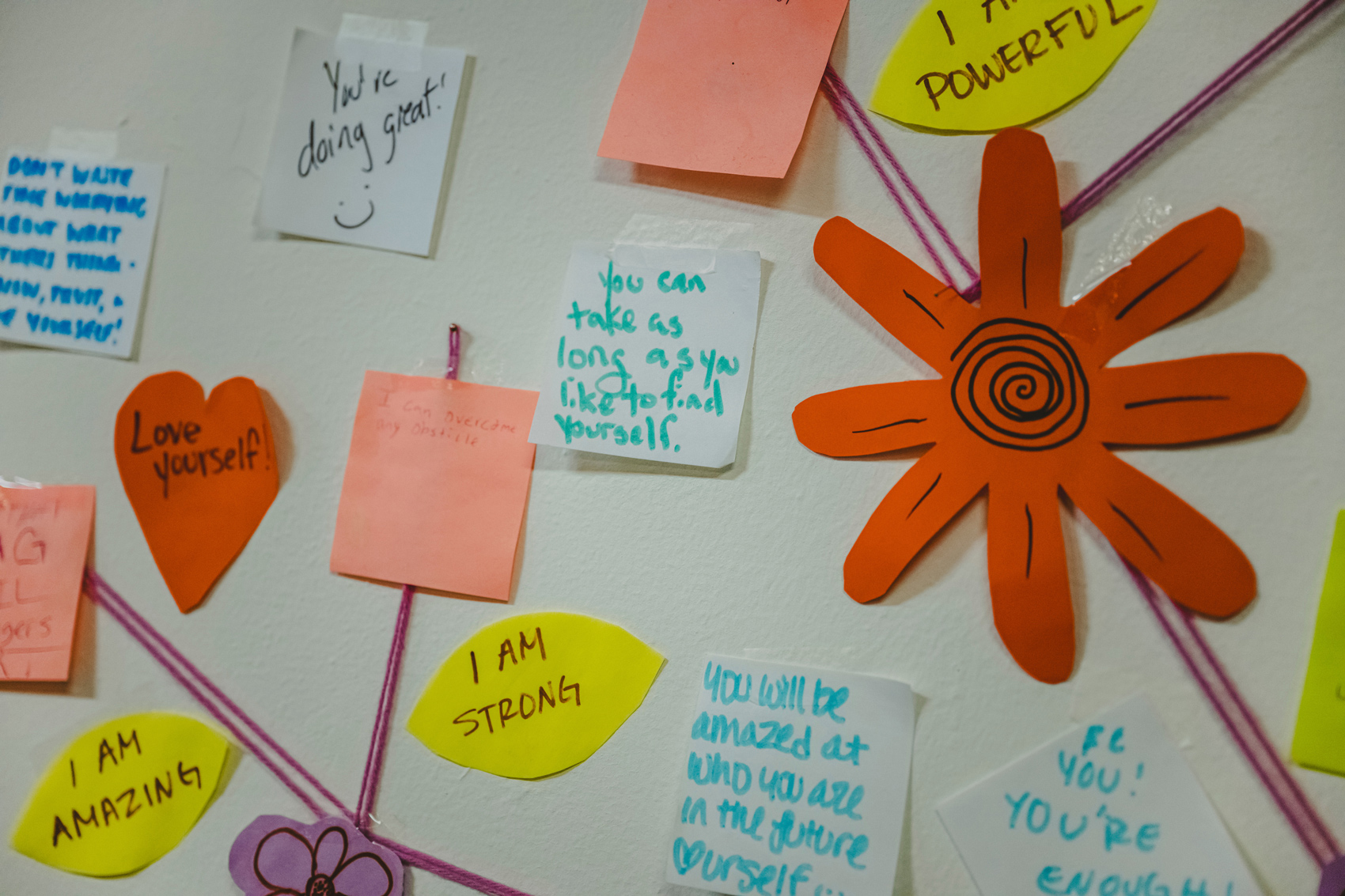
Henry particularly enjoys the arts and crafts. For him, it’s relaxing and a distraction from reality.
“I’m not a great artist by any means,” he said. “But that really helps you get out of your head and focus on what’s in front of you, which is definitely what I needed some of the time attending Grace Place.”
Traveling from Cypress to Montrose twice a week to get to Grace Place, which is housed within Kindred, an inclusive Lutheran church, Henry rarely missed a youth night. It’s where friends turned into family, it’s where he felt safe, accepted and free to be himself without judgment.
“I see people who are going through the same things as me, they’re around the same age as me,” he said. “It’s crazy and eye-opening. It’s just nice to be around peers with relatable issues.”
Youth can also speak with a case manager to get more resources and stick around for an optional peer-led chat at night.
“We don’t give advice, we’re not counselors, (and) it isn’t group therapy,” said Sellers. “It gives people a chance to be heard.”
Eating together family-style at youth nights has built a close-knit bond between staff and youth. That’s why volunteers use real dishes for their meals, to make it feel like home.
“Literally everything we do is about connection,” she said. “A lot of the youth we work with, they're lacking positive adult mentors in their lives.”
Sellers has come to know the youth that go to Grace Place so well, that she worries if she doesn't see someone for a couple of weeks.
“When you're homeless, it's easy to feel like you're alone and nobody cares about you,” she said.
A 2022 report by the Trevor Project found that 28 percent of LGBTQ+ youth experienced homelessness or housing instability at some point in their lives. The report also found higher rates among transgender and nonbinary youth, including 38 percent of transgender girls/women, 39 percent of transgender boys/men, and 35 percent of nonbinary youth, compared to 23 percent of cisgender LGBTQ+ youth.
Similar to Henry, some LGBTQ+ youth may experience homelessness due to family alienation, Sellers said, but oftentimes she’s found that it intersects with other issues, like generational poverty, racism, systemic racism and barriers, like aging out of foster care, and not having a form of identification.
The Trevor Project report found that LGBTQ+ youth who reported housing instability or current homelessness had nearly six times greater odds of being in foster care at some point in their life, compared to LGBTQ+ youth who did not experience housing instability.
“All of that feeds in along with homophobia and transphobia to youth homelessness,” she said. “It’s really just that intersecting identity.”

The success of drop-in programs
Montrose Grace Place is one of several community organizations who work together to support LGBTQ+ youth experiencing homelessness with case management resources to set long-term goals and drop-in services to meet immediate needs. Others include Tony’s Place, which is strategically open on Tuesdays, Wednesdays and Fridays, when Grace Place is closed, and The Normal Anomaly Initiative, which recently opened its new drop-in center in May in Third Ward.
Studies show that the drop-in model is preferred among LGBTQ+ youth who experience housing instability by eliminating barriers to accessing services.
Most drop-in centers are typically in nontraditional spaces, like homes, to resemble the structure of someone’s chosen family, said Joelle Espeut, director of programming at the Normal Anomaly Initiative.
“When we think about a space that is community centered and community focused, (with) a house and a drop-in center community feels comfortable coming to the door,” she said.
That’s also why you won’t find a sign at Normal Anomaly’s drop-in center, which partners with Grace Place, she said, or at Montrose Grace Place either, which is housed within Kindred, an inclusive Lutheran church. Espeut said the drop-in center is designed to feel like a welcoming space, as opposed to a clinical space.
“It doesn’t feel like I’m coming here to get tested, and I immediately feel this shame,” Espeut said. “We want a space that centers joy, that is centering community. You walk in and it doesn’t feel sterile.”
Funding to move forward
Grace Place has for years diverted youth from homelessness, Sellers said, but now it has an official program and the actual funding to it.
Grace Place was among seven other Houston homeless youth-serving agencies selected to split the $10.4 million in federal funding that the U.S. Department of Housing and Urban Development awarded to the Coalition for the Homeless/Harris County in September 2021 as part of its Youth Homelessness Demonstration Program. The program aims to prevent and end homelessness. The award made Houston the fourth-largest award in the nation that year.
Since Grace Place is a Supportive Services Only program, HUD funding prohibits providing housing assistance. This restriction forced Grace Place to get more creative, Sellers said.
Instead of housing assistance, it offers “kinship” payments, or direct cash transfers,to family members or close friends who can provide housing, while Grace Place helps youth achieve independence.
“While they have the stable roof over their head, their family member doesn't have to worry about the added bills,” said Sellers.
But kinship payments aren’t restricted to a family member or close friend, said diversion program director Rebecca Fontanilla. Kinship can also apply to anyone in the community willing to support that individual.
“We're literally just looking at who makes up your support system,” she said. “How can we build that support system? And how can we be a part of your support system to help you thrive?”
For Henry, that person was Kloth’s dad, who provided the couple housing at his Cypress-area home in August 2023. But Henry still didn’t feel completely comfortable because Kloth’s family is religious and tolerant, versus accepting of their queer identity, he said.
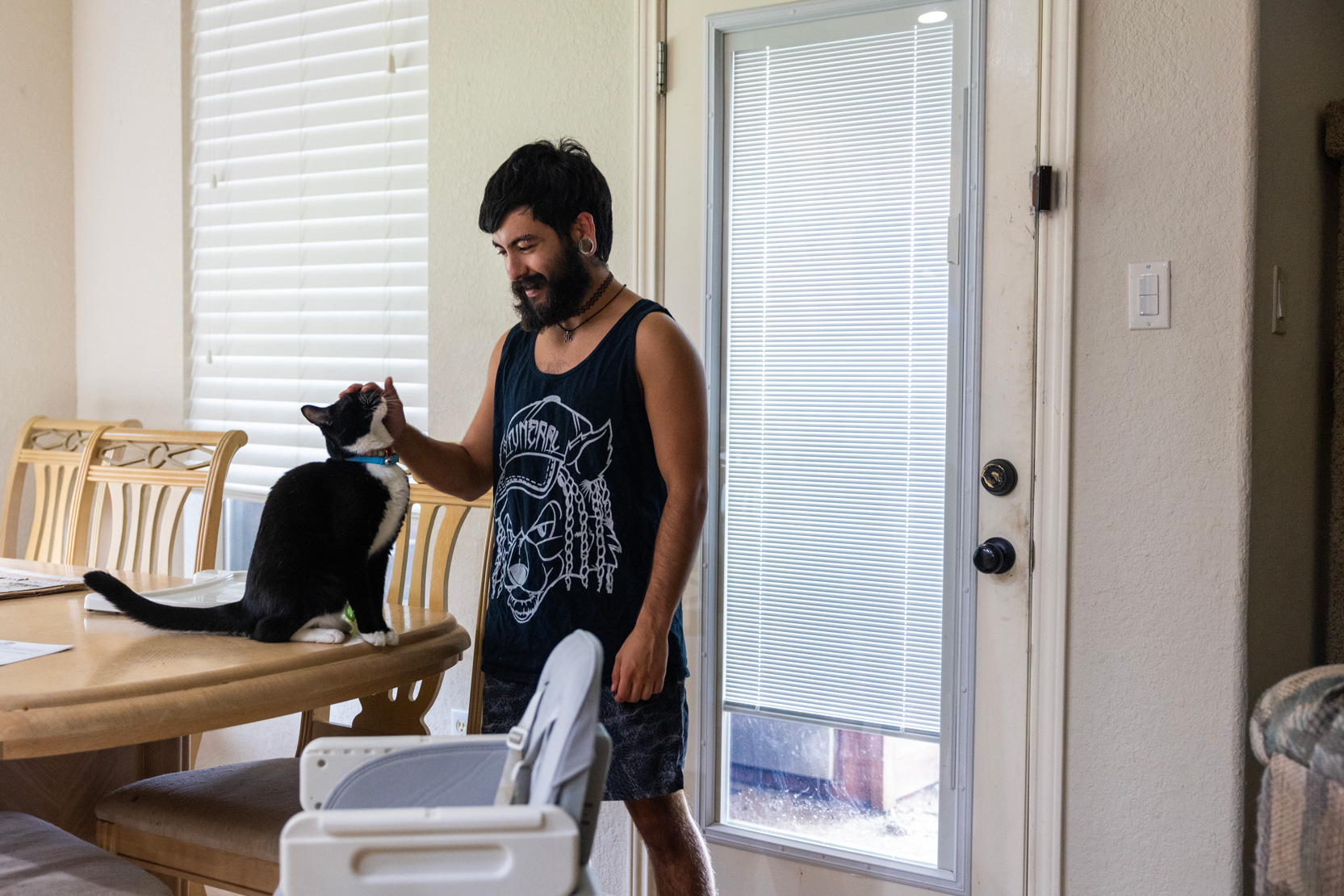
Axel Henry pets his cat while packing for his move to Michigan, Friday, May 24, 2024, in Houston. (Antranik Tavitian / Houston Landing) 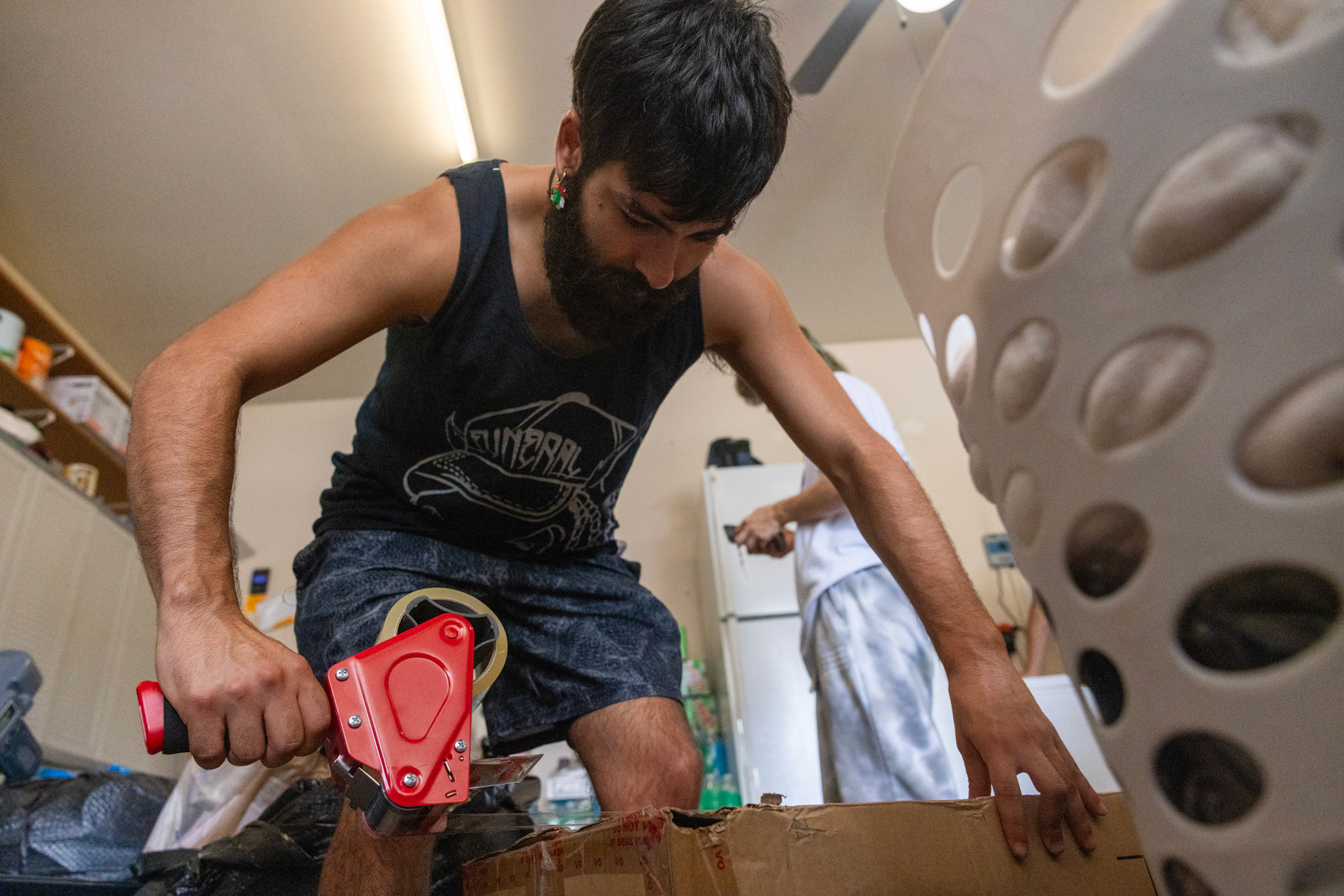
Axel Henry packs boxes while preparing for his move to Michigan, Friday, May 24, 2024, in Houston. (Antranik Tavitian / Houston Landing) 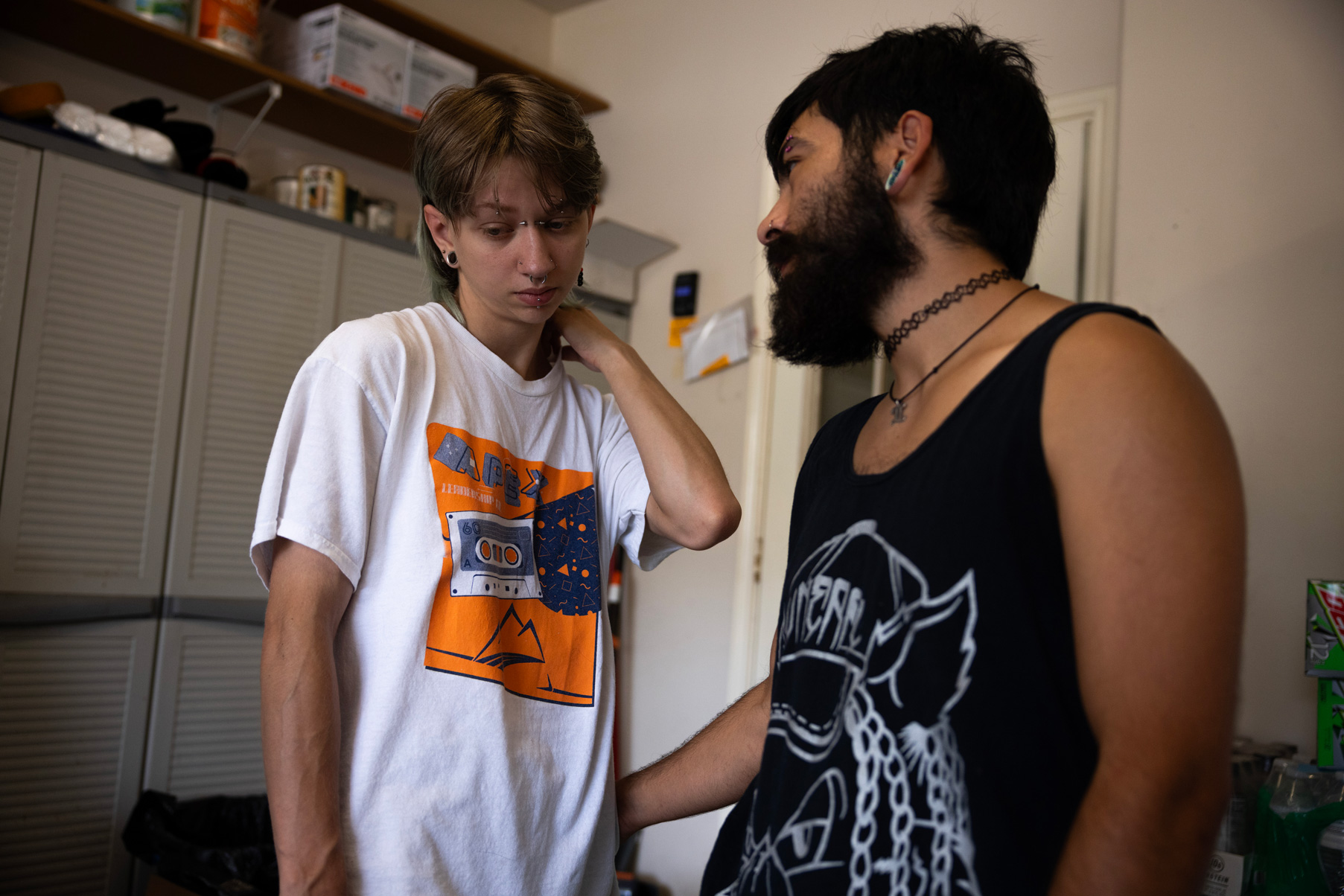
Axel Henry, at right, comforts his partner Onyx Kloth as they prepare boxes for their move to Michigan, Friday, May 24, 2024, in Houston. (Antranik Tavitian / Houston Landing) 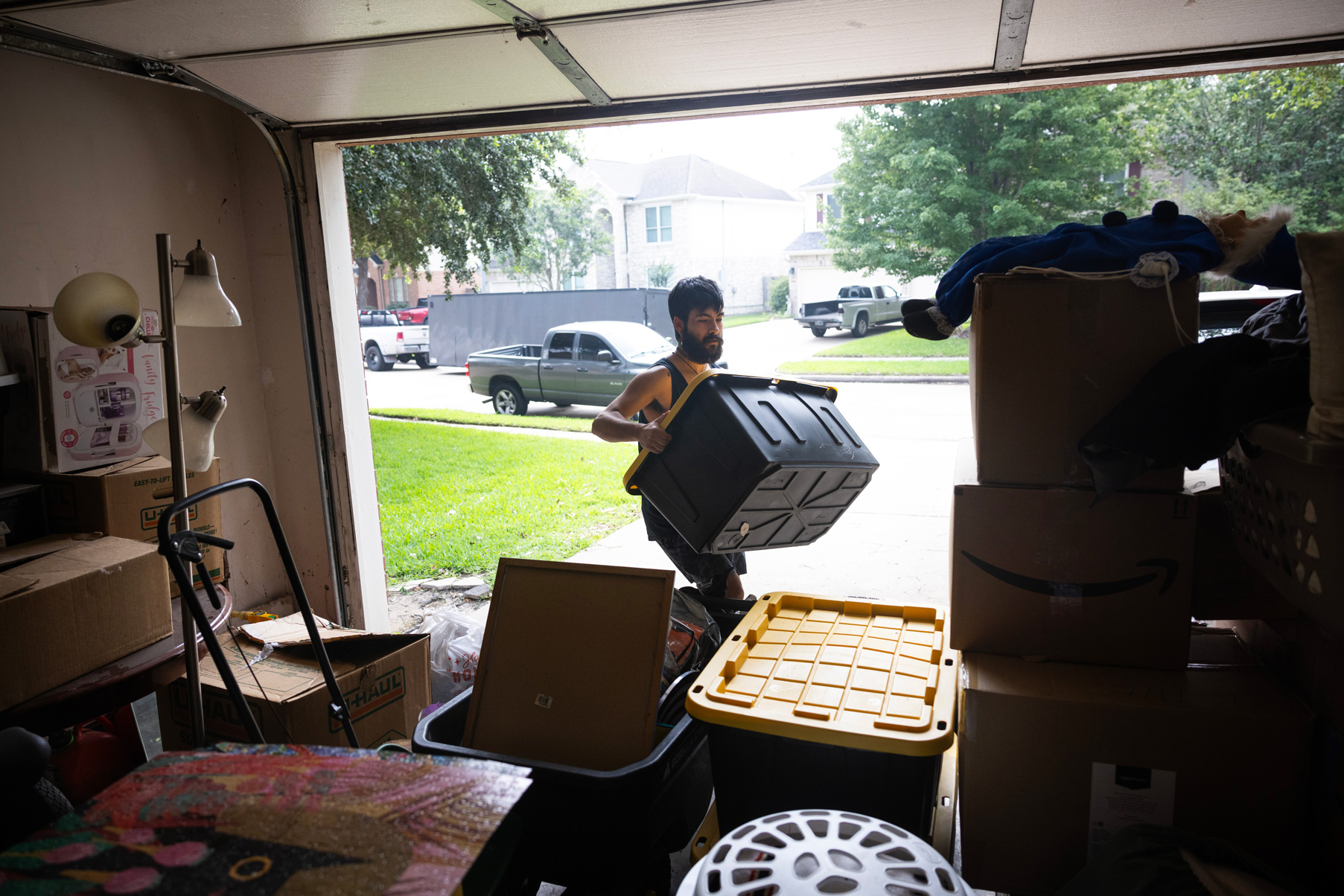
Axel Henry picks up boxes while preparing for his move to Michigan, Friday, May 24, 2024, in Houston. (Antranik Tavitian / Houston Landing) 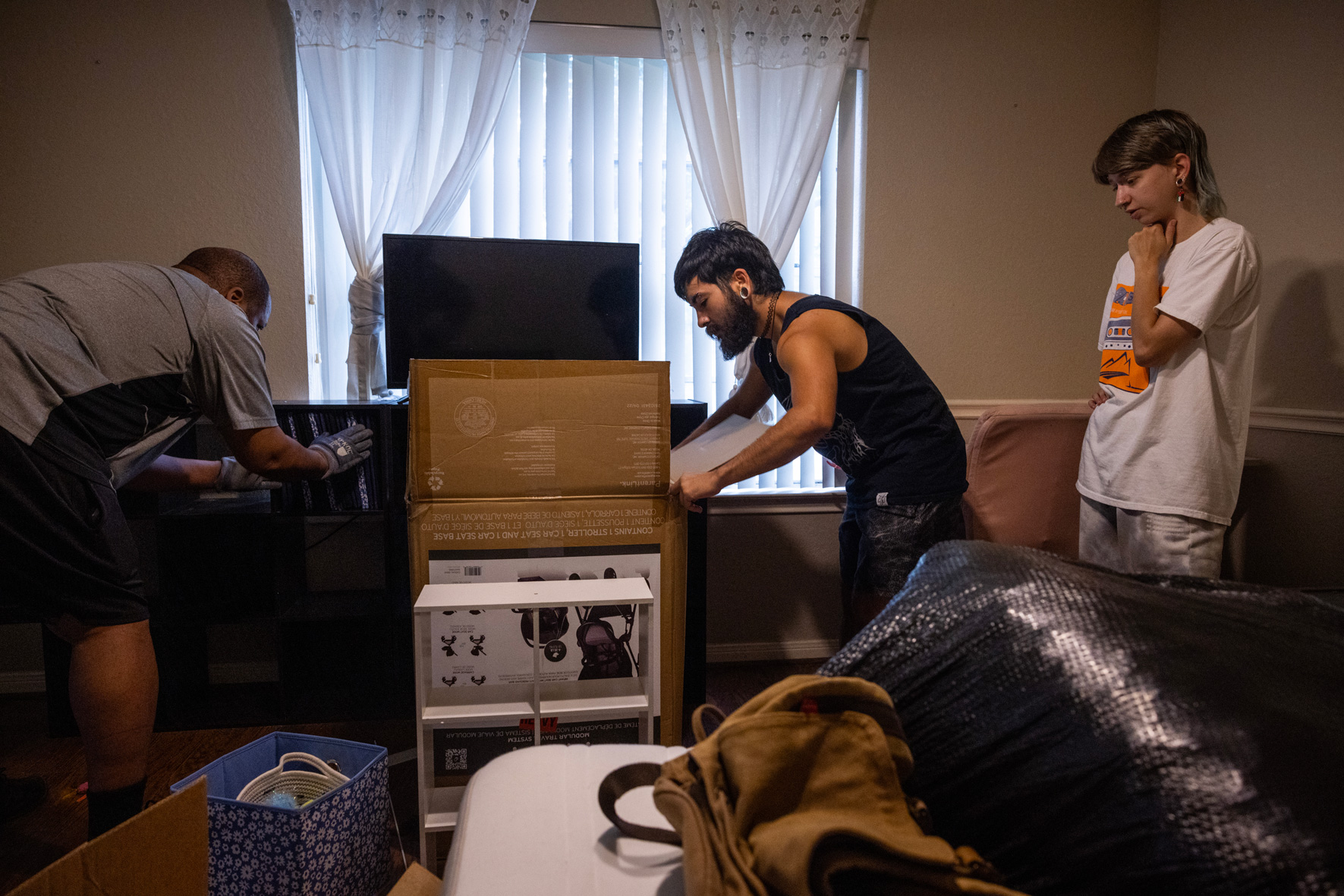
Axel Henry, at center, and Onyx Kloth, at right, move boxes and furniture to prepare to move to Michigan, Friday, May 24, 2024, in Houston. (Antranik Tavitian / Houston Landing)
Proof of success
Although the YHDP diversion program is fairly new and still within its two-year demonstration period, it has proven to be successful for Henry, who recently moved to a two-bedroom apartment in Grand Rapids on Memorial Day, just over a week before his 24th birthday.
“(It’s) kinda surreal,” said Kloth, who uses they/them pronouns.
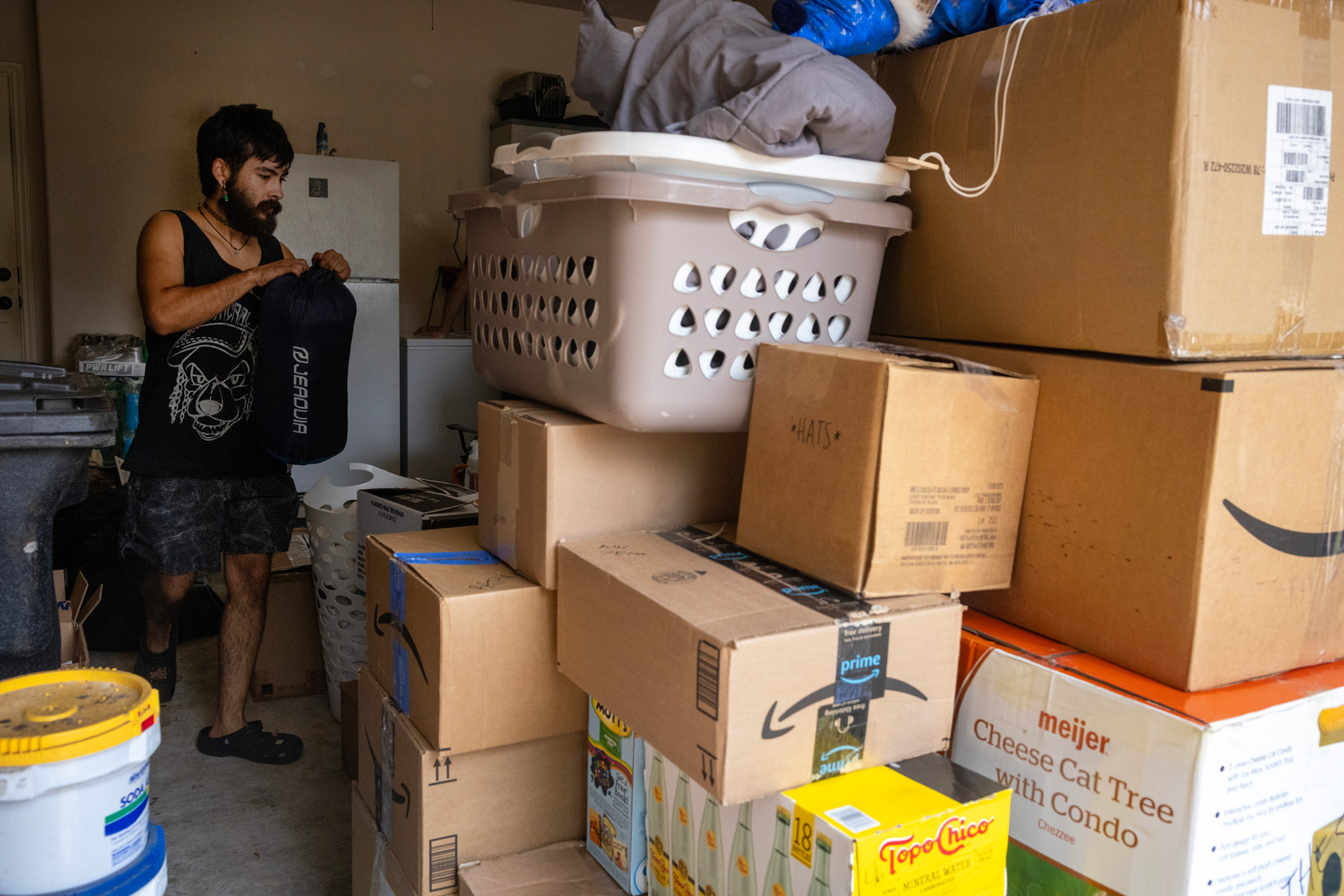
Standing in a sea of boxes consuming the garage of their temporary Cypress home, the move started to sink in for the couple.
“It has an echo now — as soon as (the movers) took the furniture out,” Kloth said as their voice reverberated in a nearly empty study room that they had made into a bedroom.
While the stress of packing and moving away from family became a bit overwhelming and bittersweet for Kloth, Henry, on the other hand, couldn’t wait to get on the road.
“Our life's been put on hold,” he said as he hosed down his cat’s litter box. “So I'm looking forward to getting into a routine.”
He’s also looking forward to finally having some privacy for the first time in their 10-month relationship.

The bittersweet moment for Henry came in the weeks leading up to his move. He said goodbye to close friends and staff at Grace Place, who had become family.
Grace Place covered all of their moving expenses including movers, a $250 gas card and a $50 Walmart gift card to purchase household necessities. Fontanilla said once youth reach this stage of the diversion program, they also have an informal exit interview to check in and make sure they’re ready to tackle the responsibilities ahead of them.
“I want to make sure that we're leaving them in a place where they can be successful and whatever goals they've reached are sustainable,” she said.
The monetary help they received from Grace Place will allow them to live comfortably for four months without work if they had to, Henry said. But as it turns out, Henry plans to start work with a caregiving company soon after they get settled.
“We’re extra-set now, and all of that extra money is going to be in savings to use down the road at some point or when necessary,” said Henry.
Although he's officially out of the program, he doesn’t plan on being a stranger.
“I do plan on coming back and visiting, and probably volunteering at Grace Place at some point when I’m ready to come back and visit Texas,” he said.
Correction: This story has been updated to reflect Rebecca Fontanilla's last name and a more accurate representation of how many people Grace Place has served.

