

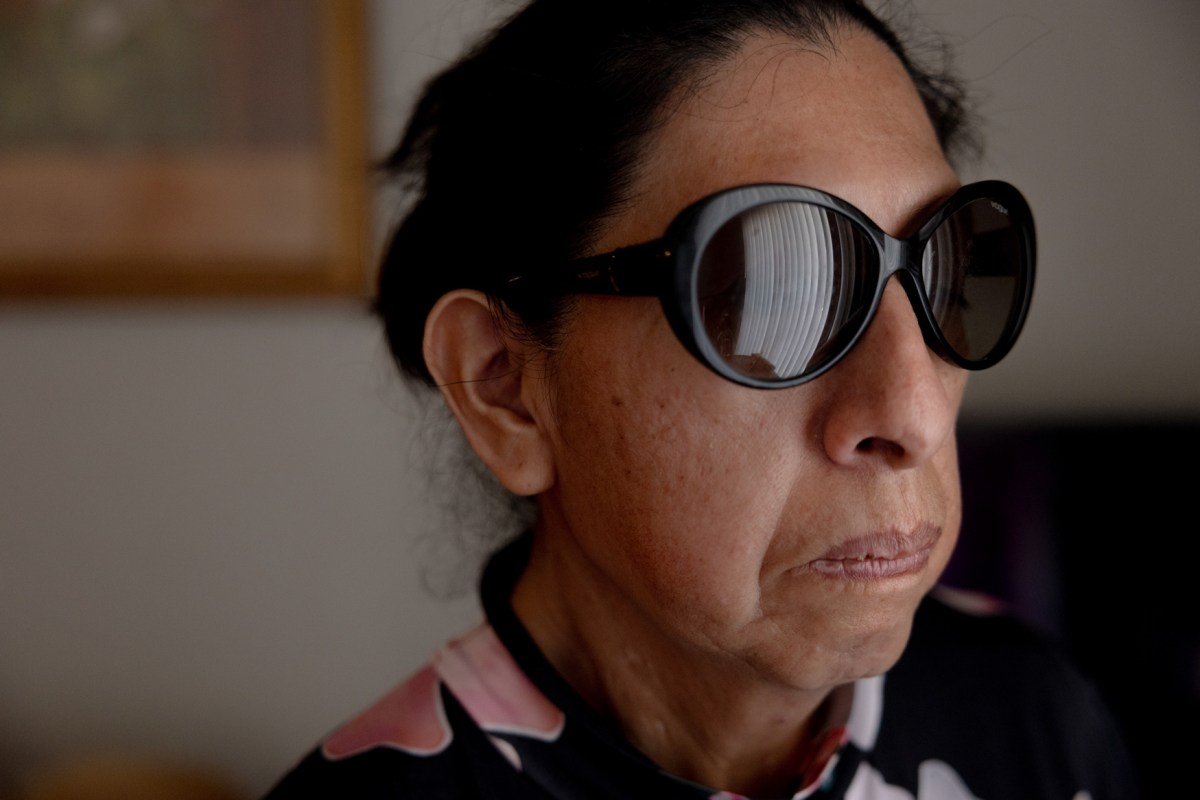
On March 18, Kevin Zaldaña Ramírez sat before a judge at Montgomery Processing Center to determine if he would be released after what his lawyer called an illegal detention. Zaldaña Ramírez, who was detained on Feb. 25 despite having legal status, has been anxious to be reunited with his mom, who is visually impaired and relies on her son for day-to-day tasks.
“I’m frustrated because my mom is alone,” Zaldaña Ramírez, the 20-year-old immigrant from El Salvador, said from detention.
Zaldaña Ramírez’s February detention has alarmed immigration advocates who worry Trump’s mass deportation plans are extending far beyond convicted criminals in the country illegally as he has claimed. As Zaldaña Ramírez waits for answers in his case, every day that he remains detained is another day his mother, Yolanda Ramirez, falls further behind on rent.
“It’s unfair,” Yolanda said of Trump’s immigration enforcement. “Because it’s people who are really working to support their family.”
Seeking release
Zaldaña Ramírez’s lawyer, Susana Hart of Hart Law Associates, explained to the judge Tuesday that Zaldaña Ramírez provided his social security number to immigration agents who came to the construction site where he worked. They told him that it was not valid, and he had a deportation order, which Hart said is not true. They then took him into custody.
Once at the detention center in Conroe, Texas, Zaldaña Ramírez was told his social security number was, in fact, valid, Hart said. He has no criminal record.
Since his detention, his lawyer and mother have been advocating to secure his release, providing all the necessary paperwork to ICE and holding a press conference in Houston.

His lawyer requested that the Department of Homeland Security, ICE’s parent agency, release Zaldaña Ramírez. It declined two times, according to Hart. ICE did not respond to a request for comment about the case, but the agency said in a separate statement that its enforcement efforts help keep South Texas residents safe.
At court, a DHS lawyer did not further explain the agency’s reason for keeping Zaldaña Ramírez detained, according to his lawyer. The agency said that Zaldaña Ramírez’s legal status did not appear in their system, although it recognized that did not mean that it does not exist. Since the application for Zaldaña Ramírez’s special juvenile status goes through a different immigration agency, United States Citizenship and Immigration Services, it is possible DHS cannot see this information in their system, Hart explained.
With a strong case for release, it’s unclear why ICE did not agree to release Zaldaña Ramírez without requiring a bond payment. Detention space is quickly filling up, and the agency reached a five-year high for detention space in March, mainly driven by immigration enforcement outside the border area. About half of the people detained have no criminal record, according to the latest ICE data published by the National Network for Immigrant and Refugee Rights.
Pressure to carry out mass deportations could be a factor, Hart said.
“The administration is pressuring the agency to detain more people, to detain as many people as possible, to really get their numbers up there,” Hart said.
After reviewing the evidence presented by Zaldaña Ramírez’s lawyer and considering his family’s situation, the judge granted him a bond. At $3,000, the amount was more reasonable than the typical $8,000 to $10,000 bonds, according to Hart. But the family still had one more hurdle to overcome — raising the money while the breadwinner remains detained.
Zaldaña Ramírez was anxious, rather than relieved, after the hearing, knowing that his mother doesn’t have that much money.
“How am I going to pay if I don’t have any money? I didn’t leave you any money,” he said to his mom.
Leaving El Salvador
Zaldaña Ramírez has been the breadwinner for Yolanda since 2020 when he began working full time at age 16. The family fled El Salvador two years before.
Back then, El Salvador had one of the highest murder rates in the world and gangs often recruited young boys and teens into their ranks. In their small town on the outskirts of San Salvador, Yolanda stayed close to Zaldaña Ramírez and her younger son Joel Ismael to keep them away from trouble, walking them to and from school every day.
Sometimes Yolanda would send Zaldaña Ramírez to buy tortillas a few blocks from their house, one of the few times she let him out alone. That’s when some gang members would talk to him, telling him it was cool to join the gang.
To make matters worse, the boys’ father had a new girlfriend, who had been in jail before and was threatening Yolanda when she asked for money for the kids.
“She told us that it didn’t cost anything to have us disappear,” Yolanda said.
Yolanda’s sister lives in Houston, so they decided to leave for the U.S. and seek asylum. “I left El Salvador trying to save my sons from so much violence that was there,” Yolanda said.

The family struggled to adapt to living in Houston. Away from the town she grew up in, Yolanda didn’t know her way around enough to go alone to church or the supermarket. Zaldaña Ramírez struggled to learn English and make friends at school. Jose Ismael was bullied because of a disability.
Then in 2023, Joel Ismael died by suicide. From then on, it was just Zaldaña Ramírez and his mom. Some of the playful energy of her son was gone.
“My younger son was more cheerful. He was different from Zaldaña Ramírez because Zaldaña Ramírez is more shy,” Yolanda said.
Since his father abandoned and threatened them, Zaldaña Ramírez was able to apply for an immigration status known as Special Immigrant Juvenile Status which provided him deportation protections and a work permit. Because of a backlog of four to six years to become a legal permanent resident through the status, Zaldaña Ramírez just became eligible for a green card in October, his lawyer said. But he hadn’t started the process yet because the family didn’t have money for lawyer fees, even though Zaldaña Ramírez always worked hard to support the family.
“Since 16, Zaldaña Ramírez has taken responsibility for me and my younger son. Since then, he’s worked,” Yolanda said.
Illegal detention
Zaldaña Ramírez was planning on sleeping in on his day off from his construction job on Feb. 25. But when another coworker canceled at the last minute, a friend came by the house around 7:30 a.m. to see if he wanted an extra day’s work.
Zaldaña Ramírez didn’t hesitate to get up and go to work, Yolanda recalled. In the rush, he left his wallet, which held his documents showing he has a valid work permit and social security number.
“He didn’t even shower. He got up, got dressed and left,” Yolanda said.
After Zaldaña Ramírez left, Yolanda went about her day, doing what she can around the house: washing dishes, cooking Zaldaña Ramírez’s favorite fried chicken, and sweeping outside as the family’s dog Benji circles around her.
Around 3 p.m. that day, Yolanda felt a tightening in her chest. She tried to shake the feeling.
“I didn’t really think that something would happen to him, because every time that he leaves, I ask God to protect him for me,” Yolanda said.

At 6 p.m. one of Zaldaña Ramírez’s friends came by the house to tell her ICE agents had come by the construction site where he was working.
Since then, Yolanda has been house bound, worried about her son in detention. Around 6:30 p.m. when Zaldaña Ramírez would usually get home from work, Benji anxiously circles around the house looking for him. The family’s cats that Zaldaña Ramírez took in, Nieves, Princesa and Princesa Junior, wander around without him to play with.
In detention, Zaldaña Ramírez said the food was so bad he could only eat bread and drink water. He missed his mom’s arroz con pollo. He was detained with three other coworkers, including one who was already deported to Honduras, he said.
“I want to get out already,” Zaldaña Ramírez told the Landing before his bond hearing. “We’re not criminals.”
As of Wednesday afternoon, Zaldaña Ramírez’s lawyer and advocates were working to raise the money to secure his release. Yolanda couldn’t sleep Tuesday night, but started to feel hopeful on Wednesday.
“Thank God,” Yolanda said. “I feel more calm because I know that my hijito is going to be out.”

