


Long before she became a famous drag performer and a reality TV star, Blackberri – born Darius Vallier – was a fashion design student at the now shuttered Art Institute of Houston.
She tried drag for the first time in 2016 after learning about pageant icon and Houston-based performer Dessie Love Blake’s popular, career-launching competition, “Dessie’s Drag Race,” through friends who had performed. They would frequently tap Blackberri to curate their costumes or hem them when they needed repair.
She decided to compete and chose the stage name “Blackberri” from the late rapper Tupac Shakur’s poetic lyric: “Some say blacker the berry, the sweeter the juice,” in his 1993 hit “Keep Ya Head Up.”
Blackberri won the competition and from there her career blossomed. As a contestant on the fifth season of the reality series “The Boulet Brothers’ Dragula,” she is one of Houston’s trailblazing performers to cast the city’s drag scene onto a national television stage. Her stardom follows the footsteps of Mistress Isabelle Brooks, a plus-sized, Latina queen who appeared on the 15th season of MTV’s “RuPaul’s Drag Race” as the first Houston queen on a reality series.

For decades, Houston has maintained a thriving drag scene with countless drag shows around town each day of the week and a host of drag brunches, trivia and bingo nights, and pageants. But now the city is finally getting its turn in the national spotlight with two queens showcasing the diversity of the city. This comes at a time where trans people and drag performers in Texas have been targeted by legislation and right-wing groups.
“With me and with Mistress being on Drag Race last season, I think (it) opened up the conversation and people know that Houston has impeccable drag,” said Blackberri. “We have amazing personalities. We have such a diverse pool of entertainers and I think because we’ve gone out and opened the doors, now the floodgates are about to open for the city.”
Those floodgates opened for Blackberri as an amateur with no experience after her first competition on Dessie’s Drag Race in 2016.
“The first night of the competition was the first night I ever put anything on at all,” Blackberri said.”
“I just kind of opened everything up and was like all right, let’s figure it out after I watched a tutorial or two. I had no experience at all. But coming up with the name, I just kind of looked objectively. I was like, I’m Black, I’m part of the bigger community so I’m thicker, and I’m juicy. So I put those things together and came up with Blackberri.” she said.
The name and her signature bearded look became a hit locally – she’s known as the “Bearded Beauty of Texas” – and made her a fan favorite on the show “Dragula.” The drag horror competition reality series airs on Shudder and AMC+, and challenges contestants based on horror, drag, filth and glamor. The winner is crowned “Dragula, The World’s Next Drag Supermonster,” and receives $100,000.
Blackberri made it to the grand finale which aired on Monday, but fell short of the throne. Brooks landed in the final four of the grand finale of “RuPaul’s Drag Race” falling short of the crown as “America’s Next Drag Superstar ” and the $200,000 prize.
But why is Houston finally receiving so much national attention now?
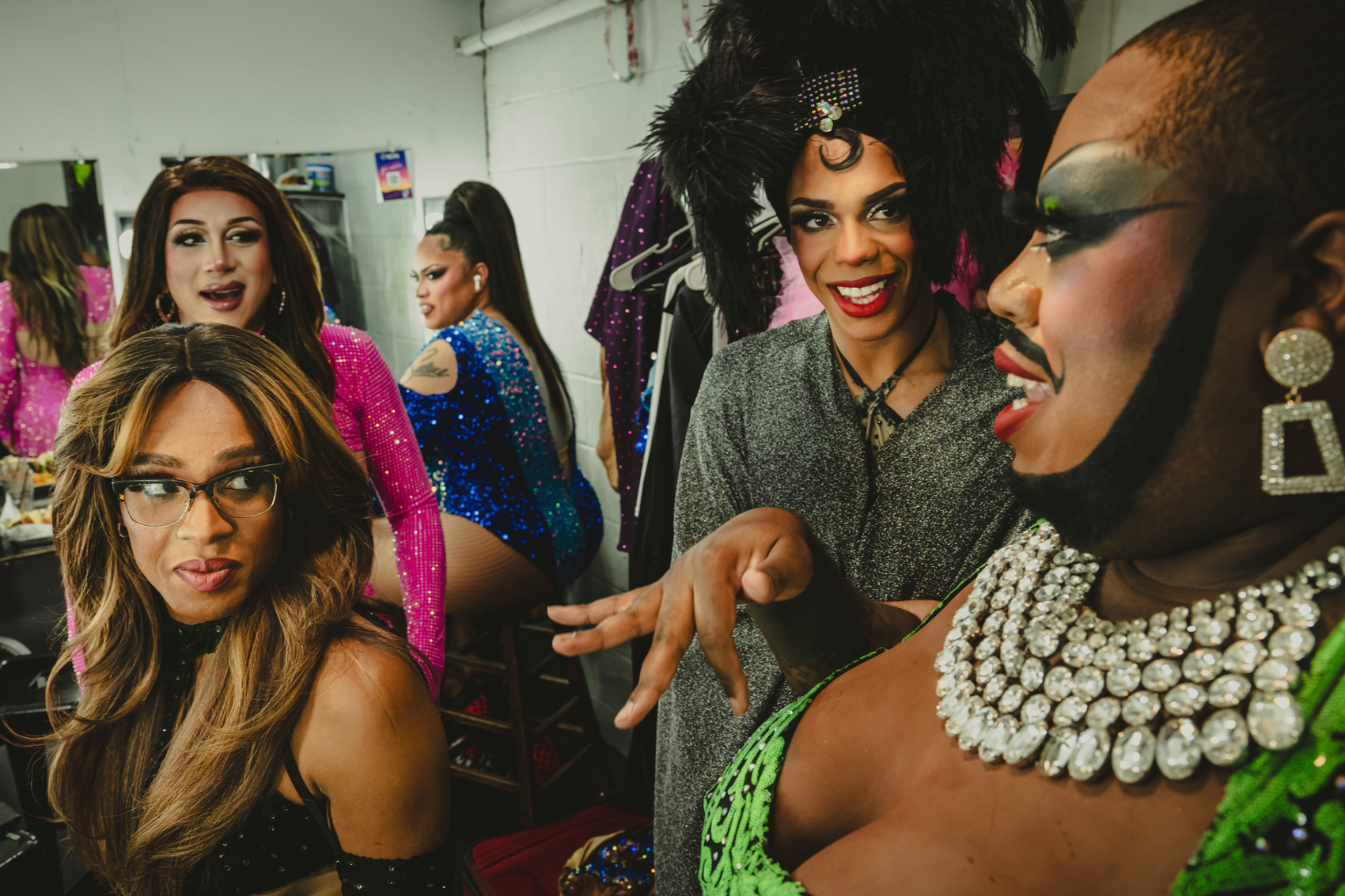
Blackberri, right, talks about her excitement for the final episode of the TV show Dragula at Rich’s Houston with fellow drag queens Amaya Jackson Ross, Bosston, Dayton Thomas and Adriana LaRue. Her success on the show has given Houston’s drag scene national spotlight at a time when the LGTBQ+ community in Texas is experiencing a wave of targeted attacks from legislation and far-right groups. (Meridith Kohut for Houston Landing) 
Veteran drag queen Roxanne Collins applies eyebrow make-up before a performance at the Barcode club in the Montrose area of Houston on Dec. 8. Collins has performed for over 30 years and specializes in Tina Turner songs. (Meridith Kohut for Houston Landing) 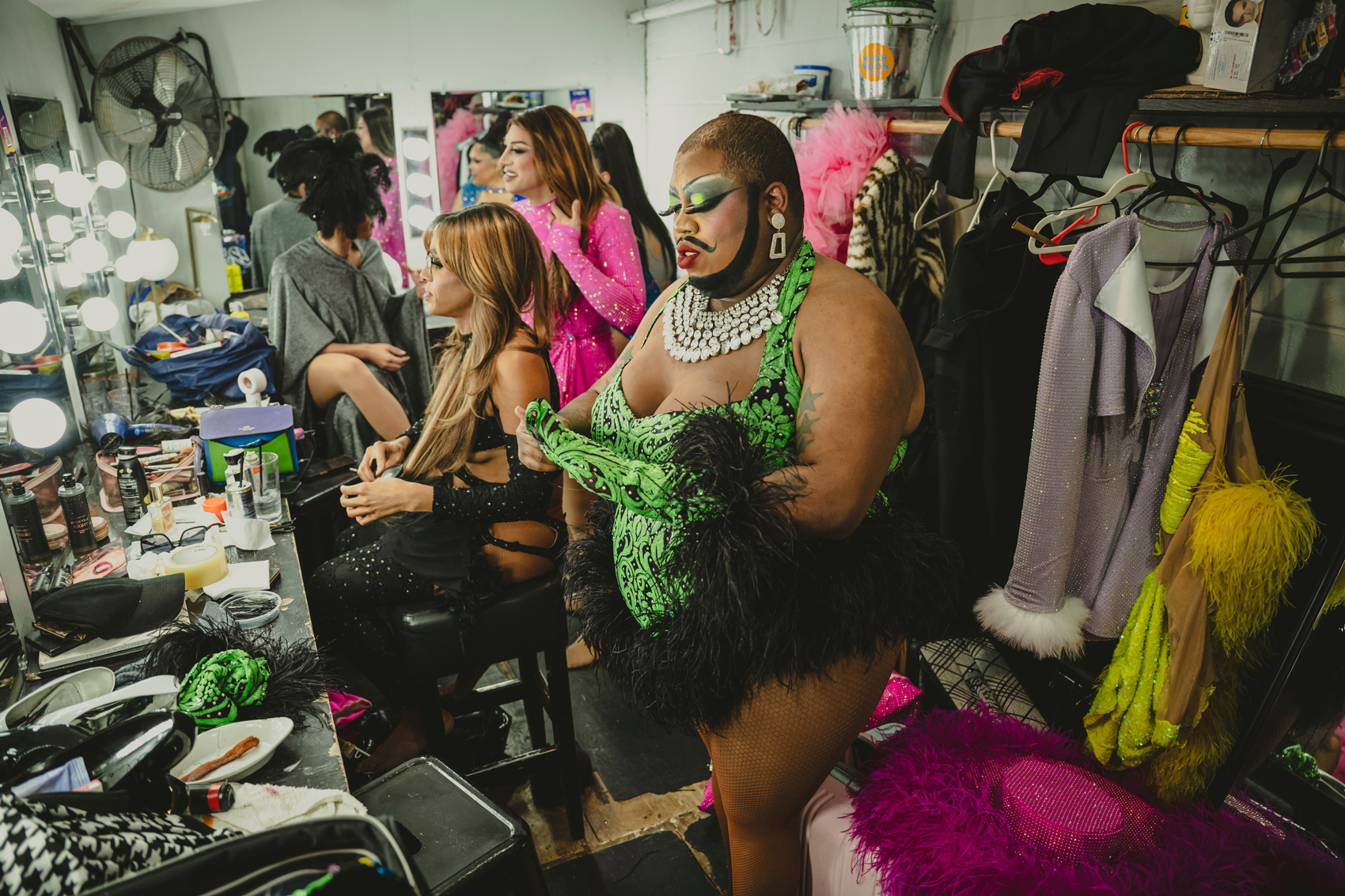
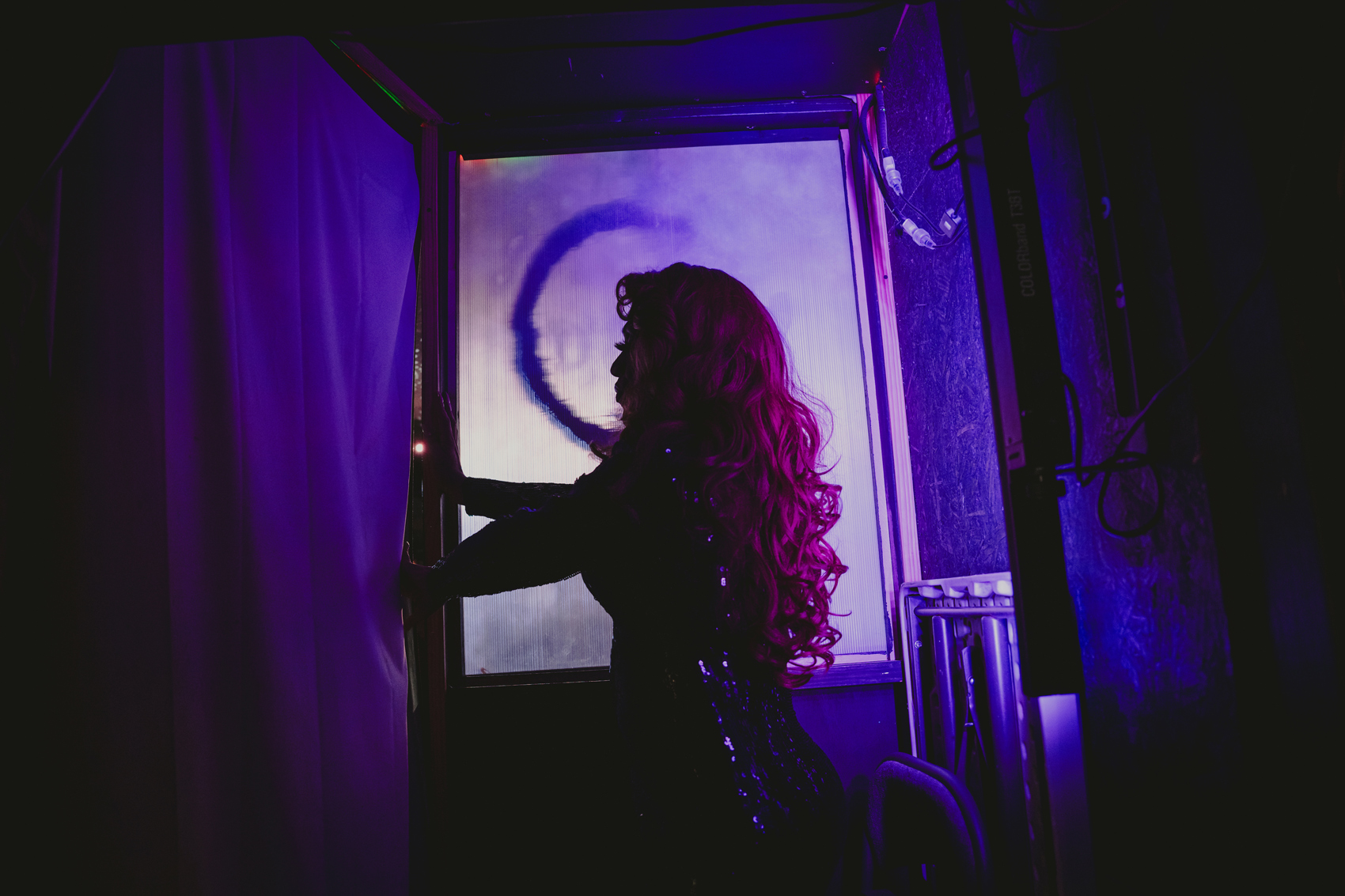
Drag performer Blackberri changes costumes backstage before a performance at Rich’s Houston on Jan. 14. (Meridith Kohut for Houston Landing) 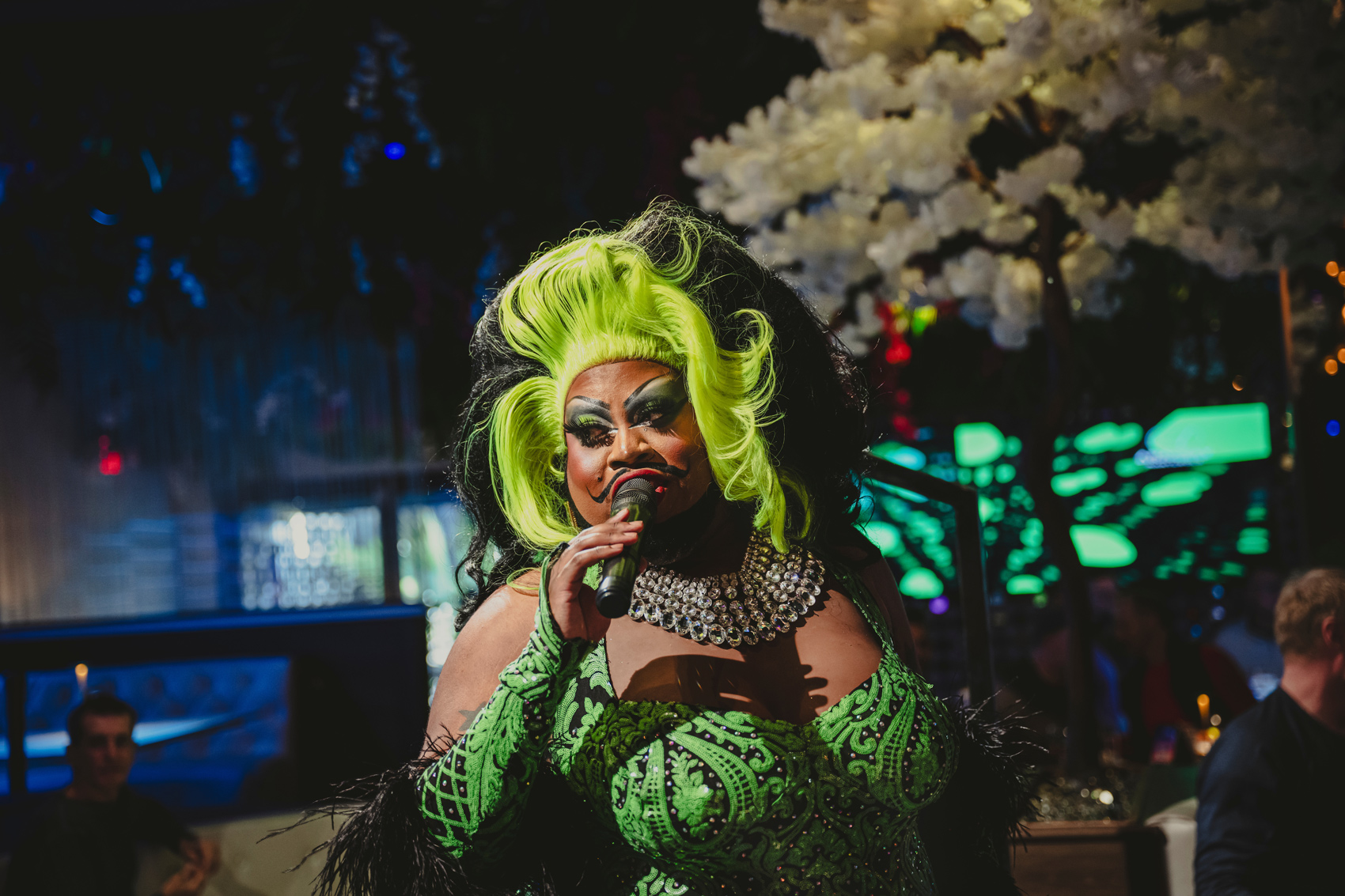
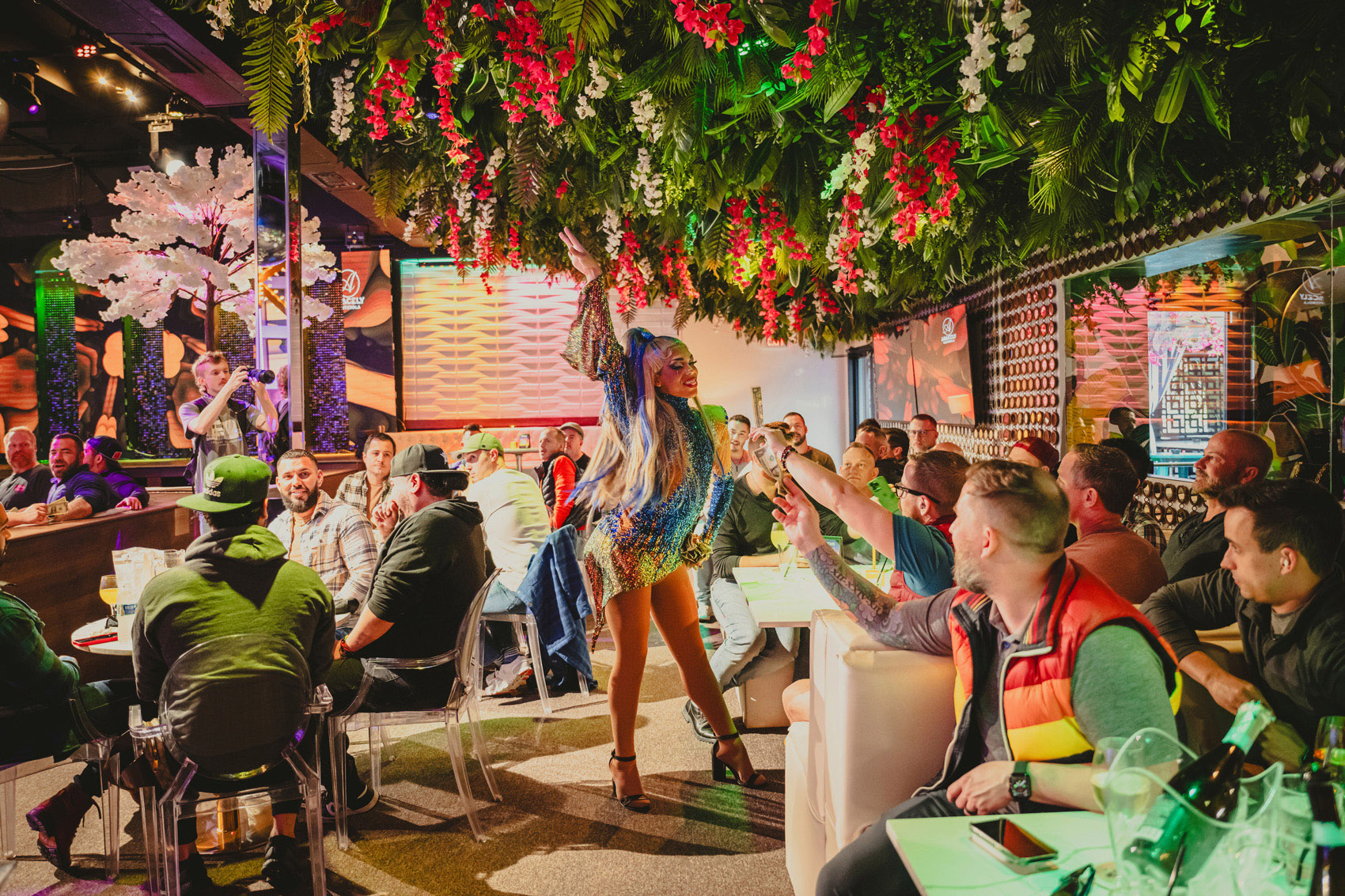
Drag queen Blackberri performs at Rich’s Houston on Jan. 14. Blackberri was a finalist on the 5th season of the TV show Dragula. (Meridith Kohut for Houston Landing) 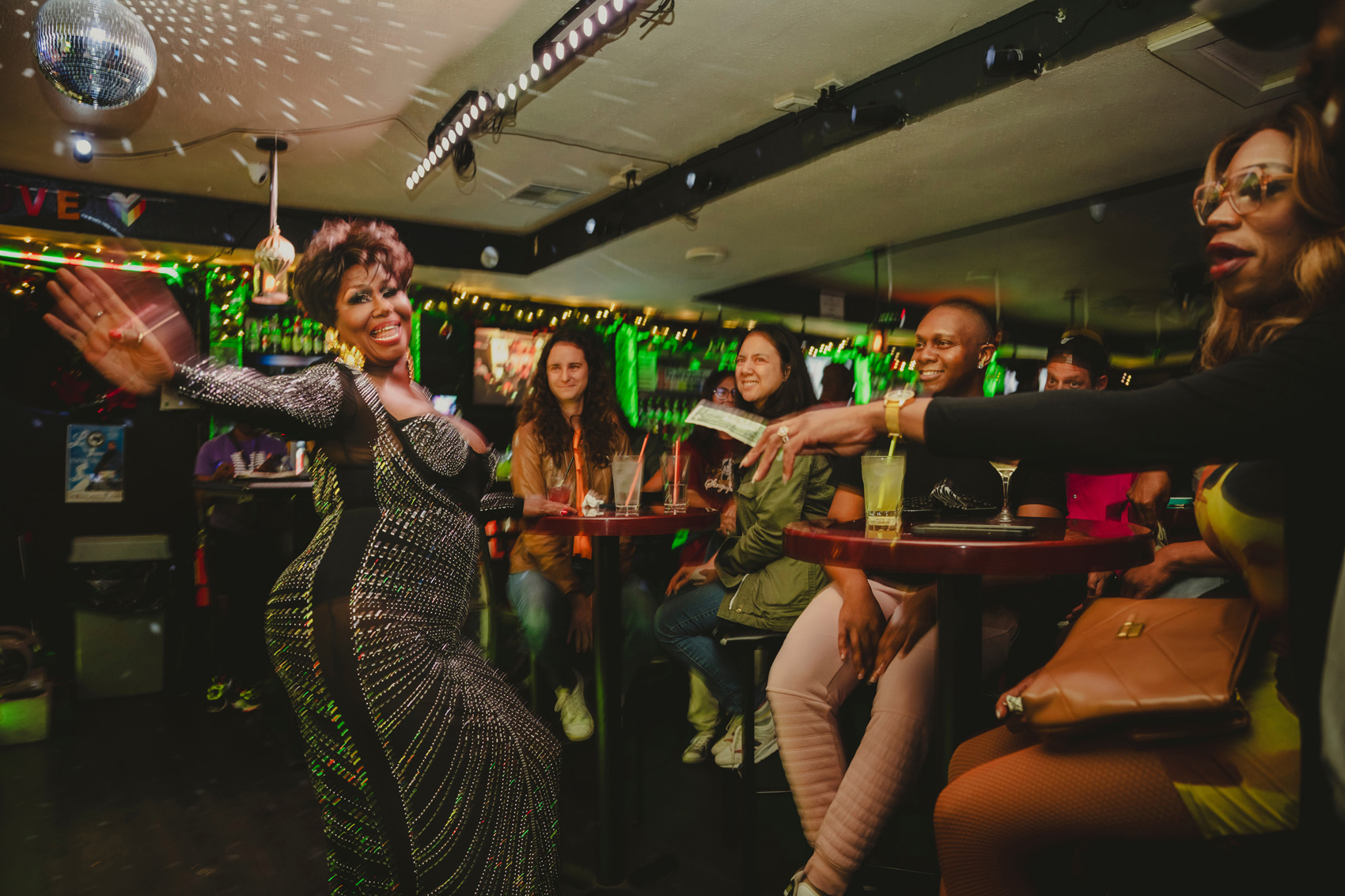
Veteran drag queen Roxanne Collins performs at the Barcode club in the Montrose area of Houston on Dec. 8. (Meridith Kohut for Houston Landing) 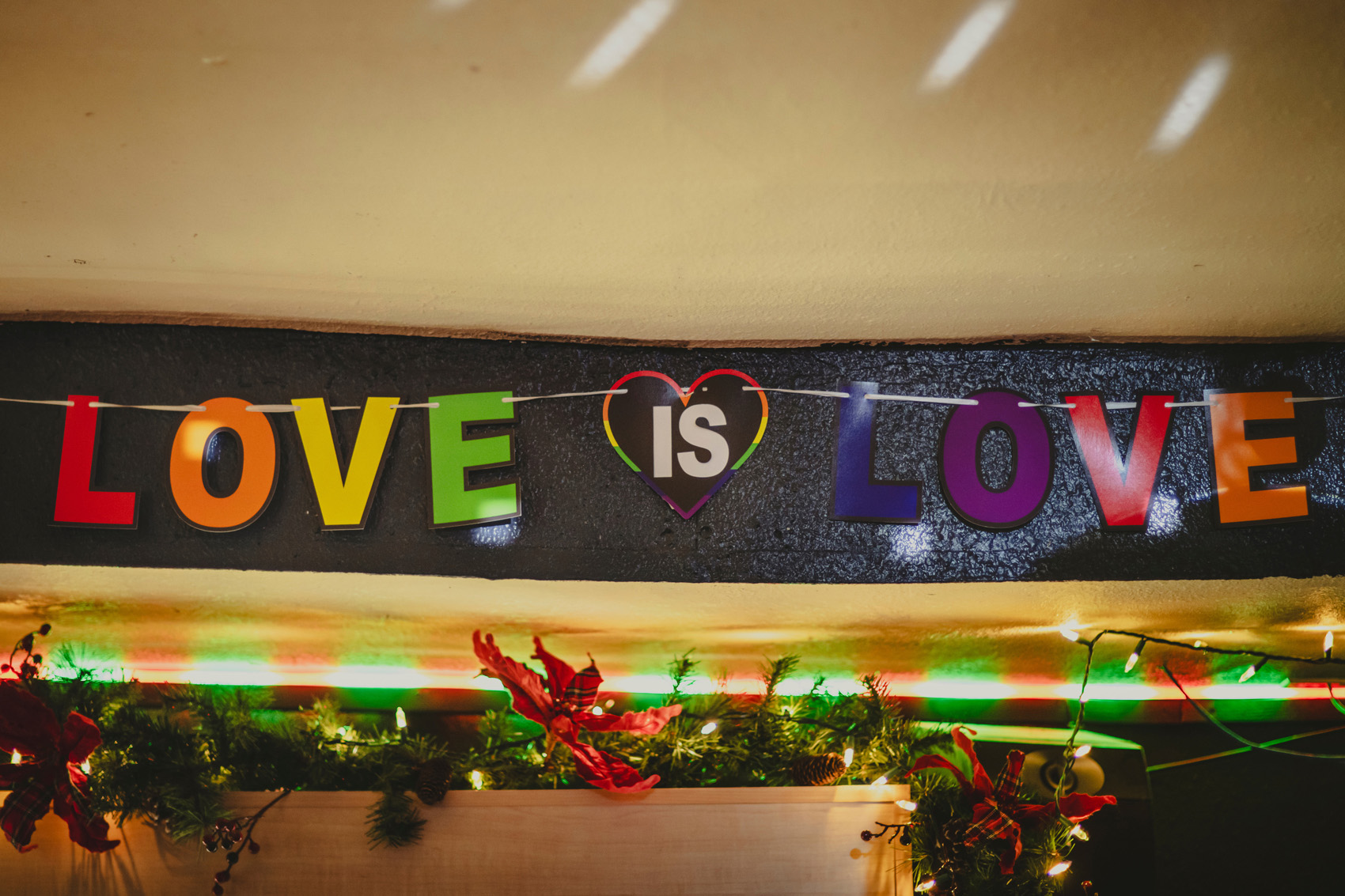
A ‘Love is Love’ banner hangs by the stage where drag queens regularly perform at the Barcode club in the Montrose area of Houston on Dec. 8. (Meridith Kohut for Houston Landing) 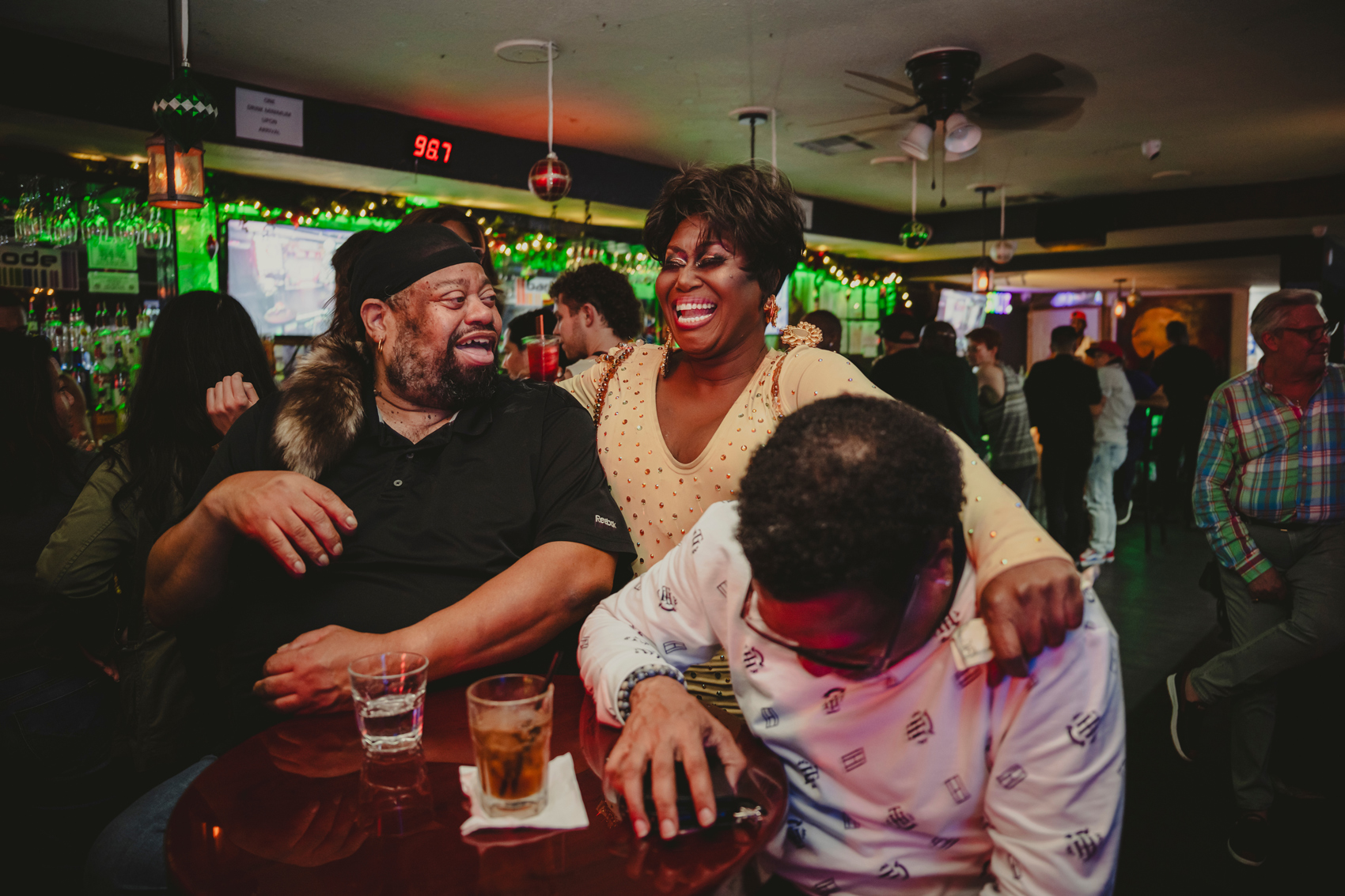
Veteran drag queen Roxanne Collins interacts with members of the audience during her performance at the Barcode club in the Montrose area of Houston, TX on December 8, 2023. Collins has performed for over 30 years, and specializes in Tina Turner songs. (Meridith Kohut for Houston Landing) 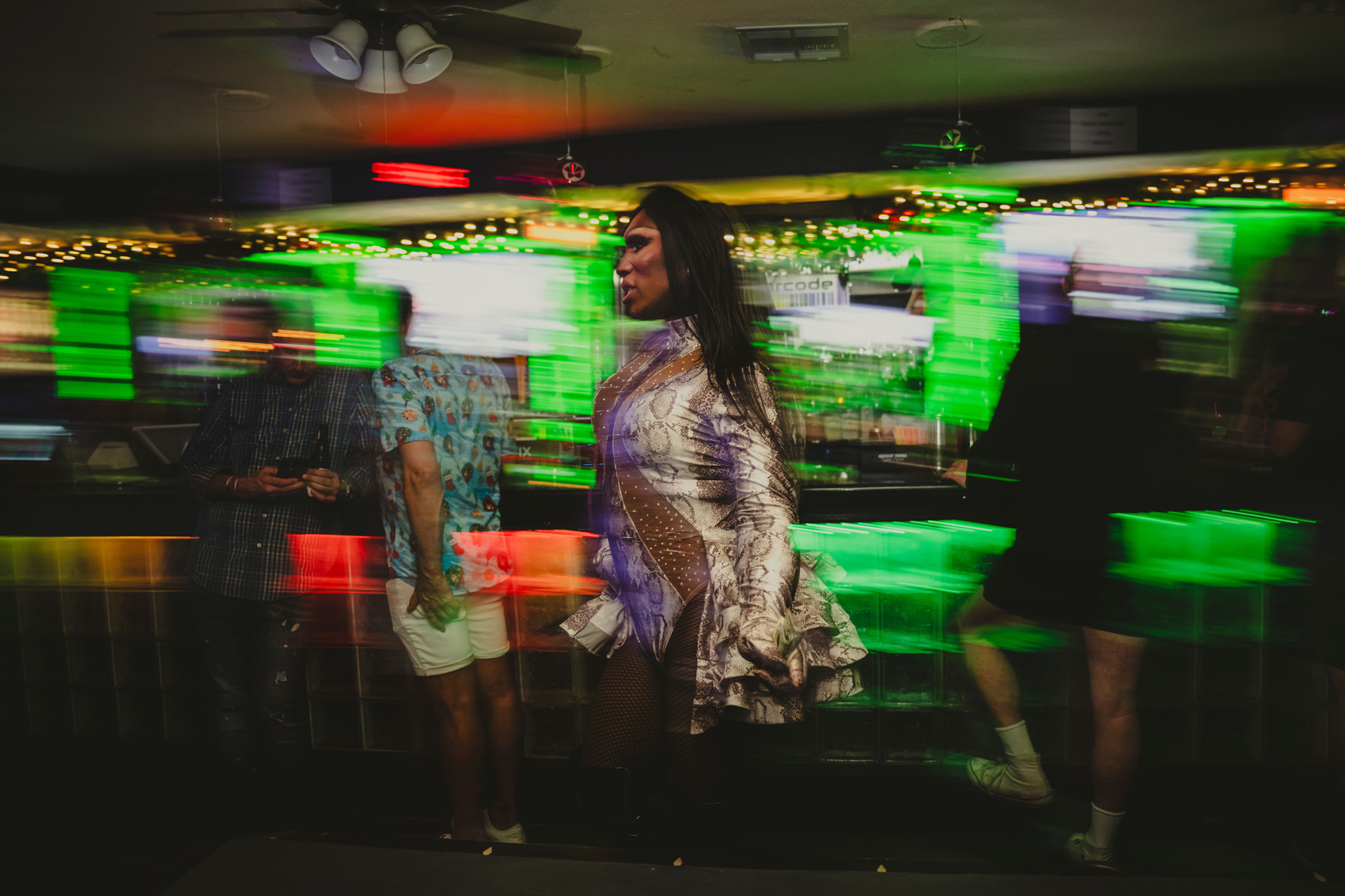
Sixteen year drag queen veteran, Marci Mogul performs at the Barcode club in the Montrose area of Houston, TX on December 8, 2023. Houston’s drag scene has received time in the national spotlight recently, as two Houston queens have participated in televised competitions, at a time when the LGTBQ+ community in Texas is experiencing a wave of targeted attacks from legislation and far-right groups. (Meridith Kohut for Houston Landing) 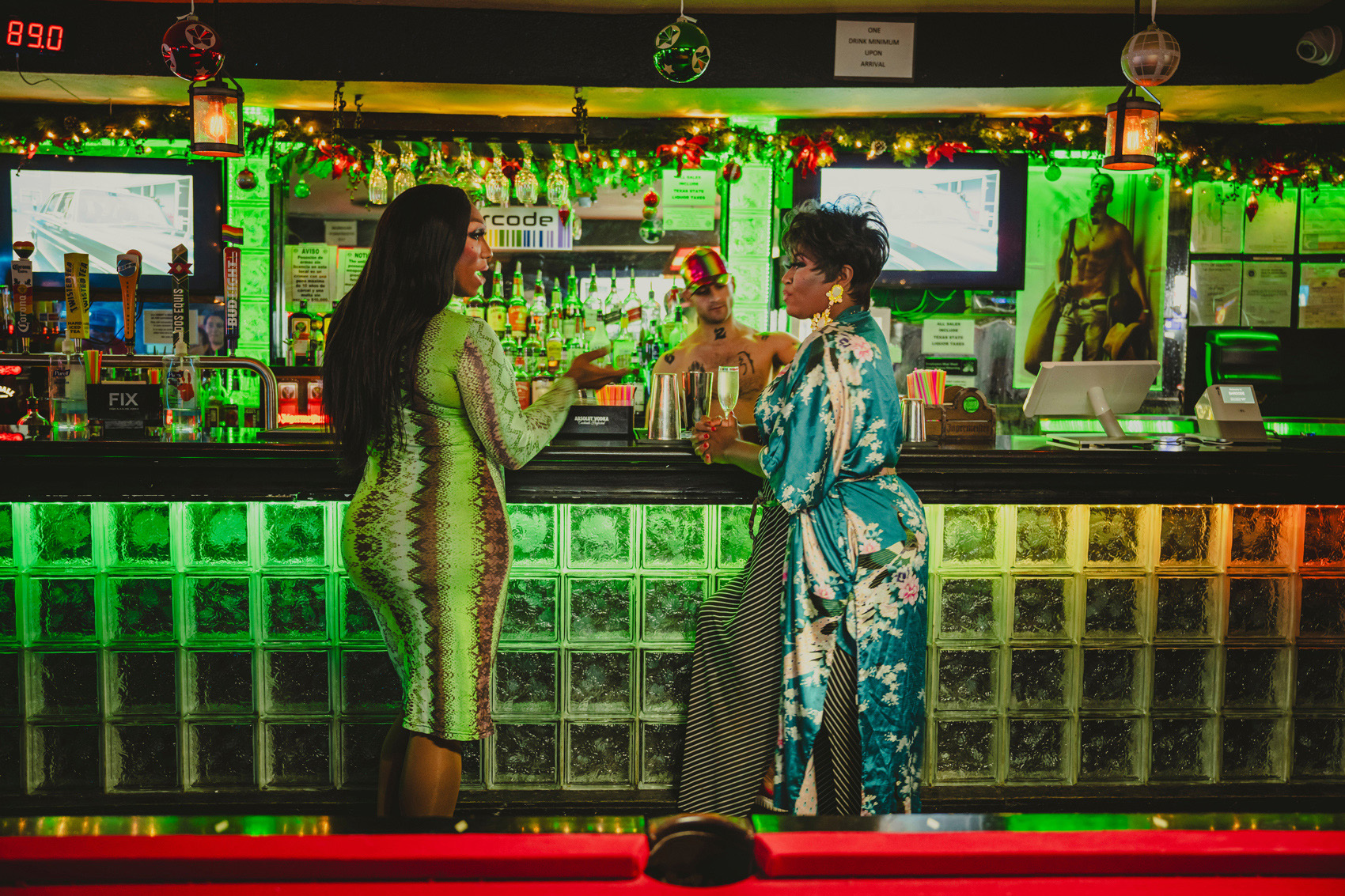
Veteran drag queens Marci Mogul and Roxanne Collins order drinks at the bar at the Barcode club in the Montrose area of Houston, TX on December 8, 2023. Houston’s drag scene has received time in the national spotlight recently, as two Houston queens have been featured in televised competitions, at a time when the LGTBQ+ community in Texas is experiencing a wave of targeted attacks from legislation and far-right groups. (Meridith Kohut for Houston Landing)
‘Overlooked’
Houston’s absence in drag reality shows was not due to a lack of talent or effort.
“In the pageant world … Houston has always kind of been on the national scene,” said 61-year old Terry “Kofi” Ray, a longtime Houston drag performer who has won numerous pageant titles throughout her 45-year career.
“But as far as the new outlets such as the TV, so-called reality shows, there were many people that have applied to be on RuPaul Drag Race, but Houston always seemed to be skipped over.”
Kofi once considered applying a couple of years ago when she got a call to audition, but was deterred by the process, she said. It required her to prepare a video with various different looks in two weeks — something she felt was “almost impossible” to pull off to her standards of quality amid her busy schedule performing at Montrose nightclub JR’s Bar and Grill and hosting her weekly amateur show “So You Think You Can Drag” at South Beach Houston.
“Houston has always been a hotspot for drag,” said longtime Houston drag performer Alexye’us Paris, 42, who’s graced the stages of Hamburger Mary’s, Eagle, Barcode, among others, throughout the span of her 25-plus year career.
Clubs like South Beach have hosted many RuPaul’s stars and performers from across the U.S. who regularly travel to the city for bookings, she said, including during the pandemic when business somewhat stalled.
But when it comes to Houston talent making it onto television, “a lot of times we’re overlooked because people don’t know exactly what we have here” Paris said.
‘Can’t put a label on us’
One of Houston’s greatest attributes, its diversity, is also what makes it underrated, Blackberri said.
“We have alternative drag. We have people that do gospel numbers. We have people that do pageants, we have very artistic people,” she said. “We just have such a variety of drag entertainers that you can’t just put a label on us.”
That diversity, she added, makes entertainers from Houston more of a commodity.
Brian Riedel, a professor and the associate director of Rice University’s Center for the Study of Women, Gender, and Sexuality, believes that Houston’s problem is less about being overlooked and more about Houston selling itself.
“I think that this is Houston’s problem telling the story of itself, less than other people not paying attention to us,” he said.
“If you are part of any of the scenes here, you know how vibrant it is. You know how long-standing it is. There are long chains of people who have trained and nurtured and fostered not just talent to the stage, but community holders within gender diverse communities; not just drag.”
‘Moments of popularity and moments of cratering”
Houston’s drag scene dates back decades when Wagon Wheel, one of the first nightclubs that featured female impersonators, opened in 1936 during the Pansy Craze — a period of increased LGBTQ+ visibility in the late 1920s and 1930s. Gay clubs and drag performers, known as pansies, experienced a surge in popularity in major U.S. cities. The club, which for two years sat at Little York Road and Airline Drive near Northside, was short-lived after arsonists set it ablaze in 1938, according to archives in a Rice University drag exhibit.
“There was a deep amount of interest in the mainstream and watching gender impersonation, female impersonation, male impersonation as mainstream entertainment that people would pay lots of money to go to these events, especially on holidays like New Year’s,” said Riedel, whose students assembled the digital exhibit.
But then that craze crashed, he said, in part due to the Great Depression and the gender culture of World War II. And the popularity of drag has gone in cycles ever since, he added, with “moments of popularity and moments of cratering.”
“In Houston in the ‘80s, the early years of the HIV crisis up into the ‘90s, drag performers were seen as the lifeblood of fundraising for many organizations,” Riedel said. “And they were, and then after a while, people got bored of going to drag shows because ‘Oh, here we go yet another fundraiser.’ It’s not just going out for a night to have a drink.”
The onset of the drama series “Pose” in 2018, which told LGBTQ+ stories through a predominantly Black, Indigenous, People of Color trans cast until it ended in 2021, was another “moment of popularity” Riedel added, that has since faltered due to a sweeping wave of Texas legislation targeting the LGBTQ+ community and drag performers in recent years. Although a federal judge shot down Senate Bill 12, Texas’ “drag ban” law in September 2023, which aimed to punish bar owners who hosted “sexually explicit performances,” the mere introduction in the legislative session was enough to spark a panic among local performers.
“It was very scary,” said Paris, who worried about her livelihood. “For me, drag is my full-time job. So with the drag ban and them wanting to actually pass these bills, your career is in jeopardy.”


‘Originality is dead’
While some Houston queens have aimed for the stars and auditioned for famous reality TV series, others like Paris and longtime performer and show director, Roxanne Collins, who is best known for impersonating Tina Turner, never desired to be on TV. Instead, they’ve always preferred performing in local clubs like Barcode, an intimate trailer-sized club with just four parking spaces that Collins calls the “Apollo of Houston,” where they can get personal with people.
“I love people, I love making people laugh. I like entertaining. I just like people. It’s the audience,” Collins, 57, said, as she applied makeup in the Barcode dressing room and sipped her sugar-free Red Bull, just hours before a recent Friday night show.
“There’s four parking spaces,” she said. “That’s the magic of this place. But people will come.”
The cozy trailer-like bar was packed by 11 p.m. on a recent Friday night in December, just minutes after Collins took the stage performing “Push the Button” by Jennifer Hudson. With a glass of champagne in her hand, she lip synced to the tune while her gold thigh-high dress and foxtails beamed in the spotlight, and as an audience member stuffed $1 bills in her bosom.
Collins, who was also the host and show director, kept the crowd entertained by cracking jokes in between numbers — a term drag performers use to describe songs — and introducing the next performers in line. Decked out in a royal blue tutu and over the knee black leather boots, Marci Mogul, a queen who recently hailed from Orlando, performed a Rihanna song medley starting with the singer’s “Love on the Brain” —a slow tempo number —before she kicked it up a notch with high kicks and splits to one of the singer’s more upbeat hits “Breaking Dishes.”
Paris closed the first part of the show with an old school Mary J. Blige medley mix and dressed in a sparkling red bodysuit beneath a black fur shrug and thigh-high boots. The look was encapsulated with a pair of disco ball glasses before she snatched them off to perform the singer’s uptempo “Real Love.”
Getting up close and personal with the audience is not just encouraged, it’s the norm at Barcode, which Collins calls a true show bar as opposed to a nightclub. There, performers are the main attraction and the emphasis is on the art, musicality and entertainment.
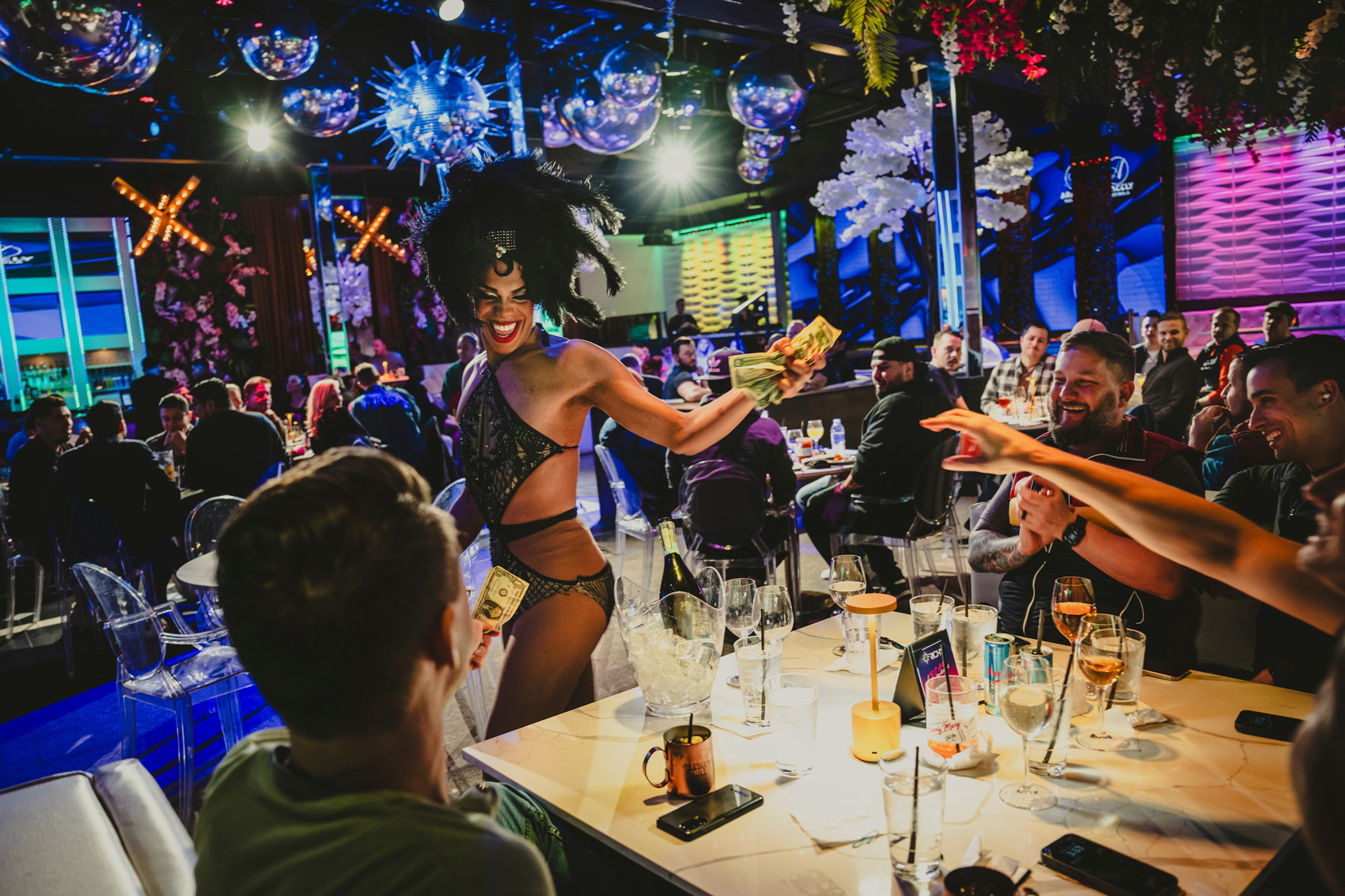
Drag queen Dayton Thomas collects tips during a performance at Rich’s Houston on Jan. 14. (Meridith Kohut for Houston Landing) 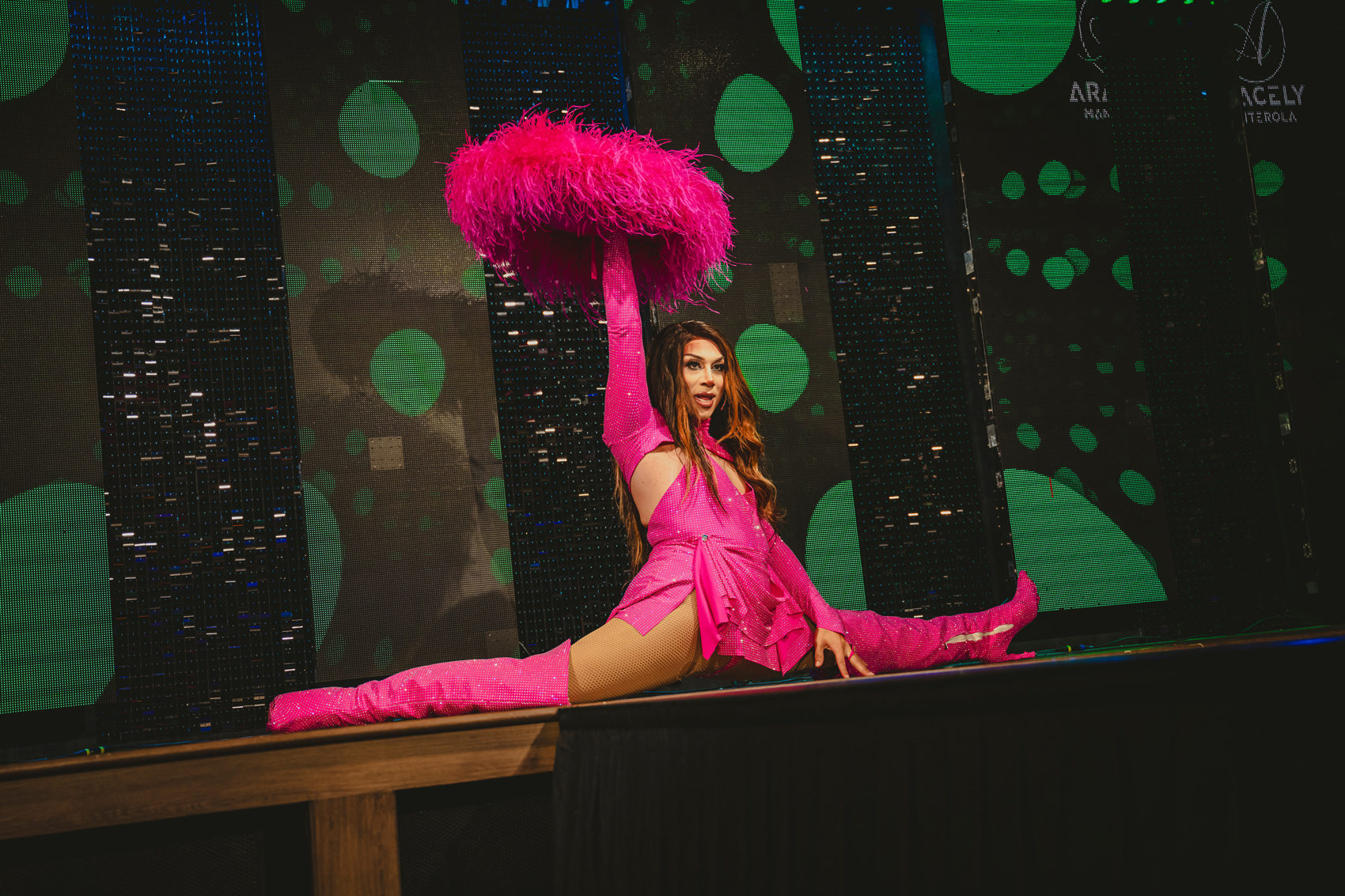
Drag queen Bosston performs at Rich’s Houston on Jan. 14. (Meridith Kohut for Houston Landing) 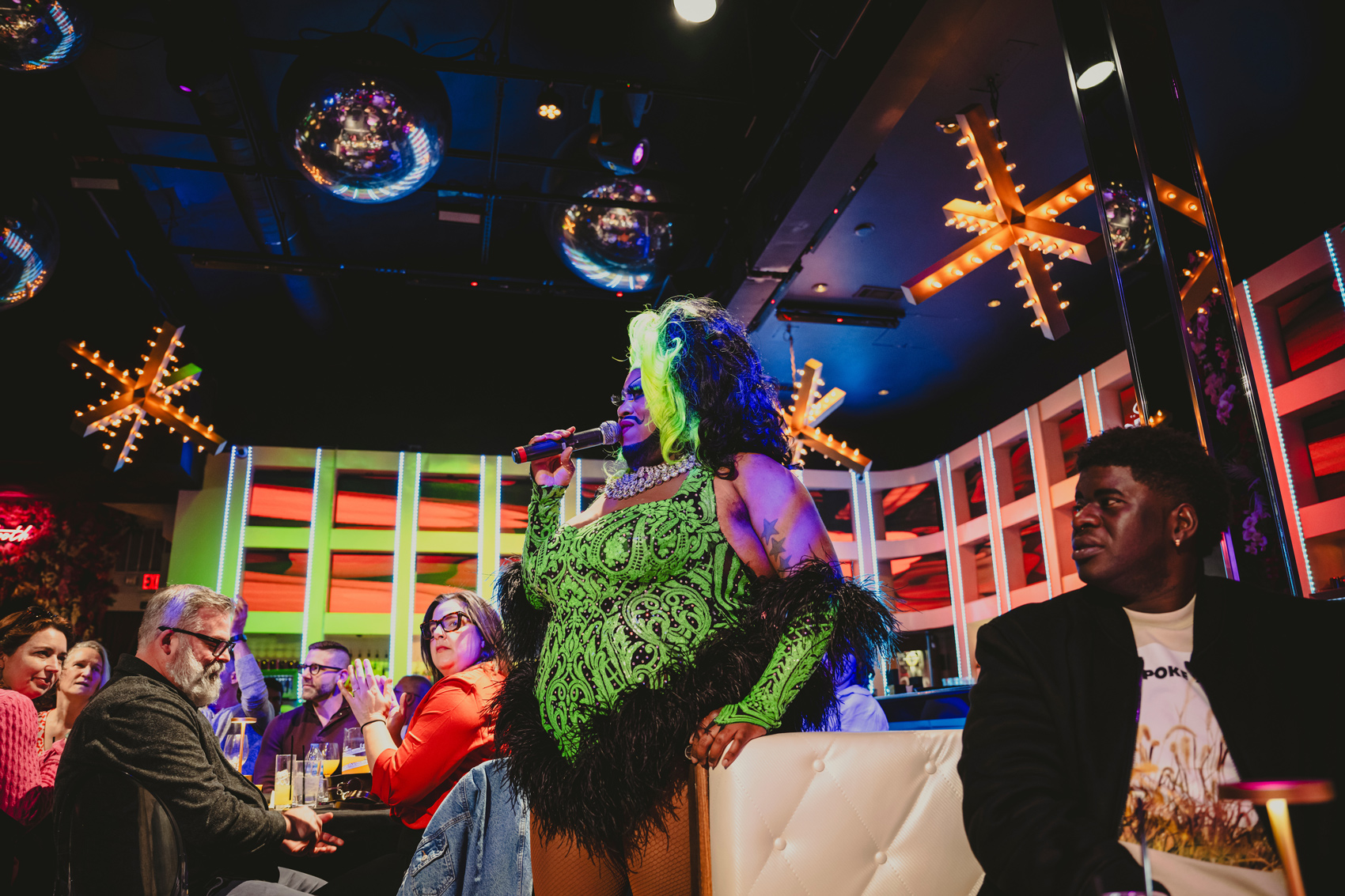
Drag queen Blackberri performs at Rich’s Houston on Jan. 14. (Meridith Kohut for Houston Landing) 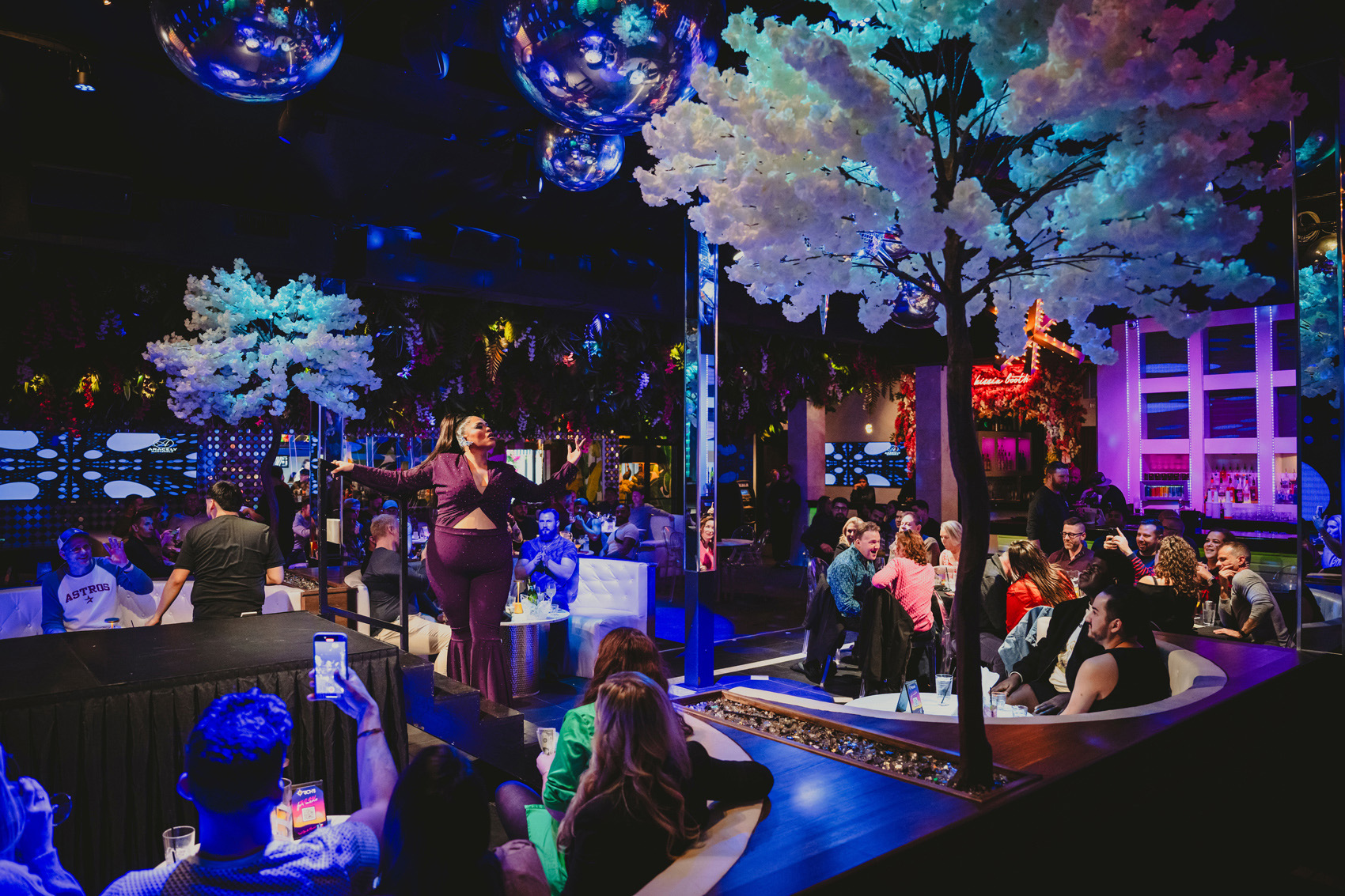
Drag queen Adriana LaRue performs at Rich’s Houston on Jan. 14. (Meridith Kohut for Houston Landing) 
The bathroom sign at Rich’s Houston, which regularly hosts drag performances, seen on Jan. 14 in Houston. (Meridith Kohut for Houston Landing)
While drag brunches and TV shows like RuPaul’s Drag Race have brought added exposure to the industry, Collins believes they’ve also tainted the art of drag.
“Originality is dead,” she said. “And I know that sounds a bit contradictory coming from a celebrity impersonator. I know I’m not original. I’m copying somebody, but there’s an art to that though.”
Eye contact, personality, moving your hands, “that’s called musicality,” Collins said. “You need that in drag.”
Paris said it’s common for entertainers to perform the same song, noting that she and Collins have both performed Gladys Knight’s “End of the Road,” but their unique styles allowed space for nuance.
“Everything’s been done at some point in time,” she said, as powder makeup baked on her face hours before showtime. “So you’re gonna always repeat something, but I always tell people how do you make it your own? If you did three cartwheels, do three cartwheels and land into something different. Don’t land into a split.”
Although finding one’s individuality in a diverse city like Houston can be difficult and can take time, according to Blackberri, it’s the “key to success” in order to set yourself apart.
“When I started here, I was a Black bearded dragon that did comedy,” she said. “And I didn’t just do an Ariana Grande number, wearing a bodysuit. So it set me apart and it made my own lane. And when you make your own lane, there’s no one else competing with you.”

