

Federal prosecutors charged a Houston pizza worker on Thursday with one count of attempting to provide material support for ISIS by creating videos and images to promote violence by the terrorist group.
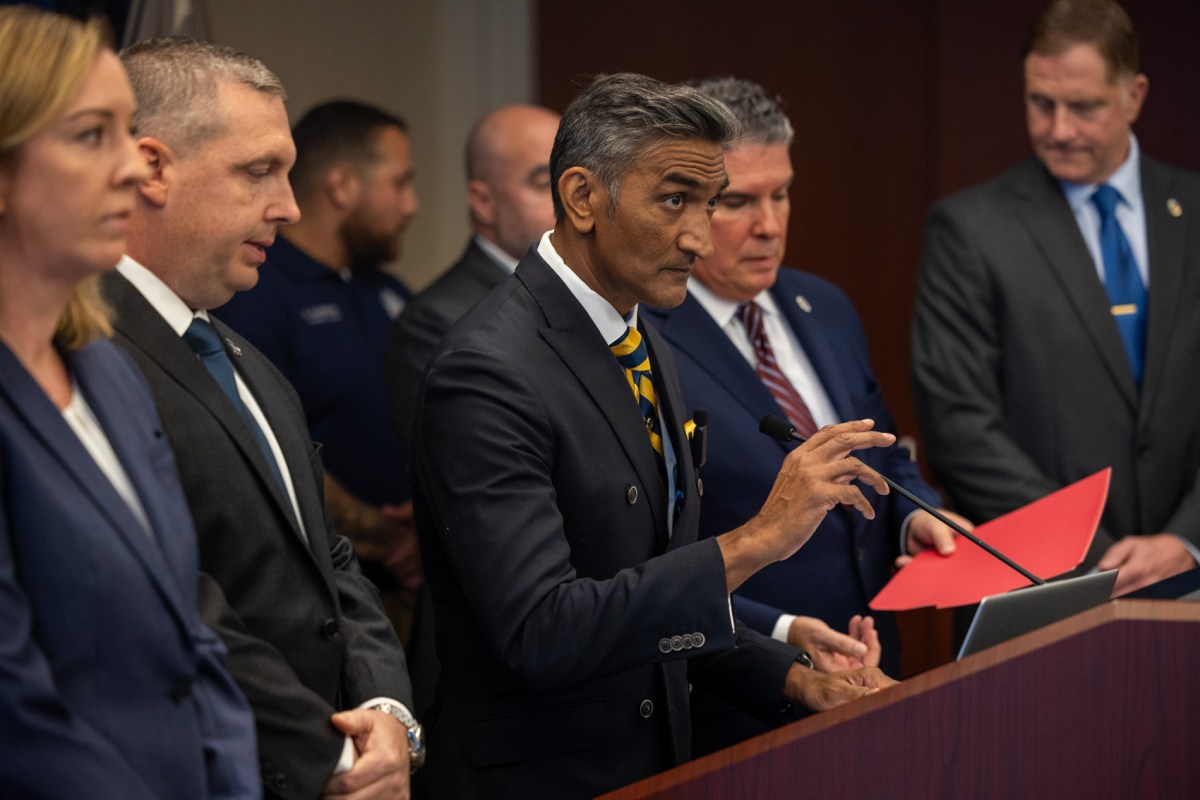
Houston FBI Special Agent in Charge Doug Williams during a press conference said investigators had also uncovered evidence that Anas Said, 28, had been “searching for ways to commit violent acts in the U.S. on our soil, right here in Houston, Texas.”
Said is not charged in connection with a supposed plot. He currently stands accused of creating propaganda for the Islamic State, a foreign terrorist organization that seized territory in Iraq and Syria in 2014.
During a brief detention hearing Thursday, Said pleaded not guilty. U.S. Magistrate Peter Bray ordered Said to remain in custody without bail. The magistrate also said he could not set any conditions that would ensure Said’s appearance.
Baldemar Zuniga, Said’s lawyer, waived an opportunity to argue for his client’s release. Carrying two heavy-duty binders with what appeared to be evidence prosecutors had given him, Zuniga told reporters that he could always request another hearing at a later date. A trial has been tentatively set for January, but will almost certainly be continued.
Said, who authorities say was born in Houston but lived in Lebanon for much of his childhood until 2014, wore a headset for Arabic translation during the brief hearing. His mother and brother declined to comment while exiting a small courtroom on the seventh floor of the federal courthouse in downtown Houston.
Said faces one count of attempting to provide material support or resources to a foreign terrorist organization, which carries a maximum penalty of 20 years in prison. He’s accused of creating at least five videos and two images and sending them to an alleged ISIS social media and web designer for wider distribution.
“These pro-ISIS videos and images focused on ISIS’ use of violence,” Alamdar Hamdani, the U.S. Attorney for the Southern District of Texas, said during the press conference.
Williams said upon his arrest, Said admitted to wanting to use explosives to commit a mass killing.
“We stopped a terrorist act from happening right here in Houston, and any day we can publicly say that is a great day,” said Williams, who did not specify how detailed Said’s plans were.
Hamdani said more charges could be filed as authorities continue their investigation.
Said first appeared on the FBI’s radar in 2017 after he placed an order for two stickers, one of which had an ISIS flag overlaying an image of the Dome of the Rock, a shrine that is one of Islam’s holiest sites, according to a memorandum filed by federal prosecutors Steven Schammel and Heather Winter. The other sticker showed a silhouette of a man holding a rifle with the caption, “Winning the Islamic Nation.”
During a 2018 interview with federal agents, Said admitted the stickers were meant to show support for ISIS, the memorandum said. He told the agents that while he did not support ISIS killing people, he liked how the terrorist organization was “waking people up.”
In another interview, in 2019, Said told federal agents that he no longer consumed ISIS propaganda and that he only used the internet for school and watching sports, according to the memorandum.
But after Hamas attacked Israel last year, Said’s behavior began to “mobilize toward violence,” and his name jumped to the top of the FBI’s list of potential dangers, Williams said.
Shortly after the Oct. 7, 2023, Hamas attack, the FBI received information from Meta that Said was using nearly a dozen Facebook accounts to show support for ISIS, Schammel and Winters wrote in their memorandum. After obtaining search warrants in February for Said’s electronic devices, investigators found multiple encrypted messages “containing records of his efforts to create and disseminate propaganda that glorified ISIS’s ongoing violence,” the prosecutors wrote.
Said was arrested in the parking lot of a Southwest Houston apartment complex where he, his brother and his mother live, authorities said. He told agents that he had considered buying a gun, had researched military recruitment facilities and had scouted out one location on Westheimer Road, the memorandum said.
Said also told agents that he had considered going up to what he assumed were military personnel near his workplace and asking them if they supported Israel or if they had been deployed to Afghanistan or Iraq and killed Muslims there. “If they said ‘yes,’ those are the persons he would kill,” the memorandum said.
The memorandum also said that Said had communicated online with an undercover FBI agent last year and told the agent of his desire to commit an attack on par with 9/11 and how he had thought about joining the U.S. military so he could attack servicemembers.
Zuniga described Said as a “homebody,” who spends a lot of his time at home when not working with his brother at a pizza restaurant.

