

Houston ISD will ask voters in November to pass the biggest school bond package in Texas history, after the district’s state-appointed board members voted unanimously Thursday to approve putting the $4.4 billion measure on the ballot.
The package, which pledges not to raise property tax rates, proposes to fund campus rebuilds, fixes to faulty air systems, school security upgrades and other improvements.
The bond has become one of the most contentious issues in an already supercharged district, pitting a widely accepted need to invest in campus upgrades against community frustration with the state’s June 2023 takeover of the district and frayed trust in the appointed superintendent, Mike Miles.
District leaders said the bond measure is sorely needed because HISD has gone longer than the recommended time since its last bond, leaving students to learn in too-hot classrooms and under leaky roofs. HISD’s most recent bond election came 12 years ago, while large urban school districts typically pass bonds roughly every five years.
“We have a lot of kids today whose parents went to school in the same building,” board member Rolando Martinez said. “Their same grandparents came to their school in temporary buildings that are now being used. Our schools need new buildings.”
related to education
Use our search tool to see how Houston ISD’s bond proposal would impact each school
by Asher Lehrer-Small and Adriana Rezal / Staff Writer
However, a faction of Houstonians have vocally opposed the proposal, arguing they cannot trust HISD leaders — the architects of a dramatic and controversial overhaul program — to responsibly manage a multibillion-dollar bond package.
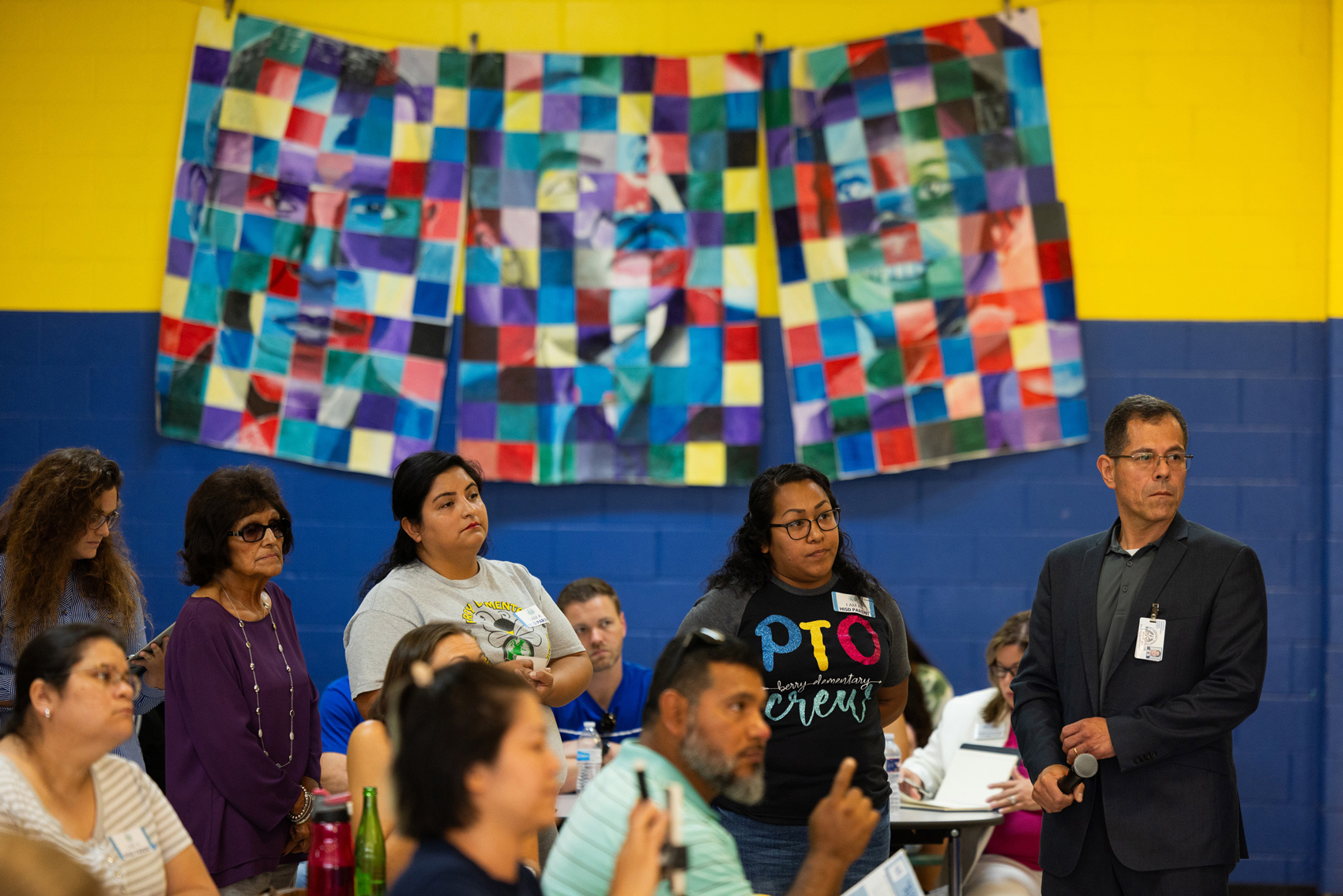
“I want to ask my Houstonians … that you will have their voices heard in November, so vote no for this bond,” HISD parent LaQuitta Barnes said during the Thursday meeting.
Voters in each Texas independent school district decide whether to approve bonds, which allow the district to finance infrastructure and technology investments. Districts pay for the costs with property tax revenue.
HISD leaders have debated since the late 2010s whether to hold a bond election, but each effort disintegrated due to concerns that voters wouldn’t approve it amid infighting among board members and the prospect of an imminent state takeover.
A matter of trust
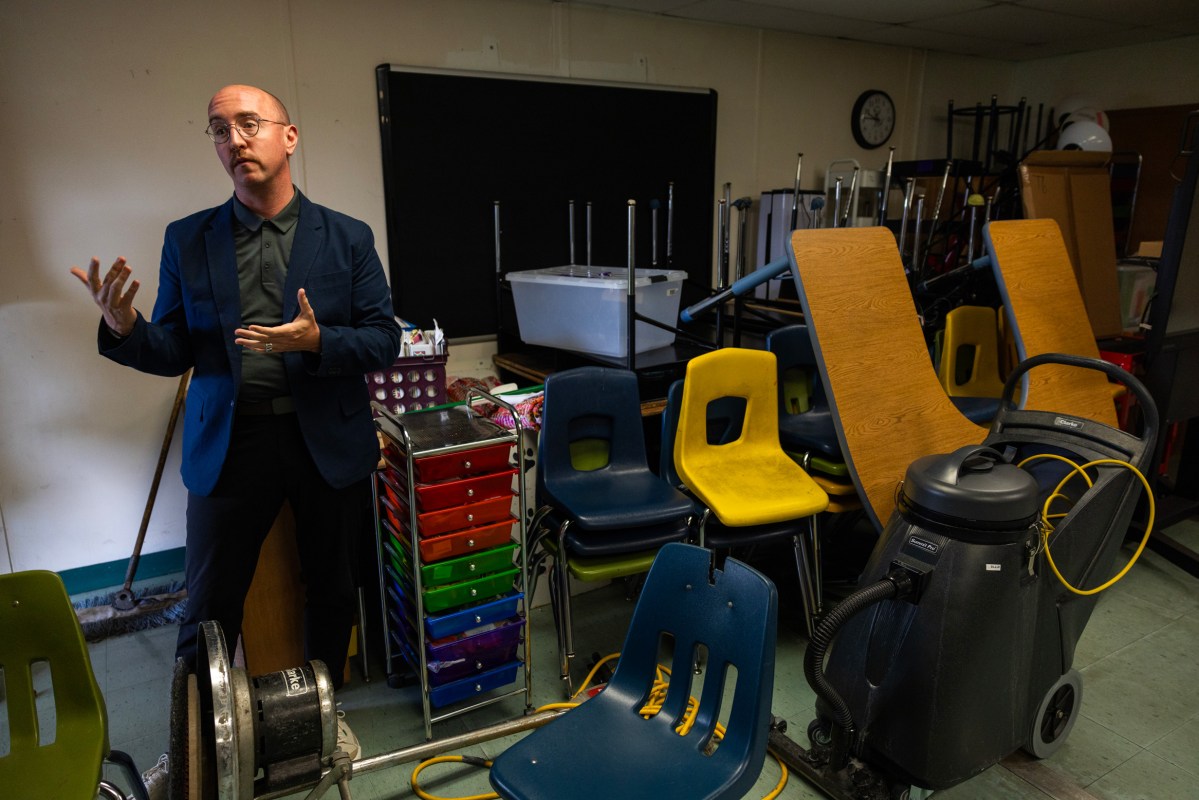
During Thursday’s board meeting, several school principals described unsafe learning conditions at their campuses, requiring major updates and upgrades.
“Every time it rains, it comes in the ceilings, the doors, the windows,” Forest Brook Middle School Principal Alicia Lewis said. “Many of our rooms flood to the point that we have to relocate scholars into different learning spaces until the water is removed.”
Seven members of a 28-person bond advisory committee convened by the district also spoke during the meeting, all voicing support for the bond.
“Quite frankly, the children can’t wait, and the teachers and staff can’t wait, to have safe and healthy buildings,” said committee co-chair Garnet Coleman, a retired state legislator who served 30 years in the Texas House of Representatives.
A spring survey conducted by Rice University’s Kinder Institute for Urban Research found that about two-thirds of nearly 3,000 HISD residents polled would support a bond that does not raise taxes by more than $25 annually. Opponents of the spending package have rallied behind the slogan “no trust, no bond,” turning the vote into a referendum of the district’s state-appointed leadership.
related to education
What’s in Houston ISD’s $4.4 billion bond plan? Here are 5 key takeaways.
by Asher Lehrer-Small / Staff Writer
Among the most controversial elements of the bond plan is a measure to relocate eight schools to another school’s campus, a process known as “co-location.” District administrators say the move will save money by allowing schools to share some facilities, like cafeterias and gymnasiums. Co-located schools would maintain much of their own separate staffing.
Several community members said Thursday that they consider the plan a disguised effort to close schools in majority-Black neighborhoods, where enrollment has slipped for years.
“Voters fear this approach is hiding a plan for school closures,” said Bridgette Murray, president of the Pleasantville Area Super Neighborhood Council in northeast Houston. “For trust, we need answers, and you must educate voters if you think you’re going to get this (bond passed).”
Other community members criticized HISD for not adjusting the bond plan in response to feedback. In June, advisory committee members questioned millions in planned bond investments for small, half-empty schools. And in July, they balked at the district’s plan to spend $425 million to build three new career and technical campuses across the district. But the district did not make significant changes to the bond proposal in response to the concerns.
“The bond committee brought forth suggestions based on public testimony and research,” said Heather Golden, the parent of a high school student at Houston Academy for International Studies. “None of those suggestions were incorporated into the proposal you’re seeing the board voting on today.”
Six of HISD’s nine elected trustees, who hold no decision-making capacity while state-appointed board members lead the district, spoke at Thursday’s meeting. Four spoke in favor of the measure and two opposed it.
“I stand before you with my 13-month-old son who will be attending HISD schools in the future,” Trustee Dani Hernandez said. “I hope that when he is old enough to go and attend HISD schools, I do not have to worry about his school … having mold, and that his campus is healthy for him, and safe for him.”
Asher Lehrer-Small covers Houston ISD for the Landing. Reach him at asher@houstonlanding.org.

