


On the clear-skied Monday following spring break, Houston Community College’s Katy campus didn’t take long to come back to life. By 10 a.m., hundreds of cars nearly filled the expansive parking, students sprawled out in study areas on each of the campus’ three floors, and a busy flow of students streamed in and out of the polished campus.
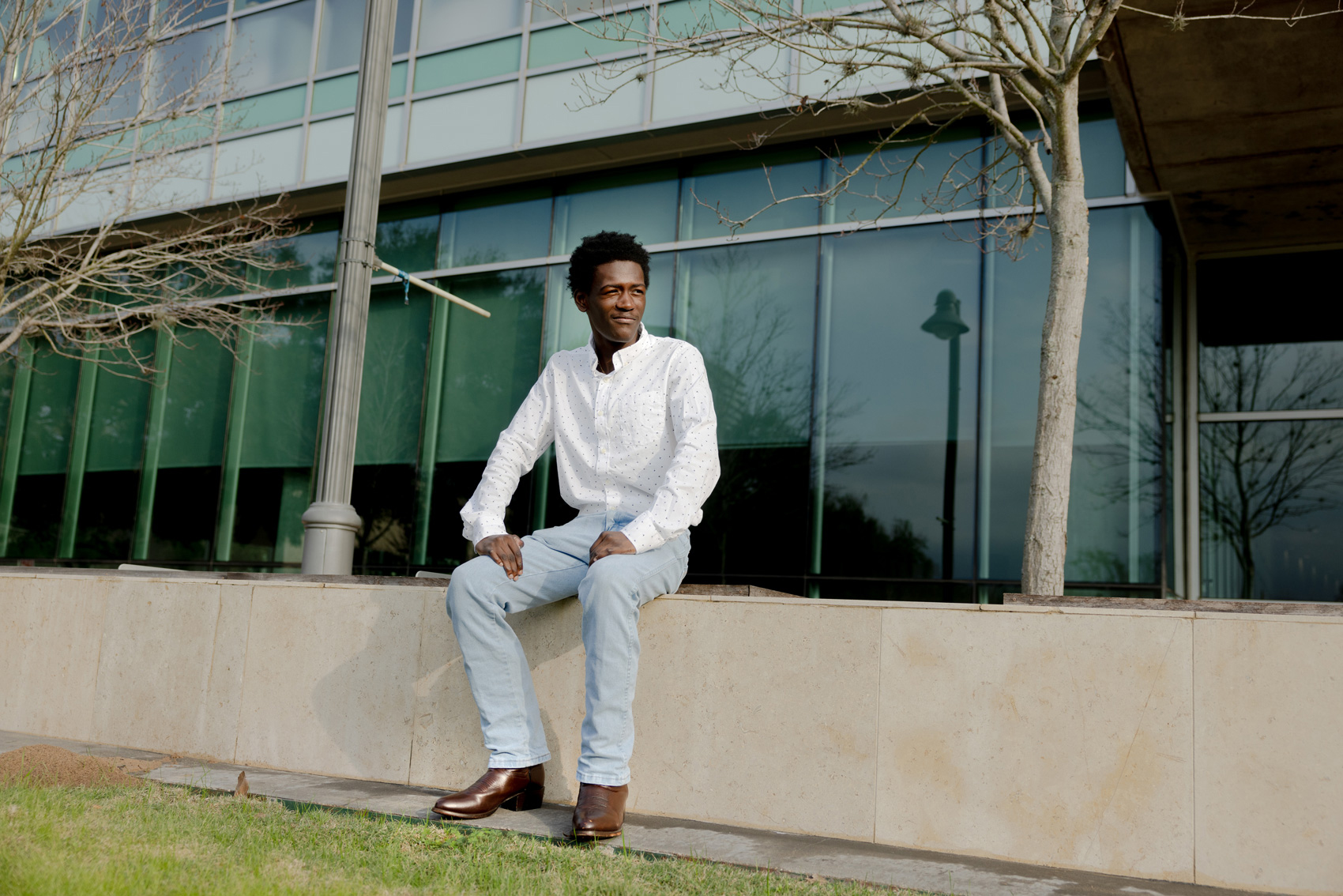
Over the past five years, enrollment at HCC’s Katy campus and other parts of Houston’s sprawling suburbs has swelled, with a couple thousand additional students signing up for classes. The growth has been fueled by students like first-year paralegal technology major Sebastian Szatynski, who moved to the Houston suburb from New York several months ago to attend HCC’s fast-growing Katy campus.
“It’s cheaper and easier here. I like the ease of access. I’m going to transfer to the (University of Houston) right after finishing my associate (degree) here,” Szatynski said, pointing toward the UH satellite campus located across the street.
In the city’s urban core, however, enrollment has fallen by several thousands of students during the same period. The losses are most severe in lower- and middle-income neighborhoods on the west side — such as Alief, Eldridge, Gulfton and Westchase — where residents were already less likely to earn a college degree.
The enrollment trends mark a stark shift for HCC, a 51,500-student college that historically educated large shares of inner-city students but now relies on more students from the outer edges of its service boundaries, a Houston Landing analysis shows. While the booming suburbs have helped HCC bounce back from a pandemic-era decline and stabilize its budget, the inner-city losses risk exacerbating education disparities in Greater Houston.
For HCC leaders, much of the shift is a natural consequence of population and development trends, as well as the nationwide decline in college enrollment after the pandemic.
Greater Houston’s suburbs continue to grow, as families flock to areas with larger, more affordable homes in developing communities with higher-rated K-12 school districts. HCC leaders have responded by marketing to the booming areas and opening a new facility in Katy in 2022.
“I think we see a need and are trying to address that need,” said Trustee Dave Wilson, who represents a west Houston HCC district.
Meanwhile, in the heart of Houston, the college is having a harder time reclaiming students. Population growth in the city and the Alief area are relatively stagnant. HCC, like many community colleges and universities, also has struggled to enroll lower-income students hit particularly hard by the pandemic.
As a result, enrollment is down compared in 2020 in nearly all ZIP codes inside the city, as well as many in Alief and Missouri City. College leaders say the slower post-pandemic recovery highlights the need for more aggressive outreach and advising services for potential students.
“While we are not to pre-pandemic levels, we are edging our way back steadily,” said HCC Southwest College President Michael Webster, who oversees operations in southwest Houston, Missouri City and Stafford.
Selling the suburbs
COVID-19 caused a steep tumble in higher education enrollment across the country — and HCC was no exception. In the first two years of the pandemic, the college lost roughly 9,000 of its 56,000 students.
In the years since, HCC has clawed back about 6,500 of the students it lost, a point of pride for college leaders who have touted the gains at public meetings and events.
The recovery, however, has been geographically uneven.
The Katy and northeast Fort Bend County areas have driven the most growth, even though students in those areas pay out-of-district tuition and fees ($180 per credit hour) that are more than double in-district costs ($85 per credit hour). Residents of Katy ISD live within HCC’s district, but they’re charged out-of-district tuition and fees because residents don’t pay property taxes to the college.
HCC has also seen a small but notable influx of students from areas as far away as 55 miles from downtown Houston, including Richmond, Iowa Colony and Spring.
related to education
Interest in HCC’s most popular degree is plummeting — and that’s by design
by Miranda Dunlap / Staff Writer
Bradley Michalsky said he’s willing to commute from Spring to HCC’s Northline campus — 30 minutes on a good day, 45 if there’s traffic — rather than nearer Lone Star College because he wanted to spend more time in the city.
“Two of my teachers went to HCC, and everybody always talked about how awesome Houston was. I really wanted to see some of that community,” Michalsky said. “The more I study and work in Houston, the more I end up falling in love with it.”
HCC Northwest College President Zachary Hodges said much of the growth in Katy and neighboring areas is stoked by population shifts, though college leaders are working to attract more students from the region.
To get students to the campus, billboards along Interstate 10 advertise HCC to drivers on the region’s west side. Northwest College admissions advisors go to nearby high schools to sign students up for dual enrollment classes. HCC also works in tandem with University of Houston’s Katy location to get students to complete bachelor’s degrees through a “Start In Katy, Finish in Katy” program.
In the college’s largest move to tap into the suburb’s rising population, HCC leaders opened a $55 million Katy campus located in the geographic middle of Katy ISD’s high schools for convenience, Hodges said.


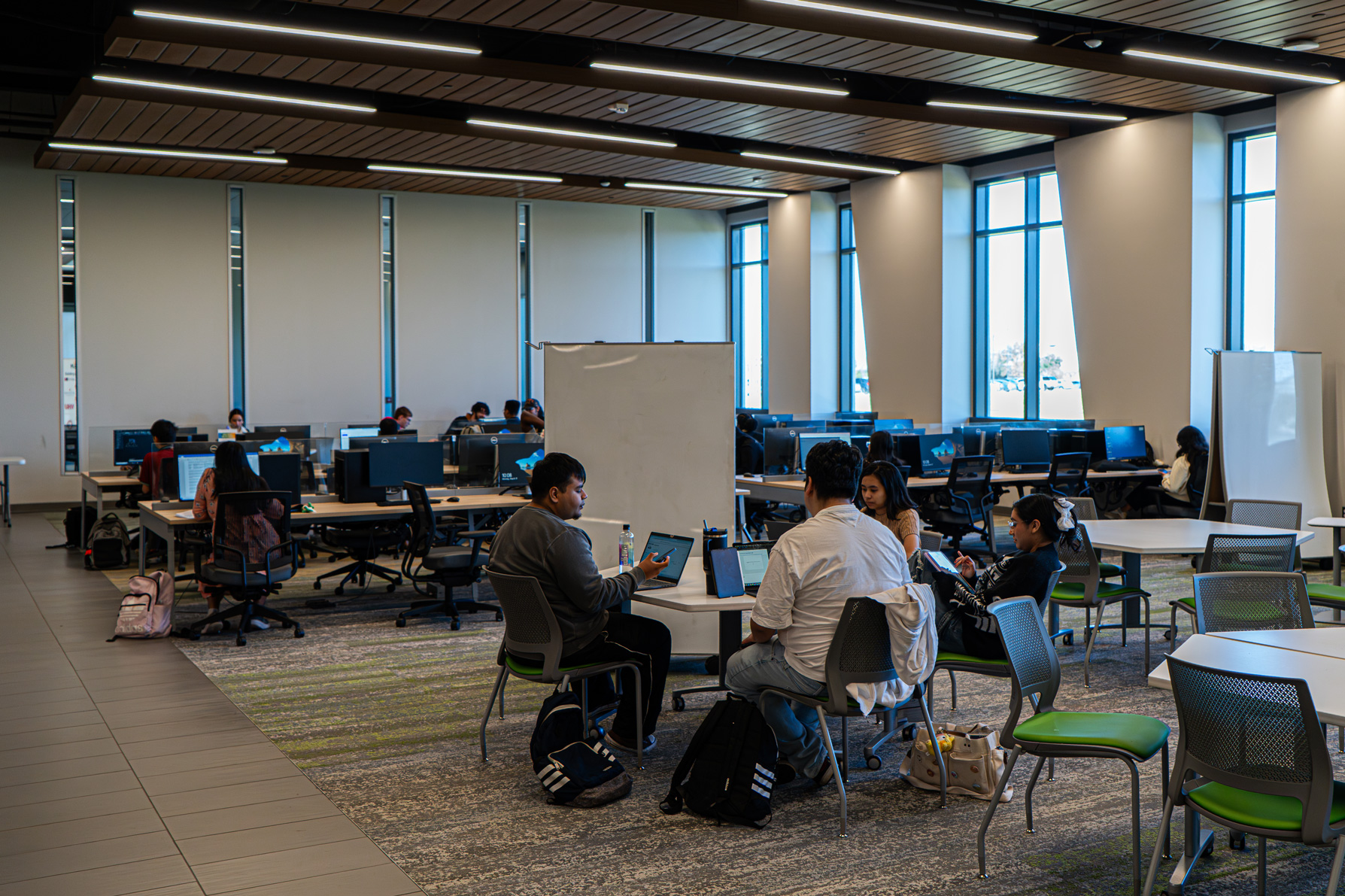
In the fall, 4,500 students took classes at the location, making it HCC’s second-busiest behind the flagship Central Campus in Midtown, which enrolled 6,340 students.
“That’s where the growth is, so of course higher education wants to follow that,” Hodges said. “If you have tremendous growth in your population, that creates a bigger market for us. But then we have to sell ourselves.”
Measuring the loss
While HCC’s enrollment is rebounding, college leaders are still struggling to boost numbers across much of its territory.
The biggest concentration of losses, totaling about 5,500 students between 2020 and 2024, comes from a cluster of about 10 ZIP codes spanning west Houston, Alief, Mission Bend and Stafford. Across the rest of the city of Houston, most ZIP codes reported 50 to 200 fewer students enrolled at HCC during that period.
HCC college presidents and board members point to multiple factors keeping students from enrolling. The pandemic’s impact on student finances are stubbornly lingering in lower-income communities, they say. Many students are now drawn to online classes, with a growing pool of options available to them. And some students no longer see the value of spending money on college at all.
“Community colleges are only about halfway to enrollment recovery, underscoring the importance of outreach, as the economic benefits of higher education to individuals, families and communities has been established,” said Webster, the HCC’s Southwest College president.
At HCC, Trustee Sean Cheben also noted the college cut down on night and weekend courses under former chancellor Cesar Maldonado’s “Transformation: HCC” initiative in 2015. HCC Chancellor Margaret Ford Fisher, who replaced Maldonado in 2023, ramped back up those offerings last year.
“If you’re working, you’ve got a crazy work schedule, it’s very difficult for you to step away from your job to go take a class in the middle of the week. So nights and weekends are really the only time that you can engage in your education,” Cheben said. “We are seeing the gain, especially in that over-25 cohort, that need that flexibility in order to dive back into their education.”
‘Fighting for customers’
In a January board meeting, administrators described HCC’s approach to enrollment gains this academic year as “all hands on deck.”
“It means we’ve got to make it work in the inner-city, we’ve gotta make it work in the suburbs, we’ve got to make it work in probably parts of town where we don’t have a footprint right now,” Cheben said. “Because the city needs it, the city needs us.”
The task for HCC leaders is two-fold: continue investing in the surging population outside the city and revive interest inside of it.
To do the latter, Webster said they’re investing in more student support resources. Southwest College leaders have added two food pantries to campuses and expanded counseling services, and this school year they hired 42 more advisers. They’ve also been more aggressive about marketing financial aid opportunities to students through repeated email and text “nudges” throughout the semester.
Ford Fisher’s administration is working on creating a “strategic enrollment plan” based on which recruitment efforts have worked best across the HCC system.
College leaders are also considering how they can continue to ride the wave of growth in the suburbs — starting with making more space at their already-bustling campuses.
Hodges, the Northwest College president, said he’s pushing the college to erect another building at the Katy campus, which has space for three more facilities.
“However, we’ve got to fund them, and that’s the challenge,” Hodges said. “The need is there. So how are we going to fund it?”
In recent months, some trustees have also supported lowering tuition costs for students who live outside of the college’s service area — a move that could help attract even more suburban students but could hurt the college’s budget.
“HCC, luckily, is now on the upswing, but we got to keep it that way,” said Wilson, the HCC trustee, who supports slashing tuition prices. “What I always propose at every meeting is we take more of an entrepreneurial approach to it. We’ve got to fight for customers.”
Miranda Dunlap covers Houston’s community colleges in partnership with Open Campus. Despite roughly half of Houston’s higher-education students attending community colleges, there hasn’t been much news covering these systems or students — until now. Her reporting holds institutions accountable, highlights barriers faced by students and helps them navigate their opportunities. Reach Miranda at miranda@houstonlanding.org or on Twitter and Instagram.

