

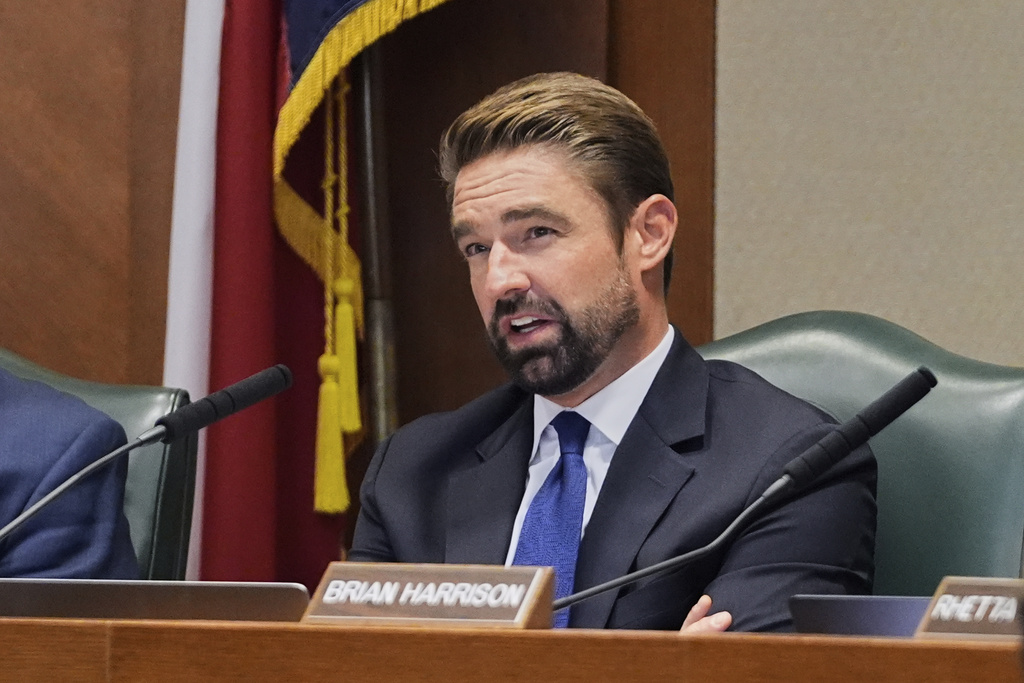
Texas House Republicans have proposed new legislation that would give educators significantly more discretion over suspending homeless students, weakening legal protections for the state’s most vulnerable children.
House Bill 6, cosponsored by nearly three-quarters of House Republicans, would allow school leaders to suspend homeless students out-of-school for behavior that “threatens the immediate health and safety of other students” or results in “repeated or significant disruption to the classroom.”
Under a law passed with bipartisan support in 2019, Texas educators can currently issue out-of-school suspensions to homeless students, only if they break rules related to violence, weapons, drugs or alcohol. At the time, state lawmakers noted many homeless children relied on schools for food, shelter and showers.
A Houston Landing investigation published in May 2024 revealed that hundreds of Texas school districts have broken the law in recent years, resulting in thousands of illegal suspensions. Following the report, the Texas Education Agency took steps to bolster enforcement of the policy, warning 460 districts in mid-January they might have broken state law and sanctions were possible if future violations occurred.
House Republicans, however, are looking to scale back the law and return more decision-making to educators. The bill also gives school leaders similar authority to suspend students in grades prekindergarten through 2, who also have some legal protections from suspensions, among other new rules related to student discipline.
“Our teachers should be spending their time educating, not constantly managing disruptions and disciplinary issues,” state Rep. Jeff Leach, a Plano Republican and one of four primary sponsors of the bill, said in a press release when legislators filed the bill in late-February. “House Bill 6 ensures that educators have the tools and authority necessary to uphold classroom discipline, allowing them to focus on what they do best — teaching the next generation of Texans.”
Leach and House Public Education Committee Chairman Brad Buckley, a Salado Republican and fellow primary sponsor, did not immediately respond to requests for comment Thursday.
Renuka Rege, a senior staff attorney at the nonprofit Texas Appleseed, said the proposed changes to state law would mark a concerning push toward “zero tolerance” discipline.
Strict punishments alienate students rather than addressing the root causes of their misbehavior, Rege argued. Suspensions, in particular, are dangerous for homeless children who may be on the streets navigating treacherous conditions when kicked off campus, she said.
“The Legislature has so recently decided that, ‘OK, there’s certain circumstances where we don’t want to send a child out of school as a disciplinary tool, because it does more harm than good,’” Rege said. “But (the bill) would be eroding that a lot.”
Too soft or too harsh?
House Bill 6 still needs to clear several hurdles before potential passage in the next several weeks. The number of Republican cosponsors and Buckley’s support of the bill bode well for its House prospects.
However, Lt. Gov. Dan Patrick, who presides over the Senate, has not included the proposal in his list of priority items for the legislative session. A Senate bill with identical language about suspensions of homeless — sponsored by Sen. Mayes Middleton, R-Galveston — does not have any cosponsors.
State Rep. Diego Bernal, a Democrat from San Antonio and vice-chair of the House Education Committee, cast the proposal — as well as state Republicans’ other education plans, including school vouchers — as incomplete and subject to change.
“We should not assume all of the bills are fully baked,” Bernal wrote in a text message.

related to education
Texas schools illegally suspended thousands of homeless students — and nobody stopped them
by Asher Lehrer-Small / Staff Writer
The bills come as districts across Texas and the nation have struggled to navigate a surge of classroom management difficulties on the heels of the pandemic. Educators have long debated whether harsher approaches to discipline unduly harmed children — particularly Black and Hispanic kids, who are more often subject to punishment — or were necessary to maintain an orderly classroom environment.
In Texas, a collection of roughly 40 school districts has formed the Student Behavior Management Coalition, which argues that state laws governing how educators can dole out punishment — including to homeless students — have become a “behemoth of mandates and standards.” The group is advocating for the changes outlined in the Republican bills.
About a dozen Houston-area districts are members of the coalition, including Cy-Fair, Katy and Spring Branch ISDs. A few participating districts — Beaumont, Cedar Hill and Texas City ISDs — have some of the highest suspension rates in the state, though most others have below-average suspension rates.
In addition to expanding the list of allowable reasons for suspending early grade or homeless students, the proposed legislation would make several other changes to school discipline law.
Schools would be able to create online alternative schools for students who commit more serious infractions and issue in-school suspensions for an indefinite number of days, among other changes.
It would also reverse a 2023 law requiring educators to send students to disciplinary alternative schools for e-cigarette use or possession. Some districts have sidestepped the law by opting out of it through the District of Innovation process, which gives them the power to ignore some Texas laws.
Asher Lehrer-Small covers Houston ISD for the Landing. Find him @by_ash_ls on Instagram and @small_asher on X, or reach him directly at asher@houstonlanding.org.

