

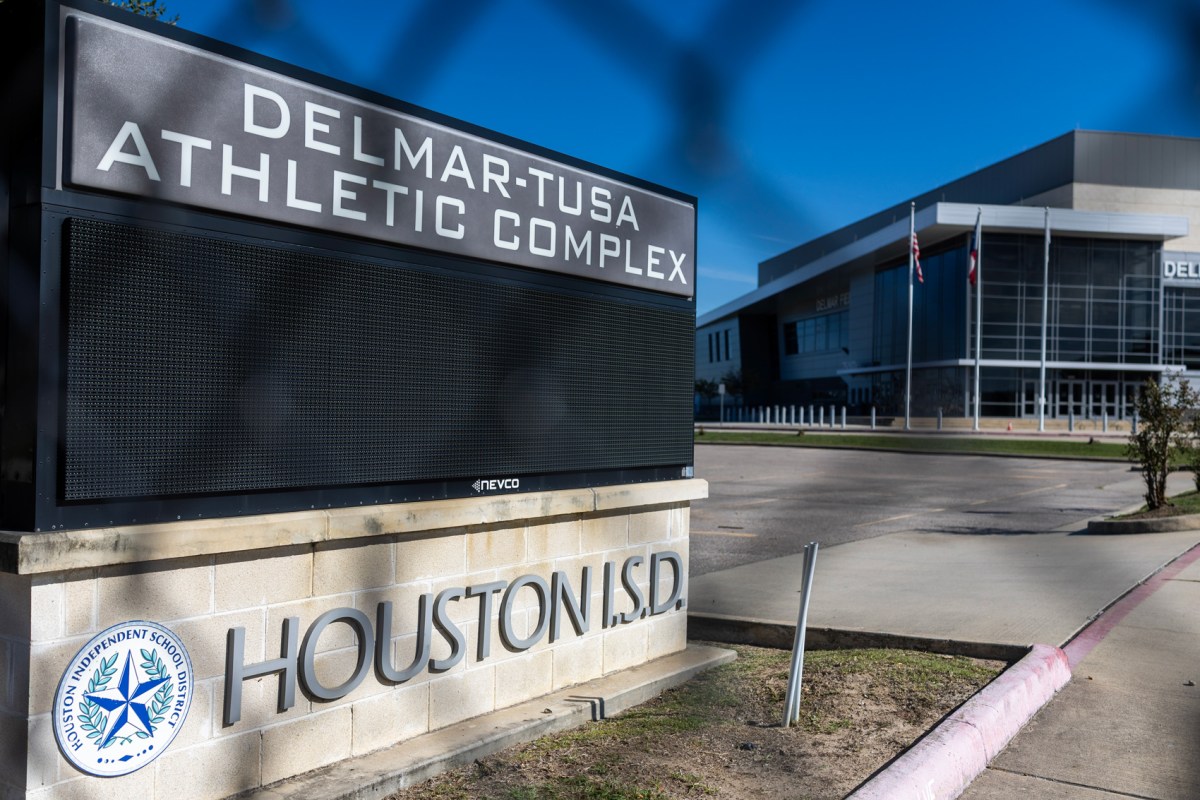
Much has changed in Houston ISD in the 70 years since the U.S. Supreme Court declared racial segregation in schools illegal. The district went through a years-long process to desegregate its campuses and, in recent decades, has been led by several Black and Hispanic superintendents.
Yet for three HISD facilities, the shadow of the district’s segregated past looms heavy thanks to an explicit reminder: their names.
Two HISD campuses, Petersen Elementary School and Scarborough High School, and one athletic facility, Delmar Sports Complex, are named for former district leaders who fought to keep the district racially segregated following the landmark Brown v. Board of Education ruling.
Now, district officials are taking early steps toward potentially renaming the three facilities, along with five other schools whose namesakes are linked to enslavement, Native American genocide and other historical injustices.
The campuses are: Eliot, Petersen and Roberts elementary schools; Welch Middle School; Lamar and Scarborough high schools; and The Rice School/La Escuela Rice.
In response to questions from the Houston Landing in late November, HISD Superintendent Mike Miles has invited principals at the seven schools to convene committees of community members to consider new names.

In late November, HISD sent email messages to families at each of the seven campuses explaining “questions are being raised about the historical figure that is your campus’ namesake.” The letter was signed by Miles, each school’s principal and the division superintendent overseeing each campus.
“While these historical figures played an important role in our state, our city and our district, in some cases, they represent a painful and challenging part of our history,” the HISD leaders wrote. “Houston is currently one of the most diverse and resilient cities in the nation and you may no longer feel like these are the right representations of who we are now or who we strive to be.”
The letter said families would have the opportunity to drive the renaming process, and a final choice “rests with your community.” Under HISD policy, if a committee is formed and reaches a “consensus” on a name change, Miles could bring the proposal to HISD’s state-appointed board, which must vote to approve any changes.
The preliminary steps come several years after a national debate over removing statutes, facility names and other iconography that bore the likeness of historical figures linked to slavery. Proponents of such changes generally argue new names allow communities to turn the page on ugly aspects of history, while opponents contend the processes divide communities and can be a waste of time.
In the mid-2010s, HISD changed the names of eight schools that honored Confederate leaders following an intense debate that divided the district. The district has since received minimal backlash against the names of the seven schools now under review and Delmar Sports Complex, though some community members have sporadically raised concerns.
HISD Board President Audrey Momanaee said she was unsure whether a “wider swath” of potential name changes were considered in the mid-2010s, but any current decisions would be based on community input and further research.
“I just don’t have enough information on any particular person or name, quite frankly, at this point, to be able to take a position on anything,” Momanaee said. “The community hasn’t bought anything before us yet, so I think it remains to be seen.”
Eight names in question
Dozens of HISD buildings bear the names of former school board members, superintendents and other community leaders — though some carry complicated legacies.
Two of those board members, James Delmar and Henry Petersen, held prominent professional roles in the community and served for a combined 30 years on the HISD board.
When the court struck down “separate but equal” in 1954, Delmar and Petersen joined the faction of HISD’s board deadset against full-scale integration of the district. Delmar railed against the Civil Rights Movement during board meetings, while Petersen said forcing integration through the courts amounted to “educational dictatorship” that destroyed the “amicable relationships” between the races.
When pro-integration trustees took power on the board, the duo frequently boycotted votes and skipped board meetings. Then, when desegregation opponents won multiple elections to take back control of the board, Petersen celebrated the win of a candidate who said she would rather go to jail than integrate HISD.
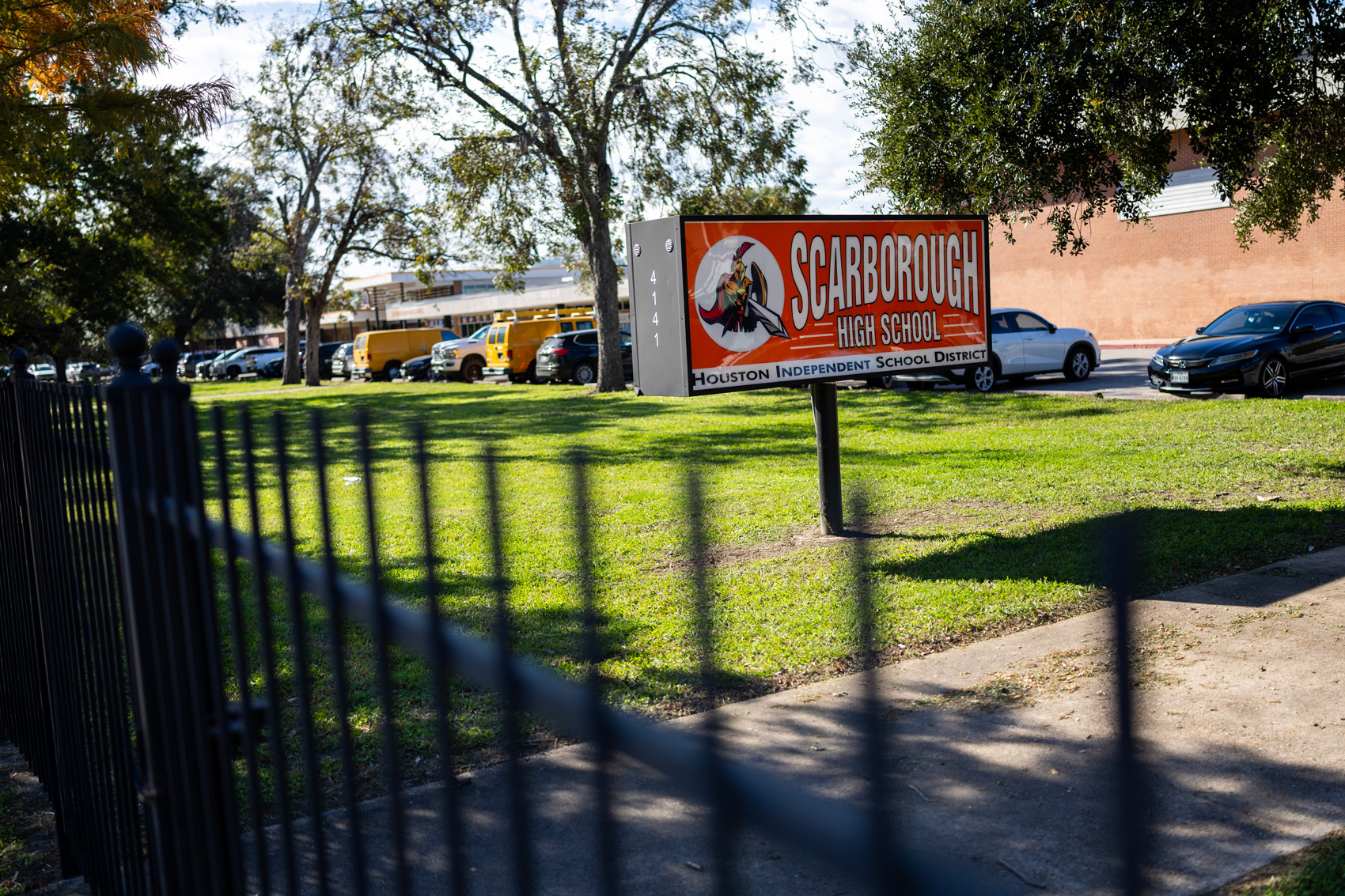
Also in the late 1950s, George Cameron Scarborough, the namesake of Scarborough High, briefly held the roles of HISD deputy superintendent and acting superintendent. (HISD’s Scarborough Elementary School is named after Scarborough’s brother, Walter.)
During that time, Scarborough was a member of the Texas Citizens Council, a group created to fight desegregation. Scarborough also proposed a plan that included requiring Black teachers to stand behind a one-way mirror and observe as white teachers led lessons for Black students. The proposal, nicknamed the “Peeping Tom” plan, became the target of ridicule and disgust, with a leading Black-owned newspaper at the time calling it “a wholescale insult.”
Other historical figures who HISD has named schools after in recent decades have also been the subject of controversy. They include:
- Mirabeau Lamar, who served as the second president of Texas, waged war on Native Americans and advocated for their “total extinction.”
- Oran Roberts, a Confederate commander, president of the 1861 Secession Convention and Texas governor from 1879 to 1883.
- Louie Welch, who served several terms as mayor of Houston in the late 1960s and early 1970s, but infamously responded to a question about how to prevent HIV/AIDS by saying “shoot the queers” on a hot mic.
- William Rice, who founded Rice University and held at least 15 enslaved people as property during his life, historical records show.
- Charles Eliot, the president of Harvard University for 40 years in the late 19th and early 20th centuries, who criticized racial segregation, opposed interracial marriage and supported eugenic sterilization.
HISD has roughly 270 schools. Dozens are named after prominent local Black and Latino leaders, including those known for civil rights accomplishments.
Community response
In interviews with the Landing, nine family members of students at Petersen Elementary said they did not know about the school’s namesake and were not sure whether their children had been taught about Henry Petersen or his opposition to integration. Most said the school’s name did not concern them, explaining that they cared more about the quality of education their children were receiving.
“The school is good,” said Ana Alvarez, the mother of second and fifth graders at Petersen Elementary. “It gives a good education for the kids, they learn a lot.”
Two parents, however, had a stronger reaction when the Landing explained Henry Petersen’s anti-integration stances. One said she was “speechless” and the other said school leaders should definitely change the name.
“I don’t like segregation, of course. … Nothing should be kept from any child,” said Dealbertice Ajayi, whose kindergartener attends Petersen Elementary.
A handful of community members have been vocal around the issue. Sonya Lucas-Roberts, who goes by Sister Mama Sonya, implored the district for years at board meetings to change the name of Delmar Sports Complex. The athletic facility sits adjacent to the district’s central office, which is named for Hattie Mae White, HISD’s first Black board member.
“I was telling the board that our young Black boys should not have to play in a stadium that was named for a man that was an avowed racist,” Lucas-Roberts said. “That was an insult to the boys, although they didn’t know it.”

HISD board member Cassandra Bandy said she would support some campuses changing their names if the school community decides it’s a good idea. In the mid-2010s, when HISD changed some campus names, local figures like Delmar, Petersen and Scarborough were “not so obvious” compared to nationally known Confederate leaders like Robert E. Lee, Bandy said.
She hopes the board can usher through any community-endorsed name changes efficiently, so that the board can return its focus to issues more directly related to improving academic performance.
“Let’s handle it. Let’s move on. Let’s get it out of the way,” Bandy said. “Let’s just not spend time and resources on performative acts.”
Asher Lehrer-Small covers Houston ISD for the Landing. Find him @by_ash_ls on Instagram and @small_asher on X, or reach him directly at asher@houstonlanding.org.

