

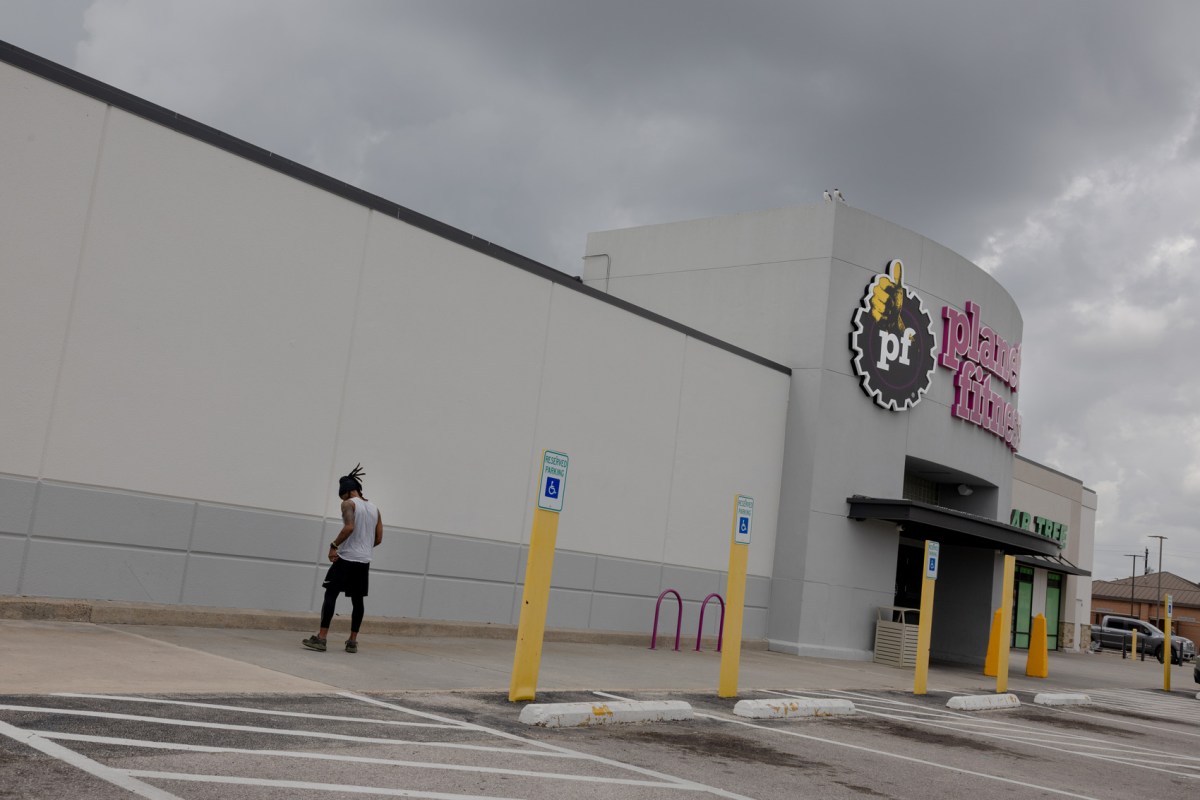
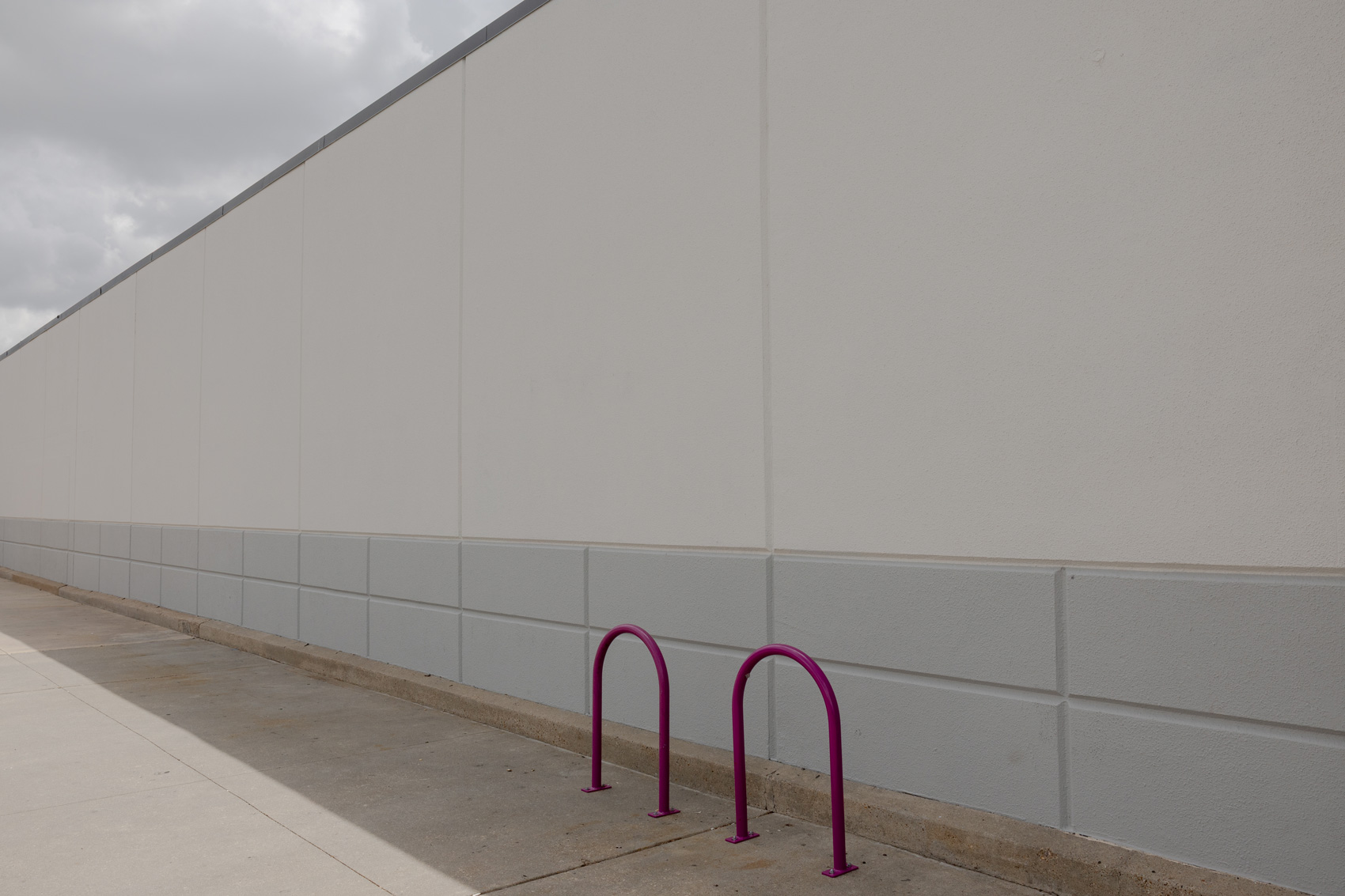
Earlier this year, Joan Alexander, a longtime Old Spanish Trail/South Union resident, was making a routine shopping trip to the Renaissance Center to join Planet Fitness. When she got there, however, she was surprised to see a familiar mural missing from the outside wall of the gym on Scott Street.
The vibrant, interactive, augmented-reality mural had been a beloved cultural fixture in the neighborhood for almost five years. It showcased stories of Black excellence by celebrating local heroes who have contributed to the area, and depicted community collaboration. Amid a political climate where companies face pressure to dismantle diversity, equity and inclusion following President Donald Trump’s anti-DEI executive orders, community members say the mural’s sudden disappearance is particularly unnerving.
“You just pass one day, and it’s gone. It’s like erasing a piece of us,” said Alexander, who is the secretary of the OST South Union Civic Association. “It’s like a slap in the face.”
The mural was located on a building owned by Houston-based Williamsburg Enterprises, a commercial real estate investment firm. Williamsburg Enterprises painted over it in 2024, a move it said it made with all its properties to maintain consistency.
“This decision reflects our broader approach to maintaining consistency, upkeep, and long-term planning across our portfolio,” the company said in a statement.
Alexander and many community members are shocked and feel slighted by the quiet removal of the cherished community mural. She is leading the charge to push Williamsburg Enterprises to rectify the issue with the community.
“I took a very personal take on it,” she said before a group of community leaders at an April 2 OST-South Union Steering Committee meeting. “It was like whitewashing.”
Many agreed, claiming the act was offensive and disrespectful.
“The disturbing thing is that we didn’t have an inkling that it would be removed,” said Paulette Wagner, 40-plus-year resident of OST/South Union and president of the MacGregor Trail Civic club. “I get it’s their property and they can do whatever they want but it would have been nice to have a heads up. It would have been a sign of respect to just let us know that it would be removed.”
“Painting is an important part of our commitment to maintaining a fresh and welcoming atmosphere. The Renaissance Center has been painted multiple times, each with a new color scheme to keep the look modern,” the company said in its statement. “Routine repainting is a standard practice in retail centers to preserve curb appeal and property value.”
At the meeting held at South Union Place Apartments, community leaders brainstormed different ways to keep the pressure on the company, urging the importance of speaking up and airing their grievances.
“I think if we don’t speak up and push back, there’s other murals in the community and if corporations or organizations, or whoever is developing, if they feel like they painted [over] that one and nobody said anything they’ll just start … painting and tearing down [others],” said Louann Pepper, social services coordinator at Radney Management and Investments who manages South Union Place Apartments.


Attendees came up with a handful of corrective actions that Williamsburg could do, such as issue a public apology, replace the mural, commission an additional mural, and increase involvement in the community. Community members also discussed launching a petition and crafting a letter signed by each civic association group leader, addressed to the company outlining their concerns.
Despite painting over the mural, Williamsburg said it remains “invested in the Renaissance Center.”
“We believe in the long-term potential of this location and continue to focus on creating a safer, more vibrant environment for tenants and visitors alike,” the company said in its statement.
‘The community felt like they owned that mural’
Danny Asberry El, founder and president of Solel International and the artist commissioned to paint the mural, said Williamsburg Enterprises hired him to beautify the vacant building, which struggled to find a tenant after H-E-B relocated from there to the MacGregor area in 2019. El received $15,000 to design and complete the mural.
The company had been trying to backfill the site with a new tenant for a while, roughly six to 12 months, said Matthew Kelley, former vice president of development at Williamsburg Enterprises, who spearheaded marketing the property.
“I thought it was a great thing to give money to and hire these artists,” he said.
Williamsburg was aiming to attract another grocer, Kelley said, so it chose El to design a community mural, based on a similar project he worked on at a Whole Foods on 101 N. Loop West at Yale Marketplace in Independence Heights. That piece showcases the history and legacy of Independence Heights — the first Black incorporated city in Texas — and incorporates community stakeholders who played a part in its development. Williamsburg Enterprises wanted the same for the OST-area mural. It helped that El also had connections to the OST community.
“We were looking at how we kind of reposition the asset and market it,” Kelley said.
It was just the second art project the company endeavored on one of its many shopping plazas.
As the project kicked off, Kelley and El held meetings and focus groups with the community to gather input on potential tenants for the site and ideas for inclusion in the mural. It was a collaborative effort, both Kelley and Asberry El confirmed.
As a result everyone settled on a mural that celebrated the spirit of community leadership and collective effort to uplift their neighborhood through education, sustainability and social support in OST South Union by recognizing key individuals who made a lasting impact. It highlighted Swatara and Tawali Olushula’s advocacy for healthier food options, Terry Garner’s stewardship of the Palm Center Community Garden, Hassani Sallah’s support through the Sehah Youth & Fitness Center, and Kavanagh Nweze’s dedication to business education and raising awareness.
Everyone was pleased with the end result and community members took pride in protecting it.

“The community felt like they owned that mural,” El said. “They kept a lot of things from happening to that establishment. That’s that community synergy.”
The October 2020 unveiling of the mural at a ribbon-cutting ceremony was widely attended by the community and elected officials, including District D Councilmember Carolyn Evans-Shabazz.
“Having a project of that size and scale, hiring people and really trying to engage [the] community with it, I thought ultimately it was very successful,” Kelley said. “I was happy with the way it turned out.”
But Kelley said he was surprised that the mural remained for so long, given the frequent turnover in commercial real estate, particularly in shopping centers.
“It was never meant to be a permanent thing that lasted forever,” he said. “It was always meant to be ephemeral and sort of temporal in nature.”
Kelley said that at the time of the mural’s creation, the building was entirely vacant. Because of this, he always considered the possibility that future tenants might need to alter the building by adding features like doors or extra windows in locations where the mural was situated, in order to make the space suitable for their business operations. While he was unsure if that was specifically communicated to the community, he believes the company and El had an understanding.
El also attended the meeting virtually to speak about artist rights and conditions of his contract with the company. While he couldn’t share much about the details of the contract, he said it had a clause that specified he would be notified of any changes to the mural.
He said he was not notified of plans to remove it and found out from the community.
“People don’t think artists have rights, but we do,” he said, referring to the Visual Artist Rights Act.
Enacted in 1990, the law safeguards an artist’s moral rights, preventing the unauthorized alteration or destruction of specific works of art that could damage their reputation.
“We need to know,” said El. “We send people to our murals and that’s bad for business.”
El said he retains the copyright, and the mural should not have been changed without his permission. Doing so, without a formal change-order agreement, may constitute a breach of contract, he said, and potentially lead to legal actions, mediation and the need for restorative action.
Williamsburg said in a statement that the original mural was a “work-for-hire piece” that it commissioned and owned to help foster community identity.
So far, community members and El said they have contacted the company several times, but said their concerns have largely been disregarded.
During a recent visit to the Renaissance Center, Houston Landing journalists inquired with employees and patrons of nearby businesses about the mural, including Planet Fitness where it was housed. Management refused to comment. While some patrons noticed it, they attributed it to the ongoing changes in the neighborhood.
“This area is being highly gentrified,” said longtime resident Ebony Broussard while picking up a takeout order from Juicy Crawfish in the building adjacent to Planet Fitness. To her, the removal of the mural was inevitable.
Others hadn’t noticed it.

“Man, that’s crazy,” Nikolas Edmonson said frequently, an employee at Juicy Crawfish, while staring across the street at the now blank canvas. If anything, given how long the mural was there, he hoped it would be extended to wrap around the building rather than removed. While he understands it’s business, he still wishes Williamsburg Enterprises would’ve at least tried to communicate with the community to bring something rather than just taking something.
“It’s already bad enough that this is not a wealthy neighborhood, so you want to give us at least as much joyness as possible,” Edmonson said. “I genuinely do think they have to give something in return. Maybe a new mural.”

