


In a presidential election where immigration has taken center stage, Galveston residents also have a local immigration issue to vote on.
Since 2021, Galveston County Sheriff’s Office has participated in Gov. Greg Abbott’s border initiative Operation Lone Star. The county sends its deputies to the border to arrest migrants and smugglers as part of the initiative that has come under fire for human rights abuses. The future of Galveston’s participation in the $11 billion initiative now hangs in the balance before Nov. 5 sheriff elections.
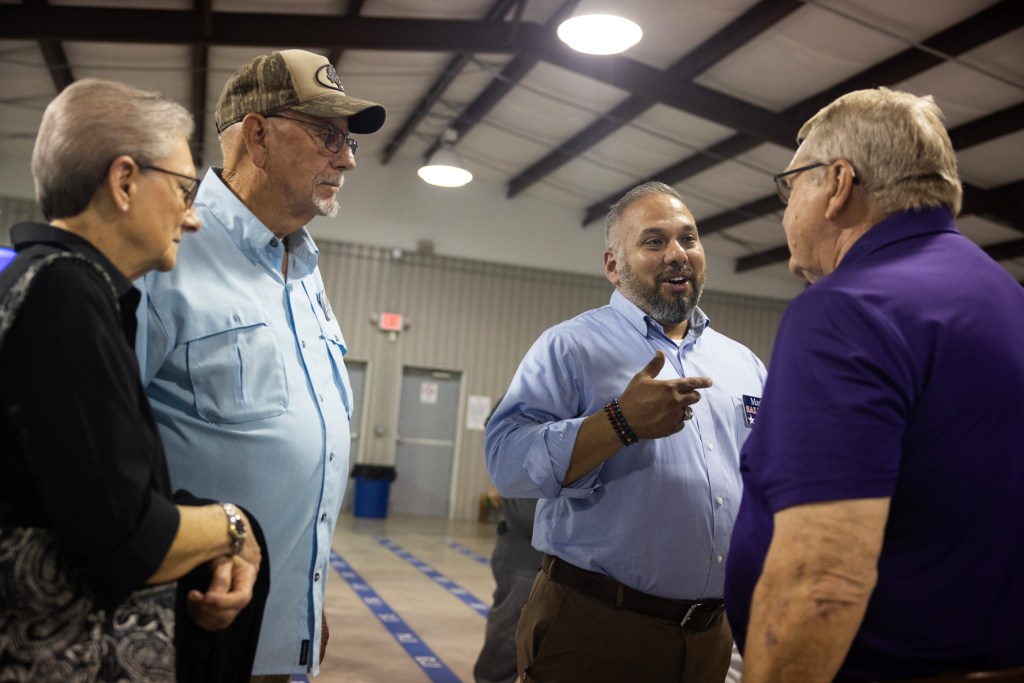
The county will elect a new sheriff to replace Sheriff Henry Trochesset, of the Republican party, who will retire in January after serving as sheriff since 2013. Running for the Republican Party is Jimmy Fullen, a former Galveston constable whose peace officer license was recommended to be revoked by the Texas Commission on Law Enforcement and who has made border security a key campaign promise. His Democratic opponent, Mark Salinas, promises to focus resources locally on Galveston, particularly on youth.

The candidates in this Republican stronghold butt heads on Galveston’s role at the border. Both agree on the need to secure the border. The disagreement centers on whether local law enforcement from a county 350 miles away should take an active role in border policing.
Fullen promises to continue participating in Operation Lone Star to “slow the spread of violent crime and deadly drugs from coming into our county,” according to his campaign website. He has traveled to the border more than 20 times, his campaign page states, and a campaign ad shows him patrolling the Rio Grande.
A hearing to determine if Fullen can keep his peace officer license after TCOLE found that Fullen failed to disclose or provided untruthful information about past accusations of discrimination, being fired or asked to resign by a past employer, and two arrests as a teenager. Fullen did not respond to multiple requests for comment.
Salinas believes securing the border is the federal government’s job.
“I do understand that there is an issue down at the border. I’m not gonna negate that,” Salinas said.
But sending deputies to the border is “taking away from the rest of the community,” he added.
Salinas would maintain a program to cooperate with Immigration and Customs Enforcement to notify them of immigrants in Galveston County jail, known as the current 287 (g) agreement.
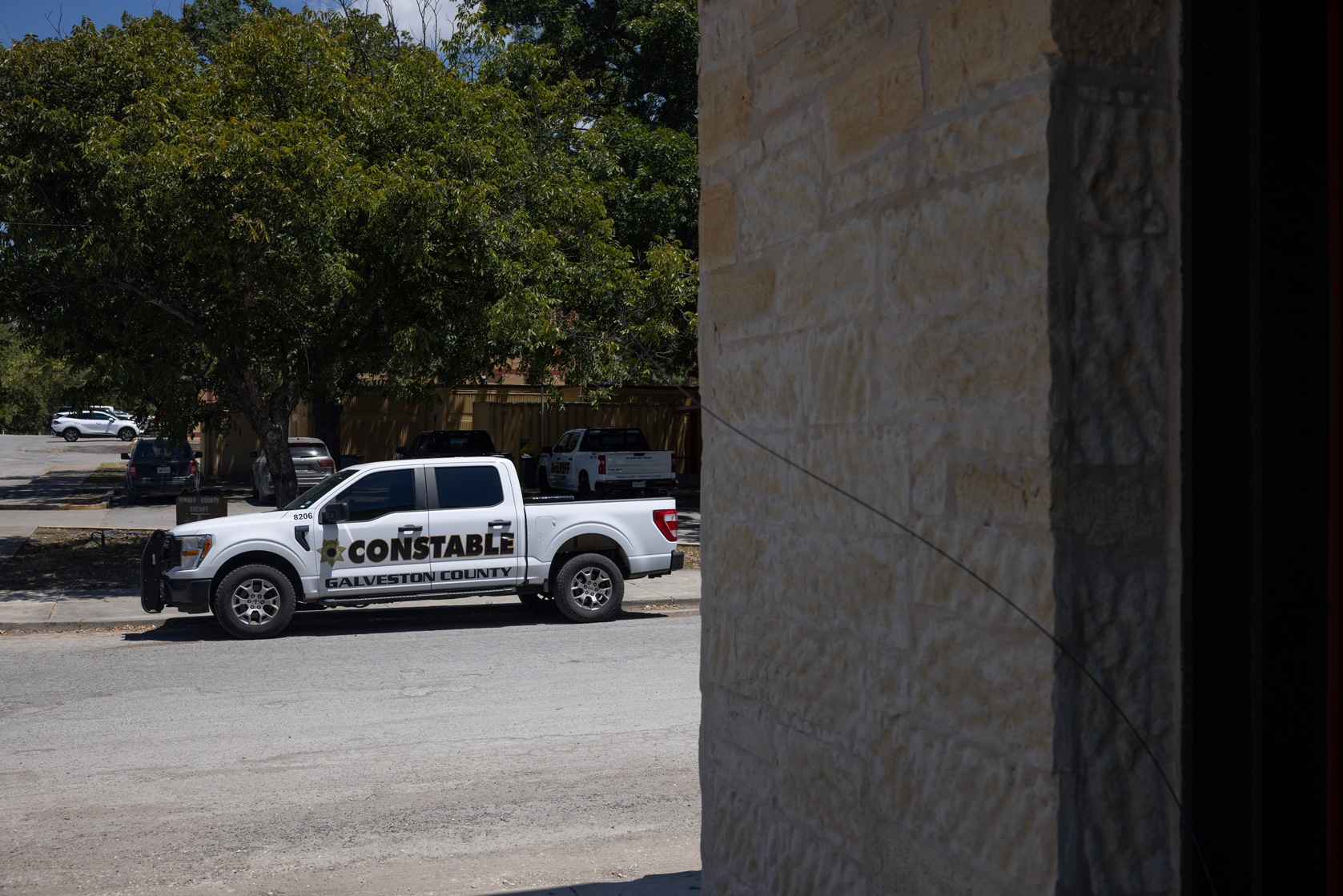
Constables for Precincts 1, 2, and 4 have also sent law enforcement to the border, but none are up for election.
Why does Galveston participate in Operation Lone Star?
Most known for bussing migrants out of Texas and installing border buoys and concertina wire along the Rio Grande, Operation Lone Star also provides state funding to local law enforcement. This funding is concentrated on the border, but any county that declares a border disaster declaration is eligible.
Through a mutual aid agreement, GCSO sends deputies to Kinney County, a small ranching town of about 3,000 residents. The county has been called “ground zero” for Operation Lone Star because of the high number of arrests and vehicle pursuits. The county’s harsh immigration enforcement tactics, including purchasing pepper ball guns in July, have been criticized by lawyers and immigrant rights groups.
Fullen has justified participation in Operation Lone Star by tying violent crime and drug deaths in Galveston to migrants crossing the border, according to his campaign website. Sheriff Trochesset cited similar concerns to justify the program. He likened sending deputies to the border to aiding after a natural disaster.
Data tracking the immigration status of people who have committed crimes in Galveston is not publicly available, but a nationwide study on incarceration rates over 150 years showed that immigrants commit crimes at a lower rate than U.S. citizens.
Salinas said that Galveston’s issues should not be attributed solely to immigrants, citing the low rates of immigrants in the county jail and evidence that most fentanyl comes through ports of entry.
“We have to relax the public and not project fear,” Salinas said. “But embrace what is really going on in our county.” Still, he said that immigrants should come legally rather than “cutting the line.”
Kinney County Sheriff Brad Coe said that Galveston county has been a key part of the county’s border response, helping to carry out migrant and smuggler arrests and turn migrants over to U.S. Border Patrol.
“Our local deputies are doing all they can, but we would never have managed these kinds of numbers without their being here,” Coe said in a statement. “We hope we can count on their presence and the Operation Lone Star funding that enables it for as long as this crisis continues.”
Residents decide
Some former law enforcement believe Galveston’s resources should remain in the county.
Former Galveston Sheriff Freddie Poor, a Democrat, supported Salinas’ position on Operation Lone Star.
“To me it’s important for our people to be here,” Poor said. “Between the National Guard, Border Patrol, and other federal agencies, there’s a lot of help. It’s difficult to justify it.”
Poor, who served as sheriff from 2009 to 2012, previously endorsed Fullen’s opponent in the Republican primary, GCSO Captain Ray Nolen.
Will Carpenter, a 24-year-old biomedical sciences student and Galveston voter, questioned whether sending local law enforcement was the proper response to what he considers a humanitarian crisis.
“I can’t say I’m for it,” said Carpenter. “People who cross the border, they’re humans first.”
Trochesset said cooperation in Operation Lone Star should be reassessed depending on the outcome of the presidential election.
“If the need is still there, yes [it should continue],” he said. “I think we’ll find out what occurs in November.”

