

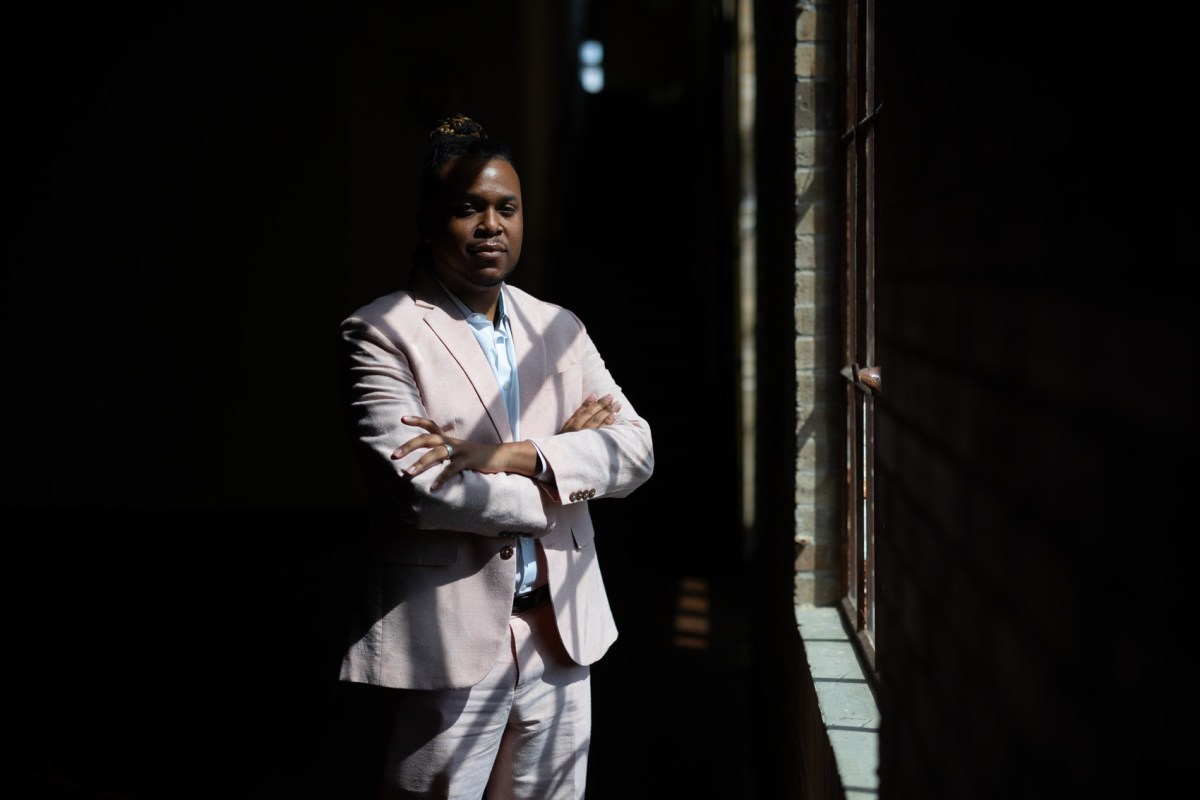
Desmond Bertrand-Pitts became suspicious when he didn’t receive any updates or email responses regarding the status of his grant application from the Institute of Museum and Library Services by early March.
As CEO of the Buffalo Soldiers National Museum, he had previously served on review panels for roughly the last four years and knew when to expect to hear something.
“I was like, ‘Ah, something fishy is going on,” Bertrand-Pitts said in an interview with the Houston Landing.
Then, when news broke at the end of March that the IMLS, a small federal agency that awards grant funding to museums and libraries across the U.S., put its entire staff on administrative leave following an executive order from President Donald Trump, it started to sink in: The museum was at risk of losing funding.
He had submitted a grant application in the fall of 2024 for the museum to be awarded $500,000 for IMLS’ African American History and Culture program, one designed to build the capacity of African American museums and support the growth and development of museum professionals at African American museums.
The funding is the largest amount it applied for from a federal entity. Previously, the museum received AAHC funding for smaller amounts, ranging from $50,000 to $250,000, that helped them hire an archivist to properly store its collections and digitize its archives. The $500,000 grant would support the last stretch of its $13 million capital campaign, “Ready & Forward,” to design its exhibitions.
“It affects us greatly in the sense that we rely on that funding for exhibitions pretty much every year,” Bertrand-Pitts said. “It’s a pretty big hit.”
In 2023, the museum recorded a net income of nearly $2.6 million, according to its latest tax data from ProPublica’s nonprofit explorer.
Beyond its exhibitions, a potential funding loss could have a larger domino effect on the community, significantly reducing educational programs, veteran services and youth engagement, he said.
The Buffalo Soldiers National Museum showcases the stories and contributions of African American men and women who served in the U.S. military with exhibitions that span over centuries of military conflicts ranging from the Revolutionary War to present day, highlighting the sacrifices these individuals made in defense of the nation and its citizens.
While the museum showcases the legacy of the Buffalo soldiers, it has a broad appeal and can evoke emotion in everyone, Bertrand-Pitts said.
“Although we tell an African-American military story and experience, we’re an American history institution,” he said. “We contributed to the founding of this country. We’ve contributed in every military facet since the very beginning, and our institution is important because it’s American history.”
The Buffalo Soldiers National Museum has also received funding from other federal programs, such as the National Endowment for Humanities and the National Endowment for the Arts, which have also seen recent cuts to grants programs and massive staff reductions under President Donald Trump’s established Department of Government Efficiency.
They are among a number of small nonprofits and organizations that have been bracing themselves ever since Trump took office attacking federal funding and diversity programs and initiatives.
Local uncertainty
While the museum has always maintained a diverse portfolio of funding, Bertrand-Pitts said the widespread reversal of diversity, equity and inclusion initiatives has indirectly impacted the museum in many ways, besides the potential loss of grant funding. The relationships have changed and the conversations are different, he said.
“We’re not getting a lot of response from corporate partners like we used to,” Bertrand-Pitts said. “And in previous years during the month of February, I can’t even count how many corporations would reach out to us to do presentations or offer some type of support and this year we did not see it. It affects us in that way because we don’t know where a lot of them stand anymore.”
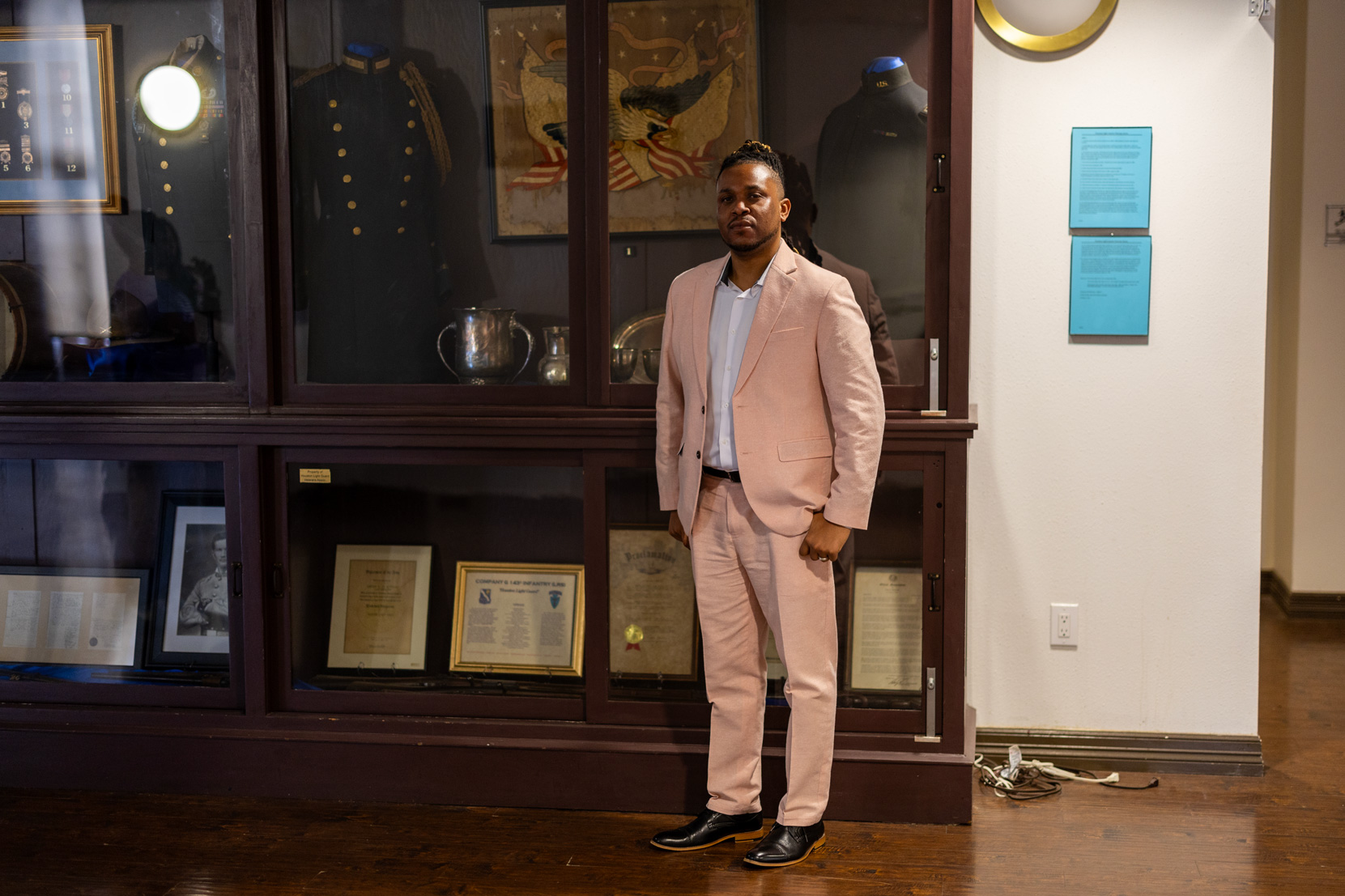
He is also concerned that he hasn’t heard local family foundations take a stance on the issue either.
“Are they going to be our saving grace during this time when things just aren’t looking very good or are some of them going to drift away?” he said. “It’s a lot of uncertainty.”
With looming uncertainty in the arts, a few executives and board members representing the collective of museums within the Museum District went to city council in January to solicit more support from city leaders in advocating for the arts. Their main objectives were to work with city council to recognize and celebrate Houston as a cultural epicenter, understand the challenges facing Houston’s cultural organizations, maintain the city’s current level of investment in the arts, facilitate additional revenue streams and consider the arts sector’s position as a major economic driver in the city’s planning efforts.
“The arts have always been the third cousin that people just don’t really get the value,” Bertrand-Pitts said. “And I think it’s up to us to make sure that people understand that the arts have value. It has economic value, mental, social, emotional value, all of that. The implications are endless.”
In 2023, the institutions that make up the Houston Museum District surpassed the combined attendance of all Houston Texans, Rockets and Astros home games, as well as the Houston Livestock Show and Rodeo events, according to the HMD board’s compiled data, shared with the Houston Landing. It also revealed that the museum district attracts roughly more than 7 million visits each year with an estimated 2 million representing out-of-town guests.
The City of Houston responded by dismantling the Mayor’s Office of Cultural Affairs in response to the results of the citywide efficiency study, which identified a “significant overlap” between the functions of the MOCA and services provided by the Houston Arts Alliance, according to Mary Benton, Mayor John Whitmire’s chief of communications.
On March 21, Necole Irvin resigned as director of MOCA and the city appointed an internal team member to serve as arts contract manager to work alongside HAA on contracts and grants, Benton said.
“The city was compensating HAA for work that, in some cases, duplicated MOCA efforts,” she said in an emailed statement. “In addition, the study noted delays in key projects that were important to the Houston arts community.”
Benton said that the HAA remains a valued partner, and that the City of Houston re-evaluated its cultural affairs strategy to streamline operations, eliminate redundancies and better serve Houston’s arts community.
However, the elimination of MOCA still concerns Bertrand-Pitts.
“The mayor says he supports the arts, and I believe that. But it’s so uncertain, and that’s really difficult to keep in and wrap my mind around it,” he said, noting the local impact of art on the city.
While uncertainty looms, the Buffalo Soldiers Museum remains committed to the community, offering events such as its upcoming three-day Juneteenth@160 celebration, and continues to garner support such as that from the Kinder Foundation, which in January renewed an additional grant of $1.5 million toward its capital campaign.
But he’s hopeful that they’ll find another way to press forward.
“There are so many funding inequities when it comes to BIPOC organizations and institutions, so that’s always at the forefront of my mind,” Bertrand-Pitts said. “We’ve always been, you know, somewhat of a target. We’ve always had to do more. We’ve always had to pool all of our sources. We’ve always had to do more networking. We’ve always had to prove ourselves more in terms of BIPOC institutions because of those factors.”
While the museum will need to come up with innovative and well-planned outreach strategies to keep expanding its pool of resources, he expressed confidence that the current political climate is only temporary.
“Now more than ever, our stories are important, and it’s important that we tell them,” Bertrand-Pitts said.
The Kinder Foundation is also a financial supporter of the Houston Landing. It had no influence on decisions related to the reporting and publishing of this article. The Landing’s ethics policy and list of financial supporters are available online.

