


Houston Community College first-year student Mia Thompson often has trouble paying attention during her afternoon classes because she hasn’t eaten in several hours.
After her shift at a Bare Necessities spa in Upper Kirby, the first-semester arts and history student drives straight to class at HCC’s Felix Fraga campus in Houston’s Second Ward. The heavy traffic on her nine-mile route from U.S. 59 to Interstate 45 often leaves her pressed for time to stop to buy food.
Once Thompson makes it to school, her options are slim, because hers is one of ten HCC campuses that offers no fresh food or meal options.
“It just definitely messes with my focusing, if I have that lack (of food),” Thompson said. “It is a little bit hard for me to sit and engage.”
Across the college, thousands of students and staff are regularly skipping meals, cutting class and missing out on important on-campus opportunities because they don’t have access to food, according to surveys conducted by school officials. Five of HCC’s 19 locations have full-service cafes, with the rest only offering packaged “grab-and-go” food, such as sandwiches, or vending machine snacks.
In the survey, which 2,640 students, staff and faculty took this summer, respondents overwhelmingly called for better, healthier food options on campus. Many students said they’ve passed on tutoring, advising sessions or study groups because they needed to leave campus to get a meal. Some students added that they have rearranged their schedules, passing over important classes, just to ensure they can eat.
1,336
Students surveyed by HCC
81%
Skip meals on campus at least sometimes
65%
Limit time on campus due to food service
“Some of my friends make their schedule for the day thinking about lunch,” said pre-nursing student Johnny Chaves, who takes classes at HCC’s Eastside Campus in Houston’s Pecan Park neighborhood. “They don’t do a 10 a.m. that’s to 1 p.m., because then they’ll have to stay (on campus) throughout the lunch period, and they’ll not eat anything.”
Multiple studies have shown that dining spaces on campus provide space for students to socialize and build community, while hunger and poor access to food are linked to worse academic outcomes.
“We really would like them to be engaged on campuses. We know that that does impact student success,” Karen Schmidt, president of the Houston Community College foundation, the philanthropic arm of the college, said at mid-September board meeting where she presented the survey’s findings.


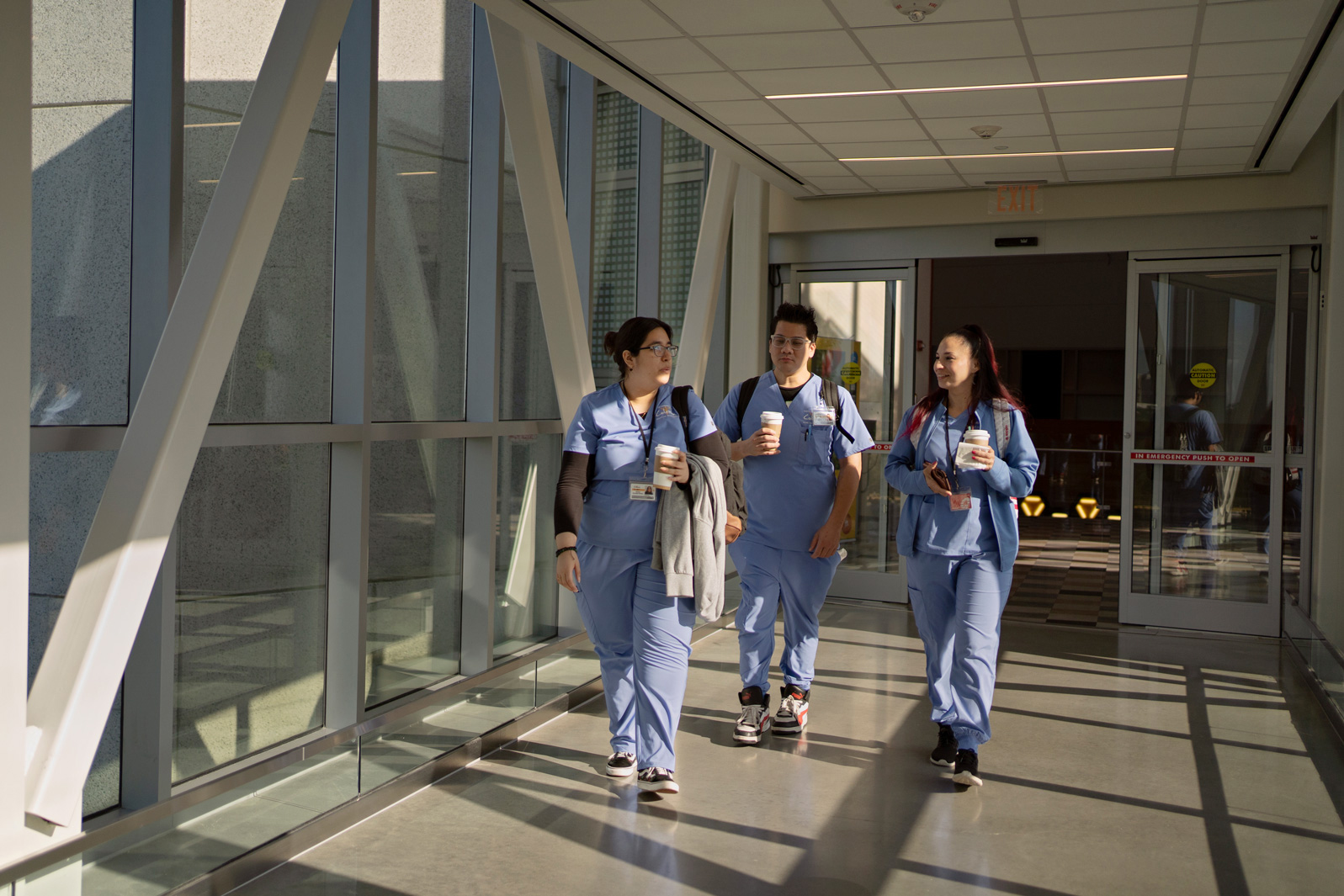

HCC spokesperson Rammele Young said college leaders have identified food service as a priority for the institution moving forward. College administrators assembled a task force after seeing the survey results to research what it would take to expand meal options, though no solutions have been presented yet.
“The primary thing we have to do is assess the need,” Young said. “(The campuses) are all unique and serve a different constituency — yes, students, but some campuses have unique needs as compared to others.”
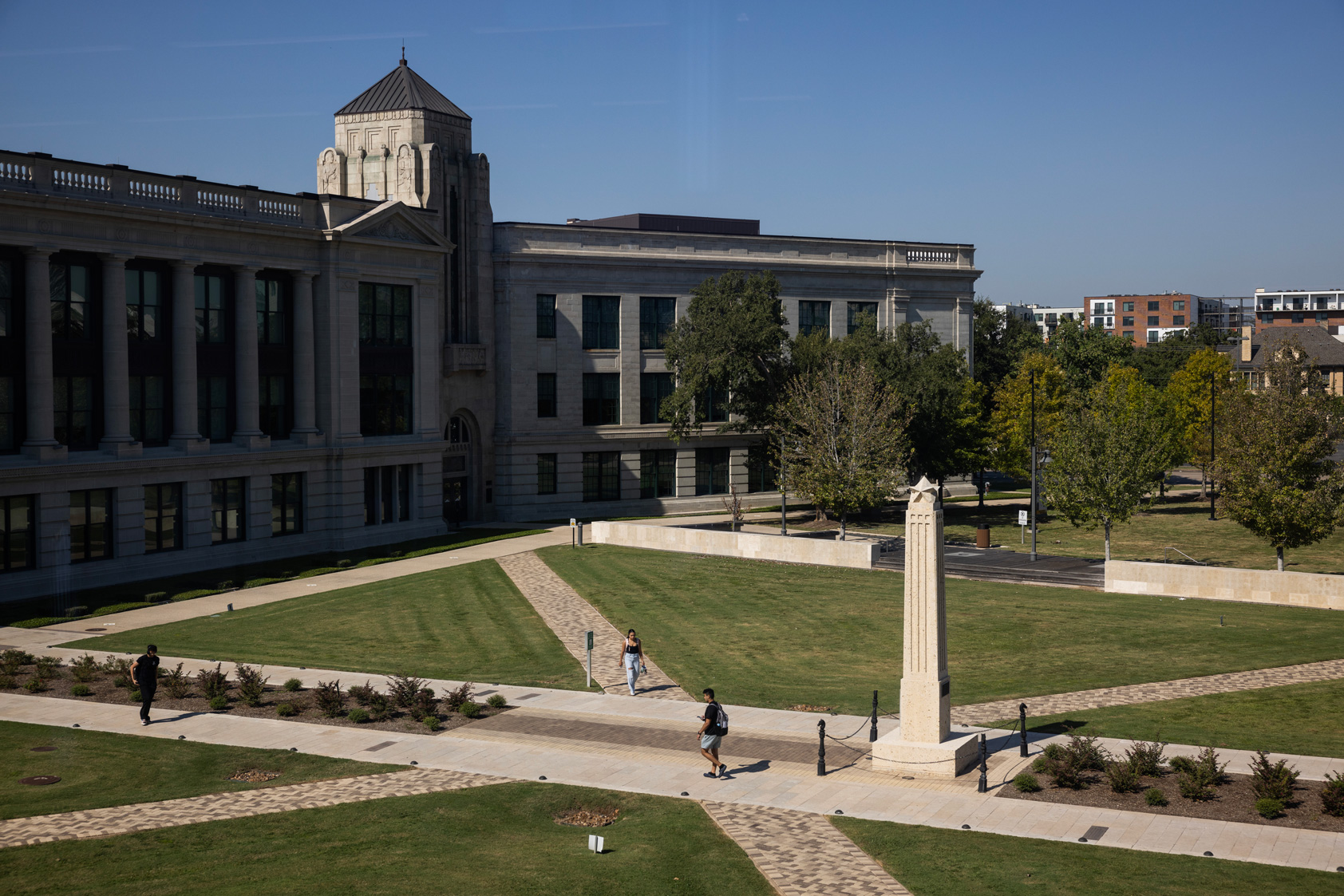
People walk around the main quad Tuesday at Houston Community College – Central Campus in Houston’s Midtown neighborhood. (Antranik Tavitian / Houston Landing) 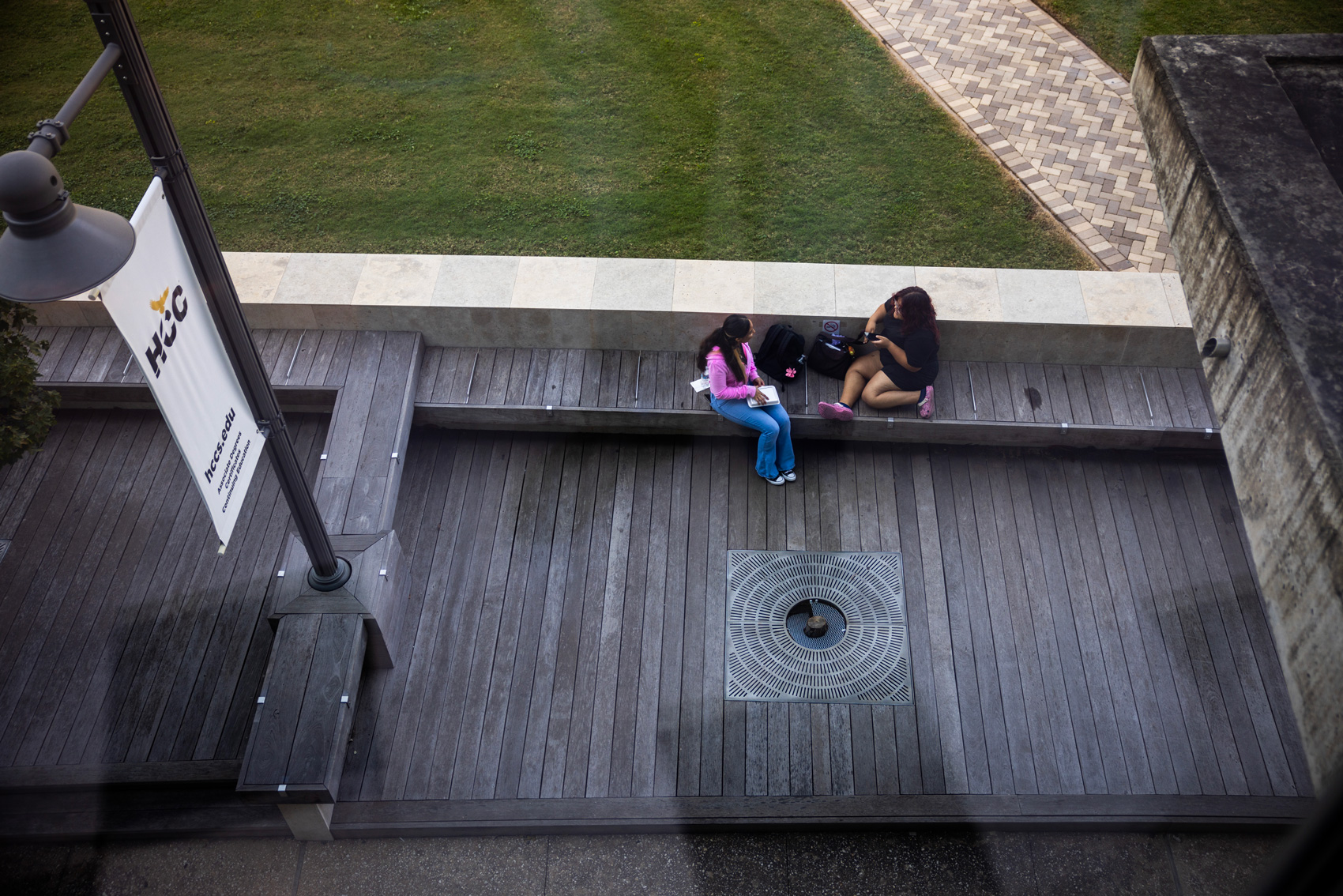
Students eat lunch and talk together at Houston Community College – Central Campus, Tuesday, Oct. 15, 2024, in Houston. (Antranik Tavitian / Houston Landing) 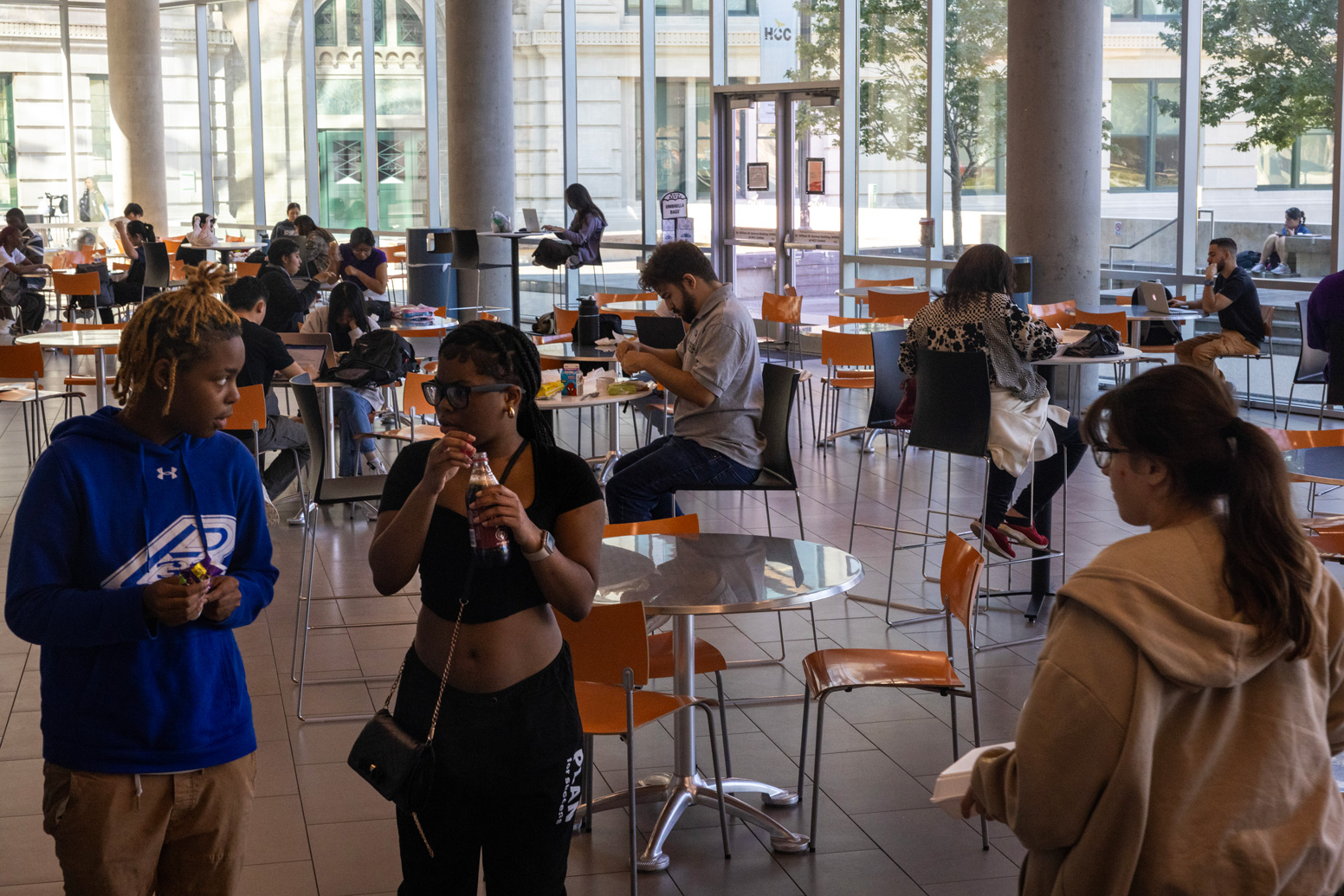
Students and faculty eat lunch at Houston Community College – Central Campus, Tuesday, Oct. 15, 2024, in Houston. (Antranik Tavitian / Houston Landing) 
Brandon Phuong, at left, pays for his lunch at The French Corner at Houston Community College – Central Campus, Tuesday, Oct. 15, 2024, in Houston. (Antranik Tavitian / Houston Landing) 
Students and faculty eat lunch at Houston Community College – Central Campus, Tuesday, Oct. 15, 2024, in Houston. (Antranik Tavitian / Houston Landing)
Inconsistent offerings
As HCC rapidly grew over the past several decades, school leaders opted to open 19 campuses spanning its 630-square-mile territory. By contrast, neighboring Lone Star and San Jacinto colleges have chosen to operate fewer campuses — all of which have a full-service cafeteria — while also enrolling tens of thousands of students.
For HCC, the approach has had some benefits. Many students don’t have to travel as far for in-person classes. Each building can be tailored to specific programs.
But the setup has spurred inconsistent food offerings on campus. HCC offers three types of food service across its 19 campuses:
- Five campuses have “full service” with prepared-to-order hot food and a cafe space for dining.
- Four campuses have “partial service,” with limited grab-and-go options such as packaged sandwiches.
- Ten campuses have only vending machines, often filled with snacks such as candy, chips and soda.
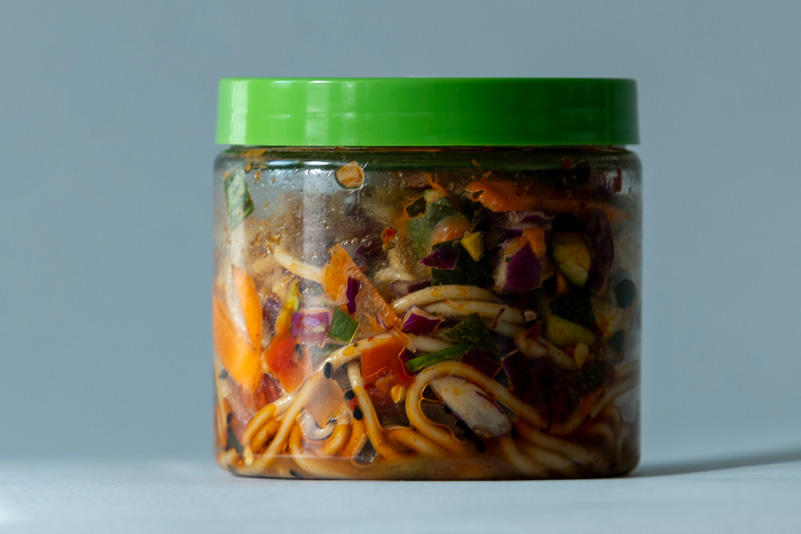
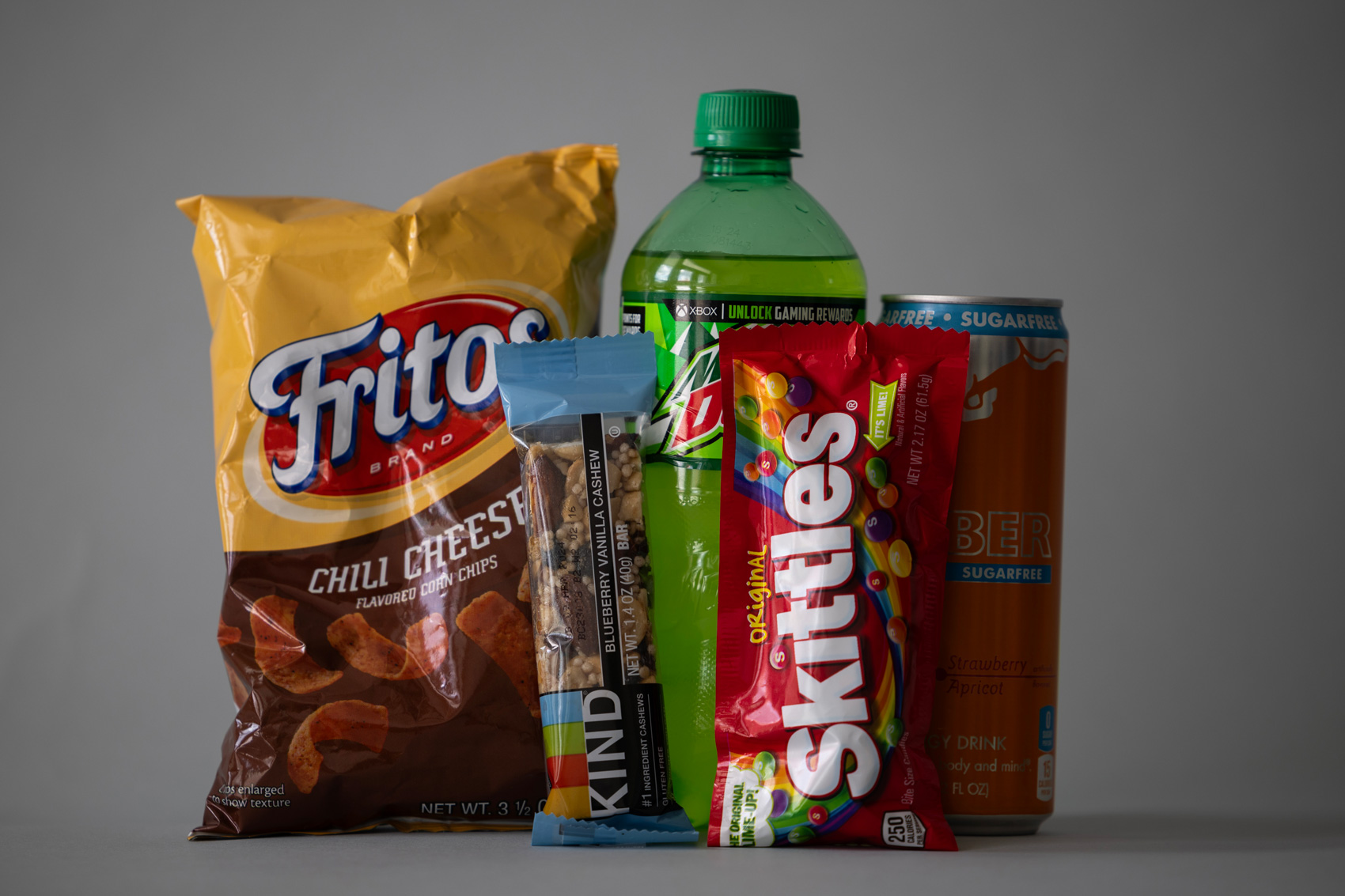

There is not a clear explanation for why some campuses have large dining areas and others do not.
Some smaller campuses with relatively minimal space don’t have a cafeteria, such as HCC’s 27,000-square-foot Brays Oaks facility. However, other large spaces, including a North Forest campus with four buildings totaling roughly 96,000 square feet, don’t have a dining area.
Cafeteria access also doesn’t appear to be based on student enrollment.
HCC’s Southwest College doesn’t have a cafe despite enrolling roughly 12,000 students. Meanwhile, Coleman College in the Medical Center is equipped with a cafe and serves about 2,200 students. (Enrollment numbers aren’t always a perfect picture of how many HCC students spend time on campus, given that about half of students were enrolled in at least one online class this fall.)
In response to questions from the Houston Landing, Young did not clarify what factors school administrators have considered when deciding where to put full-service food options.
Inequitable access
The lack of food is particularly notable at some HCC campuses in lower-income areas of the city, some of which have minimal food options.
Three HCC campuses that only offer vending machine food — located in the Acres Homes, Central Southwest and Second Ward neighborhoods — are in federally designated “food deserts,” defined as areas where family incomes are low and nearby access to a supermarket is sparse.
Several other campuses with vending machine or grab-and-go options have more nearby restaurants and stores, though few offer healthy options.
Chaves, the Eastside Campus student, said the lack of food is a common gripe among his classmates and friends. When he’s on campus during meal times, Chaves’ cheapest nearby options are generally limited to fast food joints dotted along nearby Interstate 45.
“If you want to eat lunch during the day, either you’re bringing your own food or eating fast food,” Chaves said. “There is fast food two blocks away. … But depending on where your previous class was, that could be pretty far. You're talking about walking across campus and then two blocks. And then if you want anything else you do have to cross the freeway to get there.”
Real estate student John Hernandez, who attends HCC’s Felix Fraga campus, said he feels like “there is bias” favoring campuses in more affluent communities. Almost all of HCC’s campuses in middle- and higher-income areas — including Midtown, the Medical Center, Spring Branch and Katy — provide partial service or full-service food.

“There’s not a lot of places to go,” said Hernandez, who gets the most hungry when he has back-to-back, two-hour classes that don’t leave time for venturing off campus. “It’s hard to get food when you need it.”
Young said the college hopes to ensure all students, regardless of location, are able to eat healthier food at school.
“We want to make sure that when our students come to either 3100 Main (Central Campus) or go to the southeast and northeast, that they have some viable options, healthy options, to consider for food,” Young said. “We want to keep them on campus to the extent that we can, and when they are there, we want to make sure that they have food options that are healthy.”
What comes next?
HCC trustees are expecting the task force examining food options to present potential solutions later this year or in early 2025. The task force, which includes administrators, is reviewing the costs and benefits of expanding food choices and identifying potential vendors, Young said.
For now, HCC Trustee Sean Cheban is encouraging the college to try short-term solutions like bringing food trucks to campuses, an approach other colleges have tried. Short on dining room, Texas State University built an outdoor space for food trucks between academic buildings this fall. Lone Star College also brought food trucks on every campus last school year while they added full-service dining spaces.
“In the meantime, it would be really helpful to have some kind of living experiment where we bring food trucks to one or more of the campuses to see if there's any movement, what the utilization is, what the demand is,” Cheban said at a mid-September HCC board meeting. “To me, that feels like a fairly low investment opportunity to see how many students would really use that.”
Whatever the solution HCC settles on, students and staff have made it clear: they want it to include healthier options. In the summer survey, nearly three-quarters of respondents said they preferred to see hot, freshly prepared meals offered on campus.
Thompson, the arts and history student, said even a small increase in food choices — something as simple as fruit instead of vending machine snacks — would be “impactful.”
“Some kids go to community college because they don’t have that money,” Thompson said. “Some kids are coming from nothing, and they’re trying to get to something.”
Miranda covers Houston’s community colleges for the Houston Landing in partnership with Open Campus. Despite roughly half of Houston’s higher-education students attending community colleges, there hasn’t been much news covering these systems or students — until now. Her reporting holds institutions accountable, highlights barriers faced by students and helps them navigate their opportunities. If you have ideas or questions, reach Miranda at miranda@houstonlanding.org.


