

Voters Tuesday ratified an increase in the property tax rate to give the Harris County Flood Control District millions of additional dollars each year to improve maintenance of its sprawling flood prevention infrastructure.
About 51 percent of voters approved raising the Harris County Flood Control District’s tax rate by 1.58 cents per $100 of assessed property value, according to preliminary results posted Wednesday morning. The bump is projected to cost an additional $43 per year for the owner of a $300,000 home in Harris County with a homestead exemption.
District leaders were “thrilled” with the results of the ratification vote, Chief External Affairs Officer Emily Woodell said Wednesday.
“We’re very excited that voters are placing this trust in us,” she said. “We are really looking forward to hitting the ground running and scaling up all the programs that we’ve been thinking about over the past few months.”
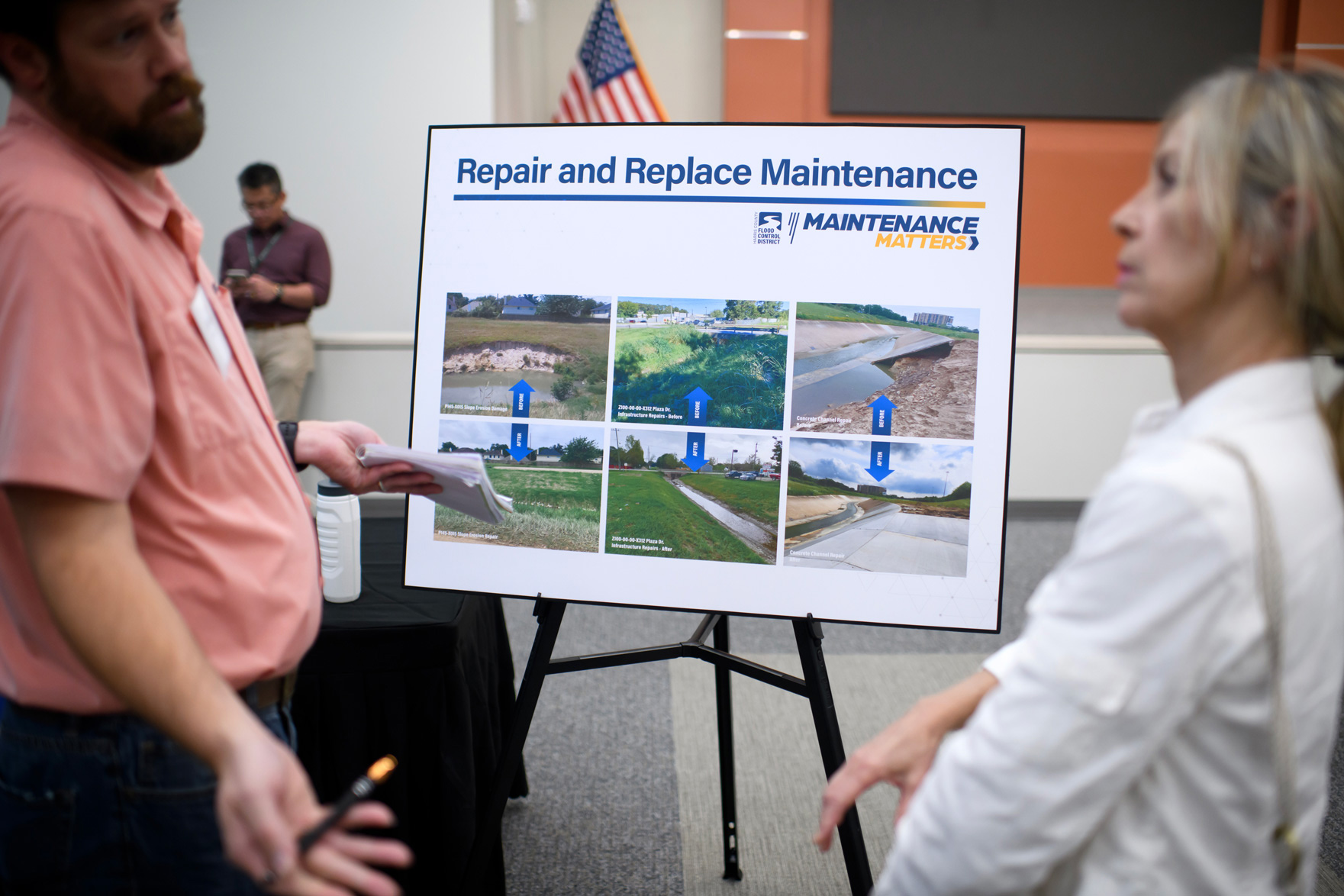
The new tax rate is expected to generate about $100 million, which would allow the district to remove sediment, repair erosion and replace concrete more quickly, Harris County Flood Control District Director Tina Petersen said. It would also fund the creation of a rapid response team dedicated to answering resident calls for service, and allow the district to plant more trees and better manage overgrown vegetation.
The district’s budget for maintenance on projects has remained flat over the past 25 years, even as new infrastructure has nearly doubled in that time. Under its current budget and funding levels, the district would need 267 years to repair and/or replace its entire system, much higher than the best practice of 50 to 100 years recommended by the American Society of Civil Engineers.

related to politics and government
Harris County Flood Control wants a tax hike to fund maintenance work. Voters get to decide.
by Tim Carlin / Staff Writer
Moving forward, Woodell said, transparency will be a key part of the usage of the new funding.
“Now that we’ve pulled back the curtain, so to speak, on our maintenance work, we want that curtain to stay open,” Woodell said. “We really want to make sure that folks continue to understand and continue to have a voice in how our maintenance dollars are spent and prioritized.”
Harris County has seen several major floods over the past two decades, costing billions of dollars in damage. Voters approved a $2.5 billion bond package for new flood-prevention projects in 2018, one year after Hurricane Harvey battered the area.
Before the vote, all five Commissioners Court members, including the court’s lone Republican, expressed support for the tax rate increase.
Following the vote, Harris County Judge Lina Hidalgo issued a statement calling the proposition “a historic step toward making Harris County fully flood resilient.”
“The proposition that Harris County voters approved will allow us to invest in maintaining all of the flood projects we’re building so we can turn the page on flooding in our community,” the statement read. “Thank you to the voters for supporting this, as well as the Harris County Flood Control District and my colleagues for helping us get this critical investment over the finish line.”
Precinct 2 Commissioner Adrian Garcia released a statement Wednesday thanking voters for passing the ballot measure.
“This helps to affirm public confidence that the district is moving in the right direction,” Garcia wrote. “With the voters’ approval of (the increase), we will be able to begin to address the neglect our system has endured for years.”
Ja’Kevion Mcleod, a 28-year-old life insurance agent from Spring, voted against the tax rate increase, saying flooding hasn’t been a major issue in his community.
“I just feel that money can be best spent somewhere else,” he said.
Shyra Moody, also a voter in Spring, supported the ballot measure.
“I think any funds that are going toward making sure the infrastructure for flood zones, to make it better, that’s a good thing,” she said.
Had the ballot measure failed, the flood control district’s tax rate still would have increased by 0.2 cents, to 3.3 cents per $100 of assessed value. The smaller rate increase would have fallen within the limit of what county officials can adopt without seeking voter approval.
Editor’s note: This story has been updated to include comments from county officials in response to the election result.

