


It’s late Tuesday morning a week before the election and Keishona Harrison is at the Sunnyside Health and Multi-Service Center in south Houston thinking about climate change. It’s not the only issue the 25-year-old student is concerned about, but it’s a major one.
She grew up in the Sunnyside neighborhood, experiencing disaster after natural disaster, extreme heat, industrial pollution. Now, she and her friend, Robyn Odom, are about to cast their votes early at the Multi-Service Center, where the city has set up voting booths in the auditorium for the 2024 general election. Odom, like Harrison, is thinking about the climate.
“It’s really a question of where do you want your children to be in the next 20 years,” said Odom, standing in the parking lot before voting. “What kind of world do you want for them?”
The two women are not alone in their considerations. While not the primary concern in this election, the environment has become a key issue in national and local polls. In a year that brought a hurricane and a derecho in a matter of weeks, residents all across Harris County are considering how the environment, flooding and natural disasters impact their everyday lives now and into the future, and data shows that overwhelmingly residents like Odom and Harrison are thinking about how elected officials can and should address these concerns.
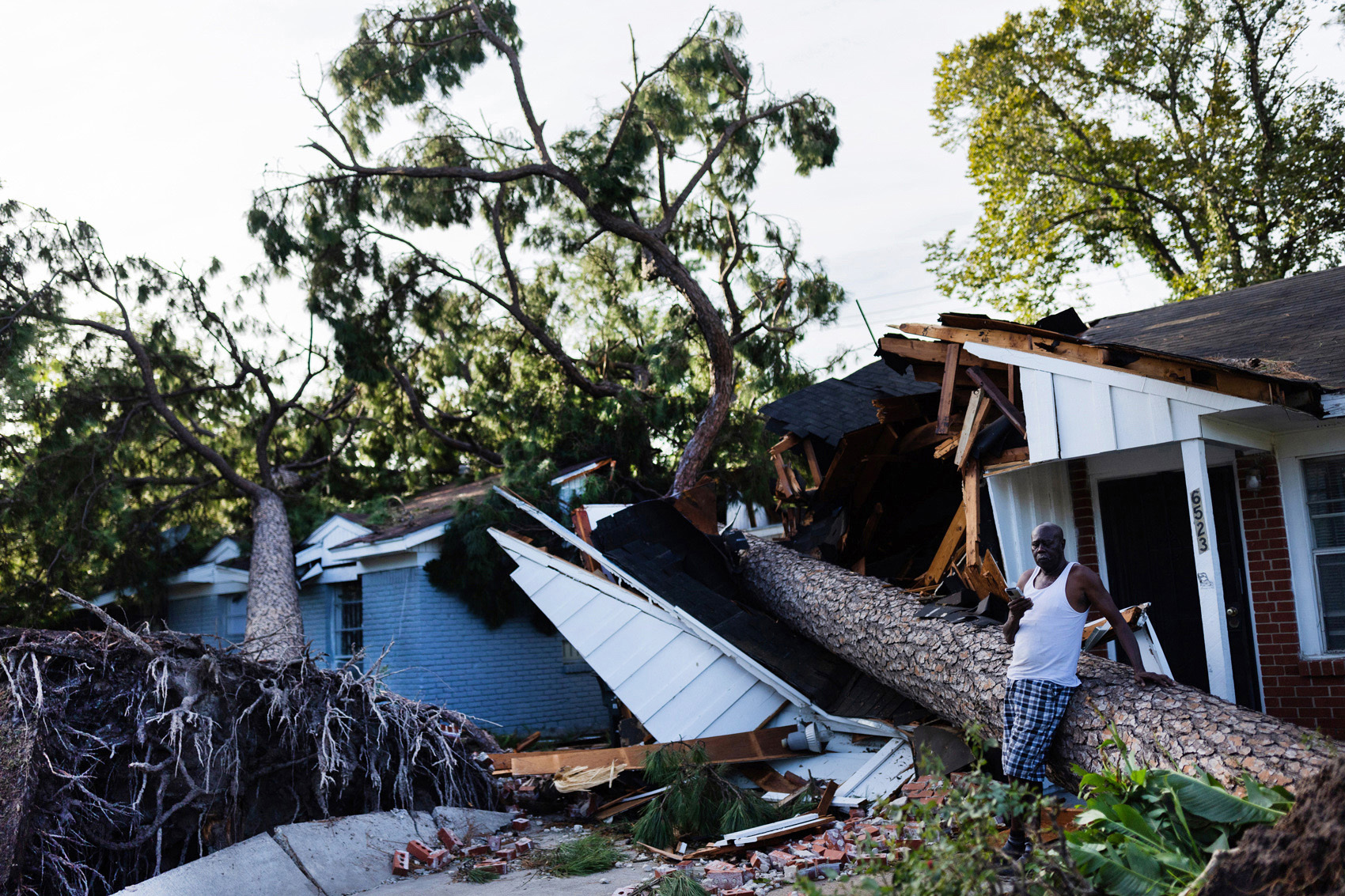
“Despite the potpourri of political ideologies that exist here in Houston, the quote unquote debate about climate change is over,” said Daniel Potter, director of the Houston Population Research Center at the Kinder Institute. “It’s happening, Houstonians realize it, so now the question becomes what are we going to do about it?”
Just over 80 percent of residents believe that climate change will have a negative impact on their health and well-being within the next 10 years, according to the Houston Area Survey 2024 Report published by the Kinder Institute for Urban Research. And about 70 percent believe that large businesses, corporations and local, state and federal officials should be doing more to address the changing climate.
Moreover, the ballot this year specifically addresses the environment with the Harris County Flood Control District Proposition A, which is looking to increase resident’s taxes for flood-risk infrastructure – an initiative that unanimously passed in August at Commissioners Court.
Looking for solutions
Over the past decade, voters in the United States have expressed greater concerns over climate change and environmental issues. This election cycle, a study by Pew Research found that climate change was one of the top 10 issues voters care about. And in 2020, Pew also highlighted climate change as a key issue.
However, at the polls this week, some Houston residents expressed that politicians seemed to be leaving climate change to the wayside in favor of other issues, such as the economy, immigration and reproductive rights.
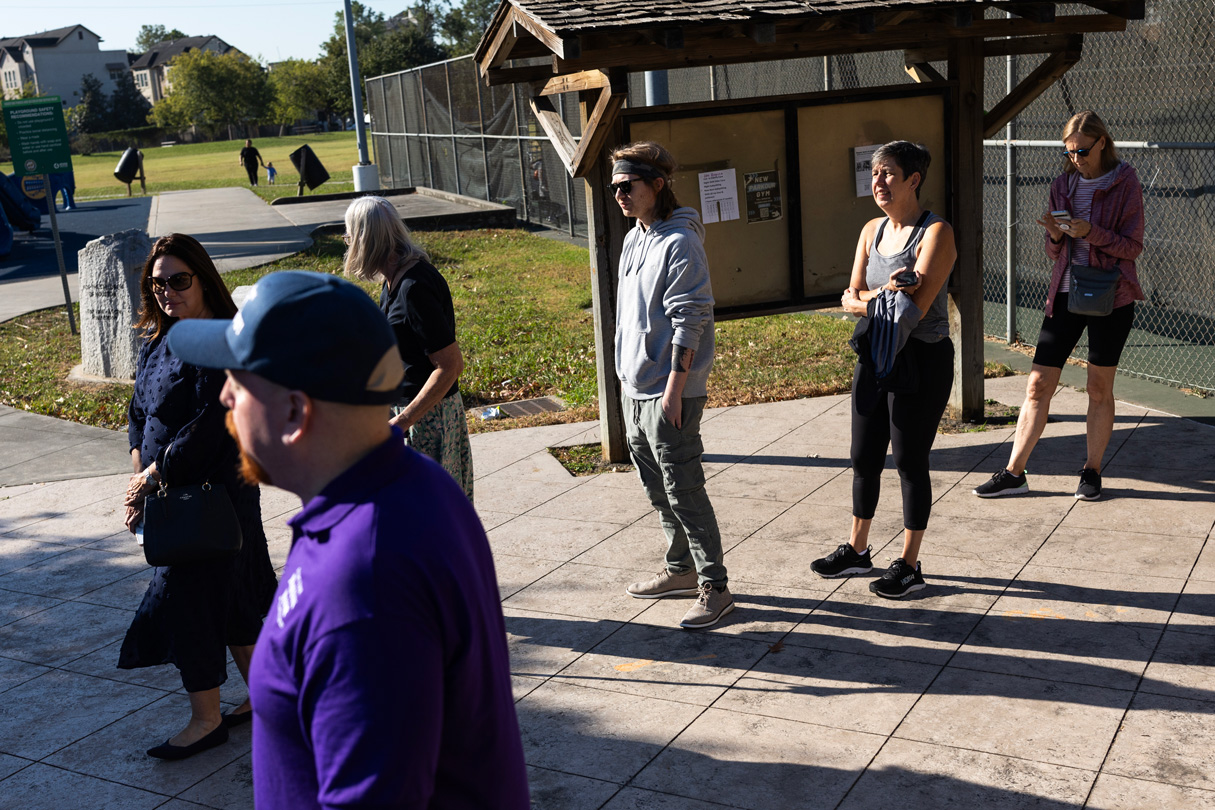
“I know it’s an issue, I just don’t hear (politicians) discussing it as much,” said Iris Cruz, outside the Denver Harbor Community Center, where the 54-year-old and her husband had just voted. “If they aren’t talking about it, then I’m wondering if they even think it’s a concern.”
Meanwhile, Barry Price, 67, said he’s always thinking about climate change – even when he doesn’t hear it from politicians. He voted at the Kashmere Gardens Multi-Service Center.
“If you grow up in Houston, I don’t know how you aren’t thinking about the environment,” he said, “There’s a lot happening here.”
Environmental advocates point out that the stakes for Harris County residents are high. They mention how President Trump rolled back in his first year in office more than 90 environmental regulations such as the chemical disaster rule, an Obama-era directive that requires facilities to have risk management plans in place and impacts Houston directly.
Biden’s EPA has since re-instated the rule in 2024.
At the national level, the difference between a presidency under Donald Trump and Kamala Harris is stark. Trump’s 2024 GOP platform does not mention environment or climate, but repeatedly highlights that a Trump administration will “unleash American Energy” and “DRILL, BABY, DRILL to become energy independent.”
Contrast that with Harris’ plans to invest in clean energy “in a manner that protects our environment and public health.”
For Houstonians, the concerns are less distinct. The Kinder Survey reported that it wasn’t that residents were split on believing in environmental issues or climate change, but rather didn’t know how to handle the issues.
“They’re saying okay, I’m recycling, I’m doing my part, but now what,” Potter said. “They are acknowledging the challenges and really understanding that the solution rests on our politicians, our leadership.”

Local Concerns
Flooding in Harris County is a common and growing concern for residents. In the 2023 Kinder Area Survey, residents said they overwhelmingly approved rules banning building in flood-prone areas. 73 percent and 80 percent of participants in 2018 and 2023 editions of the survey, respectively, said they wanted a new policy to keep developers from areas that are repeatedly flooded.
Now flooding has made it to the 2024 ballot.
For the past 25 years, the Harris County Flood Control District’s acreage has almost doubled. The District now maintains just under 60,000 acres of channels, detention ponds, and other infrastructure across Harris County.
The Flood Control District currently spends over $40 million on maintenance, but because of this growth, the department says it cannot address every issue, meaning some upkeep has been deferred over time. Despite this, Harris County’s tax rate for flood control has only gone up about 0.01 percent since 2001.
This has left lower-priority issues to the wayside, which can leave communities without the flood control they need, such as concrete lighting repair in the channels to desilting from sediment buildup over time.
Also concerning is the fact that experts have indicated that much of the District’s infrastructure was built 50 to 100 years ago and pieces are starting to reach the end of their lifespan, according to Emily Woodell, chief external affairs officer for the Harris County Flood Control District.
“Just like how residents see water erode and corrode the metals and the concrete in your personal gutters and driveway, that happens in our network too,” said Woodell. “Water moves through our system and corrodes some of these elements.”

Elected officials have long called to address deferred maintenance issues with little avail, but after residents near the San Jacinto River evacuated during intense flooding in May, the issue of flood control infrastructure came up seriously. Consequently, Commissioners Court approved sending a tax rate increase to the polls this November.
If passed, the rate will go from 3.1 cents per $100 assessed home value to 4.879 cents per $100 assessed home value.
“Not all Harris County residents have the equal level of flood mitigation infrastructure and after these storms, that could weigh heavily on voters,” said Andrew Barley, co-director of rebuild efforts and voter engagement at the grassroots organization, West Street Recovery.
In the 1980s, a billion-dollar disaster happened every 16 weeks, according to Potter. Now, these disasters happen every three weeks, exhausting residents.
“I think recent memory (of the derecho and Hurricane Beryl) will help put in mind the importance of voting for both candidates and ballot initiatives that have a positive impact on our environment or our preparedness for the environment,” Barley said.

