

REYNOSA/MCALLEN – Yasmín Escobar tossed and turned in the fluffy white sheets of a Holiday Inn in Mexican border city Reynosa the night before her appointment to enter the U.S. in early November. Her 9-year-old son Fabián and 7-year-old daughter Julia slept beside her, resting peacefully. When they woke up, they were giddy with excitement.
“Ya falta poco, mamá,” Fabián said. “We’re going to see dad.”
The family left Venezuela four months before, traveling 3,400 miles across eight countries. All the while, they dodged corrupt Colombian, Central American, and Mexican officials and cartels that prey on migrants. That Saturday in November, they were just 6 miles from safety on U.S. soil.
Fabián’s excitement that day mixed with sadness. He had taken the year-long separation from his dad the hardest.
“I feel like crying,” Fabián told his mom.
Some 160 miles away in Corpus Christi, his dad José Suárez woke up in his one-bedroom apartment alone, as he had every day since he arrived in the U.S. in December 2023.
The family are among the nearly 8 million Venezuelans who have fled the country’s humanitarian crisis in recent years. More than 58,000 Venezuelans have settled in Houston, according to the Migration Policy Institute.
Now, as president-elect Donald Trump promises to reinstate policies to limit asylum and target immigrants for deportation, immigrant advocates worry that these policies rely on a harmful miscalculation: that U.S. border policy can convince desperate families like the Suárez’s to stay in their home countries. Instead, migrants will only be pushed toward more danger, they say.
“We know that these deterrent strategies are actually the policies that drive criminal organizations to target people seeking safety,” said Amy Fischer, director of refugee and migrant rights at Amnesty International USA.
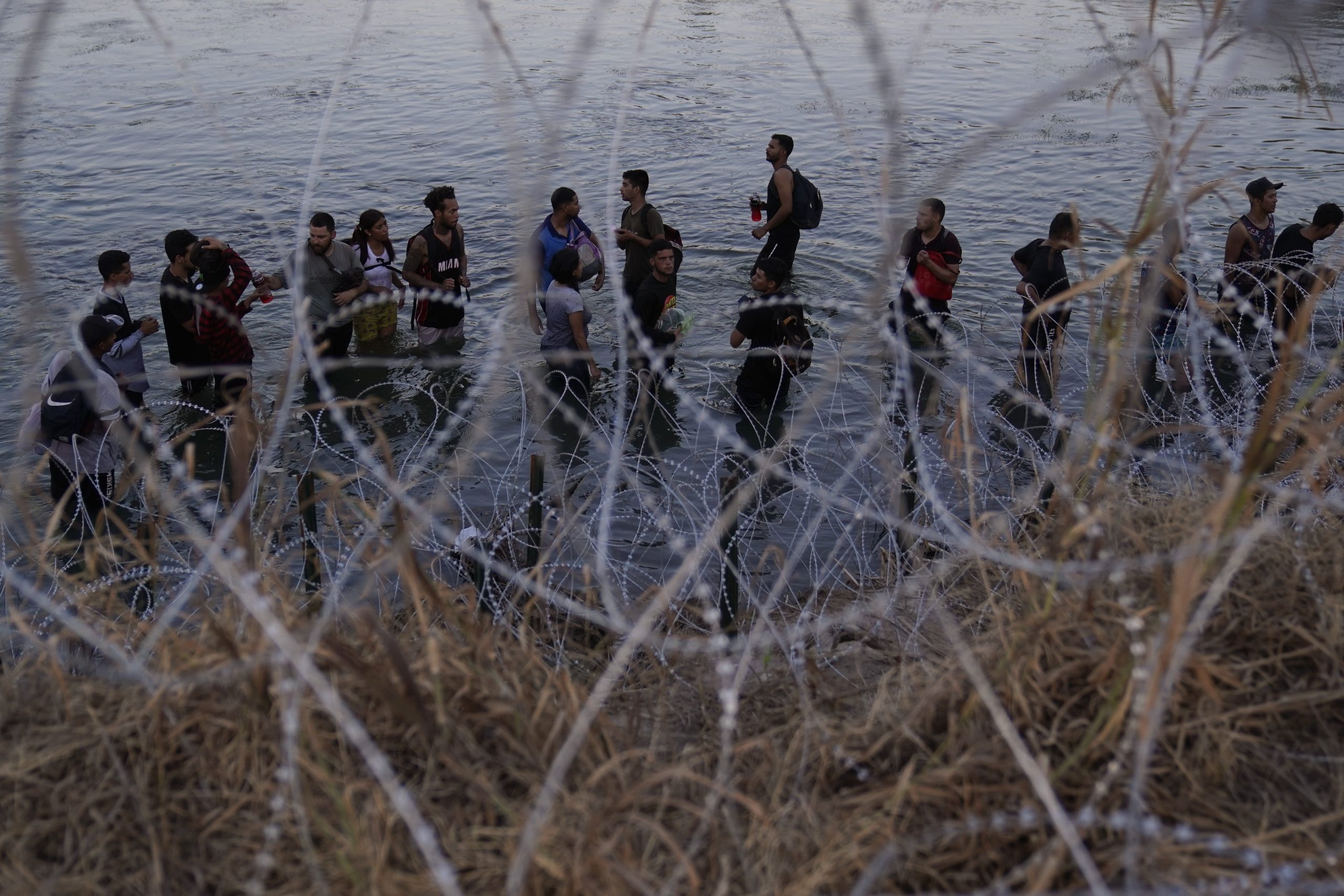
The Suárez family wanted to migrate legally, opting to use the CBP One government smart phone app. This gave them a temporary status known as parole, putting them at risk of being targeted under Trump’s deportation plan if they are stripped of this status.
“What we know is that this forthcoming administration has every intent to try and snatch and remove as many people as possible from their communities and that no one really should feel safe and secure,” Fischer said.
As the Jan. 20 inauguration approaches, the Suárez family is among the many bracing for a crackdown on immigrant communities. Their journey shows how much families are willing to risk for the chance at a better life.
Leaving behind turmoil in Venezuela
José and Yasmín both grew up in Barquisimeto, the fourth-largest city in Venezuela located in the central west part of the South American country. They were friends before they started dating in 2008, a decade into the reign of Venezuelan strongman Hugo Chávez. The former military officer rose to the presidency in 1998 promising to eradicate poverty and end corruption in politics. He enjoyed the riches from high oil prices in his early years.
In the early 2010s, the couple opened an auto shop together managed by José, a mechanic by trade. Yasmín ran a business selling uniforms and boots. They lived comfortably.
By the time Fabián was born in 2016, Venezuela was no longer the prosperous oil-rich country of decades before. Mismanagement and plummeting oil prices led to an economic collapse. The country reached hyperinflation by the end of the year. People waited in lines for hours for government rations of food. Medicine was so hard to come by that a scraped knee could become deadly. Blackouts became common.
Crime increased alongside the humanitarian crisis. Yasmín started receiving threats to pay a “protection fee” for their business. The man on the other end of the line recited her daily routine and pinpointed Fabián’s school. She stopped answering and changed her number. José took Fabián to school from then on.
Within two years, Yasmín had to close her business. She had no customers. The auto shop skated by even as the workers migrated little by little.
“Every day, our income was less and less, and we still had the expenses of the kids,” Yasmín said. “You can’t tell a kid, ‘I don’t have it.’ You have to figure it out.”
In July 2023, José told Yasmín he wanted to migrate to the U.S.
“Inside I was screaming no,” Yasmín said.
But his mind was made up.
“So I said, ‘I’ll support you in the decision that you make.’”
José left five days later with $1,500. He crossed the Venezuelan border into Colombian border town Cúcuta, then took a bus to Medellín, then another to coastal city Necoclí. From there, he took a bumpy boat ride to start the first big obstacle in his journey: the Darién Gap, a 60-mile stretch of inhospitable rainforest that connects North America to South America.
The area was relatively uncharted until 2021, when more than 130,000 mostly Haitian and Cuban migrants hiked through on their way to the U.S., according to statistics from Panama’s migration agency. That number doubled the next year after Mexico imposed visa restrictions on Venezuelans. Sixty percent of migrants crossing the Darién that year were Venezuelans compared to 2 percent the year before.
José took about five days to hike through the rugged terrain, dodging criminal groups that threatened migrants along the journey.
From there, he made his way up Central America, through Panama and Costa Rica on government-chartered buses. On the buses run by private companies in Nicaragua, Honduras and Guatemala, migration officials would sporadically board.
“Give me $50,” they demanded.
He would slip them the payment in dollars.
José reached Mexico in August 2023 with $500 left.
Fear and violence in Mexico
A few months before, in May 2023, the Biden administration implemented a policy to require migrants requesting an asylum screening at the U.S. border to use a U.S. Customs and Border Protection app, known as CBP One. Using the app ensures a work permit within weeks while an asylum case is pending. However, immigrant rights advocates have criticized the mandatory use of the app for exposing migrants to violence, sexual assault and kidnapping while they wait in Mexico, according to Amnesty International.
José requested an appointment for months while in Mexico City and then in Monterrey. By December 2023, he got an appointment at the Nuevo Laredo port of entry, across from Texas border city Laredo. He had heard about violence against migrants there and was worried he would be targeted.
José had reason to fear. The cartels controlling border cities across the Rio Grande Valley, including Reynosa, Nuevo Laredo, and Matamoros, demand payment for migrants entering their territory, known as “derecho de piso.” But bribes are just part of the consequences.
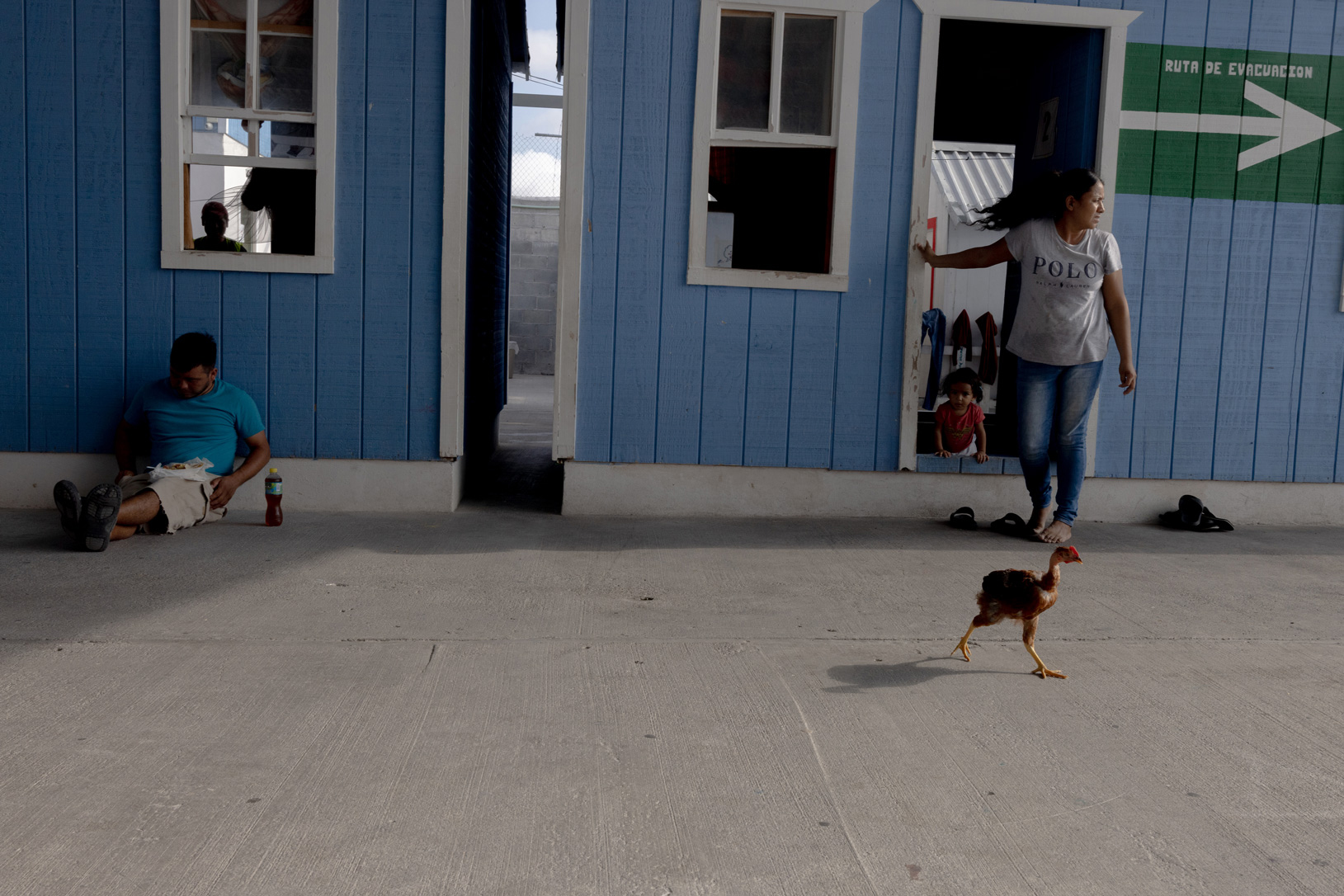
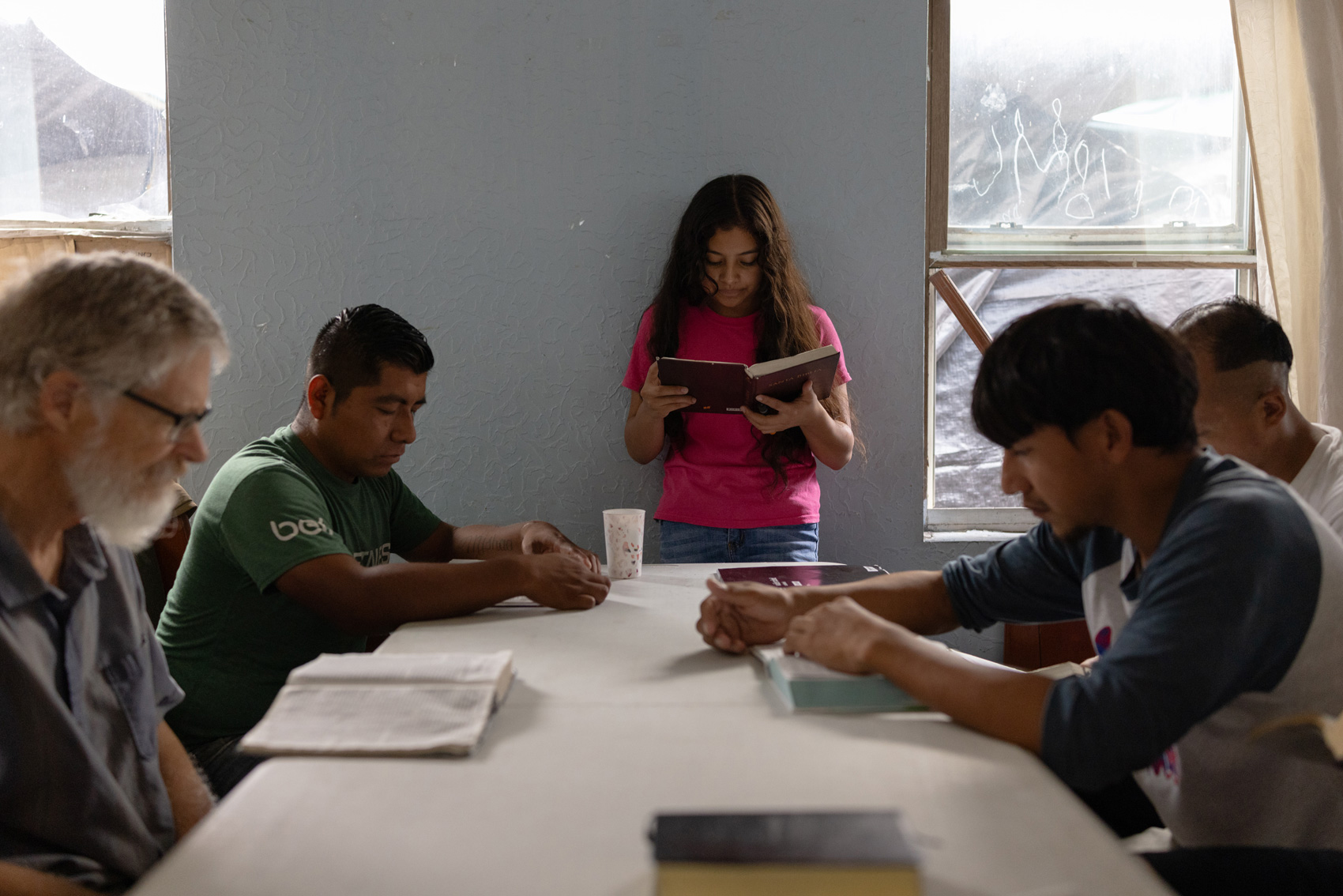
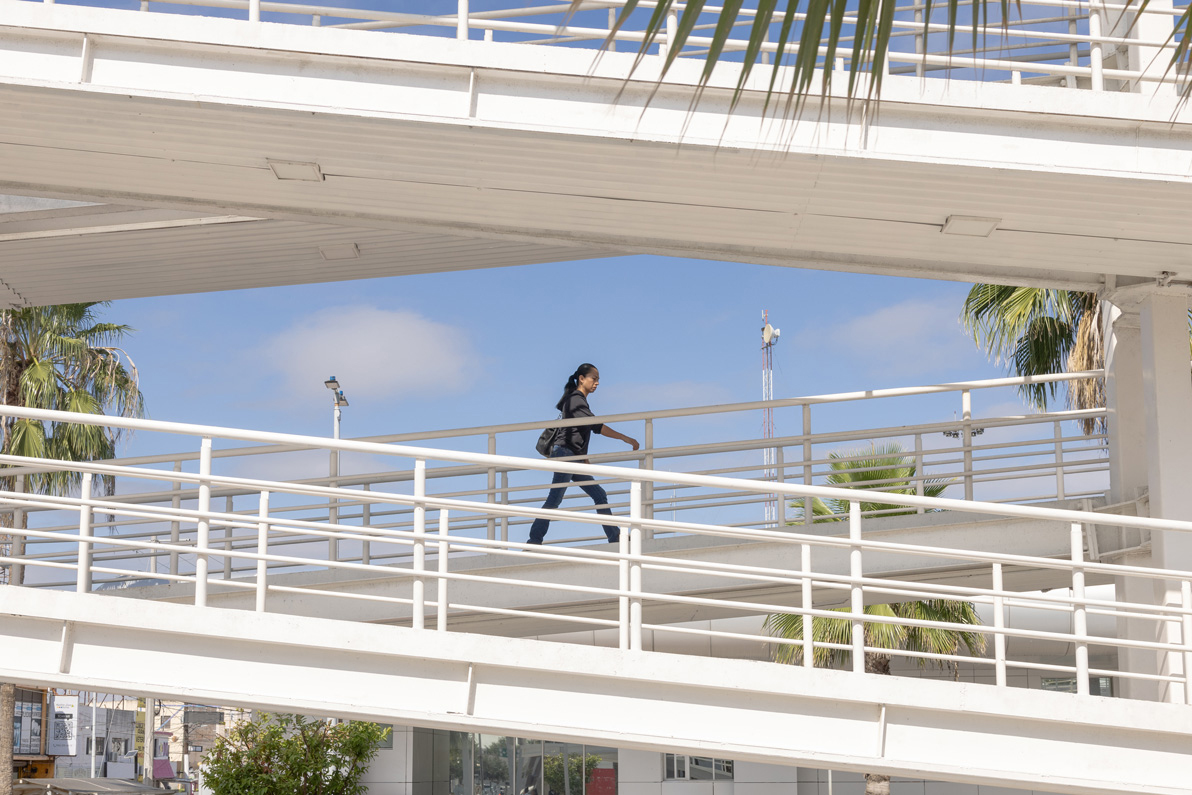
During a November 2024 visit to a shelter in Reynosa, Houston Landing identified at least 15 migrants who had been kidnapped in Mexico. Some reported being raped and tortured while captive for up to three months. All were heading to Houston.
CBP declined to comment. Mexico’s migration agency did not respond to a request for comment.
When José arrived at the Nuevo Laredo airport, an official took a photo of his passport. He worried the official was sending it to the cartel. He made it to the hotel without problem, but his cousin — who traveled separately — never showed up. He was held by kidnappers for 13 days until his cousin paid the ransom.
“My kids suffered. They missed their dad”
José settled into life in Houston, where he lived with a friend and worked for rideshare and delivery apps. He got his work permit quickly by choosing to use the CBP One app, a process that Trump has promised to end once in office.
The right to asylum is enshrined in U.S. law, so it would be difficult for Trump to end asylum entirely. However, he could make life harder for asylum seekers like José, according to Brian Manning, an immigration lawyer and former USCIS asylum officer.
“The process once you get here and apply is going to be slow and painful and you're not going to get your work permit quickly,” Manning said. “There’s levers that they could pull to make it more painful.”
A few days after Father’s Day, José’s former employee at the mechanic shop Robert called him asking for advice on the migration journey. He offered to take José’s wife and kids with him if José would let his family stay with him when they arrived.
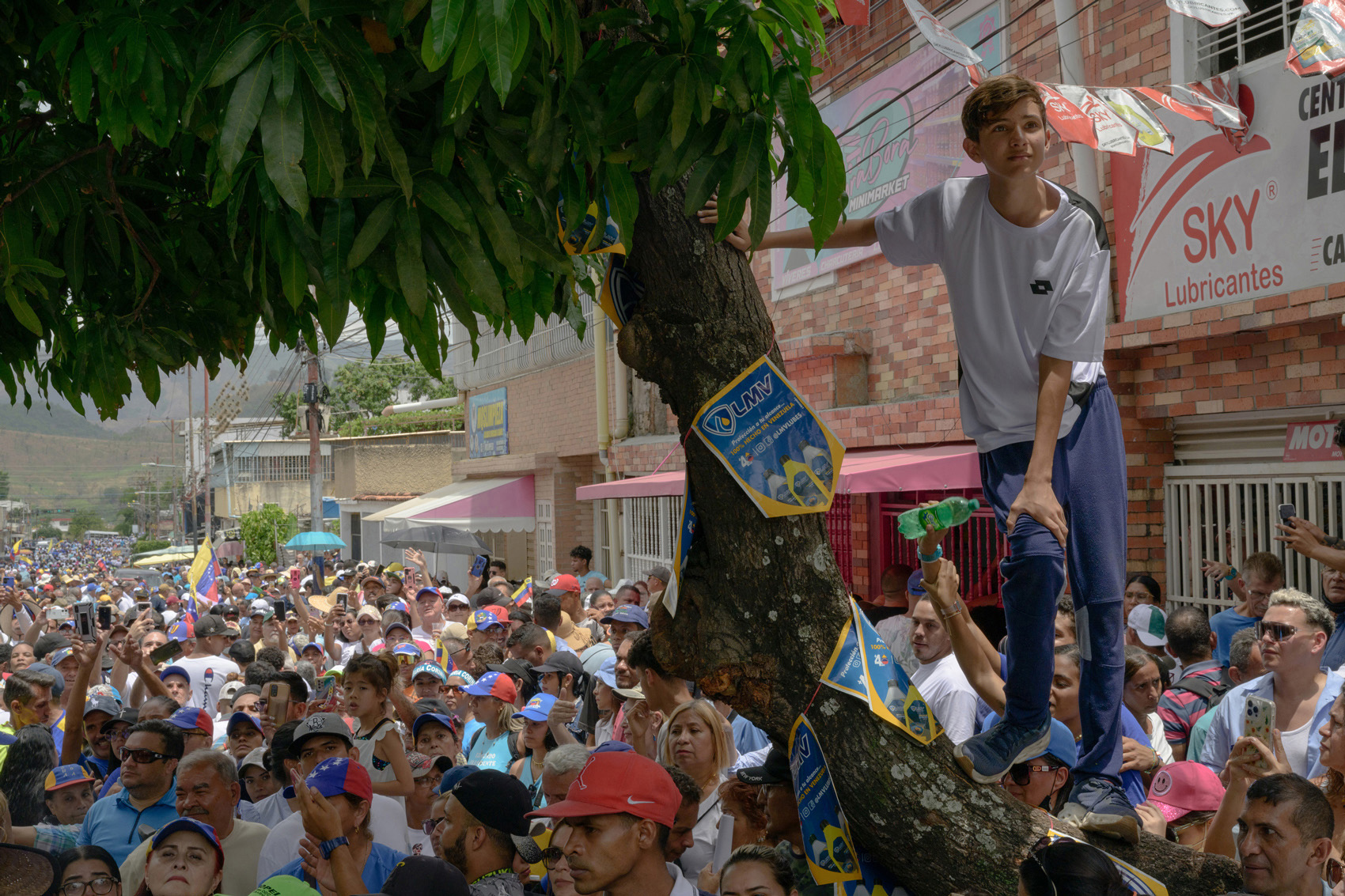
By that time, the Venezuelan elections scheduled for July 28 to potentially oust President Nicolás Maduro were fast approaching. Early in the year, Yasmín had some hope the elections would put the country on a new course. But when she saw the government publishing polls with a lead so shamelessly false, her hope dwindled.
“It was more of the same,” Yasmín said.
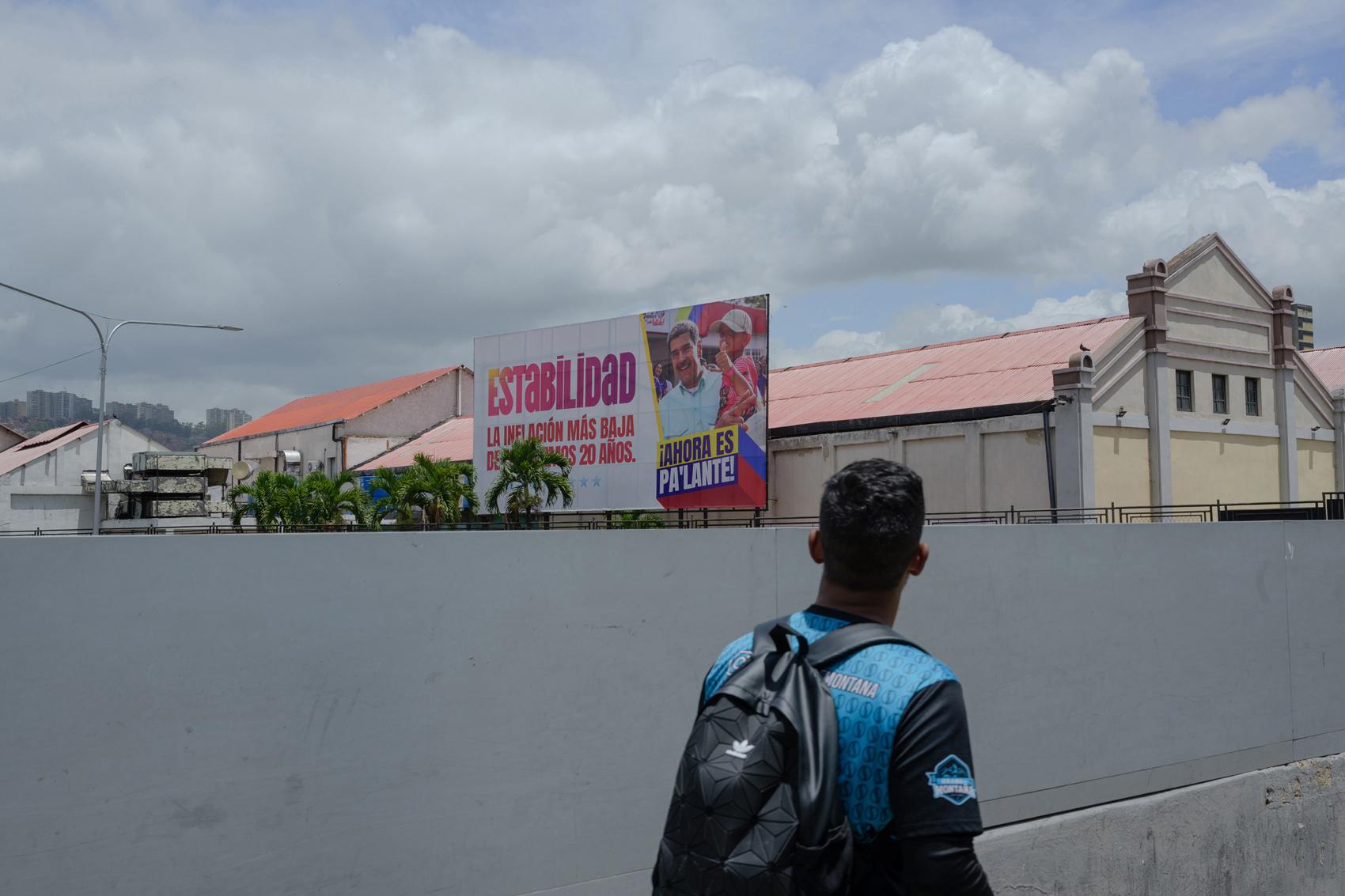
José hoped to bring his family to the U.S. through a parole program launched by the Biden administration for Venezuelans, Nicaraguans, Cubans and Haitians that would allow them to fly directly from Venezuela. But he didn’t fit the program’s strict requirements.
Yasmín had insisted to José that she didn’t want to leave Venezuela. With him gone for nearly a year, her stance softened.
“My kids suffered,” she said. “They missed their dad.”
First leg of Yasmín’s journey
Yasmín, Fabián and Julia left Barquisimeto on July 16, taking the same route as José through Colombia to reach the entrance to the Darién Gap.
In the last few years, organized crime has exploited the route, turning vulnerable migrants into profits, according to Juan Pappier, a researcher at Human Rights Watch who has documented abuses along the Darién Gap.
On the Colombian side, boat companies and so-called “tour guides” charge migrants for safe transport. The Gulf Clan, Colombia’s largest cartel, oversees the racket. The cartel makes an estimated $70 million a year off migrants in the Darién Gap, according to HRW. “VIP tours” for a heftier fee take migrants along shorter routes.
“The more you pay, the less you walk, and the less you expose yourself or your family to being robbed or raped,” Pappier said.
Yasmín paid the standard $300 per person on the Colombian side of the Darién. They received a bracelet to show they paid, a signal that bandits would risk retaliation from the Gulf Clan if they robbed them.
Yasmín was surprised by the business behind it all. There was a restaurant where she bought fries for the kids before embarking on their five-day trek. Locals charged migrants to use the bathroom or charge their phone.
“You breathe, and they charge you for breathing,” Yasmín said.
The size of the crowd as they prepared to start the journey also struck her. More than 286,000 people have crossed the Darién Gap this year as of October, according to Panama’s migration agency. More than 61,000 were minors.
“My heart was beating, and I was scared,” she said. That’s where I came back to earth and I said, ‘Well, this is the decision that I made, and there is no going back,’” Yasmín said.
A local leader blessed the crowd of people — at least hundreds — and gave them a key tip for surviving the journey: Step firmly on the ground with each step. Losing their footing could mean slipping to their death.

Fabián and Julia were in high spirits at first. But within hours they complained of being tired.
“Mamá, I can’t walk anymore.”
“Mamá, carry me.”
“Mamá, I’m hungry.”
They carried on like this for about two days on the Colombian side, walking eight to 10 hours per day to reach the Panamanian border.
A flag marking the Panamanian side sits near the top of a hill known as the “hill of death” for its steep and narrow path. Going downhill on the slippery terrain scared Yasmín the most. She sat down and slid on her butt to avoid falling. She quickly wore a hole through the back of her pants and underwear.
“I didn’t want to look to either side because I was going to go into shock,” Yasmín said. “And if I went into shock, what would happen to my kids?’
Once in Panama, it rained for three days, making the currents in the rivers stronger than expected. The adults formed a human chain to cross, linking arms so no one got swept away. Yasmín’s feet went out from under her, but her companions pulled her back in. They passed the kids from shoulder to shoulder.
The last day was the hardest. They were running out of food. They were exhausted. They asked a woman who was breastfeeding to share some breast milk. They mixed it with their last pinch of brown sugar for the kid’s last meal before setting out on their last hike.
“The last hours were very traumatic for them because they were desperate,” Yasmín said. “They were tired. They were worn out. We didn’t have food. We didn’t have water. We couldn’t drink water from that river.”
Meanwhile, José was living in Houston with a friend. His day-to-day routine was rote and boring. He spent 10 hours in his car waiting for grocery delivery orders outside Walmart. Calling his kids brightened his day.
“What else can I do? Become depressed?” he said.
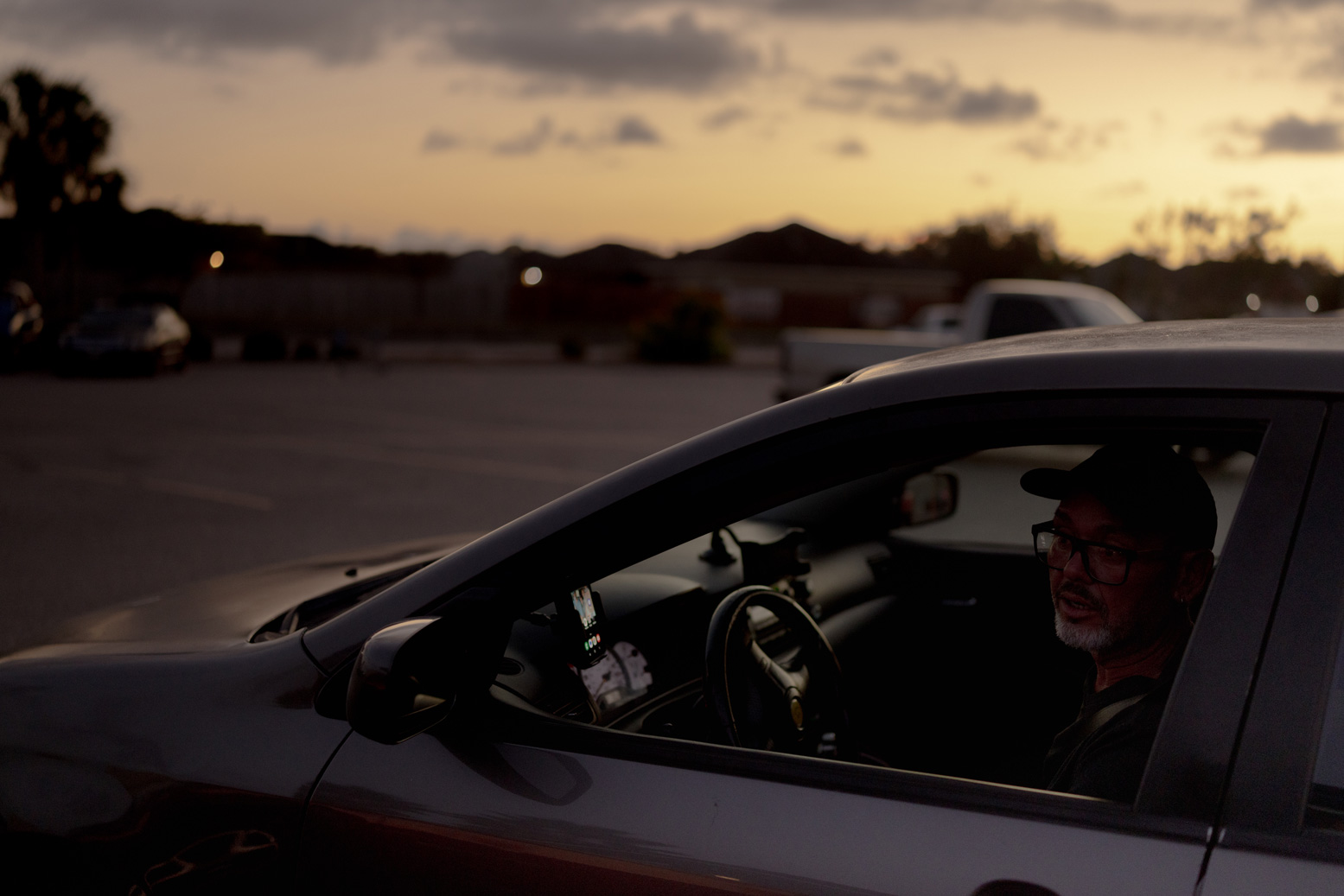
He barely slept during that week in July when his family crossed the Darién. The day they were expected to get out, he was so distracted that he almost caused a crash in Houston traffic. He messaged Yasmín at 10 a.m., then again at noon, then 4 p.m., then 7 p.m. She finally answered that night.
Yasmín was relieved that what seemed to be the worst part of her journey was over.
“I ask God for forgiveness for exposing my kids to so much danger,” she said.
False sense of safety
The family took the same series of buses through Central America as José did without much issue except for a few days when Fabián and Robert’s kids got sick. Yasmín worried about how the journey was affecting the kids.
As they searched for a hotel at the Guatemalan border with Mexico, a sweet elderly woman approached them and offered to direct them to a hotel that cost $10 a night.
“Or you could stay at my house and buy a packet to cross tomorrow,” she said. “And I’ll tell my daughter to give your son some medicine,” she added.
They zoomed off on motorcycles through winding roads as night fell.
“Don’t talk. Don’t yell, and when we arrive at the house, you’re going to go directly to the room without saying anything,” the driver instructed them.
The house was so full of people they had to sleep lined up, like “pigs,” Yasmín recalled.
“She offered to give me medicine and she didn’t,” Fabián said to his mom after they arrived. “She tricked you.”
“Why are some people bad?” he asked.
The next day they crossed into Mexico, where they would wait to get an appointment through the CBP One app, just like José did. They bought chicken and bread rolls to eat the first few nights in southern Mexican city Tuxtla Gutierrez while they stayed in a rundown hotel. They went searching for a better hotel a few days later.
“We wanted to have air conditioning and shower with warm water,” Yasmín said.
They found a hotel where Yasmín made friends with the owner and staff. She helped sweep the courtyard and take out the trash. In exchange, the owner let her use the kitchen to cook.
“When we arrived in Mexico, I thought we were fine. I forgot everything else,” Yasmín said. “I didn’t know.”
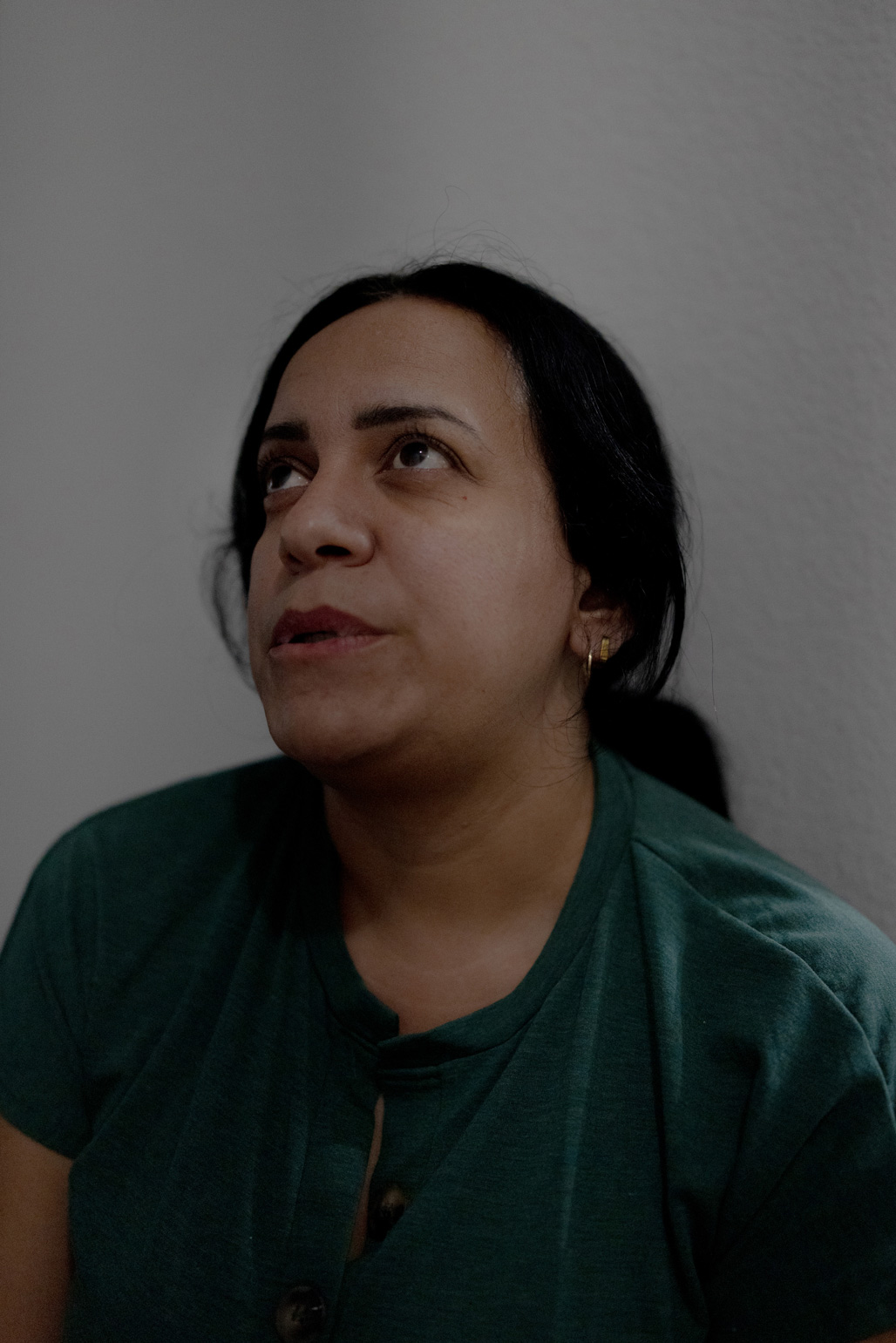
Then, a woman came up to Yasmín at the park with a warning.
“Watch your kids carefully,” she said. “Watch your daughter and take her hand.”
Yasmín received similar warnings from other women at church and the market. She made sure to take Julia’s hand whenever they ventured out.
Back at the hotel, one of the workers, Paty, explained.
“Don’t get too scared of what I tell you,” she said. “Here, there is a group of criminals that steals kids.”
Julia, with her light skin, would catch their attention, she said.
Yasmín mostly kept the kids inside the hotel from then on. She told Julia not to talk to strangers and to scream if anyone came near her. But it was hard for Julia to understand why she couldn’t go out, Yasmín said.
“I got traumatized, and I didn’t take the kids out, not even to the hotel door,” Yasmín said.
By late October, after three months of waiting cooped up in the hotel, the family finally got their appointment, scheduled for Nov. 9, the Saturday after election day.
On the border
The family got an appointment in Reynosa, a border city where advocates say cartels often hold migrants captive until they pay thousands of dollars in ransom.
Yasmín prepared for her Reynosa trip by following TikTok videos that explained the criminal dynamics. From there, she discovered a WhatsApp group for migrants with CBP One appointments in Reynosa. Someone sent a voice note saying they had been kidnapped and had to pay $1,800. Another sent a photo of a shelter where they said migrants had been kidnapped. It was riddled with bullet holes.
Yasmín wrote privately to the group administrator.
“Buenas tardes,” she wrote. “I have my appointment at the [Hidalgo International Bridge]. Do you have any contact or information that you can provide?”
“At that bridge, they charge $250,” Yasmín recalled someone writing back. “That money doesn’t go directly to us,” the woman explained. “I’m also in Mexico and I don’t benefit from this. We simply help our migrant friends cross without any risk.”
The woman sent Yasmín a number to arrange her arrival in Reynosa. Yasmin couldn’t tell if she was being scammed.
“I spent a week and then some trying to decide if I should call or not,” Yasmín said. “But after seeing the reports in the chat of kidnappings, I got scared and decided to write to them.”
She wrote the number and provided a code the woman had given her.
“The money is to protect your safety here in the country,” a man responded. “To work, I have to pay them to be able to transport you.”
Although he didn’t specify, Yasmín understood he meant the cartel.
“It’s $250 because you’re Venezuelan,” he wrote.
“So I pay $250 and my kids don’t pay?” Yasmín responded.
“Everything that breathes pays,” he answered.

She sent a photo of her and the kids and their date of arrival in Reynosa. He sent a photo of his car.
At 8:30 a.m on Nov. 7 – two days before their appointment and two days after Trump secured a second term as president – Yasmín, Fabián, and Julia flew into the Reynosa airport, still sleepy from an overnight layover in the Mexico City airport. They were among the first people to grab their backpacks and step off the plane. Yasmín called the man to pick them up.
“Let me ask for authorization for you to be able to leave the airport,” he told her. “When you leave, I’m going to tell you which way to walk. If you walk another way, I assure you, they will snatch you.”
Yasmín waited anxiously for him to call her back with instructions. Five to 10 minutes later, her phone rang. He told her to walk out and go straight until she reached a red sign to exchange dollars.
A Mexican official in a camouflage uniform seemed to be taping the family as they left. Yasmín and the kids walked straight out the door, past a truck that made Yasmín nervous for its open door that she imagined would make kidnapping easy.
They made it to the man’s car and set off on the 20-minute drive to the Holiday Inn, where José had arranged for them to stay. They rolled down the windows near a supermarket for a woman to report back to the cartel the number of passengers.
Once at the hotel, Yasmín barely let the kids leave the room. She briefly gave in on Friday to take them to the pool after repeated begging from Fabián and Julia.
“There’s a lot of anxiety being in Mexico,” Yasmín said. “You can’t be at peace.”
Reunited in uncertain times
The Saturday morning of their appointment, Yasmín called the driver 20 minutes before she was ready to leave, worried that giving him too much information would allow him to plan to kidnap them.
He picked her and the kids up from the hotel, and within less than 10 minutes through Reynosa’s congested roads, they had arrived at the bustling port of entry.
“Don’t speak to anyone,” she recalls the driver telling her.

That included anyone selling water or offering to exchange pesos for dollars. Anyone could be a cartel spy, he said.
While waiting in line outside the international bridge with the sun beating down on them, Yasmín tucked Julia behind her out of sight.
“I was looking around at everyone,” Yasmín said. “Because to me, everyone looked bad.”
The family showed their appointment information to a Mexican official, who let them through in time for their noon appointment. Yasmín was relieved that the protection fee they paid for kept them safe. Once inside the offices of U.S. CBP, Yasmín spent hours shuffling from desk to desk showing her paperwork. She took longer than most families since their dad wasn’t there.
Around the same time, José left Corpus Christi, where he had moved to be closer to his niece.
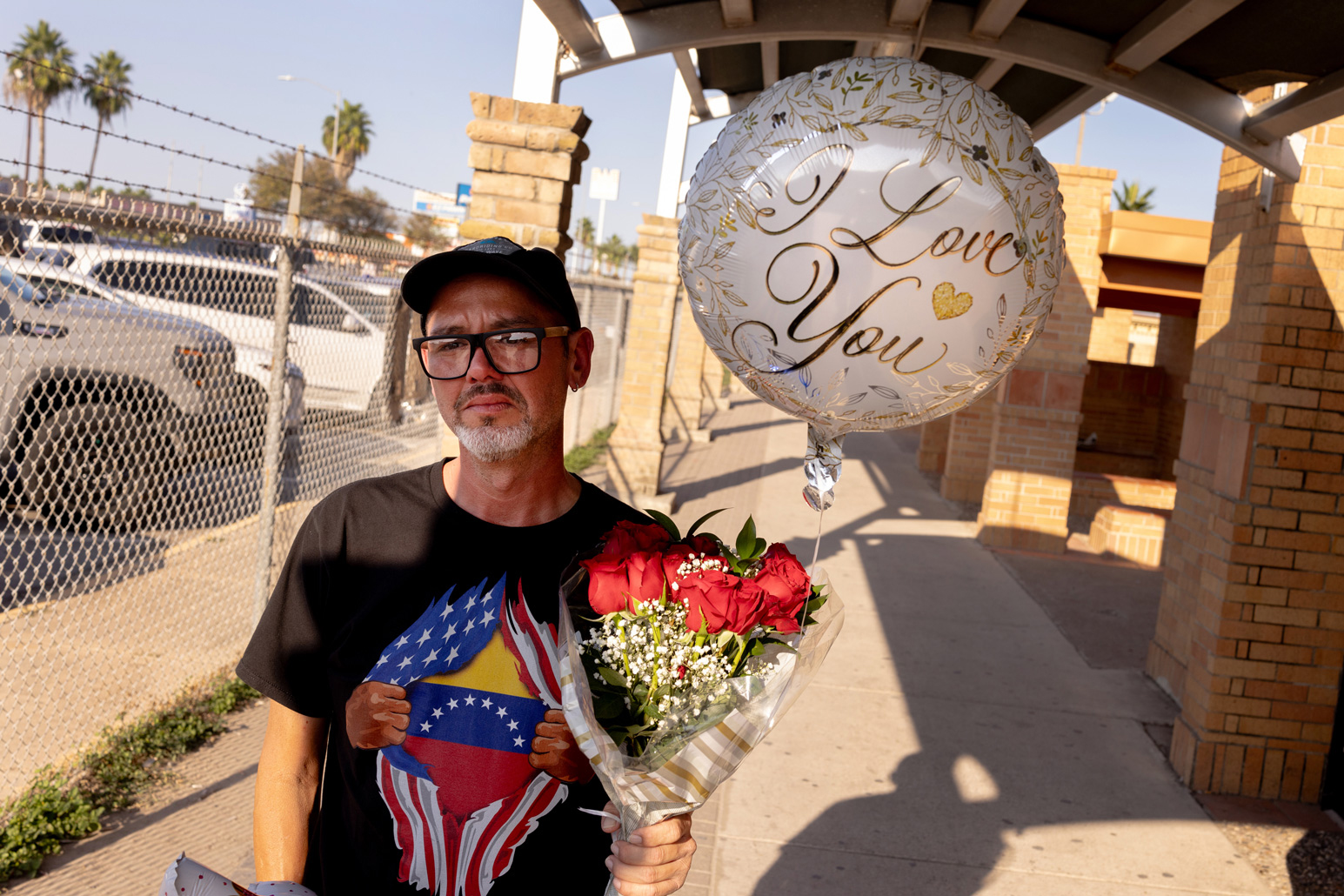
That afternoon, José stood outside the McAllen port of entry with balloons, toys for the kids and roses for Yasmín. A few other migrants waited on nearby benches with their folders of paperwork, many wearing winter coats in the 80 degree heat to make it easier to carry their backpacks and suitcases.
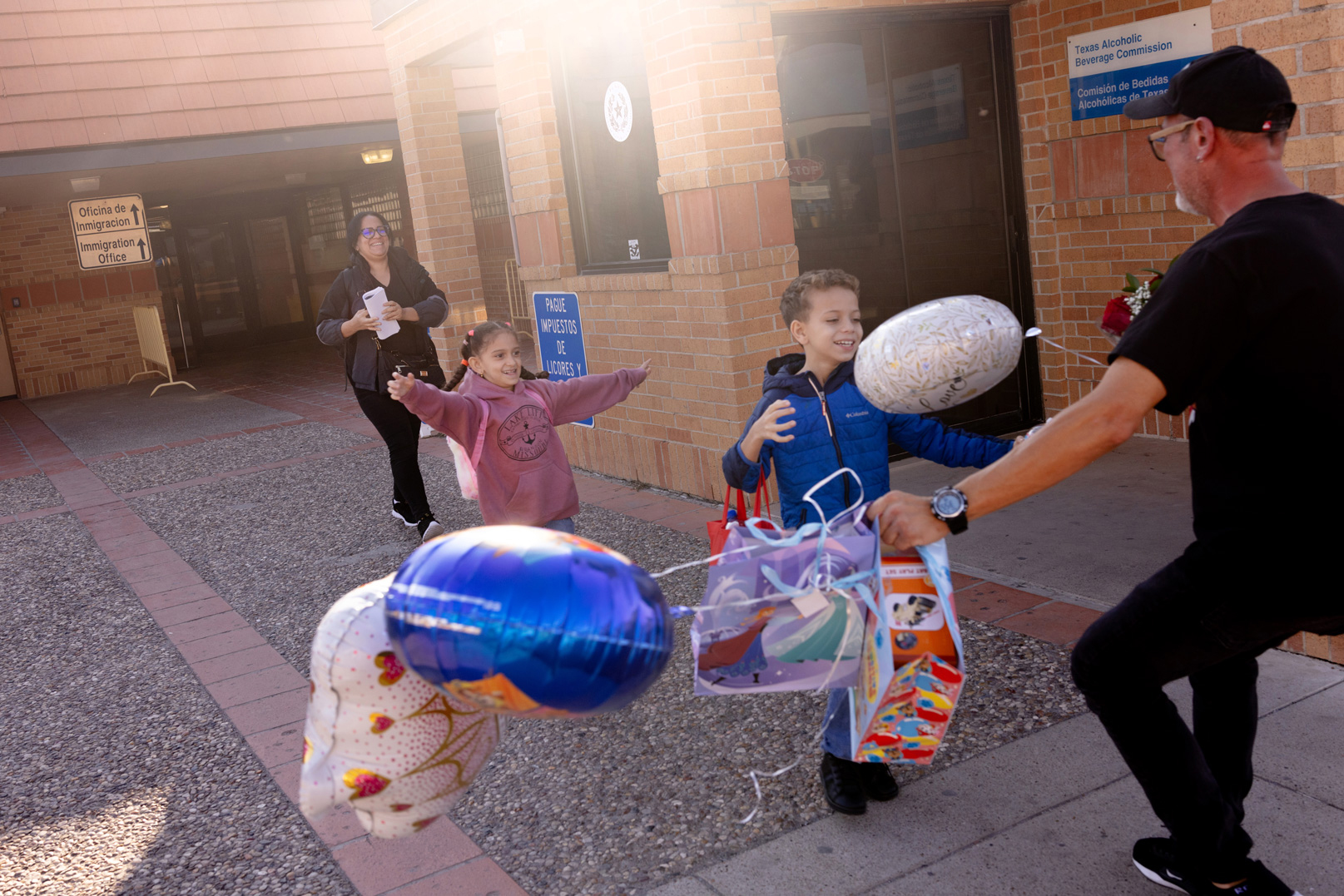

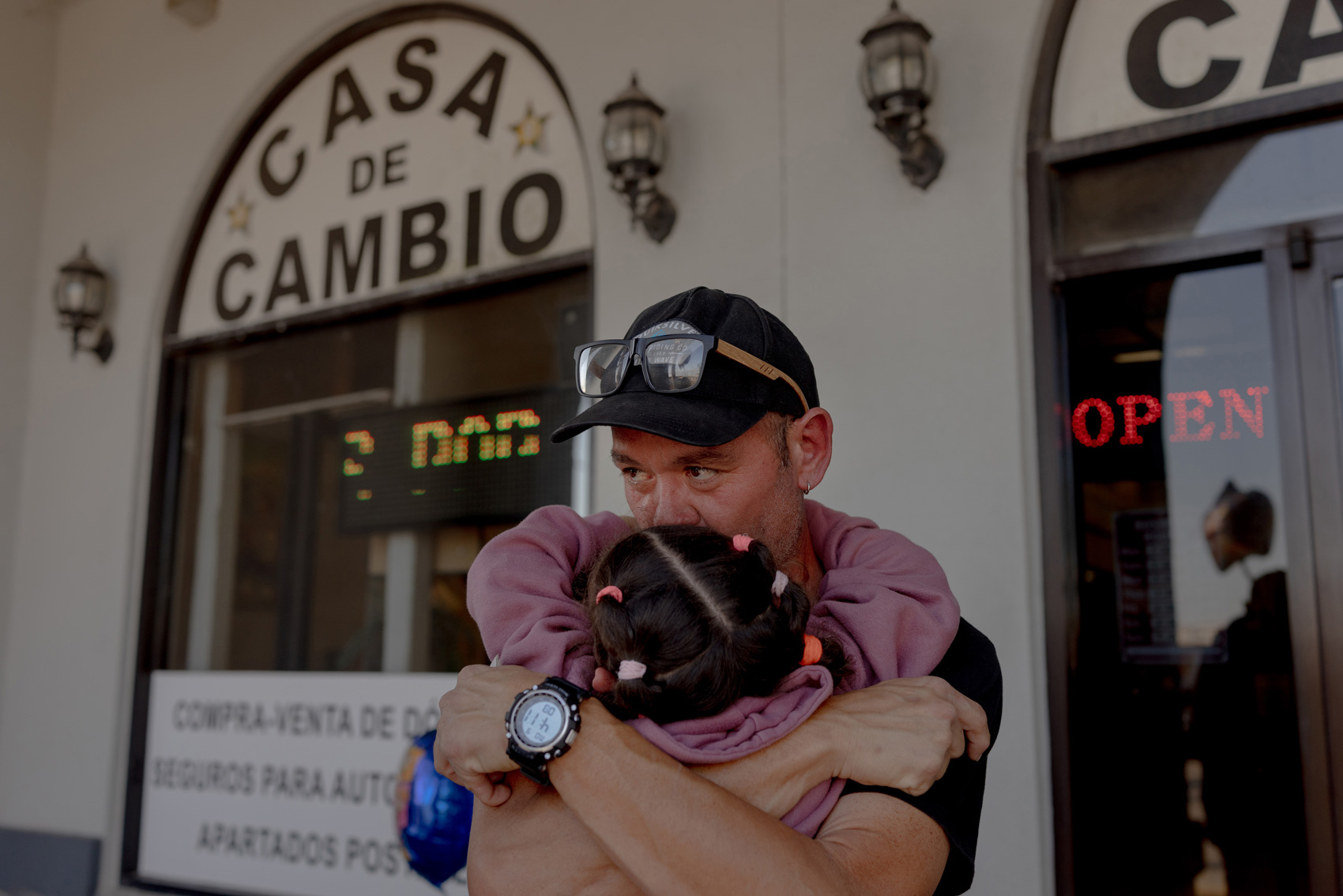
The door opened and Fabián and Julia spotted José as they walked out. They broke out into a run. José did too.
José crouched down, arms spread out for a hug. Fabián nuzzled his head into his dad’s shoulder, crying. Julia wrapped her arms around her brother and dad. Yasmín joined in the family hug.
Fabián clung to his dad even after his mom and sister pulled away. He could finally let out all he had been holding in from their journey.
José was crying too. As happy as he was to have his family with him, he wished they could have taken a different journey to be reunited.
Fabián finally pulled away and looked up at his dad.
“Te amo,” he said.
American life
The next day, José woke up in his one-bedroom apartment with his wife and kids in his bed.
He left early to do his morning runs as a grocery delivery driver. Yasmín, an early riser, finally slept soundly, without worries of kidnappings. She made arepas with Robert’s wife in the kitchen.

“Buenos dias, mi rey,” Yasmín greeted a sleepy Fabián.
“Where’s my dad?” he asked, without greeting his mom.
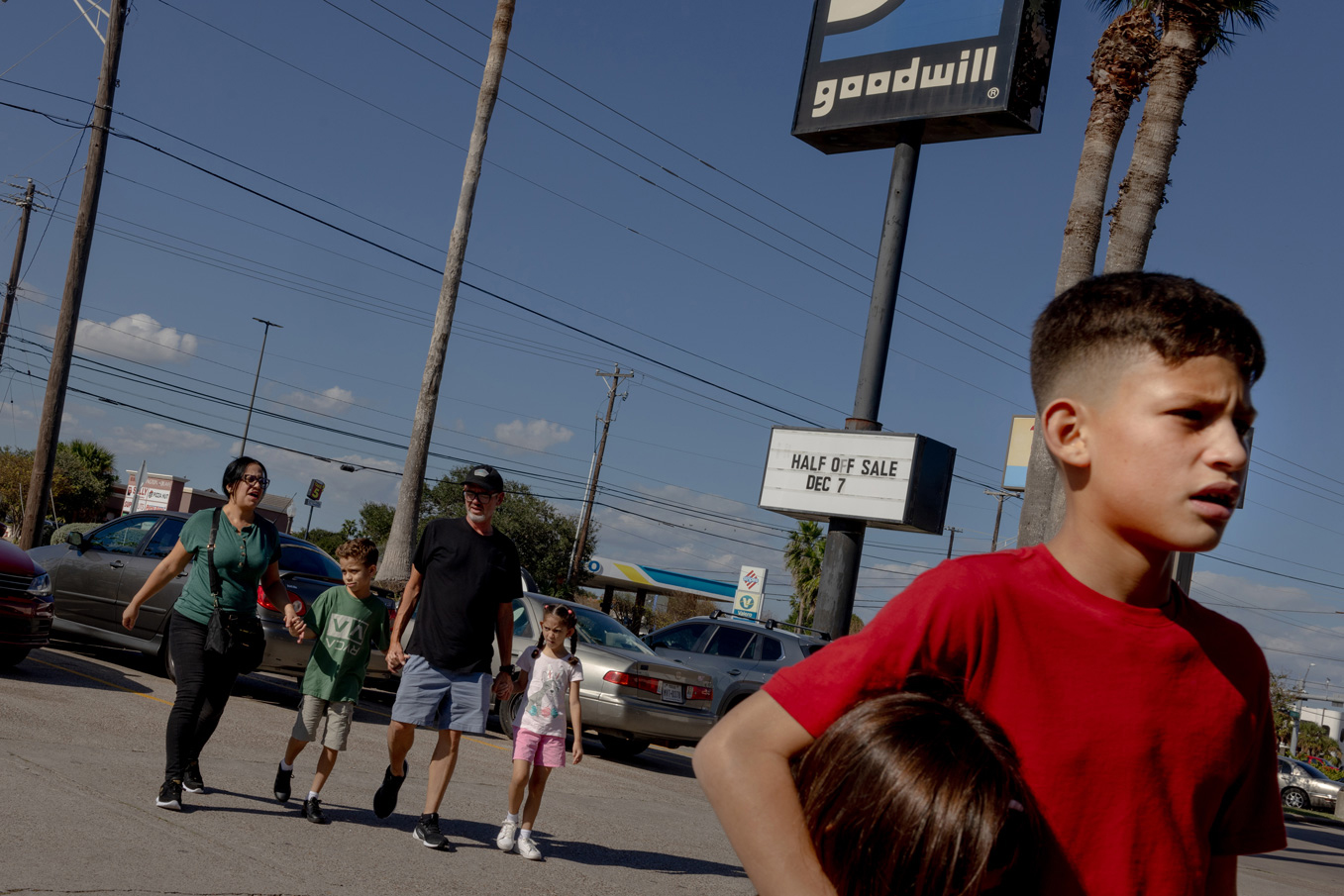


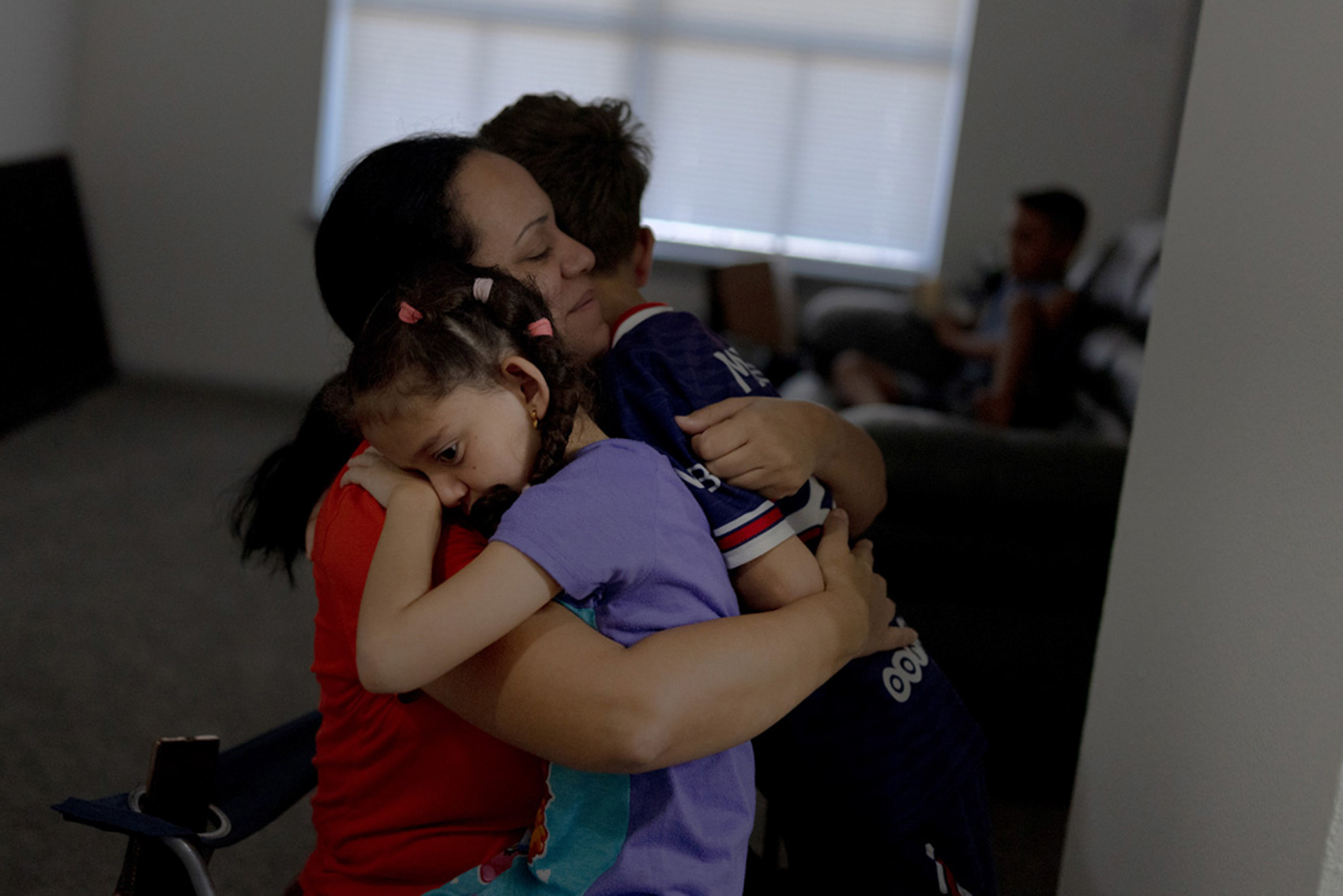

“He’s out working,” Yasmín told him. Fabián stormed off, mad that she hadn’t woken him. He wanted to go with his dad on his grocery trips.
Yasmín assured him his dad would be back soon.
By the afternoon, six pairs of tiny feet were zooming around the house, including José’s niece’s kids and Robert’s two sons. Luckily, no one lives downstairs to complain, José joked.
There was still a lot to do: get the kids vaccinated and signed up for school and file their asylum application by the end of December, which marks the one-year filing deadline for José. The family knows that a Trump presidency means they’ll have a limited window to protect themselves from the looming threat of mass deportations.
“We’re starting a new story from zero, because here we came with nothing to give them a better future,” Yasmín said. “They have a right to opportunities in a country that offers them opportunities, as long as we follow the legal path.”
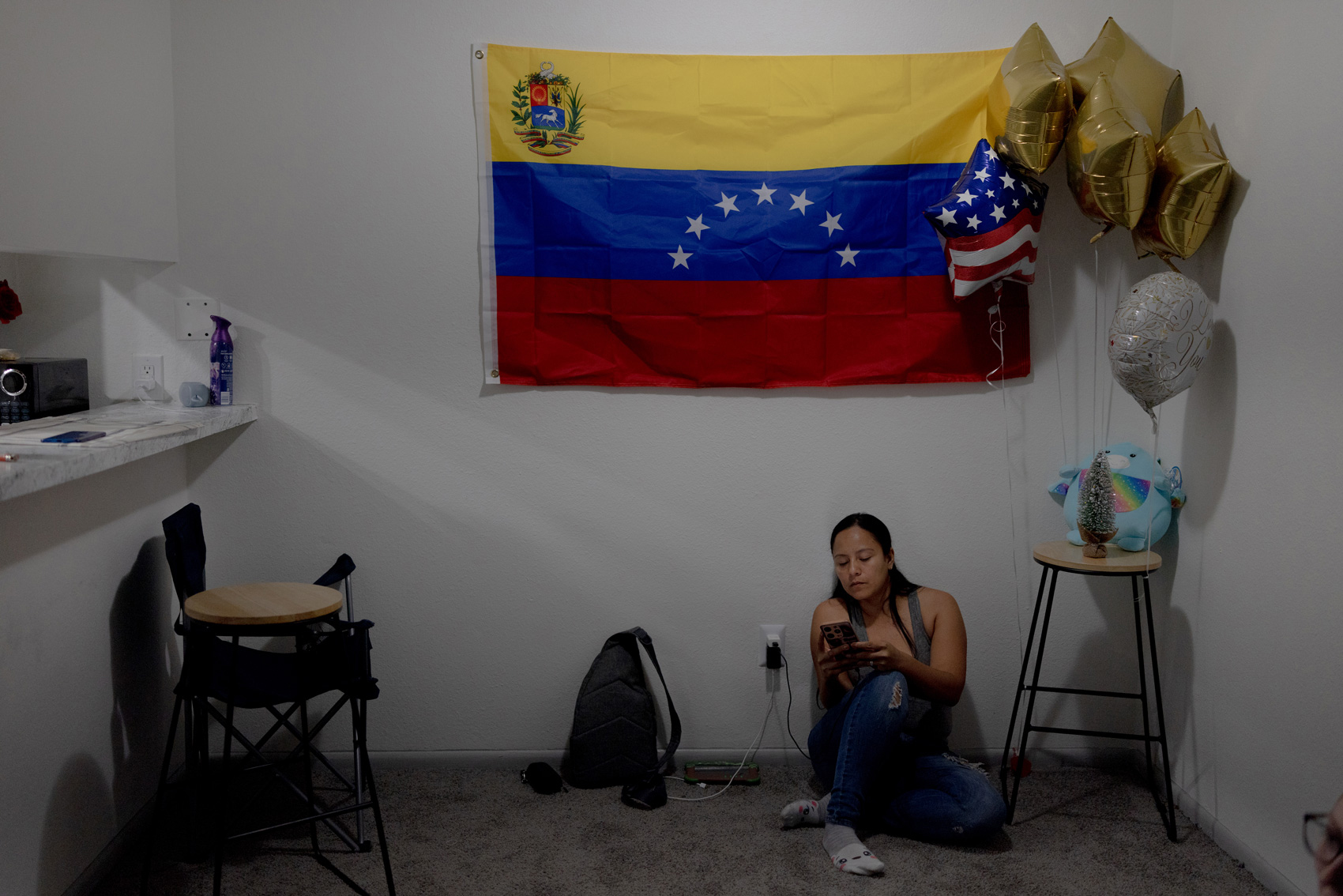
All that worrying was for another day. Today, José was going to celebrate being with his family. The kids laughed and shouted as they splashed each other in the pool at José’s apartment complex. The adults grilled chicken, steak and Venezuelan blood sausage known as morcilla.
“I did it all for my family,” Yasmín said. “Because family is the most important thing.”
Adriana Rezal, data visualization engineer, contributed data graphics for this story.


