
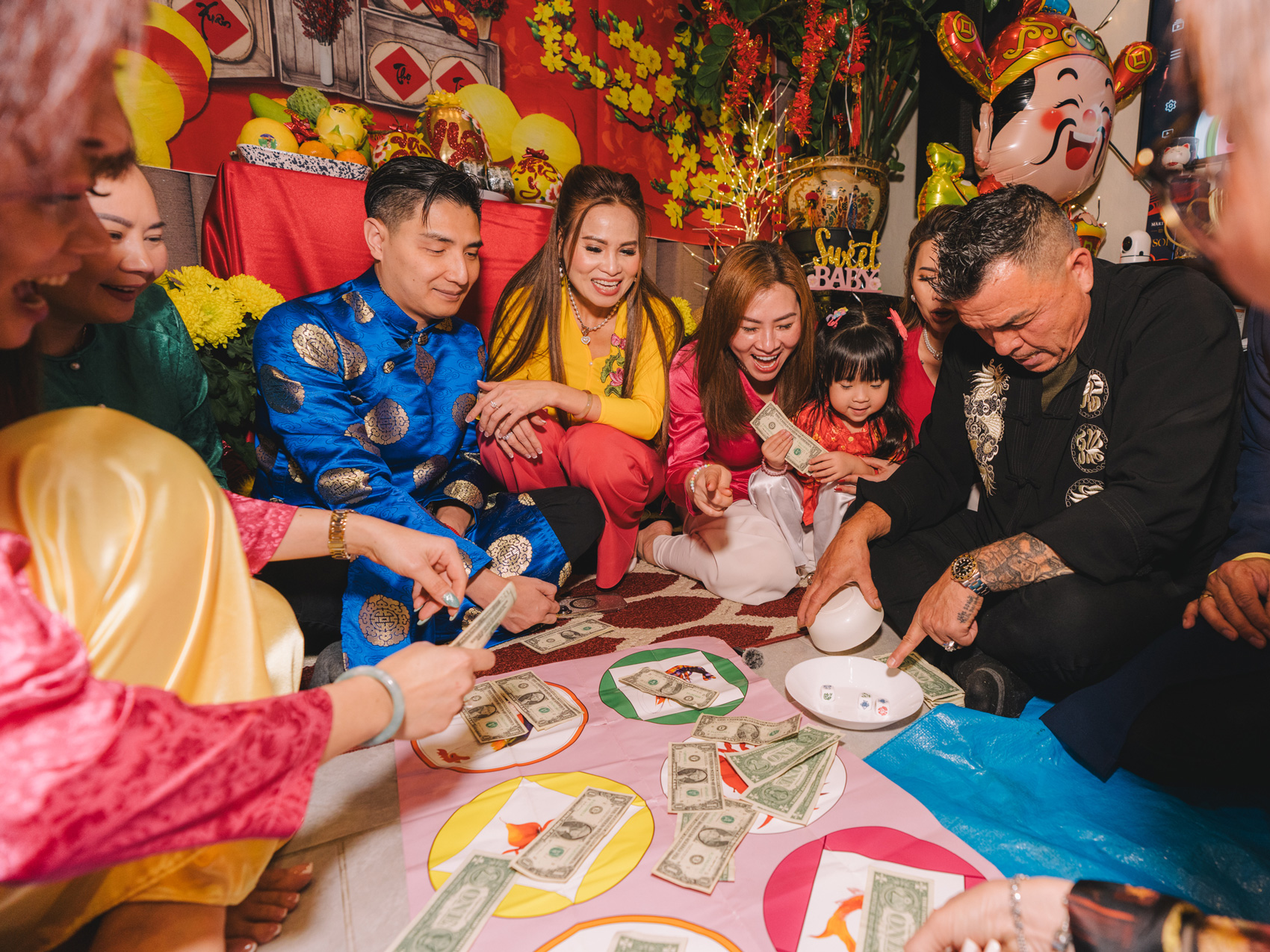

“Tôm, Cua, Cá, Nai, Bầu, gà.”
“Shrimp, crab, fish, gourd, deer, chicken,” a dozen people chant, sitting around a game board dressed in ào dài.
Under the glow of a Thuy Nga singing TV show, a toddler places a dollar on an image of tôm, a shrimp, hoping the dice will show an outline of her pick and win her a payout.
While some American families might bet their dollars on a Texans win on a Sunday, this American family stacks their crumpled bills in a Lunar New Year game of bầu cua cá cọp on the last rainy Sunday of the Year of the Dragon.
“When Tết arrives… family members gather home and wrap the cakes,” My Van said in Vietnamese. “Our new year has flowers, fruits and traditional cakes — it’s more festive than American New Years.”
Known as Chinese New Year to some, Lunar New Year or Tết, marks the start of the Year of the Snake for many Asian communities, including the Vietnamese, who have built a steadfast community in Houston over the past 50 years. Houston is home to the second largest Vietnamese population in the country, with 143,000 in the Greater Houston area coming from Vietnamese heritage.
The city hosts major free celebrations, with a Downtown festival and night market on Feb. 1 and lion dance all around the city at Asia Society Texas, Teen How Taoist Temple, Vien Thong Buddhist Temple and more. Still, for many families, the celebrations start in their homes, preparing for a year of prosperity.
Perfectly propitious fruit baskets
At Linda’s Tropical Fruit shop in Bellaire, rows and rows of fruits, yellow flowers and red lanterns line shelves as shoppers nimbly scoot past each other, tipping over with the weight of dragon fruits, pomelos and mangos in their baskets.
Owner Linda Nguyen weaves through the crowd in a bright pink jacket and a radiant smile, pointing to the rows of fruit she puts together for a traditional Lunar New Years fruit basket — fist-sized oranges, kumquats, dragon fruit, half a dozen types of mangos and more, all wrapped and covered with red and gold stickers wishing the customer a happy new year.

“Chúc mừng năm mới,” she wishes a happy new year to one regular as they leave with a full bag in hand and a sugar cane juice in the other.
Nguyen’s fruit store, a staple of Bellaire’s Asiatown, has been serving the community since 2017, with nostalgia inducing fruits and drinks like the Asian fruit chikoo and the popular drink of sugar cane juice. She has become such a steady force in Houston that, once, at a Thai restaurant downtown with her friend, while guessing the type of mango in her sticky rice, the owner overheard and told her, “of course you know the fruit, you’re Linda!”
In eight short years, she cultivated regulars, some Viet, but other diasporas, like South and East Asians, also come to her for memories of home. During peak season, Linda’s goes through a hundred bunches of sugar cane a week. At the store’s annual lion dancing celebration, she shares her traditions with her non-Vietnamese customers and community members too.
“A lot of my friends that are not Vietnamese come and enjoy the shows and they really get to understand: What are these red lanterns? What does it mean? What is it that you’re not supposed to do at the beginning of the year?” Nguyen said.
Nguyen sources her fruits directly from Vietnam or from Mexico, California, Florida and even local growers in Texas. As a fruit wholesale buyer, Nguyen gathers extra inventory before Lunar New Year in anticipation of demand, but the holiday’s timing, falling during the winter and drastic weather changes due to climate change, make it hard to supply everything a traditional Viet family wants for their basket.

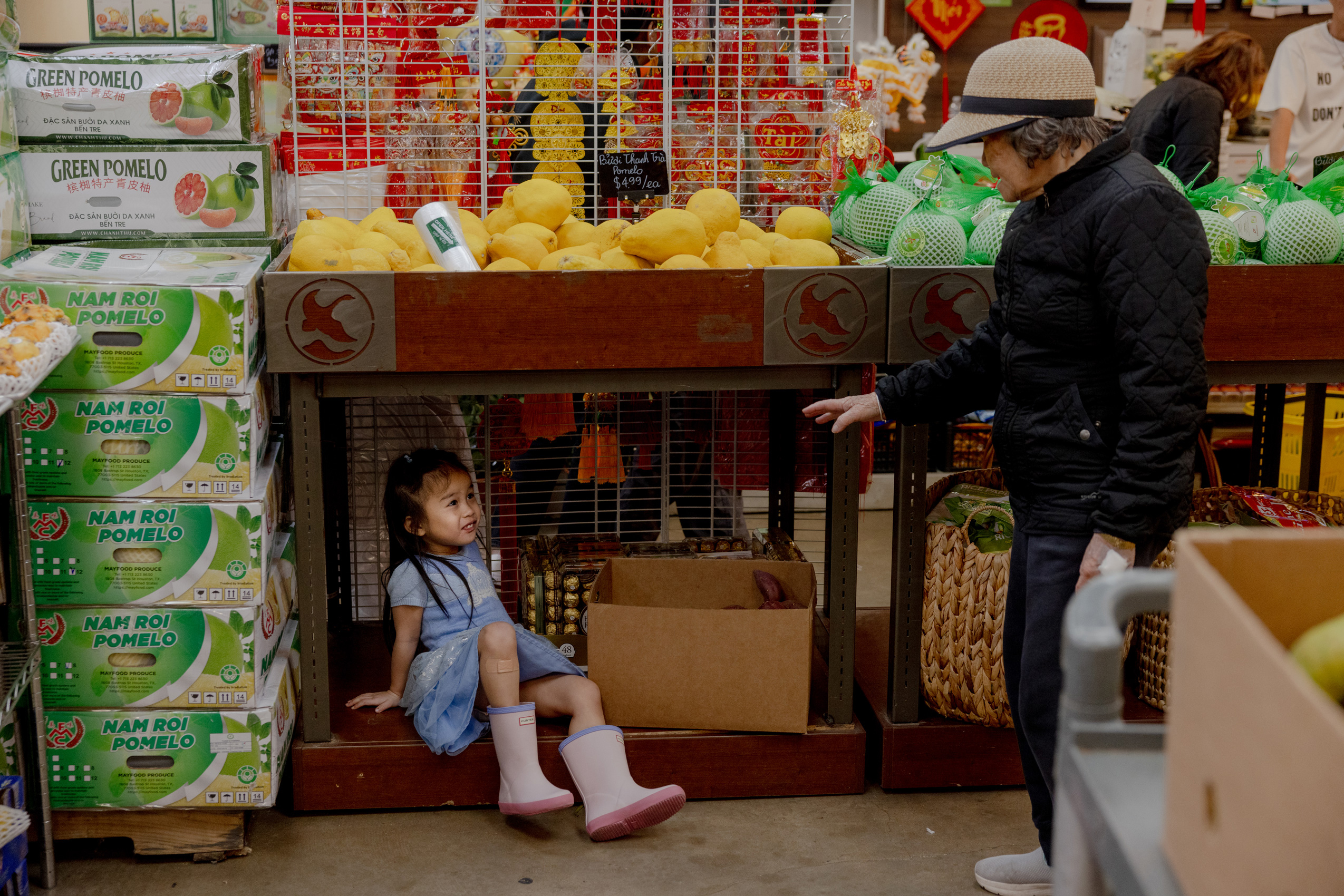


Some of Nguyen’s suppliers grow on farmland destroyed by wildfires Eaton and Hughes in California, making the produce she stocks more expensive due to high demand for the season. This year, she sourced nothing from Grenada as Hurricane Beryl wiped out a large portion of their export supply. Cherimoya, or sugar apples, cost up to 20 percent more per pound at her store this year due to an atypical winter.
Auspice-seeking customers buy Linda’s cherimoyas — called mãng cầu in Vietnamese, with cầu meaning “to pray” — to round out their baskets
“They have to have it, so it doesn’t matter,” Nguyen said. “So they end up instead of buying a bigger fruit, they buy a smaller fruit, just to have it out there in their basket or on their tray.”
Facebook finds and family feasts
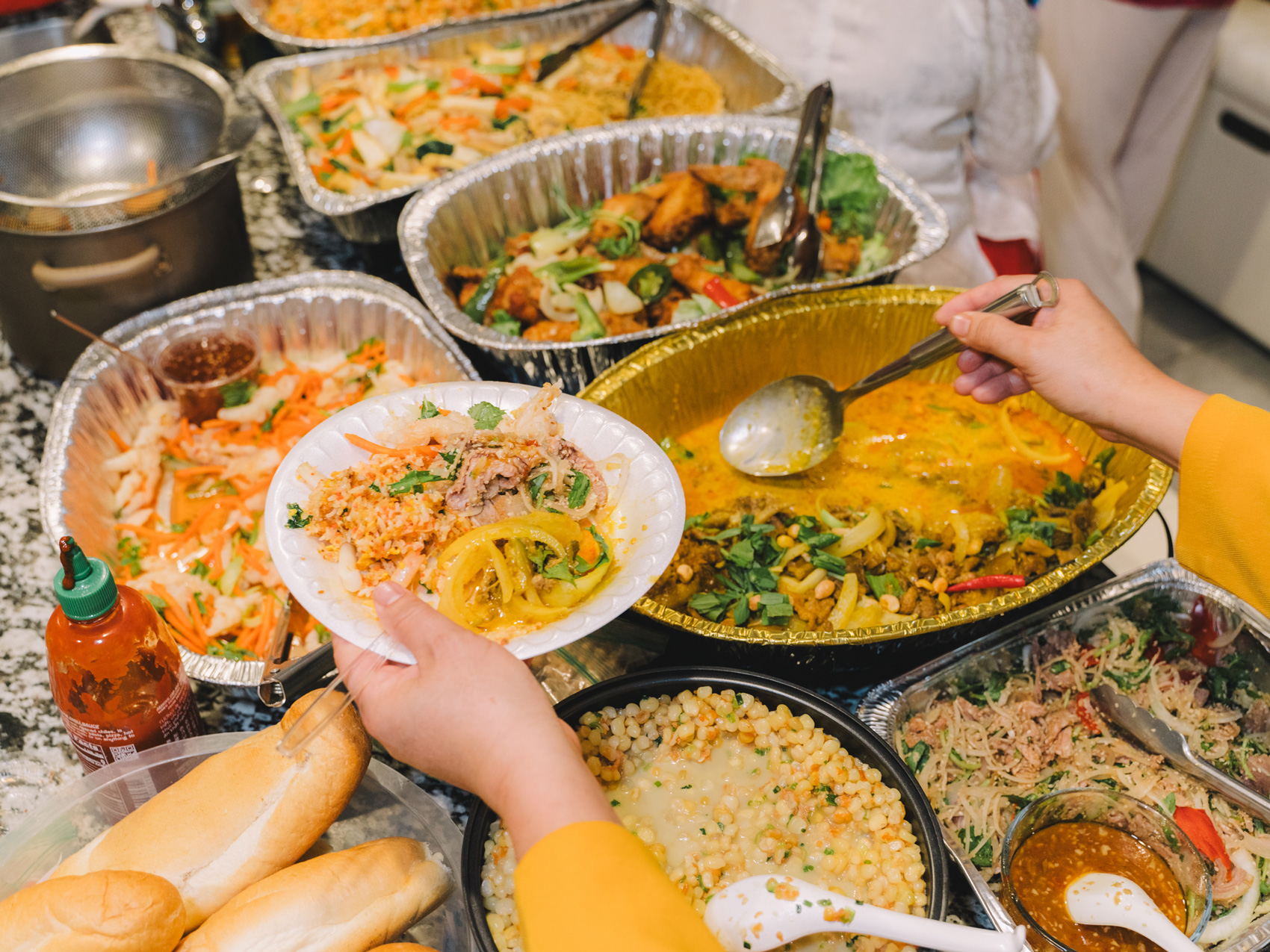
At Trang Ha’s home in Southwest Houston, trays of noodles, wings, thai mango and fried rice cover every surface of the kitchen. The room moves in flashes of bright colors, with families adorned in reds, magentas and yellows, sourcing traditional clothing on Facebook marketplace, where community members order wholesale from Vietnam. In the days leading up to Lunar New Year, groups visit the houses of wholesale buyers to find the perfect fitting áo dài.
One Facebook group, called Người Việt Houston — meaning Vietnamese People in Houston — has over 143,000 members, where they advertise local businesses or sell clothes or food leading up to major events like Lunar New Year.
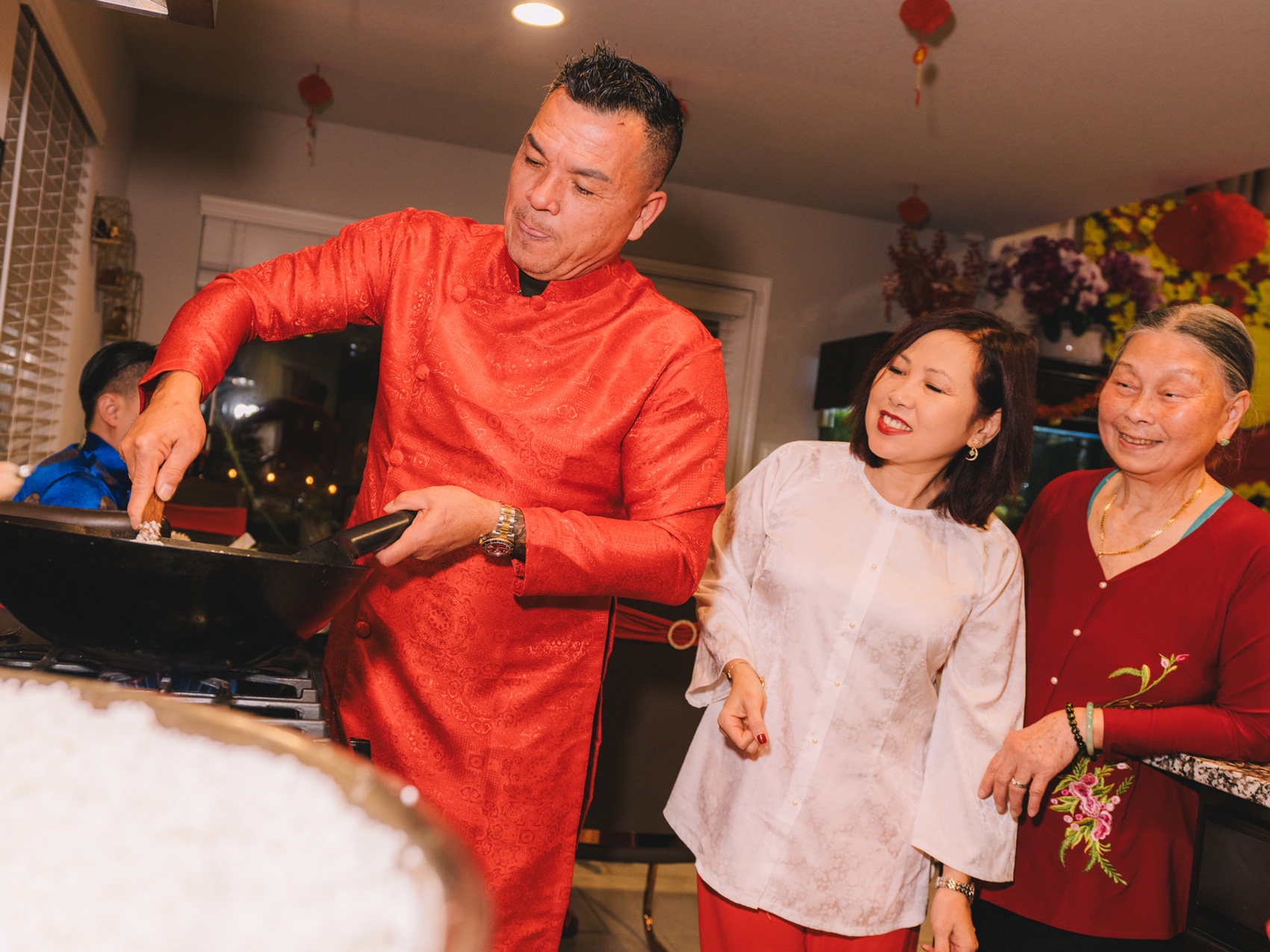
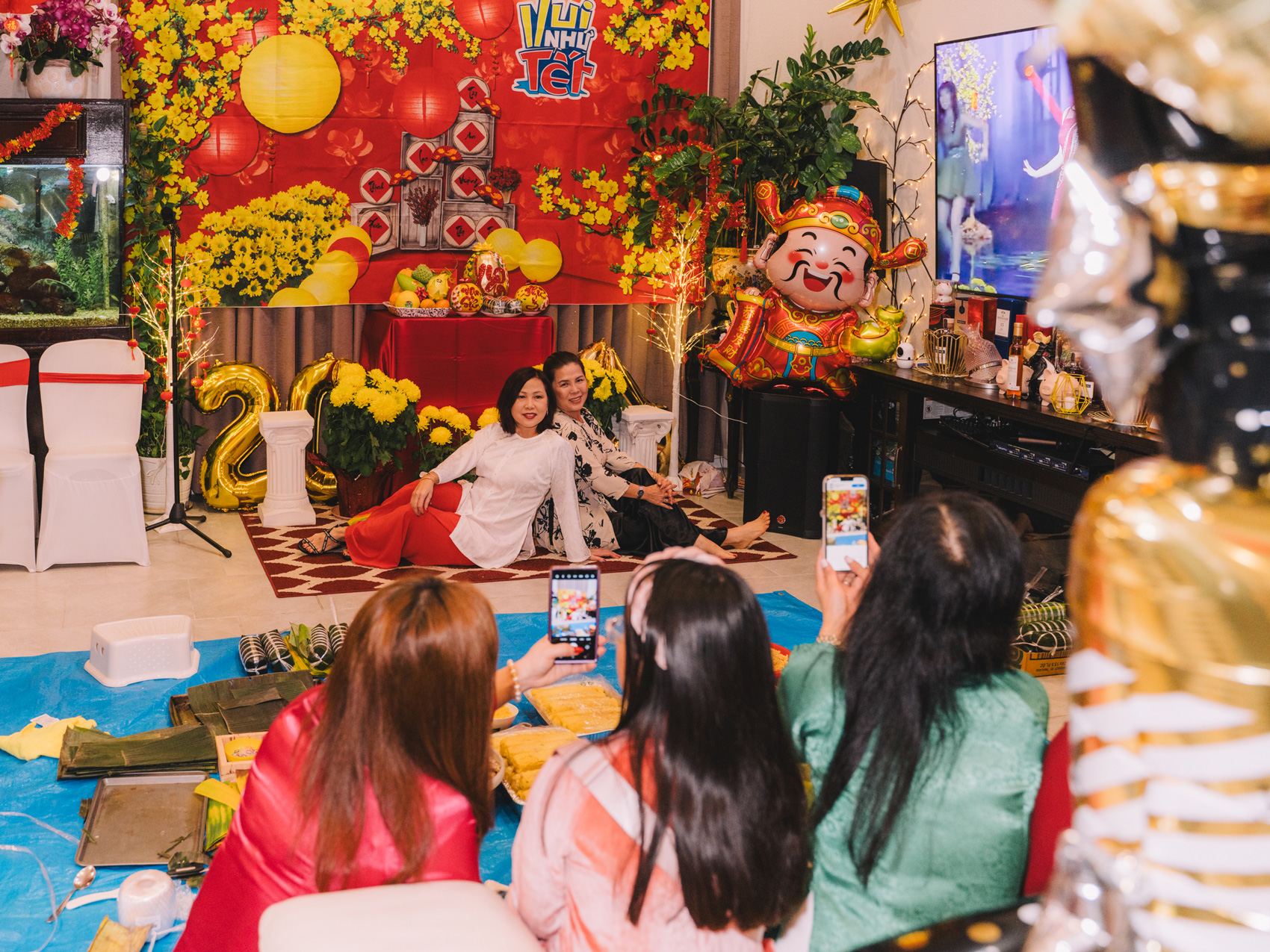
Many sell bánh tét, a traditional Vietnamese sticky rice cake eaten during the Lunar New Year. Made from glutinous rice, mung beans, and pork, the savory cake takes skilled hands to wrap them in banana leaves and boil for up to 12 hours.
On the living room floor, women sit on a blue tarp with bowls of ingredients wrapping Bánh tét with steady hands. Grabbing a kid’s pink plastic bowl embellished with Disney princesses, My Van scoops a rice mixture from a bowl. A friend in the kitchen mixes the next batch over the stove in a wok.


“The joy of holding the bánh tét I made myself reminds me of my hometown and how my grandmother and mother used to make it for us to eat,” said Van. “It’s a memory that I can’t forget.”
Family, food and faith
Members of the Vietnamese Catholic Church Our Lady of Lavang Church in Houston start preparing for Lunar New Year three months in advance to ensure they make enough bánh tét in time, said church chairman Tuyen Ngo.
The church, founded in 1985, celebrates 40 years of serving Vietnamese Catholics this year, and Ngo said large celebrations like this offer a model for cultural preservation.
“Young people here, Vietnamese American young people, the second generation born here might not know that much like we do, but we try to teach them about all the traditions.”

With over 3,000 families at Lavang Church, they host three services on Sundays, but on the Sunday before Lunar New Year, the church sold out of hundreds of bánh tét after the first service at 7 a.m.
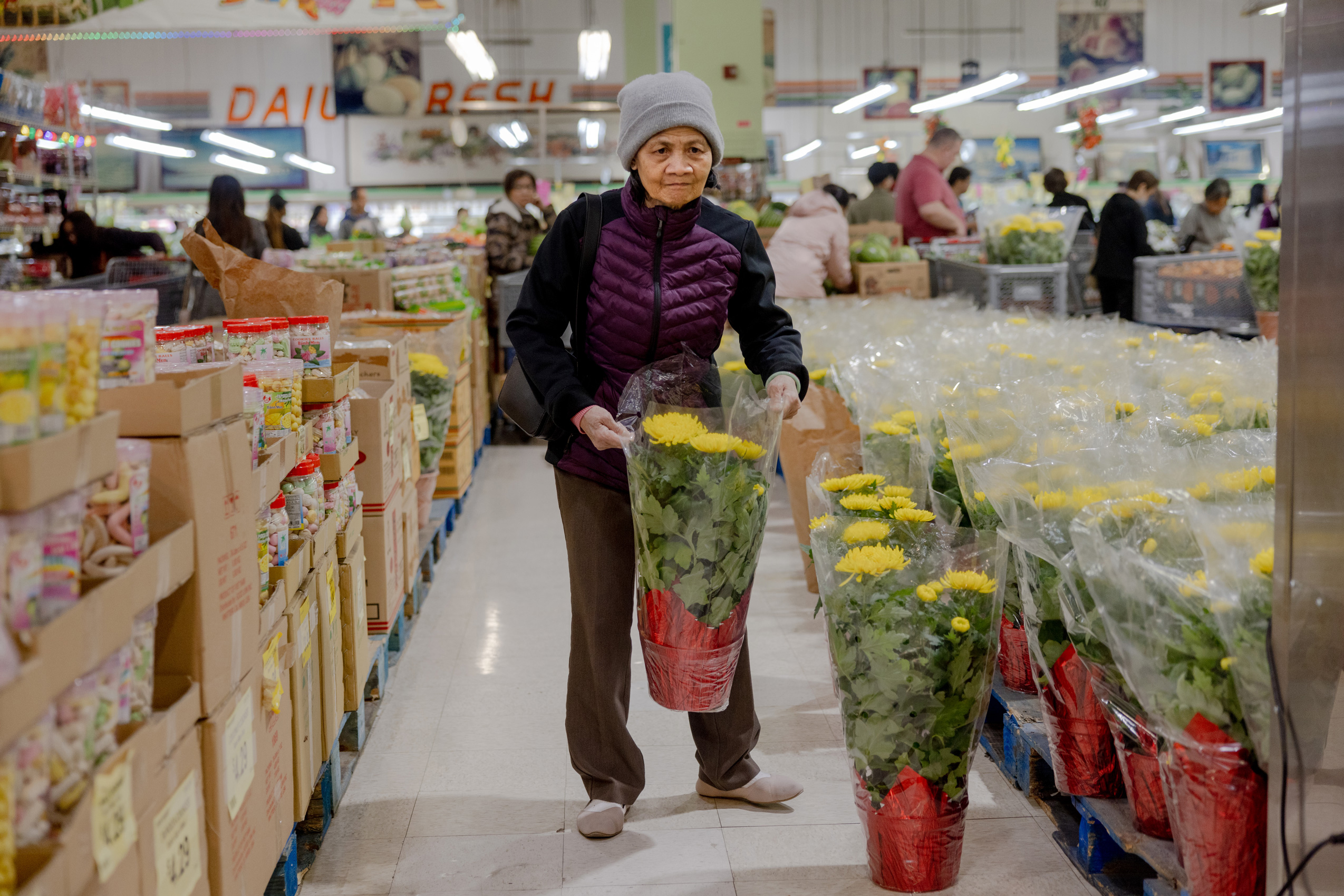
As soon as families leave the last service of the day around 12 p.m., members pick through tables of food outside, stepping through puddles of rain to find the perfect pot of chrysanthemums with a lucky number of eight or nine flowers. While yellow marigolds traditionally fill Vietnamese homes, most Houston families now rely on the more reliable Texas-native chrysanthemums to usher luck into their homes.
Some superstitious people, Ngo said, won’t sweep their house on Lunar New Year’s day so as to not “sweep the luck away.” Others don’t cut their hair for fear it will “snip the luck away.” They encourage inviting a special person to their home as their first guest to signal a welcoming year ahead.


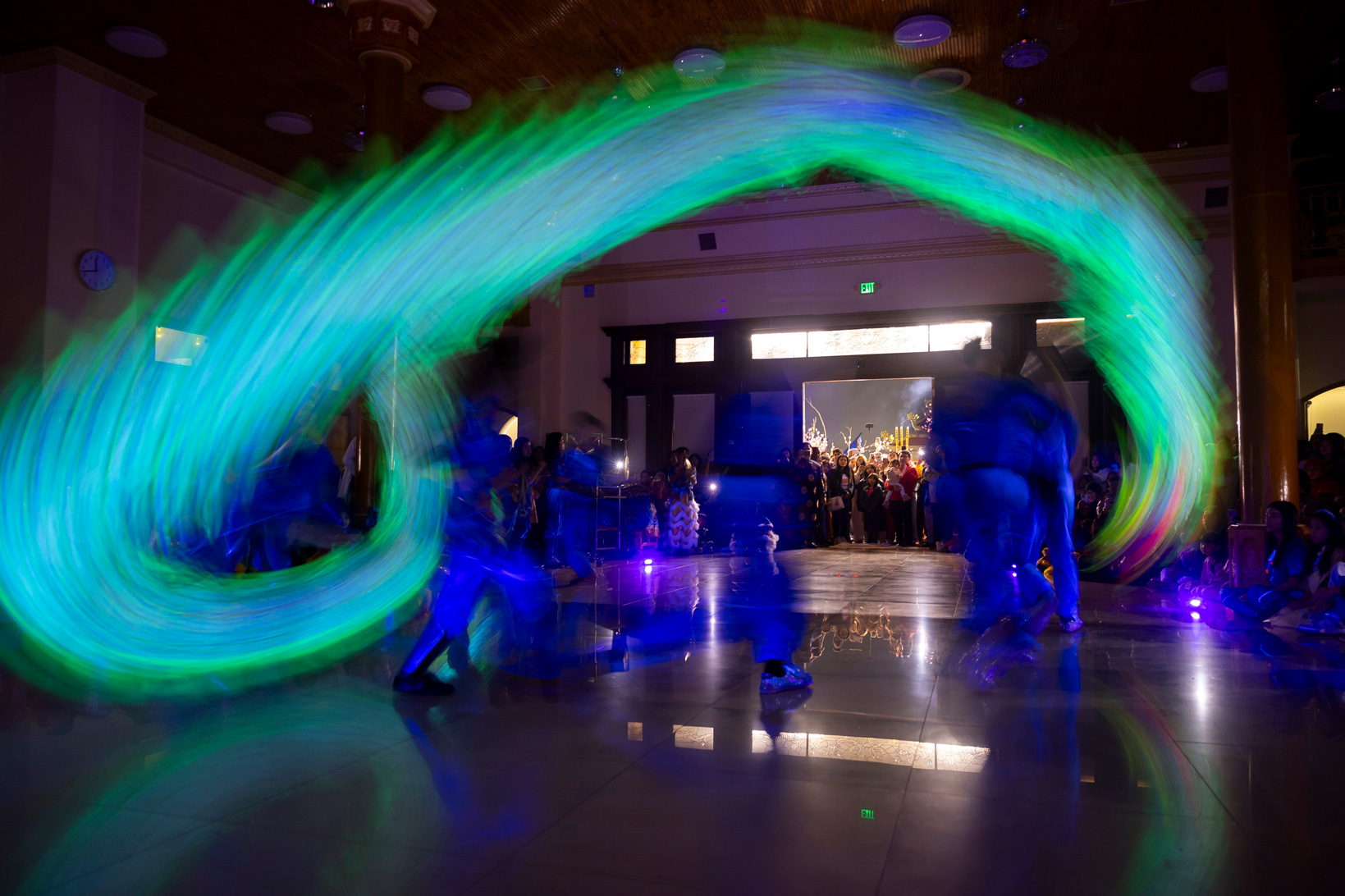
On the last night of the year and the first Saturday of the new year, Lavang Church holds a special service, where after traditional mass, trays line the front altar with finger-sized rolled paper, each one with a Bible verse. Families receive a verse at the altar, which Ngo said represents God’s directions for each person for the year.
“People put on them with tape above the fireplace or something to remind them that, see what the Bible tells you. God tells you to be generous to the elder people or do good deeds for people,” Ngo said.
The church’s celebrations largely revolve around gratitude for their ancestors and elders. For Lunar New Year’s mass, the church builds a secondary altar to burn incense for ancestors, and the pastor gives out gifts to church elders who range from 80 to 100 years old.
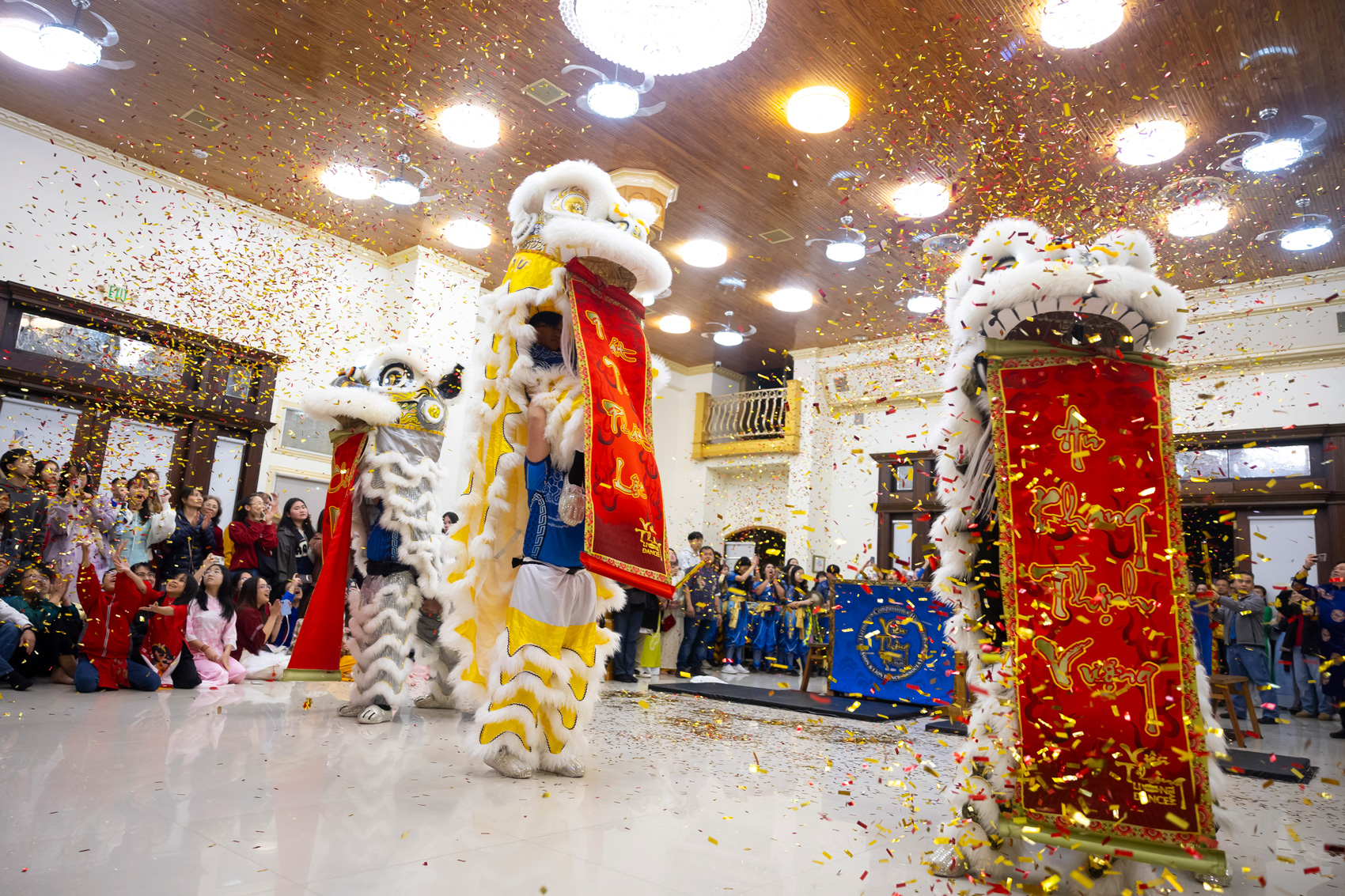
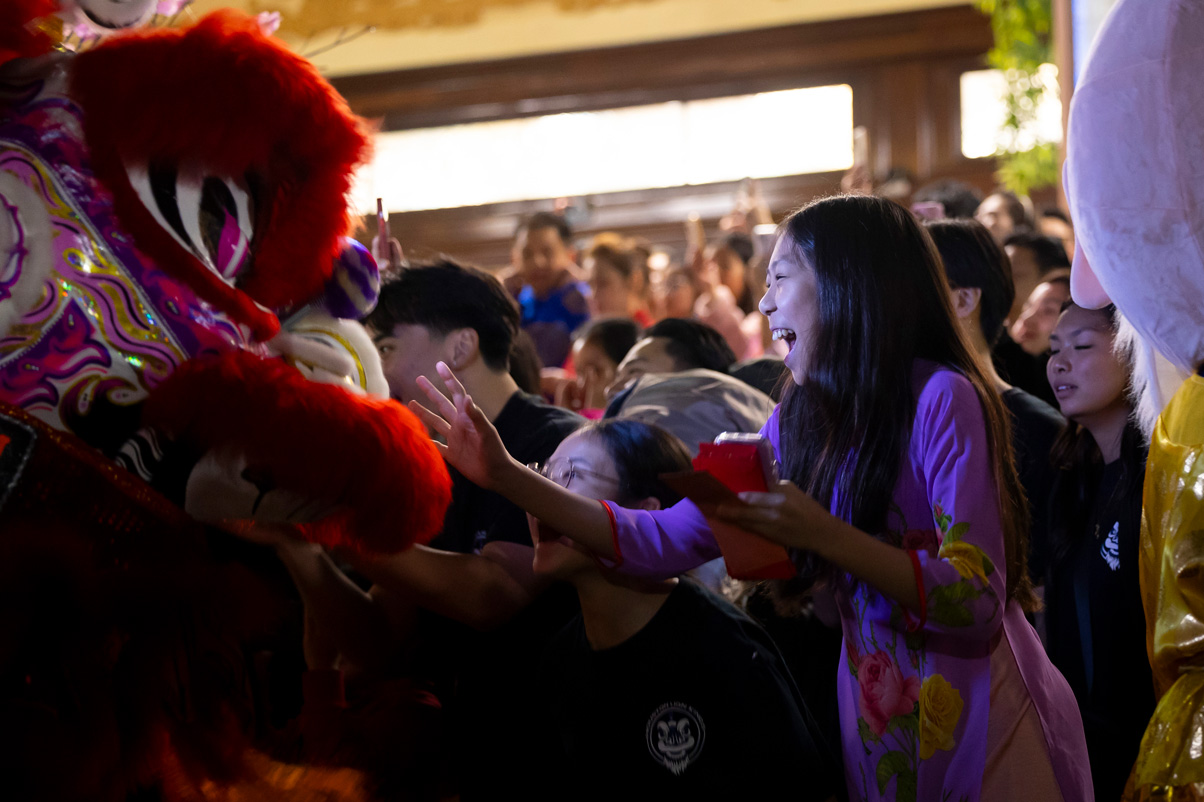

While the Vietnamese community’s religious affiliations can range from non-religious to Buddhist to Christian, many share a love for the Lunar New Year game of bầu cua cá cọp, which Lavang Church hosts after their mass.
“For Vietnamese people, or for Người Việt, we come here as the first generation, and we love our tradition, our rich food and traditions, and we would like that our young people continue to have that tradition and keep on to move on, because it’s a good tradition,” Ngo said. “To help people be close to their family and help them to help out each other.”
Hillary Ma contributed to this story with translations and reporting.

