

Venezuelan asylum seeker Jesus Miguel Barreto Lezama, 29, was denied bail on Thursday after being accused of taking payment from a government confidential informant for the smuggling of cocaine.
Federal prosecutors alleged in a Monday press release that Barreto Lezama, a slight man who attended the detention hearing in a dark green inmate uniform while cuffed and shackled, was a member of the gang Tren de Aragua, a criminal organization that originated in a Venezuela’s Tocorón prison.
Authorities at Thursday’s bail hearing did not explicitly state why they believed him to be a member of the gang, but prosecutor Anibal Alaniz argued for his detention due to his alleged associations.
“He’s a danger to the community because while he’s seeking refuge in this country he’s involved in drug trafficking with individuals and members who are associated with this Venezuelan gang,” argued prosecutor Anibal Alaniz on Thursday.
A spokesperson with the U.S. Attorney’s Office for the Southern District of Texas did not immediately respond to requests for more details on why the government press release called Barreto Lezama a member himself.
Tren de Aragua
Barreto Lezama’s case was part of what witness Tamika Jones, an agent at the Federal Bureau of Investigation, explained as an investigation by the agency into “several targets in the U.S. and overseas that were affiliated with Tren de Aragua.”
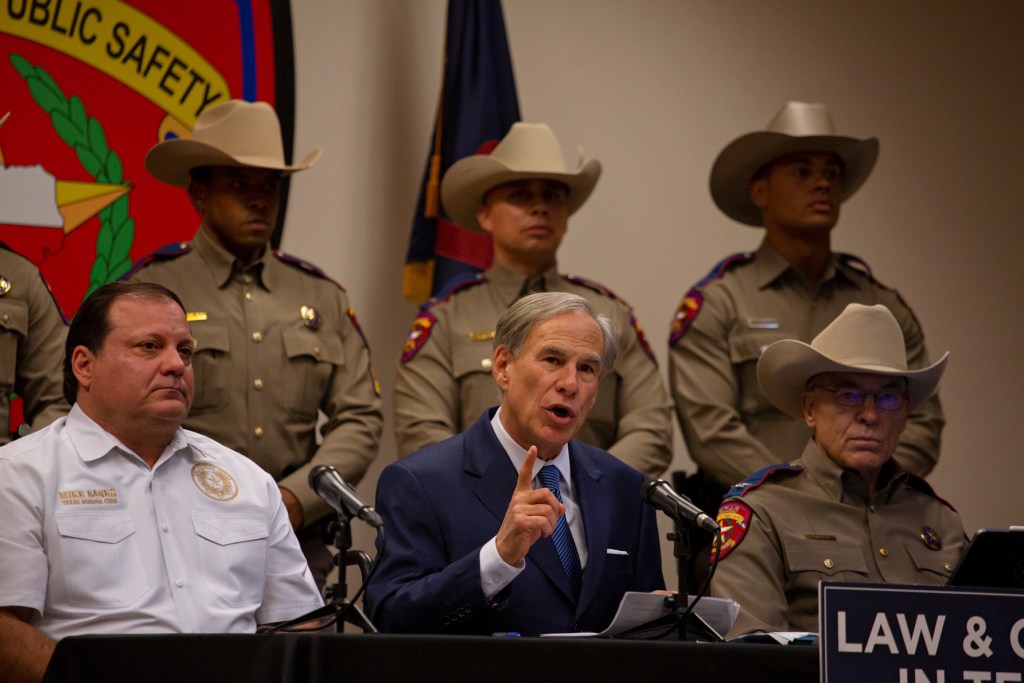
Tren de Aragua has skyrocketed to the center of President Donald Trump and Gov. Greg Abbott’s rhetoric about the danger of undocumented immigrants, both nationwide and in Houston, despite there being little evidence that the gang’s activity is widespread in the city.
While Tren de Aragua began in a single prison running extortion schemes in Venezuela, the organization spread both within Venezuela and to nearby countries in South America in the midst of an exodus of millions of people fleeing the country’s economic and political collapse.
The gang is estimated to have between 5,000 and 7,000 members total, mostly in South America, said Mitchel Roth, an expert on prison gangs professor at Sam Houston State University, in October.
Last year, Gov. Abbott targeted the gang, giving resources to state police to crack down on activity in the state. On Tuesday, state and federal officials detained more than 40 people in Hays County allegedly at a “possible gathering” of gang members or associates, but they did not explain how the dozens arrested may be linked to the gang or what charges they may face.
Local law enforcement and gang experts insist the numbers of Tren de Aragua gang members in Houston are low, according to reporting by the Houston Landing.
The Federal Public Defender’s office declined to comment on Barreto Lezama’s gang allegations or the proceedings.
The Case
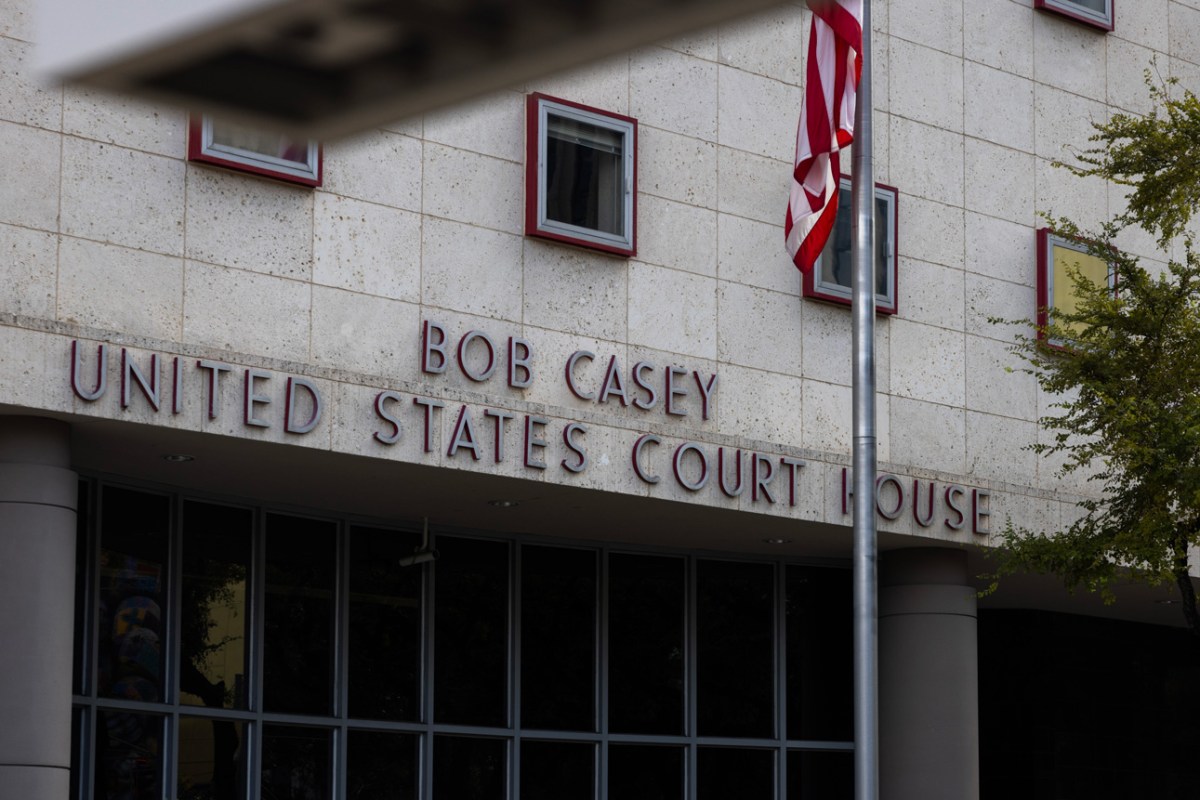
In Houston’s federal courthouse on Thursday, FBI witness Jones detailed the case against Barreto Lezama.
Jones alleged that Barreto Lezama took payment for an associate of gang members in South America who promised to move kilos of cocaine over the border for government informants.
The associate of two targeted members of the gang –whose identities are currently under seal– allegedly named Barreto Lezama as someone in Houston willing to take the money for moving the drugs.
Barreto Lezama listened silently through a pair of headphones to a Spanish translator as the case against him was detailed by the investigator.
His appointed federal defender, Rachael Melby, argued that Barreto Lezama could safely be let out on bail because of his firm ties to the community through his wife and daughter, who live in Houston and are also seeking asylum. She also explained he recently received a work permit.
Melby told the judge that Barreto Lezama had followed immigration law and court proceedings, was not involved in a violent crime, and that he was essentially a “middleman” who had not touched the drugs himself.
“He knows there’s no running from this,” said Melby.
But Magistrate Judge Christina Bryan disagreed, deciding she didn’t find the defendant’s arguments “persuasive” that he would not flee to Venezuela or to Colombia, where a member of the alleged drug conspiracy had been.
“I remand him to the custody of the U.S. Marshalls,” Bryan said.

