


Each week, “Answer Key” aims to help families by responding to an important question about education and schools in Greater Houston. If you have a question for us to answer, please email us at education@houstonlanding.org or fill out the form at the end of this article.

This week’s question:
What are the different ways that high school students can get college credit?
Each school year, hundreds of thousands of Texas high school students enroll in courses that can help them receive college credit.
Typically, school districts offer some combination of four options: Advanced Placement, dual credit, dual enrollment and International Baccalaureate classes.
Here is what parents should know about each option and what it costs to enroll.
What are these advanced classes?
All four options can result in students earning college credit while still in high school, though each avenue has pros and cons.
Advanced Placement: Advanced Placement classes allow students to take college-level courses taught by high school teachers and ultimately receive college credit if they score high enough on optional exams at the end of the school year.
The College Board, which designs and gives the AP exams, offers 39 AP courses to schools across the country, the most common of which include AP English Literature and Composition, AP U.S. History and AP World History. Each high school determines what courses to offer its students, with sophomores, juniors and seniors most often enrolling.
Schools can also offer Pre-AP courses in 12 different subjects to help students — typically freshmen and sophomores — prepare before enrolling in AP classes. Pre-AP classes do not have an exam at the end of the year and students do not receive college credit.
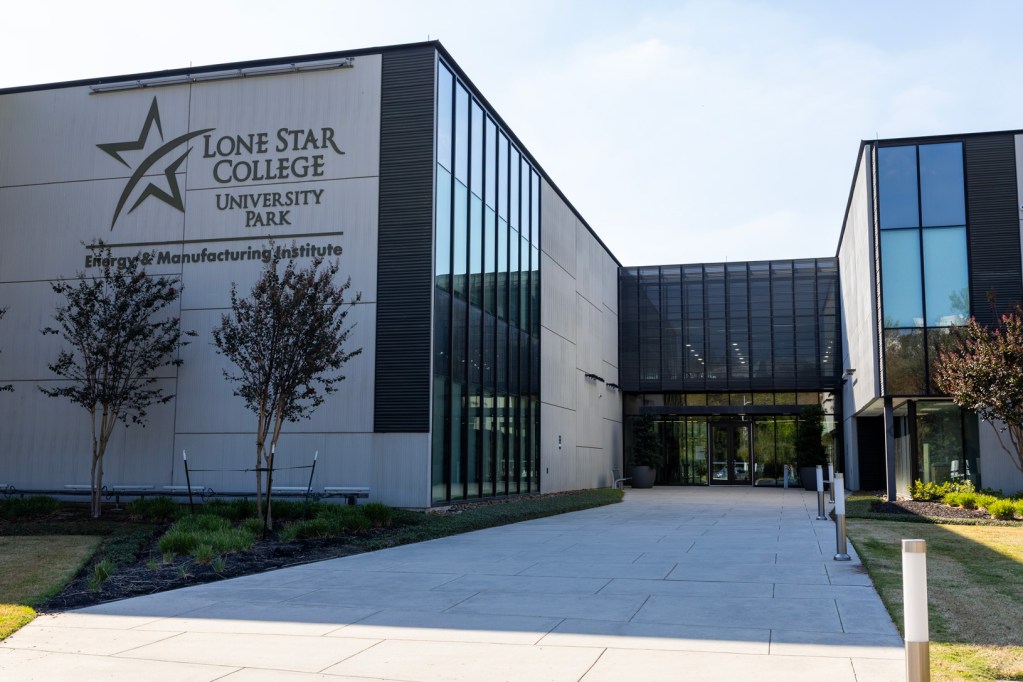
Dual credit: Under the dual credit model, a student takes a class offered by a college and receives high school and college credit for passing. Students can enroll in classes offered at their high school or a college campus. A student’s grade in the class remains on their college transcript.
Dual enrollment: The dual enrollment approach involves students taking a high school and college-level course in the same period, often with two different teachers. A student receives high school credit for passing the high school portion and college credit if they pass the college portion. If a student fails the college part of the course, they can choose to not put it on a transcript.
International Baccalaureate: An education program for students at all grade levels, though few schools in Greater Houston offer it. If a high schooler graduates with the Diploma Programme, which covers six advanced-level courses, they are guaranteed 24 credit hours at any Texas public university.
Students can also receive a certificate if they take one or two International Baccalaureate classes and don’t enroll in the Diploma Programme.
Why do students take these advanced classes?
For many students, earning college credit in high school is less expensive than paying college tuition for the same course. These options also help students pull ahead of classmates on a less challenging path and raise their class rank if they score well in higher-level courses.

related to education
Sign up for The Homeroom, the Houston Landing’s weekly education newsletter
Do these courses cost money?
The cost of the courses depends on the program.
Enrolling in AP classes is typically free, but students have to pay to take each exam — $99 for 2025 — at the end of the year. Some districts cover the AP exam cost, but students have to pay for late registration fees or unused exam fees.
Students enrolling in dual credit or dual enrollment courses often have to pay for tuition, books and fees, but colleges can sometimes waive or reduce fees, or high schools sometimes cover costs. For example, Houston ISD covers students’ tuition if they receive administrator and parent approval to enroll in the class.
International Baccalaureate students face various fees that can total hundreds of dollars at the end of the school year.
How can my child enroll in one of these options?
Each district offers different programs to its students and partners with different local community colleges and universities to offer additional courses. One place parents can start is by reaching out to campus Advanced Academics departments.
HISD: Parents can reach out to the Postsecondary Programming department for questions about each program. Reach Christina Wehde-Roddiger, executive director of Postsecondary Readiness, at cwehde@houstonisd.org or 713-556-4446. Parents can reach the department by email at postsecondary@houstonisd.org.
Aldine ISD: Contact the Advanced Academics department for questions about programs available to students. Parents can reach out to Susan Pelezo, executive director of Advanced Academics, at slpelezo@aldineisd.org or 281-985-7315.
Spring ISD: Parents can connect with the district’s Advanced Academics department at 281-891-6188 or contact director Amy Ellingson at aellings@springisd.org.
Alief ISD: Reach out to the Advanced Academics department by phone at 281-498-8110 (ext. 29070) or by emailing director Brandi Brotherton at brandi.brotherton@aliefisd.net.
Pasadena ISD: Contact the Advanced Academics department’s director, Tom Le, at tle1@pasadenaisd.org or 713-740-0013, ext. 70013.

