

Each week, “Answer Key” aims to help families by responding to an important question about education and schools in Greater Houston. If you have a question for us to answer, please email us at education@houstonlanding.org or fill out the form at the end of this article.

This week’s question:
Republican politicians are talking about banning DEI in schools. What could that mean for Texas schools?
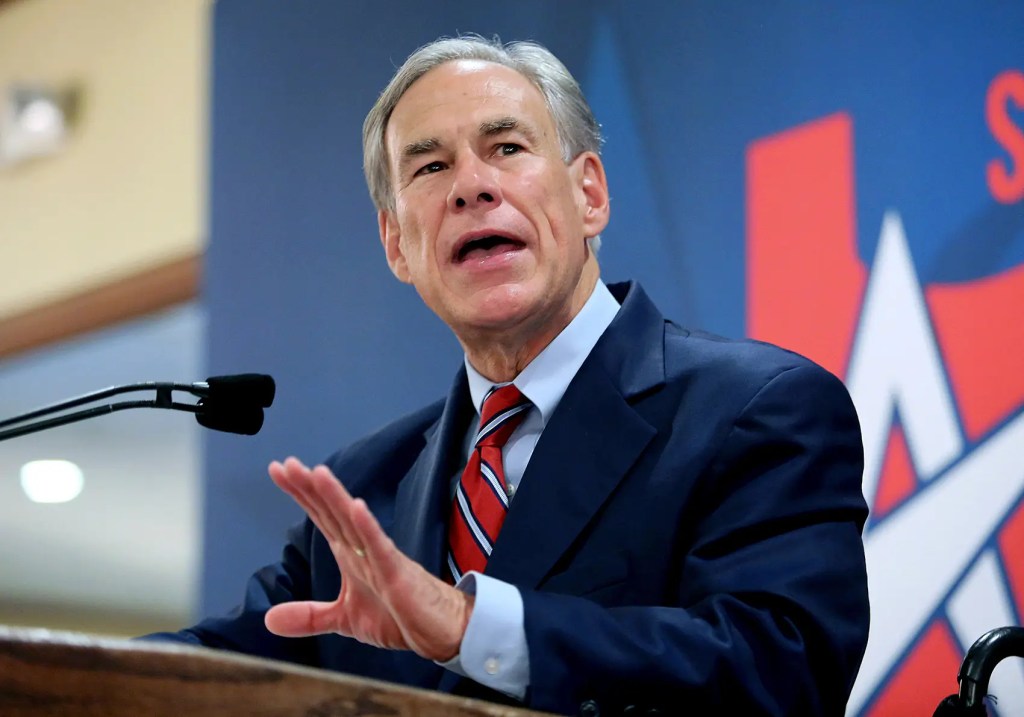
President Donald Trump and Gov. Greg Abbott are taking aim at DEI in K-12 schools. Whether they find much to tear down, however, remains to be seen.
As the 2025 legislative session ramps up, Abbott said in mid-January that he wants to ban DEI in K-12 schools, posting on X that “schools must focus on fundamentals of education, not indoctrination.” Last week, Trump issued an executive order that outlined his goal of cutting off federal funding to public schools programs that promote “gender ideology or discriminatory equity ideology.”
The pledges mirror efforts to stamp out DEI programs in other parts of Texas government. Yet Houston public schools don’t employ DEI offices, and the idea of equity for children is largely embraced across the political spectrum.
So how would anti-DEI policies impact Houston classrooms? Here’s what we know — and what we don’t know.
What is DEI?
DEI stands for diversity, equity and inclusion. Over the past decade, many government agencies and corporations have embraced DEI-related policies to support groups that have historically faced discrimination, including women, racial and ethnic minorities, and LGBTQ+ people.
Some DEI initiatives involve taking steps to hire a more diverse workforce, training employees on interacting with people from different backgrounds and creating more welcoming spaces for minority groups.
Supporters of DEI programs argue the efforts help to address historical discrimination and create a more equal society. Critics, however, say DEI programs result in illegal discrimination and divide people from different backgrounds.
In recent years, DEI has come to mean different things to different people, leading to some disagreement over what policies and practices fall under the DEI umbrella. For example, debates over gender identity and critical race theory historically were not linked to DEI, though some conservatives have started including them in anti-DEI campaigns.
related to education
Is immigration enforcement coming to Houston schools? Here’s what we know.
by Angelica Perez / Staff Writer
Do Texas schools have DEI programs?
Not exactly.
Unlike many colleges and universities, Texas school districts have not created DEI offices with a large number of employees dedicated to carrying out DEI-related plans. Some districts have employed a high-ranking administrator and small teams responsible for equity-related initiatives, though their work typically focuses on students who struggle academically and behaviorally.
Many districts have policies, programs and services that could be described as DEI-related, including equity statements, equity committees and training on working with students from different backgrounds. However, those policies and practices generally involve helping children — including those from lower-income families and students with disabilities — rather than adults. (Anti-DEI advocates generally have not attacked these efforts.)
In Spring ISD, for example, the district’s school board reads aloud its “equity statement” at the beginning of each public meeting. The statement reads in part that the district “strongly believes in educational and racial equity as fundamental aspects of its core mission and purpose.” It also says the district will have a “strategic focus on those choices and policies that most strongly impact marginalized students.”
Each school district approaches diversity, equity and inclusion differently, and sometimes it’s not explicitly stated if initiatives fall into the category of DEI.
Do Texas schools give special treatment in hiring based on race, ethnicity or gender?
No. Federal law prevents hiring on the basis of race, ethnicity or gender.
School administrators can consider some other characteristics that would help an employee serve students, such as bilingualism. They also can work to recruit employees from certain backgrounds to fill positions.
For example, four large Houston districts have worked with the University of Houston to help with “diversifying the teacher workforce” by training future educators. The initiative is driven, in part, by research showing students learn more from and respond better to teachers who share their racial or ethnic background.
related to education
Answer Key: Who decides what Texas public school students learn in class?
by Angelica Perez / Staff Writer
Do schools give special treatment in access to specialty schools based on race, ethnicity or gender?
No. That’s also not allowed by federal law.
However, districts can take other factors into account when deciding who to admit to specialty schools — a practice that DEI critics have blasted in New York City, Chicago and other large cities where white and Asian students far outnumber Black and Latino students in the highest-performing schools.
In Houston ISD, for example, students considered economically disadvantaged by the state and students with disabilities can receive 10 out of a possible 150 points on the district’s “matrix” for determining whether they’re eligible to be accepted to some schools, including Carnegie Vanguard High School and DeBakey High School for Health Professions.
Do students learn DEI-related subjects in school?
Generally, no.
Gender identity and critical race theory — two topics sometimes lumped under the DEI umbrella — are not part of the Texas Essential Knowledge and Skills, the state-approved set of expectations that outline what students should learn in each grade and subject. Abbott signed a bill into law in 2021 that banned the teaching of some critical race theory concepts in K-12 and outlined how teachers must discuss current events and U.S. racial history.
On rare occasions, Texas teachers have faced criticism and discipline for including some of those concepts in their lessons. While state lawmakers, the State Board of Education and school districts largely dictate what students should learn, teachers often have the authority to create lesson plans.
Does Texas have a law against DEI in schools?
Not in K-12 schools.
During the last legislative session in 2023, the Texas Legislature passed and Abbott signed a bill that eliminated diversity, equity and inclusion offices and programs at the state’s colleges and universities. The bill did not impact K-12 schools.
Abbott has not endorsed specific legislation related to banning DEI in K-12 schools, and Lt. Gov. Dan Patrick did not include the topic on his list of 25 priority bills for the session. (Patrick has said he will soon release 15 more priority bills.)
In his annual State of the State speech Sunday, Abbott reiterated his call to “ban DEI in grades K-12,” naming two specific policies he wants to see implemented: a ban on transgender students playing sports on teams that match their gender identity, and the immediate firing of “any educator who tells students that boys can be girls.”
What do President Trump’s executive orders on DEI mean for Texas schools?
Trump has issued several executive orders related to DEI, but for now, they do not impact K-12 schools.
Trump’s executive orders related to DEI programs and hiring practices only apply to federal agencies. An executive order he issued Wednesday related to schools calls for the Education Department secretary to create a plan for ending federal funding of gender ideology and equity ideology that “treats individuals as members of preferred or disfavored groups, rather than as individuals, and minimizes agency, merit, and capability in favor of immoral generalizations.”
It is not immediately clear whether any Texas schools receive federal funding for programs that would fall under the Trump administration’s definition of gender and equity ideology.
Staff writer Angelica Perez contributed to this report.

