

VALLE DE CHALCO, MÉXICO – Lauritz Cayuna de Melo was lounging at her home on the outskirts of Mexico City one evening in March when she got a call from an unknown number.
“How weird,” she thought.
Her family in Venezuela and husband Jesús Melo in Houston usually called through WhatsApp.
About six weeks before, she had gone to the Venezuelan embassy in Mexico City to put herself and her two kids, Esteban and Eva, on a list to return to the country they hadn’t seen in eight years.
“It must be the Venezuelan embassy,” she said to herself.
When she picked up, the voice on the other end told her that she and her kids, 14 and 13, had gotten a coveted spot on the next government flight to Venezuela. They would leave in two days.
Lauritz had to make a quick decision. Otherwise, her spot would go to someone else, the embassy employee told her.
“Obviously I told them yes, because that’s what we were waiting for,” Lauritz said. “But really, I had mixed feelings.”
Boarding the flight would mean getting out of the limbo they had been in for eight months since they arrived in Mexico. From August to January, they had requested an appointment to enter the U.S. through the government smartphone app, CBP One. All that time, they barely left their apartment on the outskirts of Mexico City, afraid that criminal groups would hear their Venezuelan accents and target them for kidnapping and extortion. Plus, Lauritz didn’t want to enroll Esteban and Eva in school just to uproot their lives again, so the kids stayed cooped up all day, playing games and watching videos on their phones.
During the Biden administration, the CBP One app became the primary way to enter the U.S. and seek asylum. An estimated 900,000 people were screened and approved to enter the U.S. through the app, including Jesús Melo.
When President Donald Trump shut down the app within hours of taking office, he got rid of the Melo family’s chance of ending this limbo and reuniting in Houston.
“That’s when all our hopes vanished,” Lauritz said. “Because we knew it wasn’t going to be possible.”

The family’s dilemma is just one example of the difficult decisions families are forced to make when avenues to legal migration are taken away, as the Trump administration has done in its first months in office. An estimated 270,000 migrants were waiting for a CBP One appointment in Mexico when the app was shut down.
The end of CBP One marked a sharp change in approach to immigration policy under the Biden administration, which embraced a strategy of opening legal pathways to reduce irregular migration at the border.
“I see it as one brick in a very very big wall,” said Adam Isacson, an expert on migration at the non-governmental organization Washington Office for Latin America. “It’s a way to exclude some people.”
As the family has watched the Trump administration ramp up immigration raids in the U.S., Jesús and Lauritz wonder if the U.S. would ever welcome them.
Lauritz knew she didn’t want to stay in Mexico like this, but deciding what the next step should be was the hard part. Since January, she and Jesús had constantly debated the options. The family wanted to be together. But how?
The three could cross the border illegally, risking kidnapping or worse along the way. They could wait in Mexico for another path to legal migration to open up, but the chances of that seemed less likely every day under the new administration. Or they could go back to square one and return to Venezuela, where at least they would be among family, and the kids could enroll in school.
Jesús was convinced that being with family in Venezuela was the best option while he continues to work in Houston and awaits the outcome of his asylum case. In the meantime, he would send money to Venezuela to finish building a house for the family. But now faced with the possibility of returning, Lauritz doubted her decision.
Boarding the flight to Venezuela also meant giving up on the dream that the family began eight years ago. As shelves at the supermarket emptied and rolling blackouts began, the Melos left their hometown on the Venezuelan coast for Peru in search of a better life. After six years there, still in financial precarity and with crime growing, Jesús then set off for the U.S. in July 2023. One year later, Lauritz, Esteban and Eva began their journey to meet him there. If they boarded the flight, they would accept that they wouldn’t reunite with Jesús in Houston.
“Here, I feel a little closer to Jesús,” Lauritz said.

Lauritz hung up the phone and texted Jesús to tell him about the call, even though she knew he was still at work as a line cook for a country club in Houston. He called right away.
“It’s going to go well. We’re going to be ok,” Jesús assured her.
She tried to stay positive, but she wasn’t so sure.
Becoming migrants
It started with a cup of coffee. Lauritz was working as a secretary for a doctor in Venezuela’s public health system back in 2007. Jesús worked as a security guard in the same building.
As he was leaving on the elevator one day, she offered him a coffee. He accepted, even though he didn’t really drink coffee back then.
Soon, they were a couple. In 2011, Esteban was born. A year later, Eva. The couple worked hard, but by 2017, decades of corruption and mismanagement coupled with a dip in oil prices led to hyperinflation in the oil-rich South American country.
“Both of us have always worked, but there came a day that we didn’t have anything to eat,” Jesús said. “And the kids still have to go to school.”
Jesús set off for Lima, Peru, which he thought would bring his family more stability. And it did for a while.
Lauritz, Esteban and Eva joined him there a few months later. He found work in a restaurant, but he had a two-hour commute.
“I would leave the house at 4 a.m. to get there by 6, because that was the start time,” Jesús said. “I left at 9 p.m., but the traffic in Lima is horrible. I got home at midnight sometimes.”
They were barely scraping by, and Jesús barely saw Lauritz or the kids.
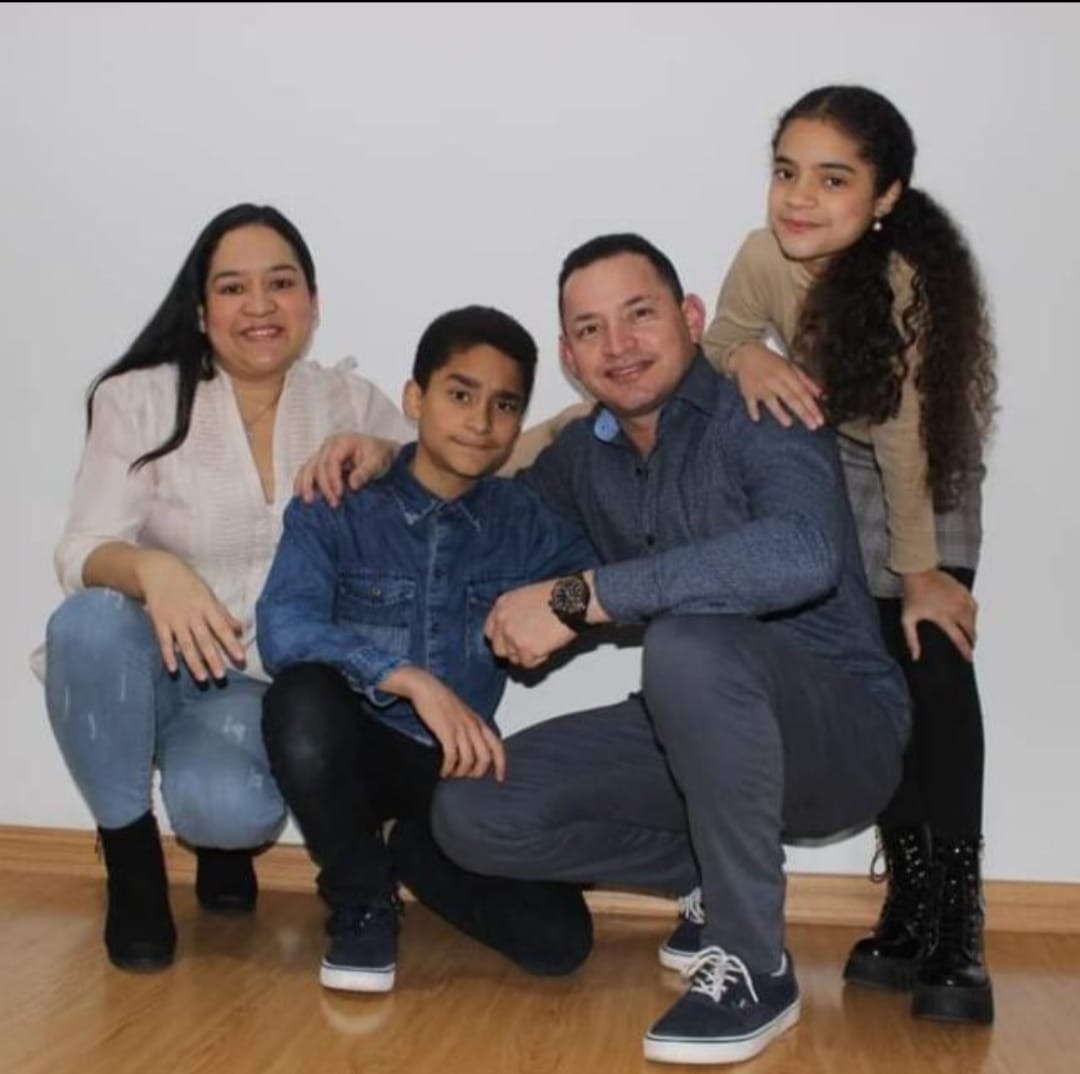
“I decided to quit because I wasn’t seeing my family,” Jesús said. “And to me that’s the most important.”
The kids had gotten used to Peru. Esteban, who was diagnosed with Asperger’s as a toddler, finally made friends at school and with a neighbor’s son. But Jesús wondered why he had left his family in Venezuela behind just to constantly worry about whether the smallest emergency would leave them without a roof over their heads or food on the table.
“We were working just to survive,” Jesús said. “There was going to be a moment when we said, ‘We can’t get sick. We can’t do anything,’ because we still have to eat and pay rent.”
With higher wages in the U.S., he saw a way to finally break this cycle.
“That’s why we saw the U.S. as an option – a chance to have something more,” Jesús said.
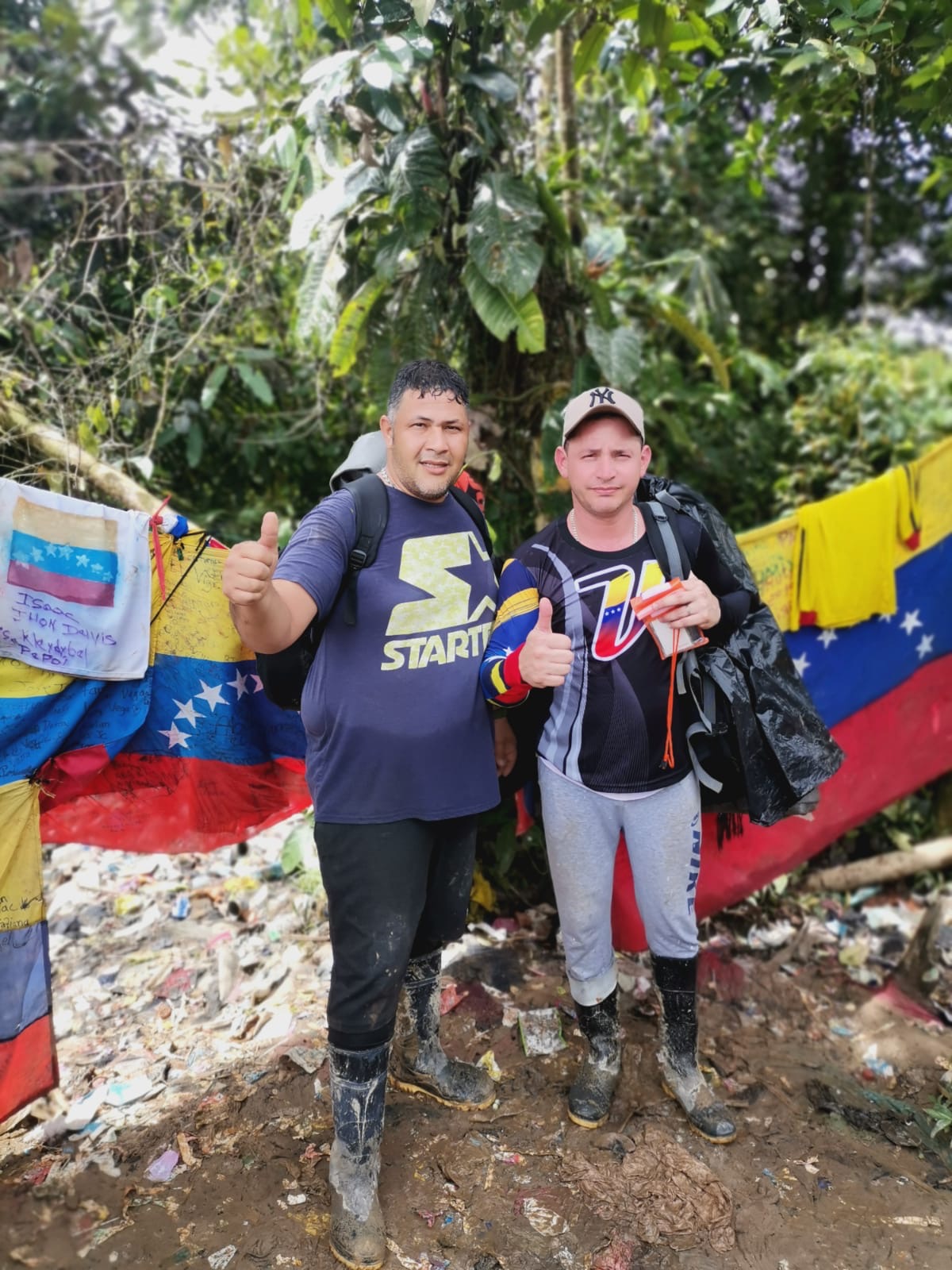
Jesús left Peru in July 2023 for Houston, where one of Lauritz’s sisters lives. He traveled through Colombia to the border, where he spent three days trekking through the stretch of jungle known as the Darien Gap. After boarding buses throughout Central America, he made it to Mexico just 18 days after leaving Peru.
Within weeks, he entered the U.S. at the Tijuana-San Diego port of entry after getting a CBP One appointment.
“The idea was that I would go first to make some money and see if I could bring them here,” Jesús said. “And if it was too hard, they could return to Venezuela and we could start a new life, but with me supporting them from here.”
“It was always a discussion that in the worst of cases, we would return to Venezuela.”
But at least for a while, it seemed that they could all make Houston home.
Living separate lives
Once in Houston, Jesús had a rough start. After finding temporary work at an oil rig in New Mexico for a few months, he returned to Houston to look for a job, draining his savings, before finally getting hired as a cook at a country club near where he lives.
Without his family near, his days were mundane and routine. Wake up. Shower. Go to work. Go home. Watch TV. Go to bed.
His calls to Lauritz and the kids during his breaks and after work were the only things that broke up his day.
His only respite from the constant grind of working in the U.S. was his Sundays off, when he would usually go for a run in the morning and church in the afternoon.
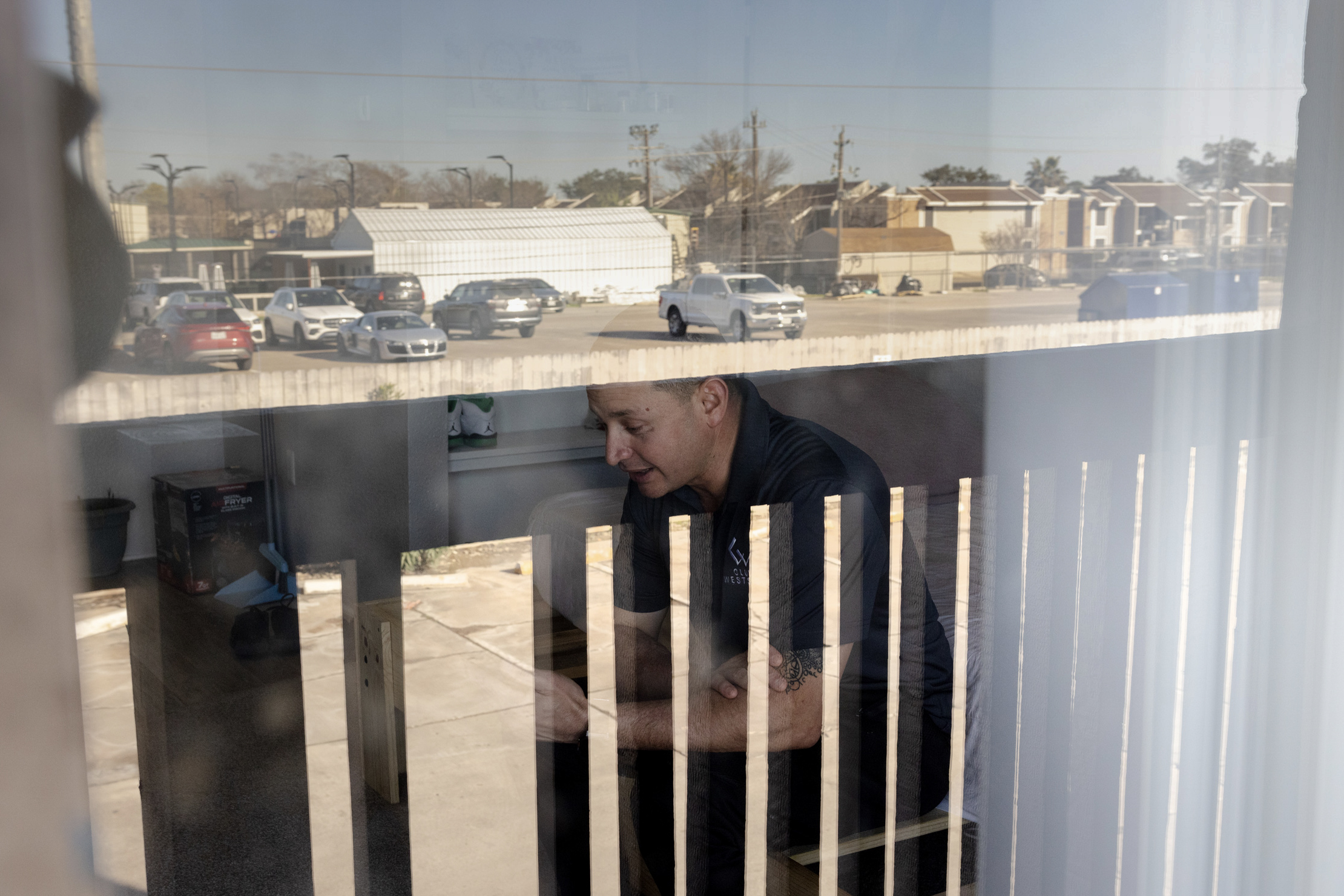
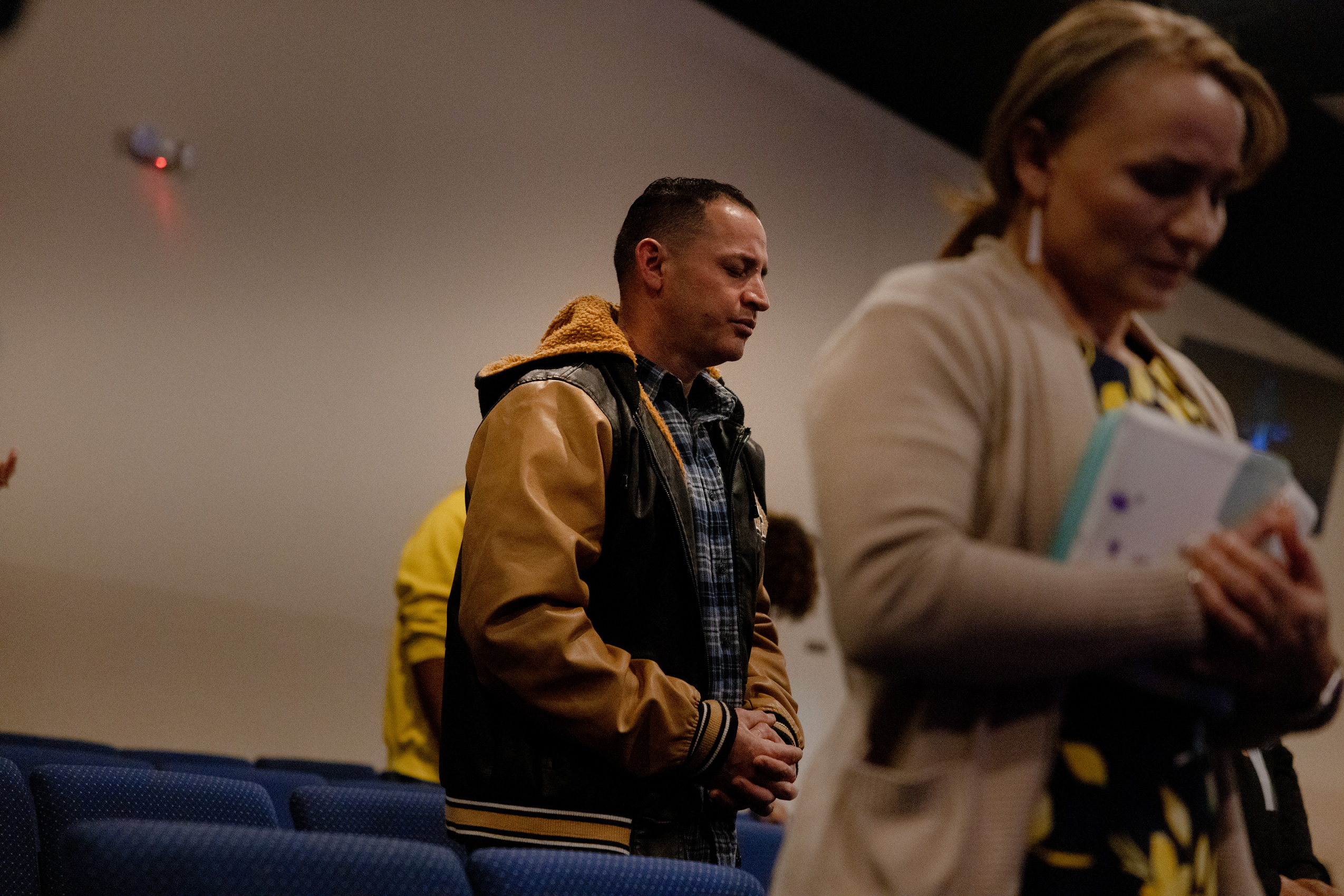

“When I arrived here, from the beginning I didn’t see myself here,” Jesús said. “It’s a country to take advantage of the opportunities, work for a while, and then return to your country.”
Lauritz, Esteban and Eva were still in Peru when Jesús first arrived in Houston.
As the kids became teenagers, they started to question Lauritz. When she called Jesús, he would tell the kids to listen to their mother. But hours later and miles away, it didn’t always work.
“They started to be a little more rebellious, as if, ‘My dad’s not here, so I can do it,’” Lauritz said.


Lauritz didn’t want to make her kids walk through the stretch of jungle known as the Darien Gap, where she heard that young girls were often raped. Jesús also had his doubts. His brother told him he regretted exposing his kids to the dangers there.
One day at church, Lauritz asked some of her friends there what they thought.
“The family has to be together,” they told her.
So they decided to set out for the U.S. in July of last year. Lauritz’s two sisters and brother-in-law also went with them.
Jesús barely slept for the two nights that his family was in the jungle. The trek was physically grueling, but Lauritz somehow moved quickly on the trails, passing her two younger sisters in a feat she attributes to a mother’s strength.
“Two more people depended on me,” Lauritz said. “I couldn’t just stand there.”
After leaving the jungle and making the same route up Central America, the family finally arrived in Mexico. That’s where the waiting began.
Meanwhile, Jesús made a few friends, mainly other Venezuelan and Cuban dads in the same situation. One Cuban friend stayed with him for awhile to save on rent, but he left Houston in April when another program for Cubans, Venezuelans, Haitians and Nicaraguans to legally migrate was ended. Jesús had also hoped to bring his family through the program, but they didn’t have all the documents to apply.
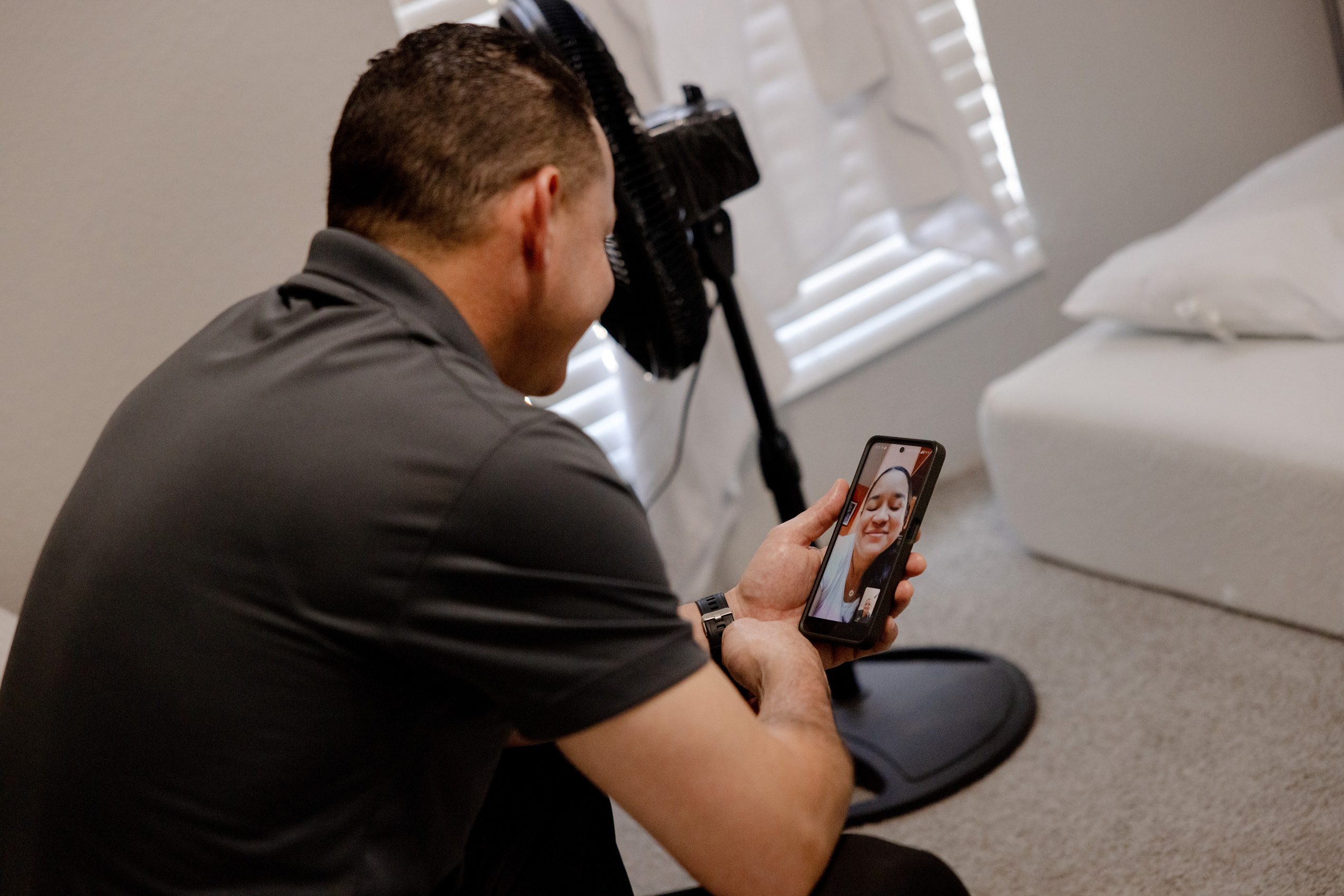

“Here you can achieve whatever dream you desire,” Jesús said. “But having things is nothing without the people to enjoy them with.”


Life in Mexico
About 750 miles away, Lauritz, Eva and Esteban found their own mundane routine. Another Venezuelan woman they met on their journey recommended an apartment in Valle del Chalco, about an hour drive from Mexico City. There, the owner wouldn’t take advantage of them and charge an exorbitant rent, but it wasn’t as safe as Mexico City’s posh neighborhoods.
In the mornings, Lauritz’s sisters and brother-in-law went to their jobs in nearby restaurants and a shoe store, leaving Lauritz, Esteban and Eva to spend the days at home alone.
Their days were only broken up by the occasional game of cards or dominos. Lauritz and Jesús began reading the Bible together at night. On Sundays, Lauritz and the kids would walk to a nearby church for the service.

When Jesús called on Sundays, he would read a passage to the kids. Eva would read along, but Esteban had begun to question everything. His analytical mind sought answers to the family’s troubles in science rather than faith.
“What hurts me the most is that they might lose their path with God,” Jesús said. “We’ve always believed in God, but this has affected them after seeing that what we wanted so much didn’t happen.”
When the day came with the news of the end of CBP One, Lauritz and Eva cried, letting out their frustrations. Esteban tried to understand the app’s algorithm to make sense of why they hadn’t been chosen.
“Maybe that’s why he has distanced himself from God,” Lauritz said. “Because he said, ‘If we have faith, why did this happen to us if we didn’t do anything wrong? We did everything right. We just want to be together as a family.’”
Venezuelans in Mexico
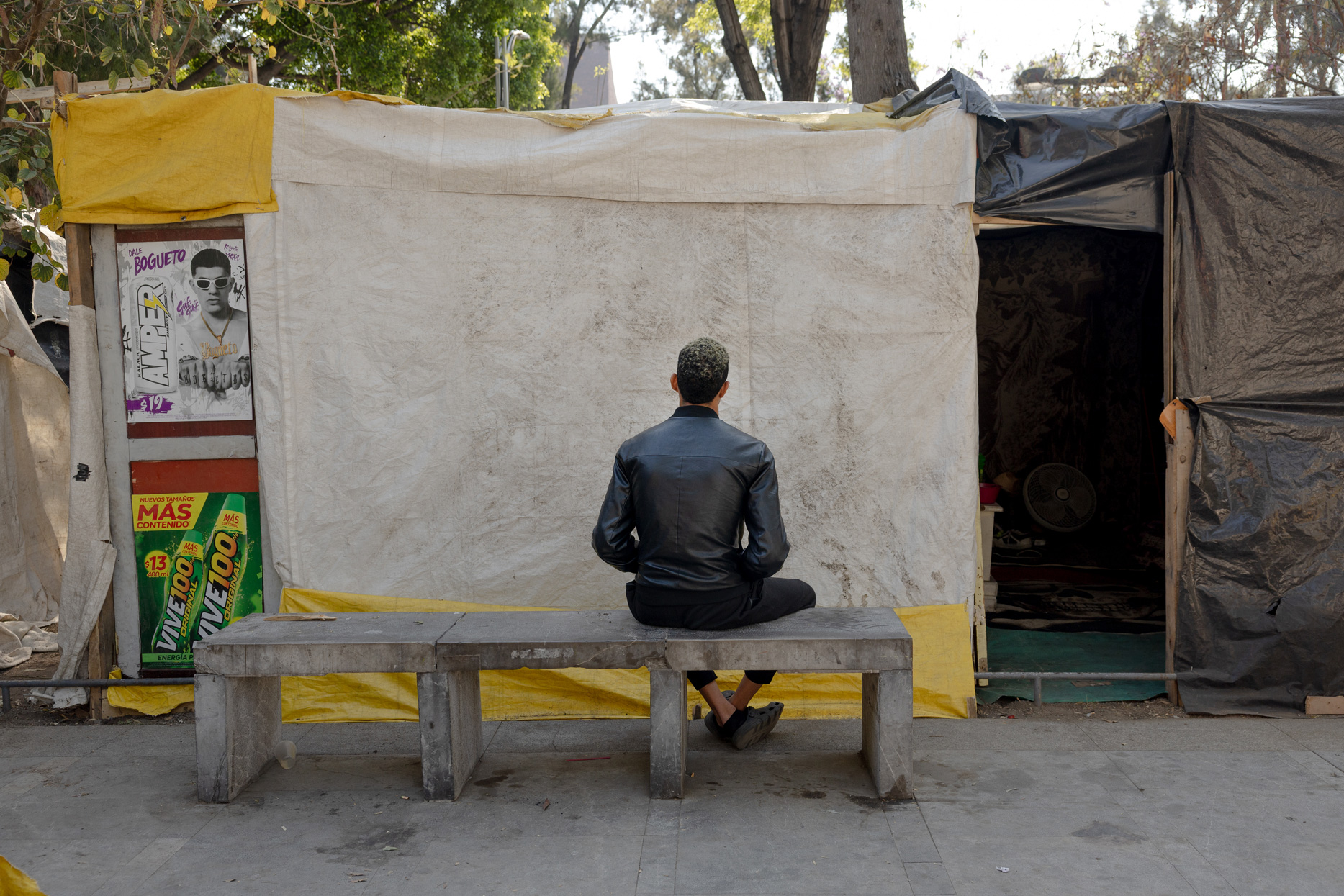
Under the Biden administration, an influx of Venezuelans began waiting in Mexico for CBP One appointments, turning the country into a waiting room rather than just a quick transit point. Their arrival strained resources as migrant shelters soon filled up and many decided to live on the streets in a makeshift camp. One of these camps was forcefully evicted by Mexican authorities just days before Lauritz and the kids were scheduled to leave.
But with nowhere to go, the Venezuelans set up camp in another plaza blocks away. One March morning, Venezuelan migrants hammered wood panels and hung their plastic tarps, rebuilding their makeshift homes. One middle-aged woman sat on a tattered couch with a newborn baby, showing him off in a video call. A toddler carried a pup through the lines of tents.
The migrants had hopes of reaching Texas, Wisconsin and Tennessee where friends and family told them they could find work. But after the closure of the CBP One app, some were considering returning to Venezuela. For others, that wasn’t an option.
“I would love to live in my country, but unfortunately, it’s not possible,” said 26-year-old Venezuelan E., who asked to remain anonymous because he deserted the Venezuelan military and feared retaliation from the government if he is deported.
E. had planned to enter the U.S. through a CBP One appointment and was living in the encampment while he figured out his next step.
“If I enter the U.S., I’m going to enter legally,” he said.
But those options have dried up.

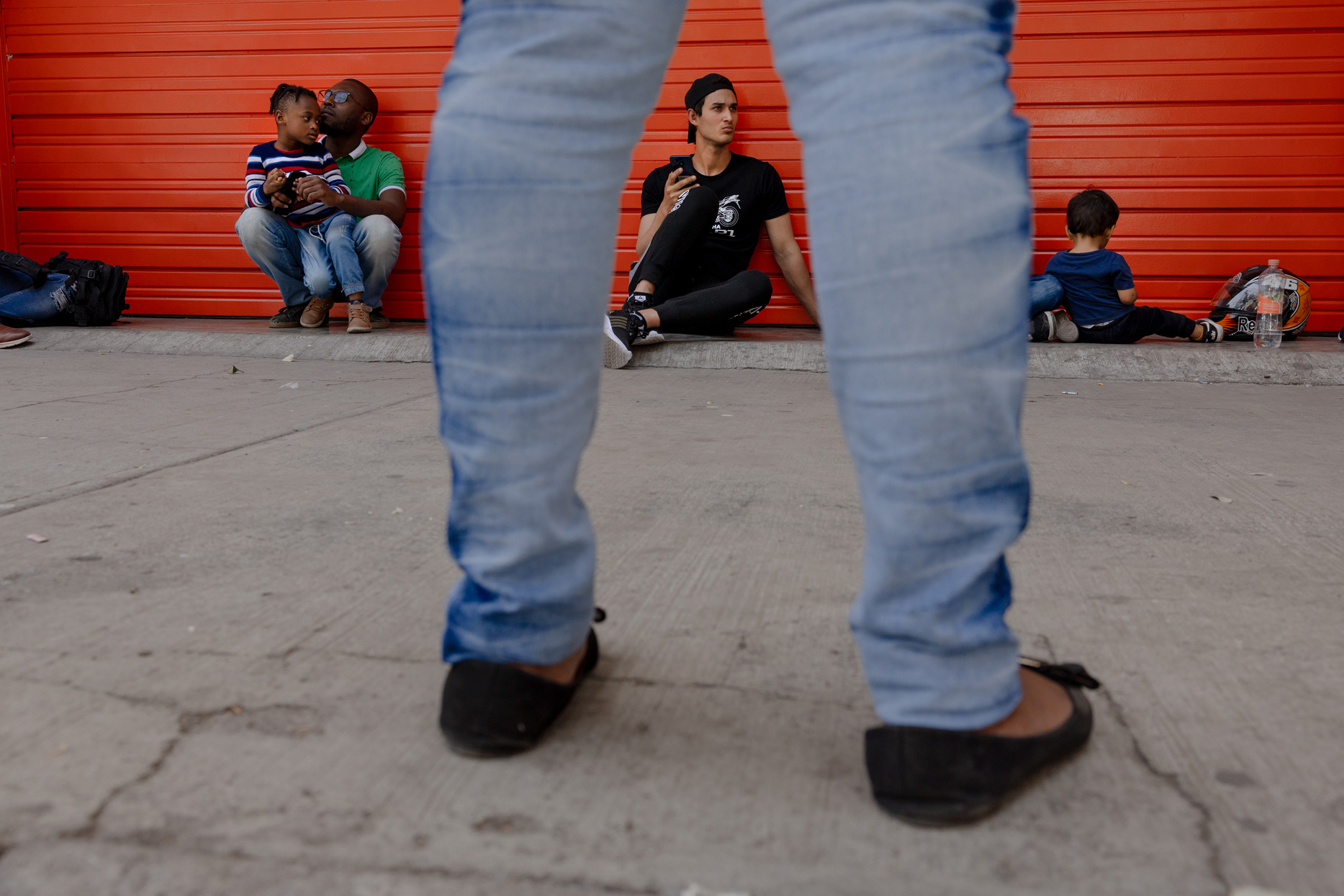
“Humanitarian pathways as they were created under the Biden administration ceased to exist, really limiting options for people who were seeking alternatives to arriving irregularly at the border and presenting themselves,” said Colleen Putzel-Kavanaugh, associate policy analyst with non-partisan think tank Migration Policy Institute
Boarding a flight to Venezuela doesn’t always mark the end of a Venezuelan migrant’s journey, explained Isacson of the Washington Office for Latin America. Venezuela’s exodus of nearly 8 million people has pushed many Venezuelans to migrate again and again, to one country in South America and then another.
Once they advance past the Darien Gap, however, it becomes more costly to return to Venezuela – if they even have the proper documents to buy a commercial flight given Venezuela’s lack of resources to keep passports up to date.
“It’s a much bigger deal if you’re in Mexico and your lack of a passport really matters and you’re stuck waiting for a flight that can take you back,” Isacson said.
Leaving Mexico
On the morning of her flight, Lauritz was still questioning her decision to return to Venezuela.
“I still have some doubts and uncertainties about what’s going to happen and how it’s going to be for us,” she said. “But I can’t be scared. I have to trust and move forward.”
Lauritz woke up around 8 a.m. to have coffee with her sisters. The three stood around the kitchen, joking about all their memories from Venezuela, Peru and Mexico. Their laughs were often interrupted by tears as they remembered this would be their final day together for who knows how long.
They promised to set a date for a family reunion in Venezuela.
Daniela was the first to leave for her restaurant job. Lauritz, the oldest of the three, took her by the shoulders and gave her a few words of wisdom.
“It’s time for some advice. You already know how things are and what to do,” Lauritz said. “Everything’s going to be ok. Soon you’ll be there.”

About an hour later, it was time for Maria to leave. “Bueno mi hermana, chao, fortaleza,” Lauritz said. “May God bless you and take care of you and protect you at all times.”
“Amen,” Maria said.
“Everything is going to be ok. We’ll see each other soon,” Lauritz said.
“And my hug?” Maria said. She held Lauritz close as her trickle of tears turned to a sob. As Lauritz pulled away, she clung on, giving her extra hugs to send to their mom and dad in Venezuela. Through tears, Maria then made Eva and Esteban promise to behave as she gave them goodbye hugs.

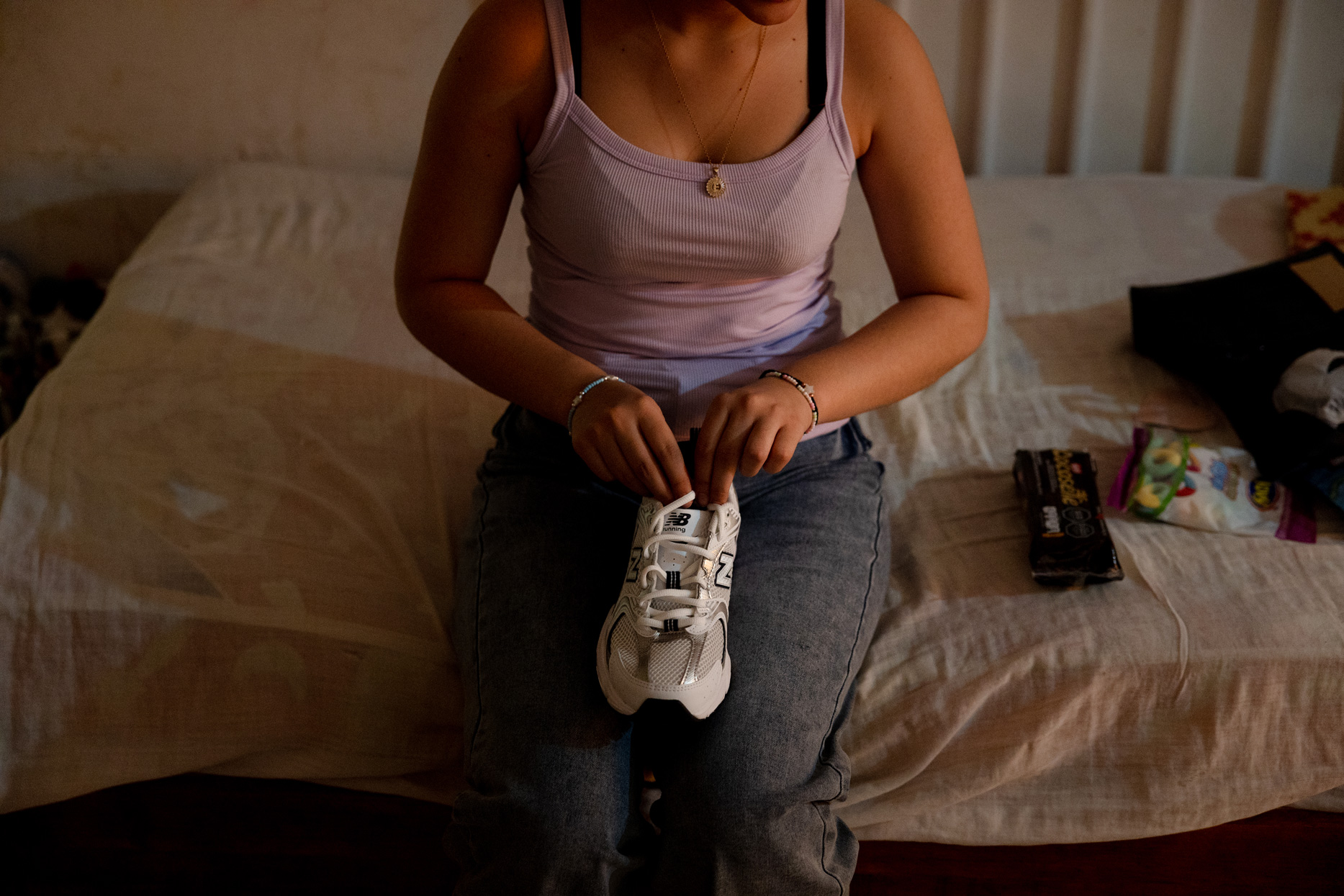


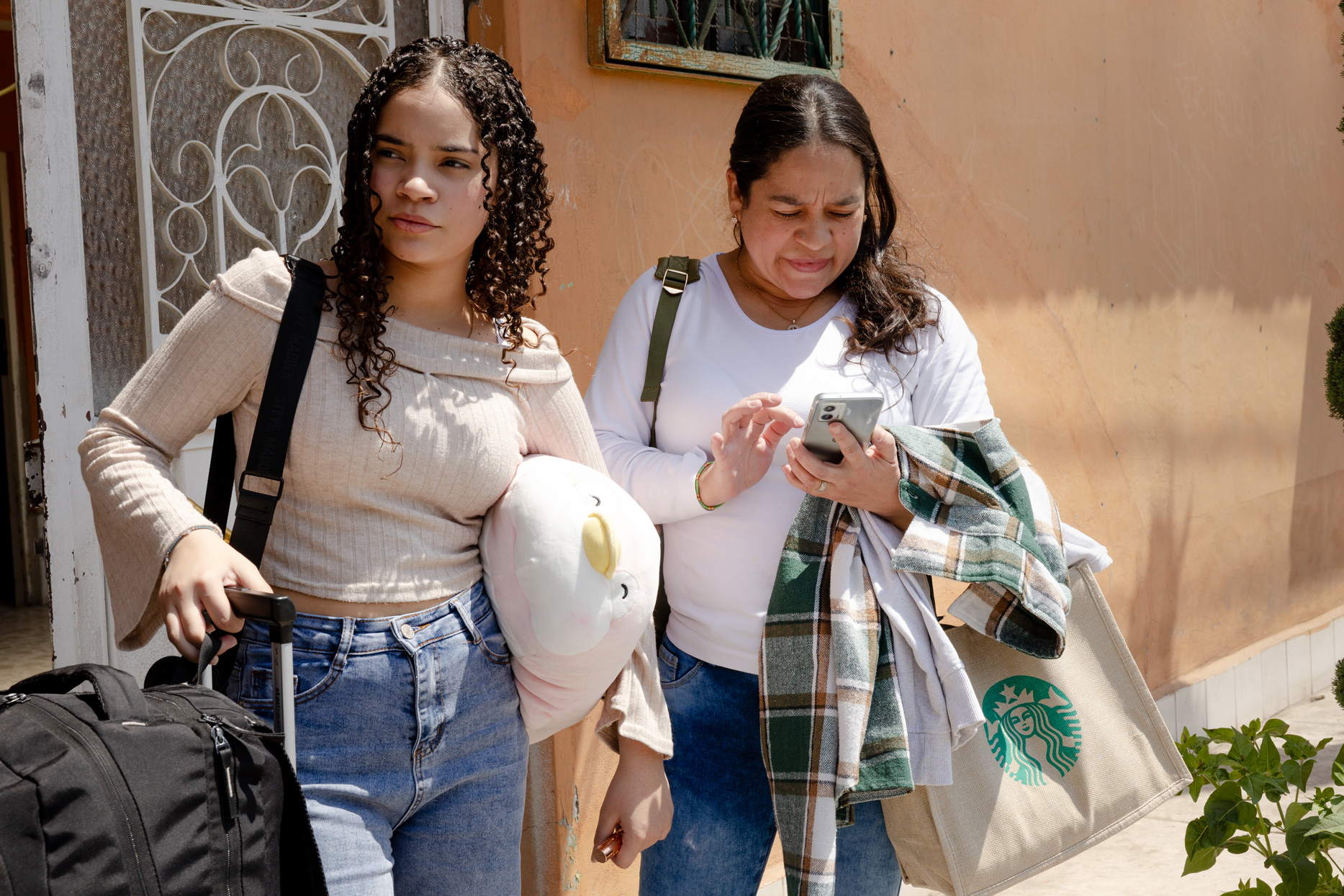
After her sisters left, Lauritz got dressed, putting on the new sneakers Jesús sent her from the U.S. Eva styled her curly hair, meticulously coating each strand with gel before getting dressed and putting on the new sneakers she begged her dad for. After his mom goaded him into showering, Esteban put on a new black T-shirt from his dad.
Around 2 p.m., Lauritz called an Uber to take the family to the immigration office an hour away.
They called Jesús from the street as they got in the car. Eva took the phone to speak to her dad.
“How do you feel, hija?” he asked.
“Good,” she replied.
“Aren’t you excited?”
“Si, papa,” she said. Esteban stood nearby, but didn’t speak much. Jesús could tell they weren’t in a chatty mood.
“Have a safe trip. I hope everything goes well,” Jesús said.
“Amen,” Eva replied.
Lauritz took the phone as they got in the Uber.
“I love you. Talk soon. Un beso,” she said before hanging up.
As they drove away, the three waved goodbye to their landlord and his parents at the corner store.
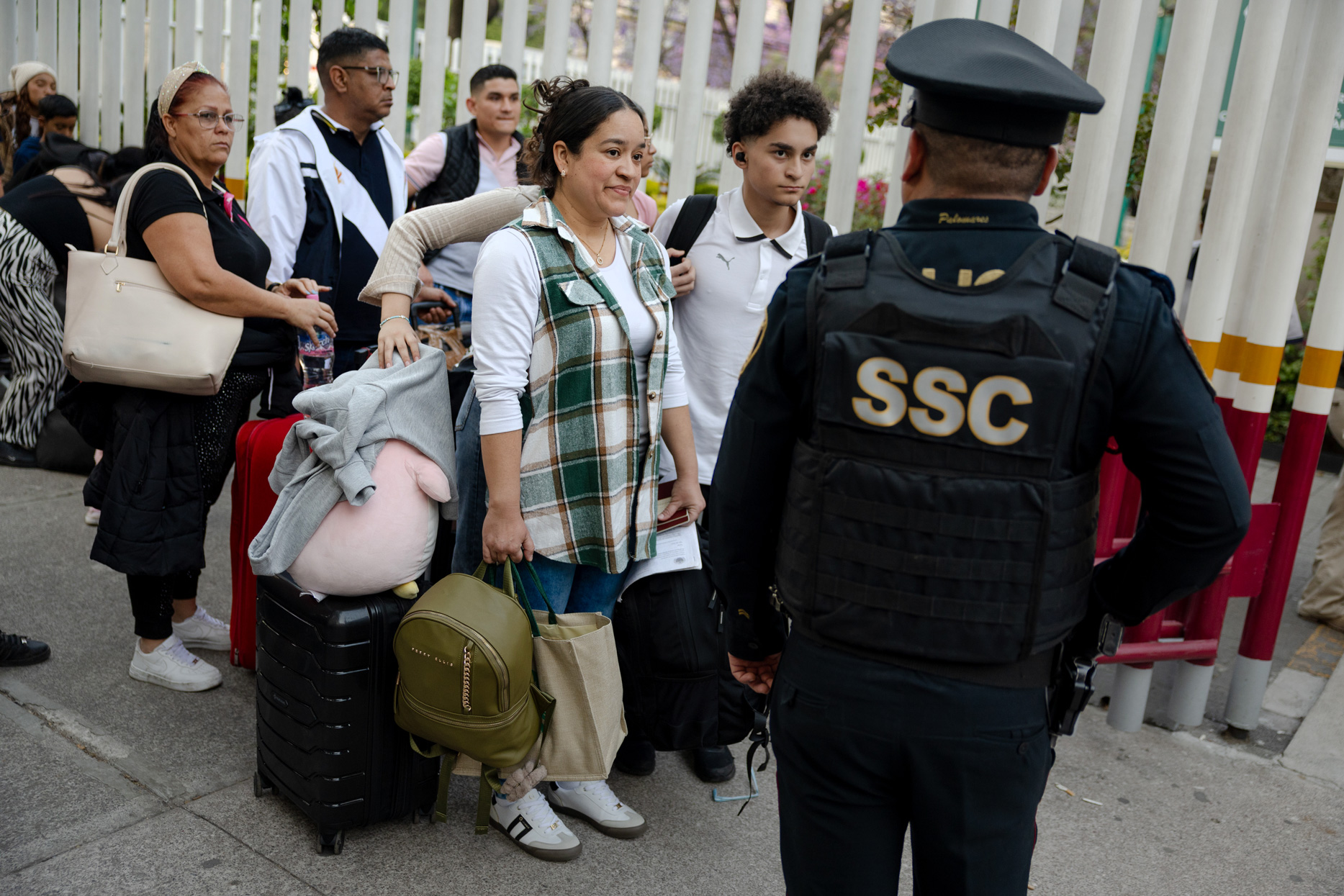
At the immigration office in the upscale Polanco neighborhood, Lauritz, Eva and Estaban joined the dozens of families who had already gathered outside to form a line that wrapped around the corner. Some toddlers sat patiently with their parents, hugging their stuffed animals. Others ran around playing with their new friends they met in line. Teenagers stared at their cellphones. Every few minutes, a new family pulled up in a cab and opened the door in haste, trying to quickly grab their backpacks and suitcases as oncoming traffic zoomed past them.
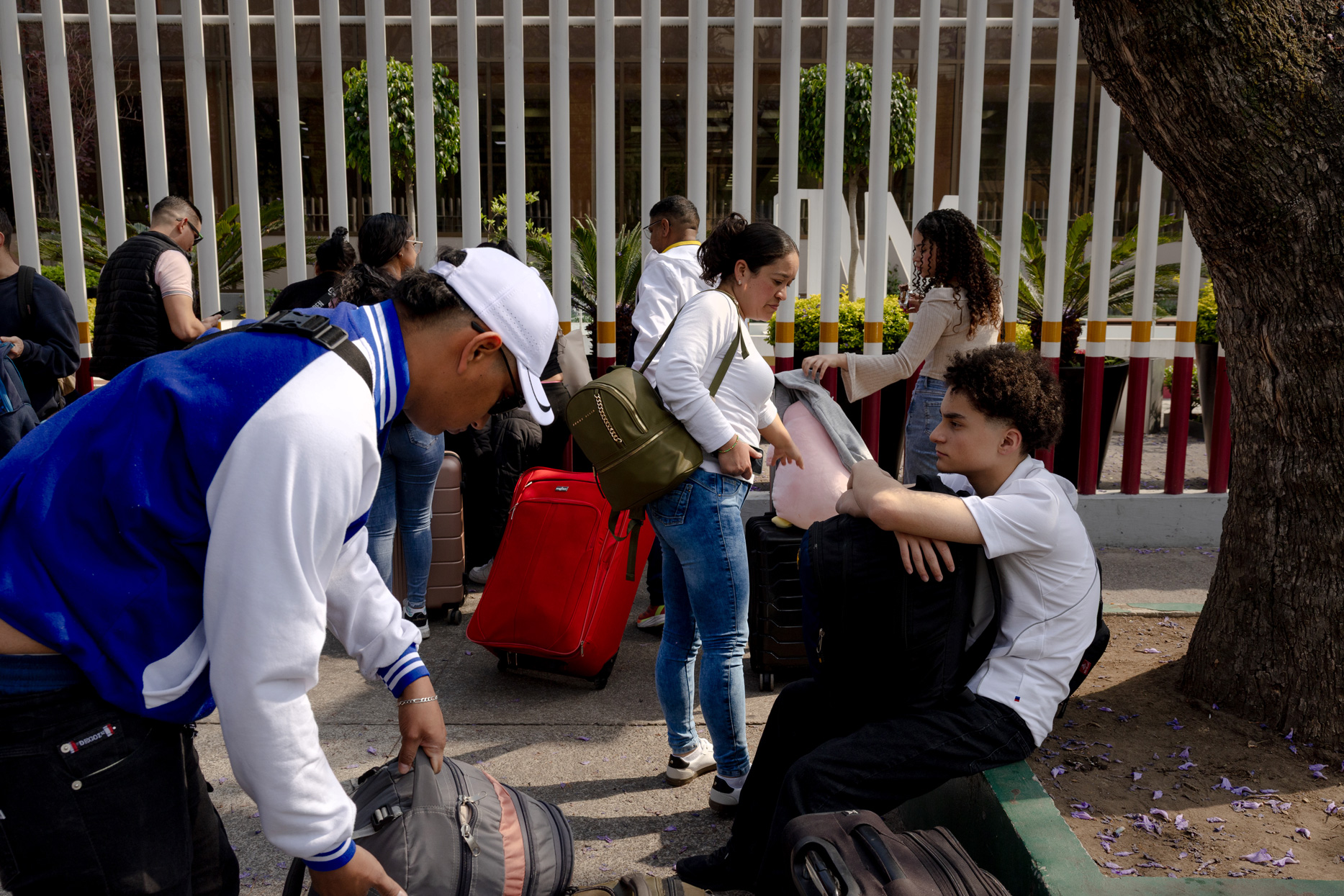
Most had left Venezuela years before, living in Peru, Colombia or Chile before coming to the U.S. All had tried to make it to the U.S. through a CBP One appointment and didn’t see a way to migrate there without it. They had tried to make the most of their time in Mexico, but complained of the lack of job opportunities and insecurity. Within the city limits, employers discriminate against Venezuelans, so many had to live in more dangerous areas in the city’s outskirts to find work, they said.
Karoline, a 22-year-old who migrated with her husband and their 3-year-old daughter, was hoping to reunite with friends in Memphis or Florida. But when the CBP One app was shut down, the pair decided that crossing with their daughter was too dangerous. Their thought process echoed Lauritz and Jesús and the other parents there that day.
Karoline and her partner weren’t sure living in Venezuela long-term was sustainable. So they were considering migrating to Chile after spending a few months in Venezuela with their family. But they knew staying in Mexico was not the answer either.
“The situation here isn’t easy,” Karoline said. “Because there’s no stability.”
As it came closer to time to board their flight, Lauritz started to focus on the positive aspects of returning to Venezuela. But like many other family milestones – birthdays, anniversaries, Mother’s Day – Jesús’ absence was not unnoticed.
“The good thing is that our family is there. I’m going to have support, ” Lauritz said. “And that alleviates a little the fact that Jesús won’t be there.”
Still separated
On a Tuesday afternoon in May, as Jesús enjoyed his day off, he called Lauritz to check in on her and the kids.
Lauritz answered from Jesús’ parents’ house in the Venezuelan coastal city of Barcelona. Their power had just come back on after a four-hour outage in the 90-degree heat.
“Everything is good, thank God,” Lauritz said. “Just enduring the heat,” she said with a laugh.
Readjusting to the heat and power outages was just one of the challenges of being back in Venezuela. But a few weeks after their return, most of Lauritz’s worst fears had disappeared. Esteban and Eva were making friends at school and liked their teachers. They were spending time with their grandparents and aunts and uncles who hadn’t seen them since they were five and six years old. The blackouts forced them to get off their phones and spend time with family. Esteban even cut his hair without arguing with Lauritz about it.
Jesús felt a sense of peace seeing photos of Esteban and Eva in their school uniforms for their first days of school and spending time with his family he misses so much.
But seeing the photos are bittersweet for Jesús, because they remind him of so much that he has missed.

“It hits me hard every time I see them, especially that photo of them going to school,” Jesús said. “It’s hard to see how they’ve grown. Eva is now a young lady. For me, it’s emotional to see her like that and not be there.”
Jesús has been sleeping better now that his family is in Venezuela, falling asleep soon after work rather than spending hours watching TV until 2 a.m.
Lauritz wishes the family could be together, but has come to accept that it will all happen in time.
“God has decided it, and it’s going to take a little longer for us to be together,” Lauritz said.

