


Fear is propagating among Houston’s nonprofit organizations after a series of executive orders and memos recently issued by the Trump administration temporarily froze federal funding leaving them wondering the impact of what’s to come next.
On Jan. 27, President Donald Trump’s administration issued a memo freezing all federal grants and loans, but it was rescinded shortly after following legal challenges and a temporary restraining order. Even so, a flurry of executive orders issued over his first few weeks back in office continue to threaten the work that many local organizations do and who they serve.
“We saw a number of agencies across the community have at least temporary freezes in their funds for some of the social services they provide,” said Amanda McMillian, president and CEO of United Way of Greater Houston. “It does create an environment of significant uncertainty for agencies across our community who are providing a lot of different kinds of social services in the community.”
Local organizations dependent on government funding are having to reassess their operations, come up with cost-cutting measures, review contracts and pay close attention to any further decisions at the federal level. Some have removed information from their website like the types of communities they serve and team members’ photos in attempts to protect both their programs and their staff.
Trump’s executive orders have mostly targeted immigrants, the LGBTQ+ community, and diversity, equity and inclusion programs. Based on these executive orders, the most impacted organizations would be those that focus on human services.
“It could impact housing and emergency shelter services for individuals, it could impact food services, it could impact health care services,” she said.
BY THE NUMBERS
38,000
The number of nonprofits in the Houston metro area, which includes Baytown, Conroe, Galveston, Sugar Land and The Woodlands.
Source: Cause IQ, a company that gathers data on nonprofits nationwide.
United Way conducted a survey of their 100 partner organizations and received responses from about three quarters of these partners. Most of them, about 79 percent, said they receive some sort of government grant funding – be it federal, state or local – and about 25 percent depend on government grants for at least half of their revenue.
“So, even if the funding for one particular program might get cut off, it could impact the entire portfolio of services they provide,” McMillian said.
Who will do it?
The nonprofit leaders who spoke with the Houston Landing did so on condition of anonymity out of fear of repercussions. They said this uncertainty has turned into fear, not only for their ability to continue serving Houstonians, but also for the safety of their clients and staff.
“Many of us have actually taken down the names (and pictures) of our board of directors off our website as well as staff members, because we are afraid of any targeting that might occur,” said a local nonprofit leader who reported having about 25 percent of its funding dependent on government funds.
Many expected their work to be challenging under the Trump administration because of the communities they serve, this source said. But what happened in the first few weeks of Trump’s return to office has shocked many beyond what they imagined.
“People think that only immigrants and refugees are going to be targeted and affected by the lack of funding, and that is absolutely not true,” the nonprofit leader said. “Mr. and Mrs. Jones who have lived here all of their lives are absolutely going to be affected by this.”
Even those who rely minimally on federal grants are bracing for the ripple effects of funding cuts to essential regional programs, such as housing programs for the elderly or health services to lower-income communities. Eliminating these programs and services will have unintended consequences, nonprofit leaders said.
Tips for nonprofits
If you run a nonprofit, Amanda McMillian, president and CEO of United Way of Greater Houston, offers these recommendations:
- Understand your cash flow: What are your cash reserves? What kinds of credit lines do you have? And how would you utilize these to cover your priorities – i.e. debt repay, operations, etc.? How diverse are your funding sources?
- Understand your contracts: If you have government contracts, go through the terms of these very carefully and understand what are your contractual obligations, termination clauses and conditions to payment.
- Seek legal advice: Legal council may help you verify if any remedies are available within your contract and ensure your contractual obligations are met.
- Scenario planning: Talk to your board of directors, your stakeholders and potential champions so that they can understand your organization’s pain points.
- Speak up: Make sure you are meeting with your legislators so that they understand the impact that these shortages of resources will have on the community they represent.
“Who is going to provide these services if they are cut?…You are cutting programs that are supporting children and families and seniors. It’s creating enormous amounts of disruption,” said another nonprofit leader, adding that about 3 percent of their funding depends on government funds.
In other words, the need for these services will not simply go away if funding stops.
The nonprofit community, especially in Houston, is resilient, nonprofit leaders noted. But much like during the coronavirus pandemic, the expectation is that cutting one source of aid will increase the burden of service to other entities, they said. But an emergency at this scale and under such circumstances just feels different.
“This shouldn’t be,” they said. “Being a natural-disaster-prone community that we are, this is a man-made disaster, and it can completely be avoided.”
A strong community
Rhonda Horn, president of local consulting firm Sterling Nonprofits, said the experience gained from handling natural disasters and the pandemic can provide valuable insights for nonprofits at this time.
However, she acknowledged nonprofits face a chaotic environment to navigate.
“That lack of clarity and that uncertainty is a very big challenge for nonprofits. Even if you have six months of cash reserves, this could be caught up in the courts, caught up for a long time,” Horn said.

At the end of 2024, Sterling Nonprofits conducted a survey of organizations in the Greater Houston area. Nearly 200 organizations responded, with about a quarter of them being human service organizations and another quarter in the education field.
The survey found that small and medium nonprofits struggled more to diversify their revenue, to access lines of credit that could help them in a situation like this and to have healthy reserves.
In comparison, about 33 percent of organizations with budgets under $1 million reported having less than three months of cash reserves. These were also the organizations less likely to have a line of credit and more likely to be led by Black, Indigenous and people of color.
When asked what their most common mitigation strategies were during the height of the pandemic in 2020, 61 percent of all surveyed organizations reported using their cash reserves, 36 percent of them said they cut programs and 23 percent reduced payroll.
“The abrupt way that the COVID pandemic affected revenue streams is a very recent illustration of how a disruption can affect the nonprofit world,” Horn said. “You had this gap between the government ramping up some sort of funding and nonprofits trying to basically mind the gap and that's very, very hard.”
While some organizations might have taken the pandemic as a cue to save money and diversify their funding sources, those in the human services sector may struggle more since the demand for their services has gone up since the pandemic.
“We know that COVID recovery has not fully happened for people who are under-resourced, Horn said. “So the demand continues to push and yet the financial resources might not be there.”
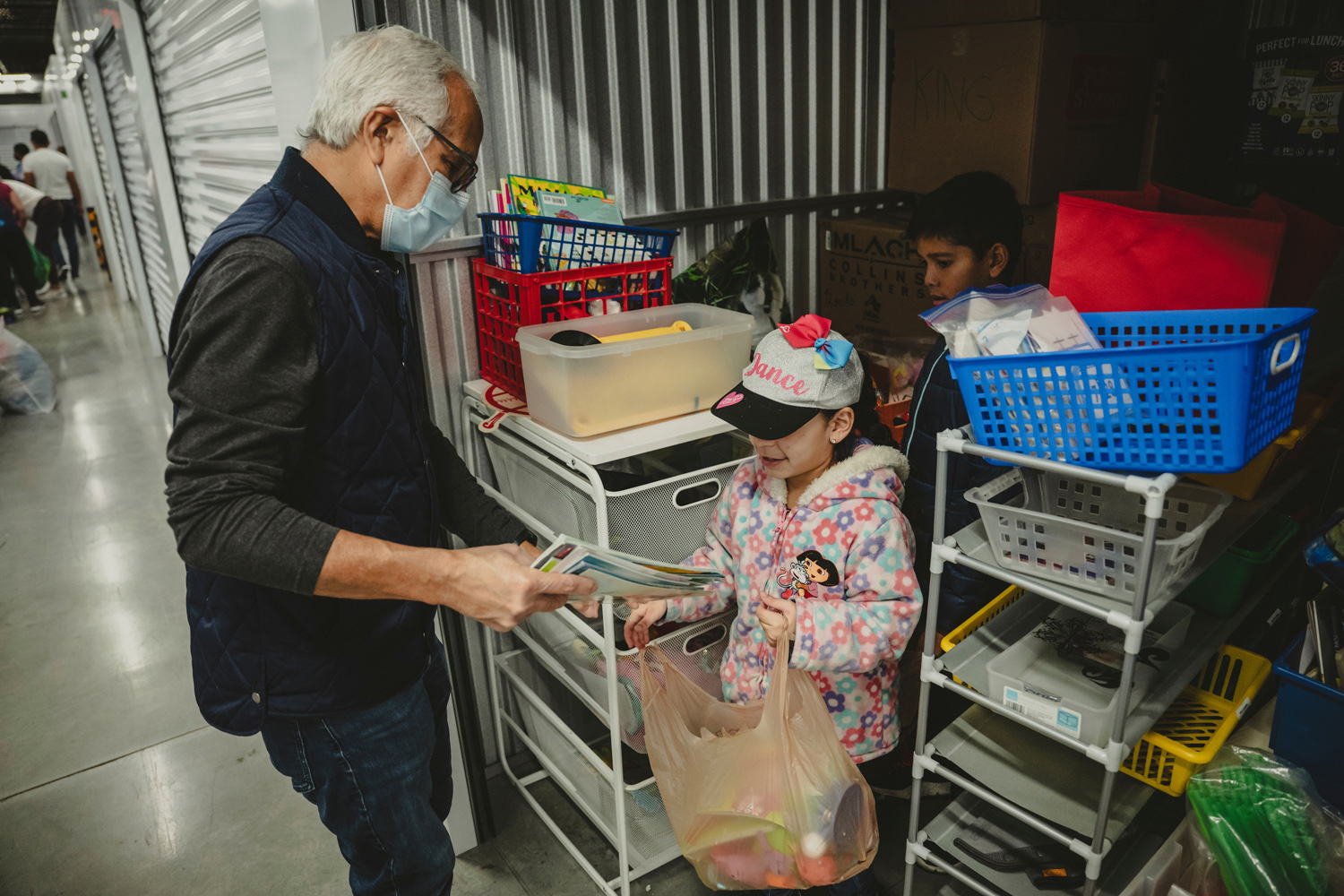

As an added challenge, many of these government grants work on a refund basis, which means organizations are likely expecting refunds for services they’ve already provided.
McMillian, of United Way of Greater Houston, suggested reviewing these contracts. In particular, she suggests examining the termination clauses and any protections these might offer to getting paid for services already provided.
Staying informed, keeping board and staff members informed and seeking legal advice is also crucial in a time like this, she added.
Organizations that spoke to the Landing said they were not yet cutting programs or staff, but they do worry about having to do so in the future.
“I'm going to have to change my staffing and program models and I'll have to do that frequently if there's no funding for certain programs,” an anonymous source said. “I'm not going to lay anyone off if I can help it, because I have a plan. If it comes to laying off, that will be a very hard choice to make.”

