

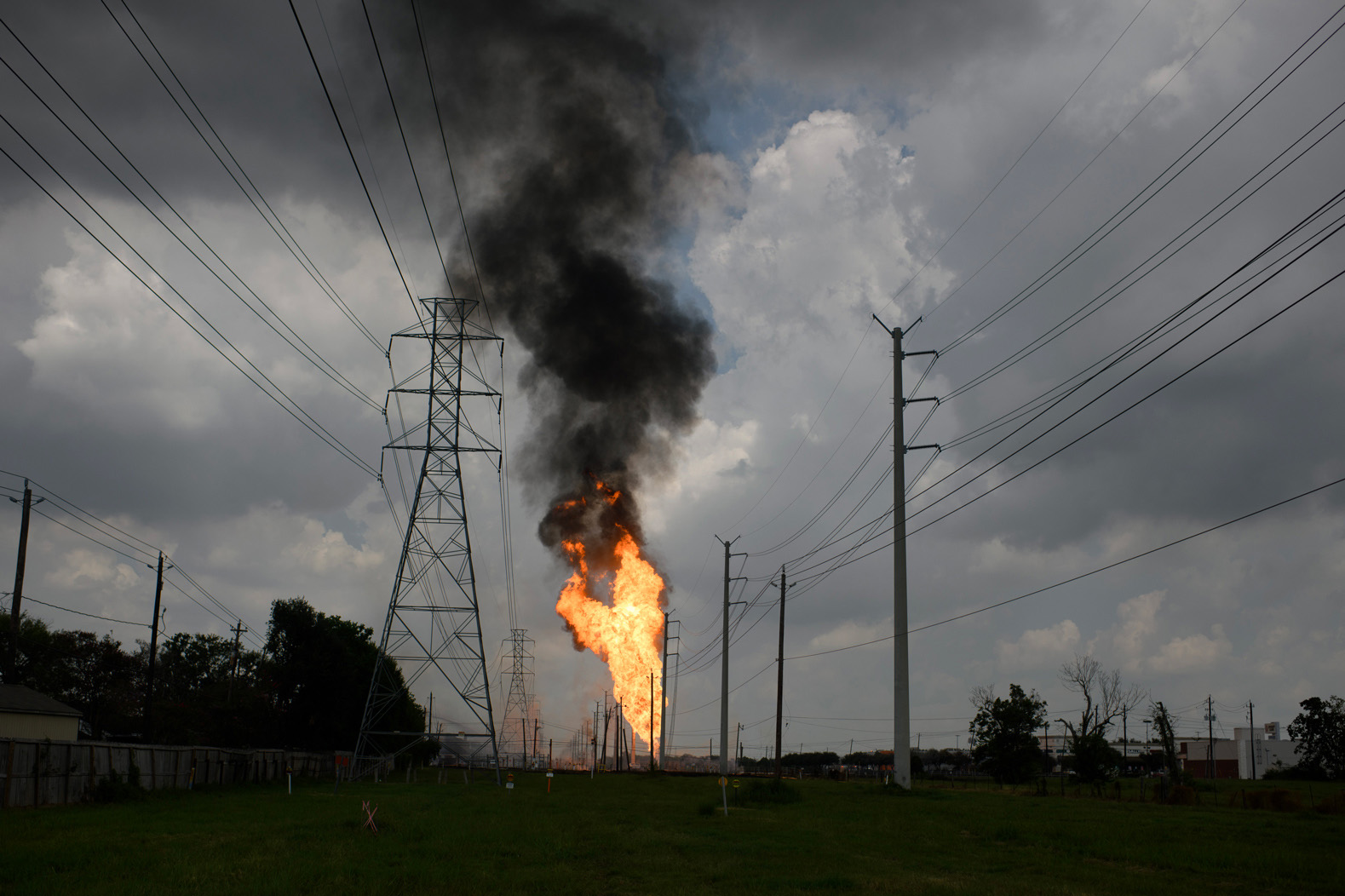
The Harris County medical examiner’s report on the driver who caused the Deer Park pipeline explosion says the man had a history of suicide attempts and had recently been discharged from a rehabilitation center for alcohol addiction.
The report on the Sept. 16 death of driver Jonathan McEvoy Sr., which was released Wednesday, cites these two factors – plus video surveillance of the vehicle accelerating toward the pipeline – as the evidence for ruling the death a suicide.
Members of McEvoy’s family could not be reached Tuesday and Wednesday. They have previously told the Landing that McEvoy had a history of seizures and that they believed that’s what caused the crash. McEvoy didn’t leave any note, they said, and had told his roommate he was going to Walmart to buy shoes and had asked her if she wanted to go with him. McEvoy was driving his roommate’s SUV the morning of the crash, his family said.
Witnesses saw the vehicle moving slowly in the parking lot of a Walmart Supercenter in Deer Park before it veered out of the lot, across the grass of a utility right-of-way and then crashed through a chain link fence and into a natural gas liquids pipeline.
The impact caused an explosion and massive plume of fire that killed McEvoy and necessitated the evacuation of hundreds of homes and businesses in Deer Park and LaPorte. It took nearly four days for the fire to be extinguished. The intense heat and flames damaged nearby homes, cars and power lines.
The medical examiner’s report, which Houston Landing obtained Wednesday after filing a public records request, is dated Jan. 17. The Harris County Institute of Forensic Sciences, which prepared the report, did not respond to requests for additional information about the report’s evidence and conclusions.

The Deer Park Police Department, as of midday Wednesday, had not yet received a copy of the medical examiner’s report, department spokesman Lt. Chris Brown said. “We have requested but not received the report yet. Once received we will review it and determine where we go from there,” he said. The department has had an ongoing criminal investigation into the pipeline crash.
Pipeline regulators at the Texas Railroad Commission, who have been investigating the explosion of the Energy Transfer-operated pipeline, said Wednesday that their report has not been finalized.
Regulations require pipeline operators to protect their lines against damage and the medical examiner’s suicide ruling in the driver’s death doesn’t change that, said Bill Caram, executive director of the Pipeline Safety Trust, a national safety advocacy group.
“To me, it doesn’t change anything for the operator,” Caram said. “The code says that each valve needs to be protected from damage or tampering. It does not make exceptions based on someone’s intent.”
At the time of the crash the segment of above-ground pipeline struck by McEvoy’s vehicle had only a chain link fence around it, despite its location near traffic along a busy stretch of Spencer Highway and the parking lot for Walmart and other retail shops. After the fire was extinguished, Energy Transfer installed concrete barriers around its pipeline structures at the site.
Residents whose nearby homes were damaged by the explosion and intense heat have questioned why the pipelines weren’t better protected against vehicle crashes earlier. Energy Transfer has said the barriers were put in place to protect the lines from construction equipment during repair work. The company did not immediately respond to a request for comment on Wednesday.
A Houston Landing investigation published in December found that vehicles crash into above ground hazardous liquid and gas transmission pipelines with surprising frequency. There have been at least 36 reported incidents nationwide since 2019, with 12 of them in Texas. These pipelines often had little protection against vehicle strikes, just chain link or wooden fences.